 Bradenton Siding
 Why Color Choice Is a Bigger Decision in Bradenton Than It Looks
Picking a siding color feels like a design decision, but on the Gulf Coast it's also a performance decision. Manatee County homes face intense year-round UV exposure, salt-laden air off Tampa Bay and the Gulf, wind-driven rain that gets pushed sideways into every seam and joint, and the occasional hurricane-force wind event that tests everything on the wall at once. A color that looks great in a brochure but fades unevenly, chalks, or fails to hold its pigment under that kind of abuse turns into a maintenance headache within a few years. That's the backdrop for this guide: what James Hardie's color system actually is, how it's engineered to survive our climate, and how to choose a shade that still looks right five, ten, and twenty years from now.
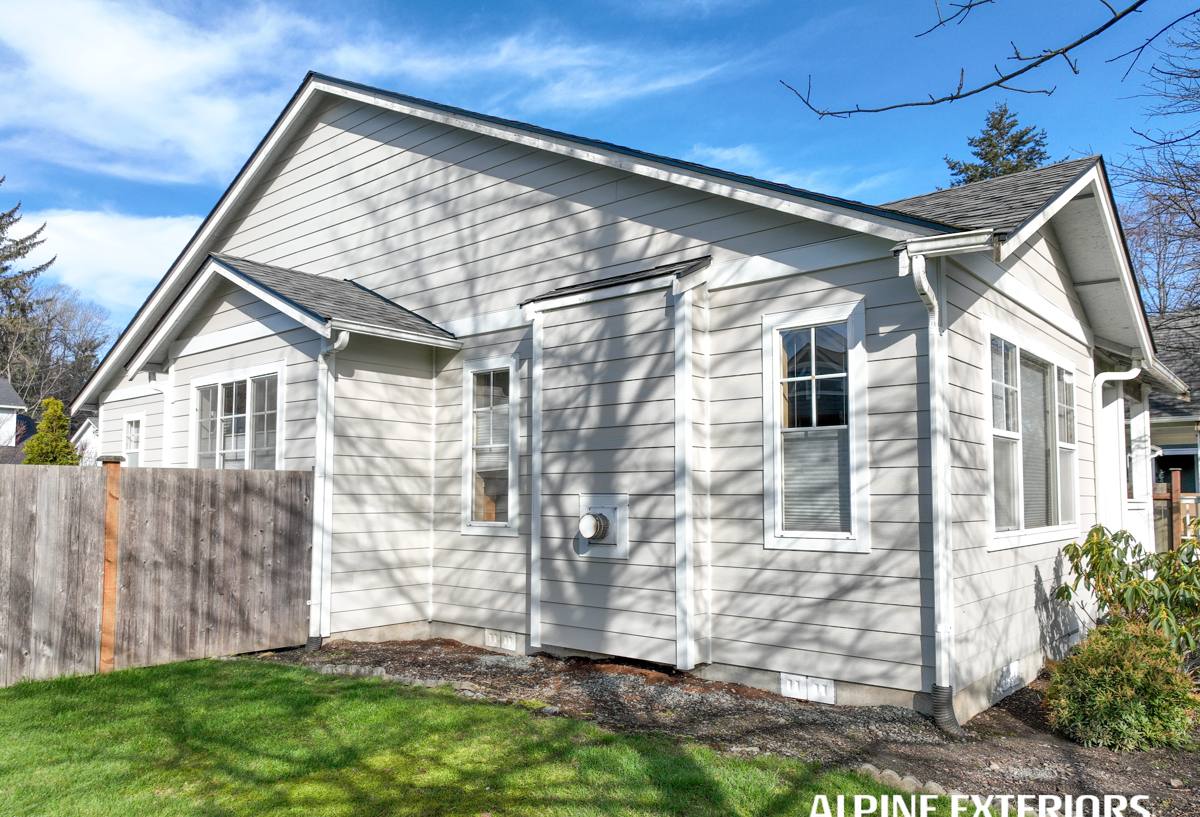
ColorPlus Technology: The Difference Between Painted and Finished Siding
Most of the color decisions on a James Hardie job come down to one system: ColorPlus Technology. This isn't paint applied by a contractor after installation — it's a multi-coat finish baked onto the fiber cement board at the factory, under controlled conditions, before the boards ever reach a job site. That distinction matters more in Florida than almost anywhere else in the country.
Why Factory-Applied Finish Matters Here
Field-applied paint has to bond to fiber cement on-site, often in Florida humidity, with no control over temperature, dust, or cure time. ColorPlus finish is cured in a factory environment, which gives it more uniform coverage, better adhesion, and more consistent color depth from board to board. In a market where UV load is high nearly every month of the year, that baked-on consistency is what keeps a wall from developing the blotchy, faded look that shows up on field-painted fiber cement and other siding products after a few Florida summers.
| Factor | ColorPlus Factory Finish | Standard Field-Applied Paint |
|---|---|---|
| Application environment | Controlled factory conditions | Job-site weather, humidity, dust |
| Coverage consistency | Uniform, multi-coat, baked-on | Depends on crew, weather, number of coats |
| Typical repaint interval | Often 15 years or longer before touch-up | 5-8 years in intense Gulf Coast sun |
| Warranty coverage | Separate finish warranty from Hardie | Contractor or paint manufacturer only |
| Color match on repairs/additions | Ordered pre-matched from the factory | Mixed and matched by hand |
How James Hardie Organizes Its Color Palette
James Hardie offers color in two tiers, and understanding the difference helps you budget and plan realistically before you fall in love with a shade.
The Standard Palette
This is the core lineup available on most HZ5 products without upcharge in most markets — a curated range of neutrals, warm earth tones, coastal blues and grays, and a handful of deeper accent colors. These colors are chosen specifically because they photograph and weather well across a wide range of climates, including intense sun exposure.
The Statement Collection
This is an expanded, designer-curated set of additional colors — often deeper, more saturated, or more distinctive shades — available at a premium over standard colors. If a homeowner wants a bold navy, a deep charcoal, or a less common tone that isn't in the standard lineup, it usually comes from this collection.
| Factor | Standard Palette | Statement Collection |
|---|---|---|
| Color range | Broad, versatile neutrals and classics | Expanded, bolder, more distinctive shades |
| Typical cost impact | Included in most product pricing | Upcharge per square, varies by supplier |
| Availability/lead time | Usually stocked or short order | Sometimes special order, longer lead time |
| Best fit | Most homes, HOA-friendly, resale-focused | Homeowners wanting a distinctive statement look |
Heat, Dark Colors, and What It Means for Your Roofline
Darker colors absorb more solar heat, which is true of any exterior material, not just fiber cement. James Hardie's HZ5 boards are formulated for high-heat, high-UV climates like ours, so a dark ColorPlus finish isn't going to fail the way an inferior painted product might. That said, homeowners choosing a deep charcoal or navy for a home with substantial west or south wall exposure in Bradenton's sun should expect that wall to run warmer than a lighter-colored wall nearby. It's not a defect — it's physics — but it's worth factoring into your decision if energy efficiency matters to you, and it's worth discussing with your contractor if that dark color is going right next to window and door trim that could also expand and contract with heat.
Matching Color to Manatee County Architecture
Bradenton's housing stock spans classic Florida ranch homes, coastal cottages near the water, newer construction in planned communities, and older neighborhoods with more traditional detailing. Color choice should take the house's architecture and its neighborhood into account, not just personal preference in isolation.
- Coastal and waterfront homes often lean into blues, grays, and soft whites that read as "beach" without looking themed.
- Traditional ranch and colonial-style homes generally hold their value best with warm neutrals, tans, and classic whites.
- Newer construction in planned communities may be restricted by an HOA color palette — always confirm before ordering.
- Homes with a lot of masonry, stone, or brick accents should have their siding color pulled from or complementary to those existing tones, not fighting against them.
HOA and Deed Restriction Considerations
A meaningful share of Manatee County communities have HOA-approved color lists. It's worth checking your community's covenants before you fall in love with a Statement Collection color, since some HOAs restrict siding to a pre-approved standard-palette list. A good contractor will ask about this upfront rather than let you discover it after ordering.
Trim, Soffit, and Accent Coordination
Color decisions don't stop at the field color of the siding. James Hardie's trim boards, and the fascia, soffit, and shutter colors around them, all need to work together as a system.
Common Coordination Approaches
Most homes do well with one of a few tested combinations: a lighter or white trim against a mid-tone or dark field color for contrast, a monochromatic scheme where trim is a slightly lighter shade of the same family as the field color, or a matched trim-and-field approach for a cleaner, more modern look. Whatever combination you choose, ask to see it on an actual sample board or a larger swatch — small paint chips are notoriously unreliable for predicting how a color will read across an entire wall in direct Florida sun.
Salt Air, Coastal Exposure, and Finish Performance
Homes closer to the water in and around Bradenton deal with airborne salt that can accelerate wear on metal fasteners, trim, and lesser-quality finishes. ColorPlus Technology is engineered with UV-cured, baked-on coatings intended to resist fading and hold adhesion better than field-applied paint under this kind of exposure, but no finish is completely maintenance-free near the coast. Periodic rinsing to remove salt residue and dust buildup, along with prompt caulking touch-ups where trim meets siding, goes a long way toward protecting the finish over the long run, regardless of which color you choose.
Warranty Coverage on Color and Finish
One of the practical advantages of ColorPlus Technology is that the finish carries its own warranty coverage from James Hardie, separate from the substrate warranty on the board itself. That's a meaningful difference from field-painted siding, where any fading or peeling issue becomes a conversation with a paint manufacturer or your contractor rather than the siding manufacturer. Ask your contractor to walk you through exactly what's covered, for how long, and what maintenance (like periodic cleaning) is required to keep that coverage valid.
A Practical Checklist for Choosing Your Color
- Check your HOA or deed restrictions before selecting a color, especially from the Statement Collection.
- View large sample boards outdoors, in direct sunlight, at different times of day — not just a small chip indoors.
- Consider how the color will look next to your roof, driveway, landscaping, and any brick or stone accents.
- Factor in heat absorption if you're considering a dark color on a wall with heavy west or south sun exposure.
- Decide on your trim and soffit coordination at the same time as your field color, not as an afterthought.
- Ask specifically what finish warranty applies to your chosen color and what maintenance keeps it valid.
- Confirm lead times if you're choosing a Statement Collection color that may require special order.
Getting It Right the First Time
Color is one of the few siding decisions that's genuinely hard to undo — repainting fiber cement later is a real cost and a real project, not a weekend touch-up. Taking the time upfront to view real samples outdoors, check HOA rules, and think through how a color will hold up against Bradenton's sun, salt air, and storm season pays off for decades, not just for the first year the siding goes up.
If you're weighing colors for a new install or a full re-side in Bradenton or elsewhere in Manatee County, we're happy to bring out real ColorPlus samples, walk your property, and talk through what will hold up best on your specific home. Reach out for a free, no-pressure estimate using the form below.