 Bradenton Siding
 Siding Built for Village of the Arts
Village of the Arts sits close to downtown Bradenton, in a part of Manatee County where older bungalow-style homes, converted cottages, and artist studios sit shoulder to shoulder on tight lots. A lot of the housing stock here predates modern hurricane building codes, which means the exterior cladding on many of these homes has been patched, repainted, and stretched well past what it was designed to handle. When we're asked to look at siding, roofing, windows, or decks in this neighborhood, we're almost always dealing with a home that's earned its character the hard way — through decades of Gulf Coast weather.
That weather is the real story here. Bradenton sits close enough to Tampa Bay and the Gulf that salt-laden air reaches inland neighborhoods like Village of the Arts more than people expect. Add in intense year-round UV, wind-driven rain during summer storms, and the occasional direct hit from hurricane-force wind, and you've got a climate that is genuinely hard on exterior building materials. This page walks through what that means for siding decisions in this specific area, and how we approach the work.
What This Climate Does to Siding Over Time
Salt Air and Humidity
Even without an ocean view, homes in this part of Bradenton are close enough to the coast that airborne salt settles on exterior surfaces and accelerates corrosion of fasteners, trim, and any material that isn't rated for a marine-adjacent environment. Combine that with Florida's near-constant humidity, and you get conditions that keep wood-based products damp longer than they'd stay damp almost anywhere else in the country. Moisture that lingers in a wall assembly is where rot, mold, and paint failure start.
UV Exposure
Florida sun is stronger and more consistent than most manufacturers account for when they rate a product's paint or finish life. Siding that's supposed to hold color for ten years in a lab test often fades, chalks, or breaks down faster under Bradenton's sun. Southern and western exposures on Village of the Arts homes tend to show this first.
Wind-Driven Rain
Summer storms here don't just drop rain — they push it sideways into lap joints, seams, and anywhere a siding installation has a gap. A product or installation that isn't detailed for wind-driven rain will eventually let water behind the cladding, and once that happens the sheathing and framing underneath start absorbing damage that isn't visible from the street.
Hurricane Wind Loads
Manatee County requires exterior products and fastening schedules to meet wind-load standards, and for good reason — this area has seen direct and near-miss hurricane impacts. Siding that isn't fastened correctly, or that isn't rated for the wind zone, is one of the first things to fail in a storm, which then exposes the rest of the house to water intrusion.
Why We Install James Hardie and Nothing Else
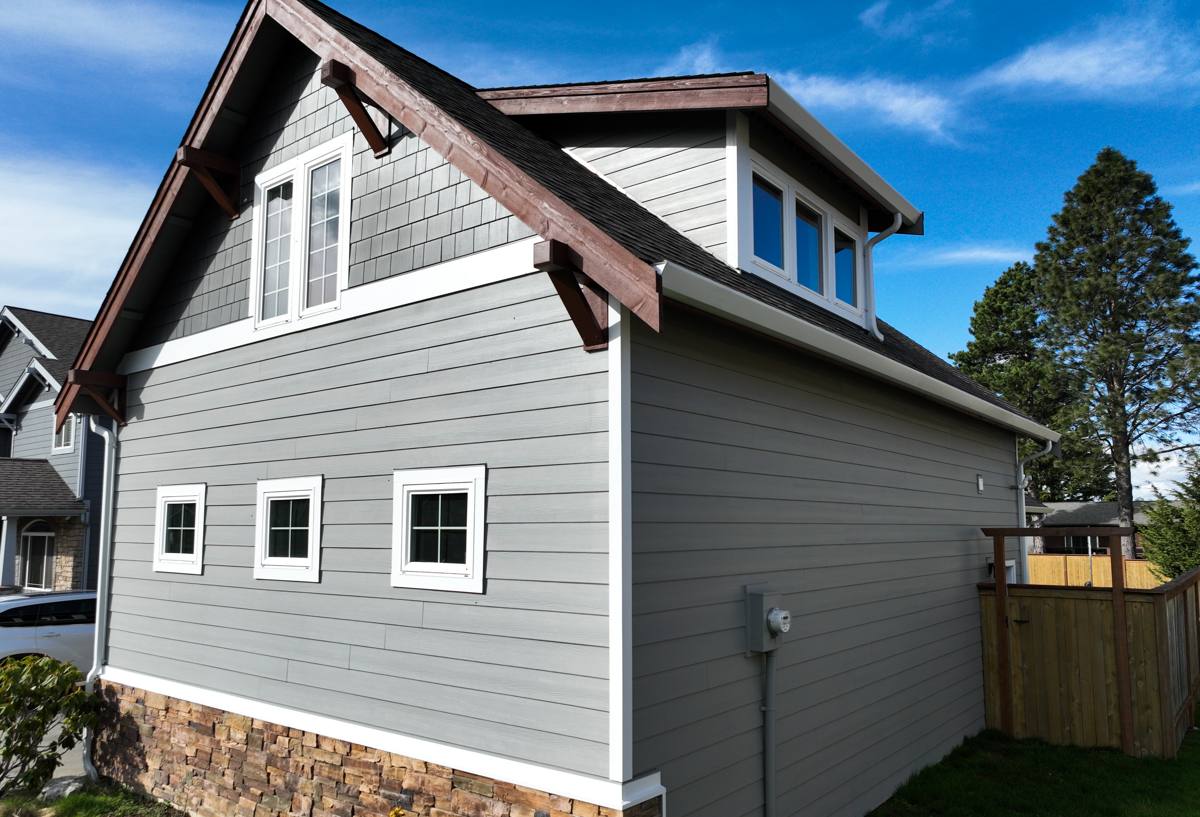
We standardized on James Hardie fiber cement siding for every home we work on, including throughout Village of the Arts, and we don't install vinyl, LP SmartSide, Cemplank, Allura, primed spruce, or cedar. That's not a marketing position — it's a decision built around what actually holds up in this climate.
- Non-combustible: Fiber cement doesn't burn, which matters in a state where wildfire and lightning-strike house fires both happen.
- Moisture-resistant core: Hardie's cement-based composition doesn't absorb and swell with humidity the way wood-based or wood-fiber products can, which matters enormously in a climate that stays humid nearly year-round.
- Factory-applied ColorPlus finish: Baked-on color resists UV fading far better than field-applied paint, which is a real advantage under Florida sun.
- HZ5 engineering: Hardie makes climate-specific product formulations, and the HZ5 line is engineered for high-humidity, moisture-prone regions like ours.
- Strong transferable warranty: Hardie's warranty structure is one of the more robust in the category, which matters to homeowners who plan to sell.
We go into the specific trade-offs of vinyl, LP SmartSide, and wood siding on their own pages — the maintenance burden, moisture behavior, and installation sensitivity that led us to stop offering them. The short version is that in a climate this demanding, we'd rather install one product exceptionally well than offer several options and hope each one performs.
How the Siding Process Works for Village of the Arts Homes
1. On-Site Assessment
We walk the exterior, check for existing water damage, soft spots, and areas where past patch jobs may be hiding bigger problems — common on the older housing stock in this neighborhood. We also look at how the home sits relative to sun exposure and prevailing wind and rain direction.
2. Sheathing and Moisture Barrier Check
Before any new siding goes up, the substrate underneath has to be sound. If there's rot or compromised sheathing from years of moisture exposure, that gets addressed first — installing new siding over a bad substrate just locks the problem in.
3. Product and Profile Selection
Village of the Arts has a distinct architectural character — a mix of bungalow, cottage, and mid-century styles, several converted into working art studios. We help homeowners choose a Hardie profile (lap, board-and-batten, shingle-style) and color that fits that character rather than pushing a one-size-fits-all look.
4. Installation to Manufacturer and Wind-Zone Spec
Fastening schedule, clearances, flashing details, and joint treatment all matter more here than in milder climates. Hardie's performance is only as good as the installation, and correct installation is what keeps wind-driven rain from getting behind the cladding during a summer storm or tropical system.
5. Final Walkthrough
We review the finished work with the homeowner and make sure trim, caulking, and transitions around windows and doors are sealed and finished properly — those transition points are where most future water problems start if they're rushed.
Comparing Siding Options for This Climate
| Factor | James Hardie Fiber Cement | Vinyl | Wood / Engineered Wood |
|---|---|---|---|
| Moisture behavior in humid climate | Resists swelling and rot | Doesn't absorb, but can warp/buckle in heat | Prone to moisture absorption and rot over time |
| UV/color stability | Factory ColorPlus finish resists fading | Can fade and become brittle | Requires repainting on a regular cycle |
| Fire rating | Non-combustible | Can melt/deform in heat | Combustible |
| Wind/impact performance (installed to spec) | Strong when fastened per wind-zone spec | Can crack or blow off in high wind | Varies; joints and edges are vulnerable |
| Maintenance | Low — occasional wash and caulk check | Low, but replacement panels are common after storms | Higher — repainting/resealing on a cycle |
Roofing, Windows, and Decks in the Same Neighborhood
Siding rarely fails on its own — it's usually one piece of an exterior envelope that's aging together. In Village of the Arts, we regularly find that a home needing new siding also has a roof nearing the end of its service life, windows with failed seals letting humidity into the wall cavity, or a deck that's absorbed years of sun and rain without proper sealing. Because we handle siding, roofing, windows, and decks, we can look at the whole exterior at once instead of treating each component as a separate problem — which matters when moisture intrusion at a roofline or window can undermine even a brand-new siding installation.
What to Check Before Hiring Anyone for Exterior Work
- Manatee County licensing and insurance current and verifiable
- Familiarity with local wind-load and building code requirements, not just general installation experience
- Manufacturer training or certification for the specific siding product being installed
- A written scope that specifies fastening schedule, flashing details, and moisture barrier — not just "install siding"
- References or completed work in the Bradenton area, ideally in older neighborhoods with similar construction
- Clear answers about what happens if rot or sheathing damage is found once old siding comes off
Why a Local Crew Matters Here
Village of the Arts isn't a cookie-cutter subdivision — lot sizes, home ages, and architectural styles vary block to block, and a lot of these properties have been renovated in stages over the years by different owners. A crew that works this specific part of Bradenton regularly knows what's usually hiding behind old siding on a house of a certain age, how the neighborhood's mix of sun and wind exposure tends to wear on materials, and how to keep new work visually consistent with a neighborhood that takes its character seriously. That local knowledge shows up in fewer surprises once the old siding comes off and in a finished result that actually fits the street it's on.
Get a Free, No-Pressure Estimate
If your home in Village of the Arts has siding that's aging, cracking, or showing water damage, or if you're weighing options for a roof, windows, or a deck alongside it, we're happy to take a look and walk you through what we're seeing — no pressure, no obligation. Fill out the form below to schedule a free estimate.