 Bradenton Siding
 Siding Built for the Bungalows and Cottages of Village of the Arts
Village of the Arts is one of Bradenton's most distinct neighborhoods — a mix of older Florida bungalows, small cottages, and mid-century homes that have been renovated and repainted into working studios and galleries. That character is the whole point of the neighborhood, and it's why the siding on these homes has to do two jobs at once: hold up to real Gulf Coast weather and still look like it belongs on a historic Bradenton street rather than a generic subdivision.
A lot of the housing stock in this part of Bradenton predates modern siding standards. Original wood lap siding, old stucco patches, and in some cases layers of paint over materials that were never rated for this climate are common. When homeowners in this neighborhood call us, it's usually because something is already failing — soft boards, cracked caulk lines, paint that won't hold — and they want a fix that actually lasts instead of another five-year patch job.
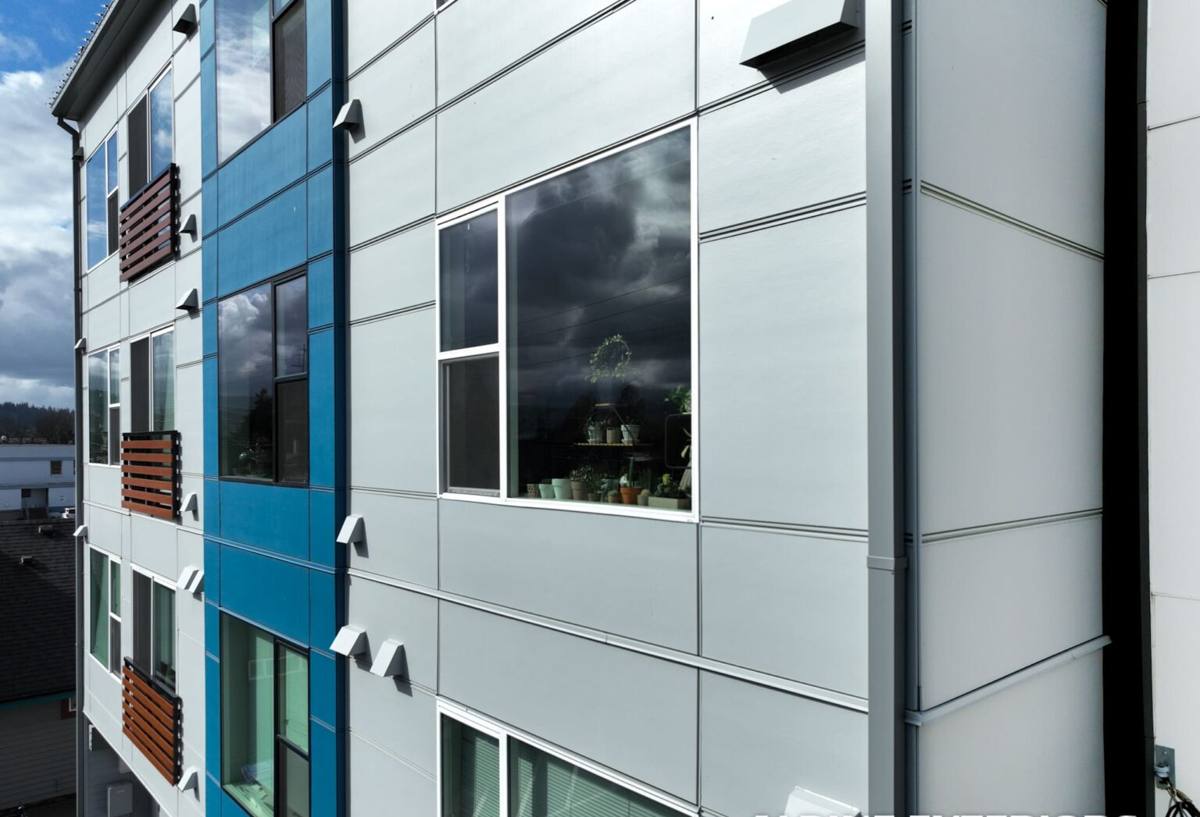
What Bradenton's Climate Actually Does to Exterior Siding
Manatee County sits close enough to the Gulf that homes deal with a specific combination of stress that inland siding never has to handle. It's worth naming these plainly, because they drive every decision in the sections below.
- Hurricane-force wind: Even in years without a direct hit, tropical systems and seasonal storms push wind loads that test every fastener and panel edge on a home's exterior.
- Intense, year-round UV: Florida sun breaks down paint film and cheaper siding substrates faster than almost anywhere else in the continental U.S. There's no real off-season for UV exposure here.
- Wind-driven rain: Storms in this area rarely fall straight down. Rain gets pushed sideways into wall assemblies, which means water intrusion at seams, corners, and penetrations is a bigger risk than in calmer climates.
- Salt air: Being close to the coast means airborne salt settles on siding, trim, and fasteners, accelerating corrosion and breaking down finishes that aren't built to resist it.
Individually, any one of these is manageable. Together, on an older Village of the Arts home, they're exactly why so many original wood and low-grade siding installs in this neighborhood are showing their age.
Why Fiber Cement Is the Right Material for This Neighborhood
Fiber cement — specifically James Hardie's product line, which is the only siding we install — is built from cement, sand, and cellulose fibers. That composition is what makes it a fundamentally different material than wood, vinyl, or engineered wood products.
For a neighborhood like Village of the Arts, that matters in a few concrete ways:
- It doesn't rot, and it isn't a food source for termites or wood-boring insects — a real issue for older Florida homes with a history of moisture problems.
- It's non-combustible, which matters on tightly spaced older lots where homes sit closer together than in newer developments.
- James Hardie's ColorPlus factory finish is baked on and warranted against fading, which matters enormously under Florida UV where field-applied paint jobs often need attention within a few years.
- It comes in lap, shingle, and panel profiles, so a bungalow with shingle-style accents or a cottage with traditional lap siding can be matched in fiber cement rather than forced into one generic look.
We don't install LP SmartSide, vinyl, Cemplank, Allura, or primed wood siding. That's a deliberate standard, not a sales pitch — we've made the judgment that for this climate, James Hardie's engineered fiber cement, factory finish, and installation specifications give homeowners the best long-term outcome, and we'd rather stand behind one system we trust completely than offer several we have reservations about.
What a Correct Fiber Cement Installation Actually Involves
Fiber cement siding is only as good as its installation. The material itself is durable, but a rushed or incorrect install undermines almost every advantage it offers. On a Village of the Arts project, correct installation means:
Water management comes first
A weather-resistive barrier goes on the wall sheathing before a single piece of siding is hung. Flashing gets installed at every window, door, and penetration so wind-driven rain has somewhere to go besides into the wall cavity. This step is invisible once the job is done, which is exactly why it's the step that gets skipped by crews trying to save time.
Clearances and gaps, done to spec
James Hardie's installation manual specifies minimum clearances from grade, roofing, and decks, along with gap requirements at butt joints and trim. These aren't arbitrary — they're what keeps water from wicking into the bottom edge of the siding or pooling where two pieces meet.
Fastening for actual wind exposure
Manatee County's coastal exposure means fastener type, spacing, and embedment need to match the real wind loads the home will see, not a generic minimum. Corrosion-resistant fasteners matter here specifically because of salt air.
Field-cut edges get sealed and finished
Any cut edge exposes raw fiber cement that isn't protected by the factory ColorPlus finish. Sealing cut edges and finishing them correctly is a small step that a lot of crews skip, and it's one of the first places you'll see a poor installation start to fail.
| Installation Step | Done Correctly | Common Shortcut |
|---|---|---|
| Weather barrier | Continuous, properly lapped, integrated with flashing | Patched, gapped, or skipped at trim returns |
| Fasteners | Corrosion-resistant, spaced and embedded to spec | Standard fasteners, inconsistent spacing |
| Clearances | Meets Hardie's minimums at grade, roof, and deck lines | Siding run tight to grade or roofline |
| Cut edges | Sealed per manufacturer instructions | Left raw or sealed inconsistently |
| Caulking | Used only where specified, quality sealant | Overused to mask gaps and poor fits |
Our Process for Village of the Arts Projects
Every home in this neighborhood is a little different in age and condition, so we start with an honest assessment rather than a quote off a photo. Here's what a project typically looks like:
- On-site inspection: We look at the existing siding, sheathing condition, and any signs of past moisture intrusion — common in older bungalows that have had multiple exterior updates over the years.
- Tear-off and sheathing check: Old siding comes off and we inspect the sheathing underneath. Any soft or damaged wood gets addressed before new siding goes up — covering a moisture problem instead of fixing it just hides it for another owner to deal with later.
- Weather barrier and flashing installation: This is the step that determines how the home performs in wind-driven rain, and we don't shortcut it.
- Hardie installation to manufacturer spec: Lap, shingle, or panel profile, fastened and gapped correctly for this exposure category.
- Trim, caulking, and final finish check: Cut edges sealed, joints finished, and the ColorPlus finish inspected for any touch-up needs.
- Walkthrough: We go over the finished work with the homeowner before considering the job done.
Why It Matters That We Already Work This Neighborhood
A crew that regularly works Village of the Arts and the surrounding Bradenton area has already dealt with the specific quirks of this housing stock — older sheathing types, uneven original framing, and the mix of past renovation work that's common when a neighborhood has been continuously updated over decades. That's different from a crew that mainly works new construction in newer developments and treats an older home the same way.
Local familiarity also matters for permitting and inspection. Siding work on homes in this area typically requires permitting through the appropriate local building department, and a crew that pulls permits regularly in Manatee County knows what inspectors are looking for at each stage — which avoids delays that catch out-of-area contractors off guard.
Questions worth asking any siding contractor before you hire them
- Do you pull permits for siding replacement, and will you handle the inspection process?
- What weather-resistive barrier and flashing details do you use, specifically?
- Are your fasteners rated for coastal/high-wind exposure?
- Can you show examples of fiber cement work you've completed in this area?
- What does your warranty cover, and is it separate from the manufacturer's warranty?
- How do you handle sheathing repair if it's found during tear-off?
Long-Term Care in a Salt Air Environment
Fiber cement lowers the maintenance burden significantly compared to wood, but "low maintenance" doesn't mean "no maintenance," especially this close to the Gulf. A simple annual rinse-down removes salt residue and airborne grime before it builds up. Caulking at trim joints should be checked periodically, since sealant has a shorter service life than the siding itself. Keeping an eye on any area where irrigation or sprinklers hit the siding directly is also worth doing — constant moisture exposure in one spot will outlast even a good installation's water management if it's not corrected.
None of this is heavy upkeep. It's the difference between siding that looks good for its full warranted life and siding that starts showing problems early because small issues went unaddressed.
What This Costs and What Drives the Number
Every home is different, and the honest answer is that price depends on the specifics of your project. The factors below are what actually move the number up or down, more than square footage alone.
| Cost Factor | Why It Matters |
|---|---|
| Condition of existing sheathing | Rot or moisture damage found during tear-off requires repair before new siding goes on |
| Siding profile chosen | Lap, shingle, and panel styles differ in material and labor |
| Home's architectural detail | Trim, corners, and accent areas on older bungalows take more time than flat elevations |
| Access and site conditions | Tight lots and mature landscaping common in this neighborhood can affect setup and staging |
| Color and finish selection | Factory ColorPlus finishes vary by color line |
We give straightforward, itemized estimates based on an actual look at your home — not a generic per-square-foot number that doesn't account for what's really going on with your walls.
If you're dealing with aging or failing siding on a Village of the Arts home, we're glad to come take a look. The estimate is free, there's no pressure, and you'll get a clear picture of what your home actually needs before you decide anything.