 Bradenton Siding
 Exterior Work in Tara: What Bradenton's Climate Does to a Home
Tara sits inland from Sarasota Bay but still gets the full package of what Manatee County weather throws at a house: long stretches of high humidity, intense UV exposure nearly year-round, sudden downpours that come in sideways during storm season, and salt-laden air that drifts in off the Gulf even a few miles from the water. None of that is unique to any one neighborhood, but it adds up differently depending on how a home is built, which direction it faces, and what's actually on its exterior walls.
Homes in and around Tara run the gamut from older construction with original wood or early fiber-cement siding to newer builds put up during the last two decades of growth in this part of Manatee County. What we see consistently, regardless of age, is that exterior materials chosen for a milder climate or a lower price point tend to show wear faster here than they would somewhere with less sun and less moisture. That's the whole reason we've built our business around one siding product instead of offering a menu of them.
Why Local Conditions Matter More Than People Expect
A lot of siding and roofing products are rated and marketed based on national averages. Bradenton doesn't have average weather. Between the UV index, the humidity, and the wind-driven rain that comes with tropical systems, exterior materials here are under more sustained stress than in most of the country. That's why we pay attention to how a product actually performs in Gulf Coast conditions over years, not just what the spec sheet says.
Siding: Why We Only Install James Hardie
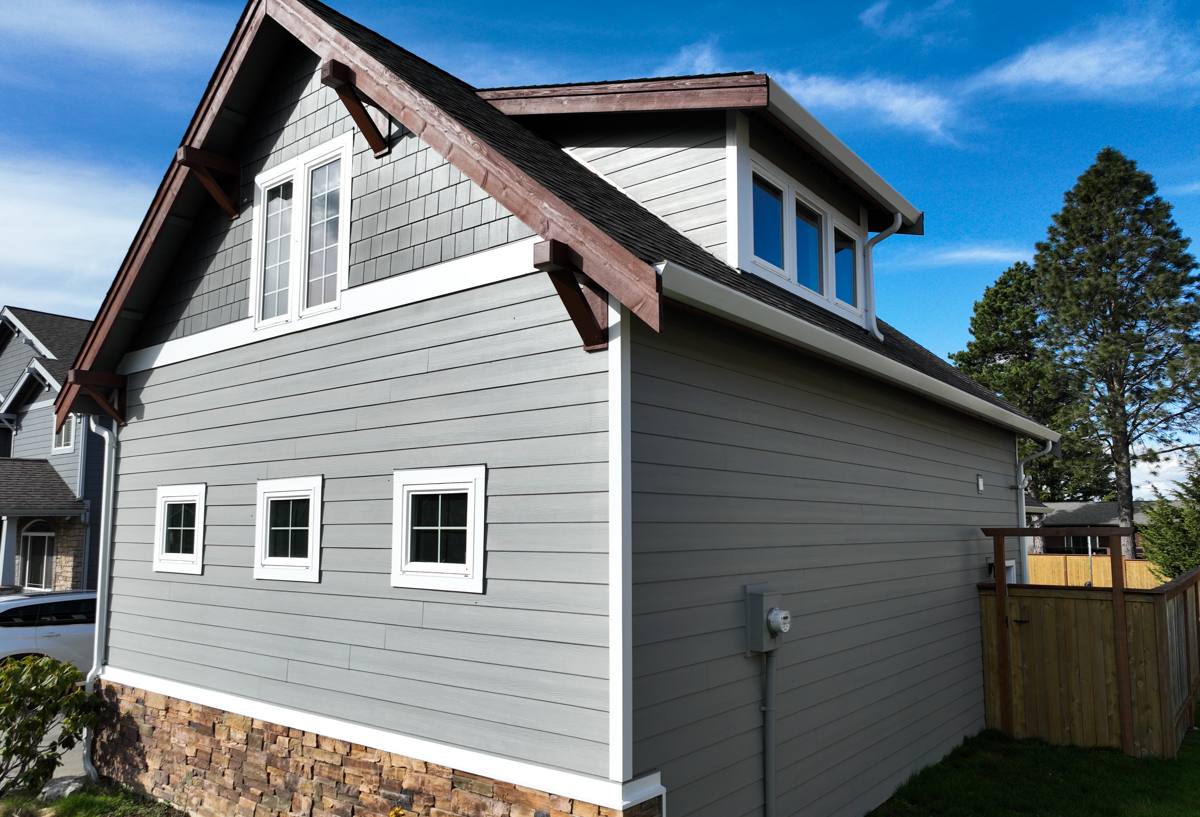
We install James Hardie fiber cement siding exclusively. We don't offer vinyl, LP SmartSide, Cemplank, Allura, or primed wood siding like spruce or cedar as options for a full siding job. That's a deliberate standard, not a lack of options, and it's worth explaining why.
Vinyl siding is inexpensive and easy to install, which is why it's everywhere. But it's also a plastic product that softens and can warp in sustained high heat, and it doesn't hold up as well to wind-driven debris during storms. In a climate where summer temperatures regularly push exterior surfaces well past what vinyl was designed for, we've seen enough warping and fading to not want our name on that installation.
LP SmartSide and similar engineered wood products perform reasonably well in drier, more moderate climates. In a humid coastal environment with heavy rain, engineered wood siding is more vulnerable to moisture intrusion at seams, fastener points, and cut edges if it isn't perfectly detailed and maintained. Cemplank and Allura are both fiber cement products, and they're not fundamentally bad materials, but we've standardized on Hardie's specific manufacturing process, factory-applied ColorPlus finish, and the HZ5 formulation engineered for high-humidity, high-moisture climates like ours. Primed cedar or spruce siding requires ongoing owner maintenance, repainting, and moisture vigilance that most homeowners don't want to sign up for on a coastal property.
James Hardie's fiber cement is non-combustible, resists the moisture cycling that causes rot and pest damage, and comes with a factory-baked color finish that holds up to UV exposure far better than field-applied paint. It's not the cheapest material on the market, but for a house that has to survive Bradenton summers and hurricane seasons for decades, it's the product we're willing to warranty and stand behind.
James Hardie Product Lines We Install
- HardiePlank lap siding — the most common choice, available in multiple textures and exposure widths
- HardieShingle — for accent areas or homes wanting a shingle-style look without the maintenance of real wood shingles
- HardiePanel — vertical panel siding often used for modern designs or accent gables
- HardieTrim — matching trim boards for a consistent, finished look around windows, corners, and fascia
Roofing in Tara
Roofs in this area take a beating from the sun before they ever see a storm. UV degrades roofing materials over time, shortening their effective life even without a single hurricane. We handle roof replacement and repair with materials selected for this climate, and we pay close attention to the details that matter most in coastal wind: proper fastening, underlayment quality, and flashing at penetrations and edges, since that's where most storm-related roof failures actually start.
A roof and a siding system work together as a home's weather envelope. If one is compromised, water finds its way into the other. That's part of why we handle both trades rather than treating them as separate, disconnected jobs.
Windows
Older single-pane or early dual-pane windows in this part of Florida tend to struggle with two things: energy loss from constant AC use, and vulnerability to wind-driven rain during storms. Impact-rated and properly sealed replacement windows address both. Beyond storm performance, well-installed windows reduce how hard your HVAC system has to work through a Bradenton summer, which shows up directly in utility bills.
Window installation quality matters as much as the window itself. A high-end window installed with poor flashing or sealant will leak eventually; a mid-range window installed correctly with proper integration into the surrounding siding will outperform it. We treat window installation as part of the whole exterior envelope, not an isolated add-on.
Decks
Outdoor living is a big part of why people live in this part of Florida, and decks here face their own version of the same problems: UV breakdown of surface finishes, moisture at ground contact and fastener points, and general wear from being outside twelve months a year instead of a shortened seasonal use pattern. We build and repair decks with materials and fastening details suited to that reality, focused on structural integrity first and appearance second.
Comparing Common Siding Materials
| Material | Typical Lifespan Here | Moisture Behavior | Maintenance | Do We Install It |
|---|---|---|---|---|
| James Hardie Fiber Cement | 30+ years | Resists moisture-driven rot; engineered for humid climates | Low — factory finish, occasional cleaning | Yes |
| Vinyl | 15-25 years | Can warp/soften in sustained heat | Low, but replacement is common after storm or heat damage | No |
| LP SmartSide / Engineered Wood | 15-25 years | Vulnerable at seams and cut edges if moisture gets in | Moderate — sealant and edge maintenance | No |
| Other Fiber Cement (Cemplank, Allura) | 25-30 years | Generally similar category performance | Low to moderate | No — we standardize on Hardie specifically |
| Primed Cedar/Spruce | 10-20 years with upkeep | Requires consistent sealing/repainting to resist rot | High — regular repainting and inspection | No |
What Drives the Cost of a Siding or Roofing Project
Every home in Tara is different, and pricing depends on real, specific factors rather than a flat rate. The things that actually move a project's cost:
- Square footage and number of stories
- How much of the existing siding, sheathing, or roof deck needs to be removed and replaced versus reused
- Whether there's underlying moisture or rot damage discovered once old material comes off
- Trim complexity — gables, dormers, multiple roof lines, and architectural detail add labor time
- Product selection within the Hardie line (plank profile, texture, ColorPlus color versus field-painted)
- Access and site conditions, including landscaping, fencing, and how close neighboring structures are
We won't quote a number without seeing the house. Anyone who does is guessing, and on a home exposed to Bradenton's weather, guessing on scope leads to change orders and disappointment later.
Why a Local Crew Makes a Difference
Hurricane preparedness, permitting familiarity, and knowing how Manatee County inspections work aren't things you pick up overnight. A crew that works this area regularly understands the wind load requirements our homes need to meet, knows how local humidity affects cure times and material handling, and isn't learning Florida building code on your job. That local familiarity shows up in the small decisions made on-site — fastener schedules, flashing details, how siding is terminated at grade — that determine whether a job holds up through its first real storm season or fails at the first one.
We also stand behind our work locally. If something needs a warranty call or a follow-up inspection after a storm, we're not a crew that came through once and moved on to another state.
A Practical Pre-Project Checklist for Tara Homeowners
- Walk your home's exterior after any major storm and note new stains, soft spots, or visible siding damage
- Check window and door frames for gaps or discoloration that suggest water intrusion
- Ask any contractor for their manufacturer certification, not just general licensing
- Get a written scope of work, not just a total price, so you know exactly what's included
- Confirm whether removal and disposal of old materials is included in the quote
- Ask what warranty applies to both materials and labor, and get it in writing
If your home in Tara has siding, roofing, windows, or a deck that's due for an honest look, we're happy to come out, walk the property, and give you a straightforward assessment — no pressure, no hard sell, just a clear picture of what your home actually needs. Use the form below to request a free estimate.