 Bradenton Siding
 Why Roofs in Tara Take a Different Kind of Beating
Tara sits inland from the coast, but "inland" in Manatee County doesn't mean sheltered. Homes here still take on salt-laden air carried in from Tampa Bay and the Gulf, the same intense year-round UV that bakes every rooftop in this part of Florida, and the wind-driven rain that comes with our summer storm pattern and the occasional hurricane threat. None of these forces act alone. UV breaks down the oils and granules that protect asphalt shingles, wind loosens fasteners and lifts edges, and once a roof has a weak point, wind-driven rain finds it fast. A roof that looks fine from the driveway can already have moisture working its way into the decking underneath.
Because Tara is largely a planned community with homes built in overlapping phases, we see a lot of roofs that are the same age as their neighbors and starting to show wear on a similar timeline. That's useful context for us as a local repair crew — it means we can often spot patterns (a batch of shingles that seals poorly, a flashing detail that was common in a certain construction phase) instead of treating every repair as a total mystery.
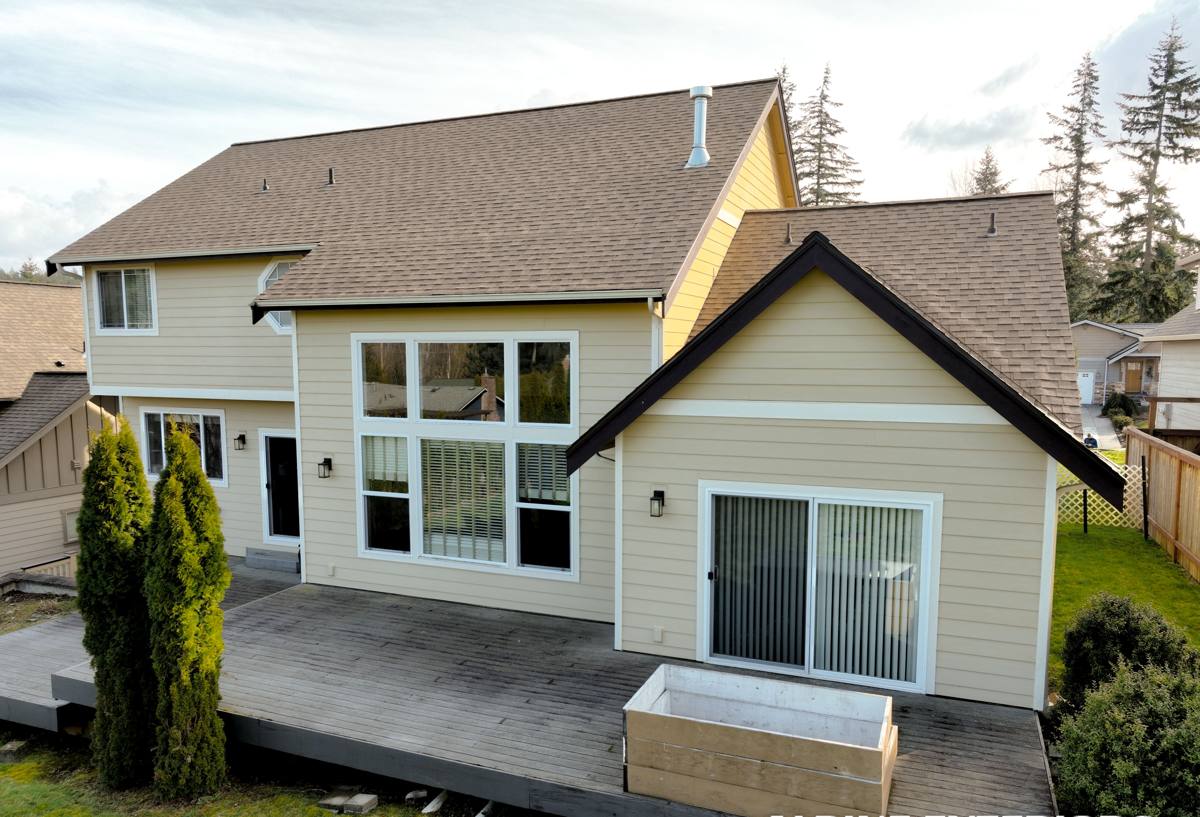
What "Roof Repair" Actually Covers
Roof repair isn't one job — it's a category that covers a range of problems, and the right fix depends entirely on what's actually failing. On most Tara homes, the repairs we're called out for fall into a few groups:
- Shingle damage — cracked, curling, or missing shingles from UV breakdown or wind uplift
- Flashing failures — around chimneys, skylights, plumbing vents, and roof-to-wall transitions, usually the first place a leak starts
- Valley and seam leaks — where two roof planes meet and water volume concentrates during heavy rain
- Underlayment and decking damage — moisture that got past the surface layer and is now affecting the wood below
- Sealant and pipe boot deterioration — rubber and caulk components that break down under UV faster than the shingles around them
The mistake we see homeowners make most often isn't ignoring a leak — it's treating the visible symptom (a stain on the ceiling) without addressing the actual failure point on the roof, which is sometimes several feet away from where the water shows up indoors.
Signs a Tara Homeowner Shouldn't Ignore
Roof problems in this climate rarely announce themselves with a dramatic leak on day one. They start small and get worse with every storm. Watch for:
- Granules collecting in gutters or at the base of downspouts
- Shingles that look curled, cupped, or have visibly lost their color uniformity
- Soft or spongy spots when walking the roof (we check this, not something to test yourself)
- Ceiling stains that appear after wind-driven rain specifically, even without a full storm
- Visible daylight or gaps around vent pipes, chimneys, or skylights
- Missing or lifted shingles after any period of sustained wind
- A musty smell in the attic, which often shows up before any visible staining
If you're seeing more than one of these, it's worth having someone look at the whole roof rather than patching the one spot you can see.
What a Correct Repair Involves
Diagnosis Before Anything Else
A repair that lasts starts with figuring out where the water is actually entering — not just where it's showing up inside. That means checking flashing, valleys, penetrations, and the surrounding shingle field, not just the ceiling stain's rough location. On a two-story or steep-pitch Tara roof, this is also where a crew's comfort and equipment matter — a rushed inspection from the ground misses more than it catches.
Matching the Repair to the Roof's Actual Age
A five-year-old roof with one storm-damaged section is a different job than a seventeen-year-old roof where the surrounding shingles are already brittle. We test the condition of shingles adjacent to the damage before deciding whether a targeted patch will hold or whether the repair needs to extend further to tie into sound material.
Using Materials That Match, Not Just Fit
New shingles from a different batch or manufacturer than what's already on your roof can create a visible patchwork and, more importantly, may not seal the same way against the existing material. We work to match not just color but shingle profile and sealant type so the repaired section performs — and looks — like part of the original roof, not an add-on.
Sealing Every Penetration, Not Just the One That Failed
If one pipe boot has degraded from UV exposure, the others installed at the same time are usually close behind. Part of a correct repair is checking every penetration on the roof while we're already up there, rather than fixing one and leaving the rest to fail next season.
Common Roof Types in Tara and How We Approach Each
| Roof Type | Typical Vulnerability Here | Repair Approach |
|---|---|---|
| Asphalt shingle | UV granule loss, wind uplift at edges, sealant strip failure | Section replacement matched to existing shingle, re-seal or re-fasten lifted edges |
| Concrete or clay tile | Cracked or slipped tiles, underlayment failure beneath intact-looking tile | Careful tile removal/replacement, underlayment repair without disturbing surrounding tile |
| Metal panel | Fastener backout, sealant washer breakdown at seams and penetrations | Fastener replacement, seam and penetration resealing with compatible materials |
| Flat or low-slope sections (lanai, porch tie-ins) | Ponding water, membrane seam separation | Membrane patch or reseal, slope and drainage check |
Tile roofs deserve a specific note: the tile itself often survives Florida weather very well, but the underlayment beneath it has a shorter service life than the tile on top of it. A roof that looks structurally sound from the tile surface can still have a failed underlayment layer underneath — which is why a proper inspection sometimes means lifting tile in a suspect area rather than assuming the surface tells the whole story.
Repair vs. Replacement: How We Actually Decide
We don't default to recommending replacement, and we don't stretch a repair past the point where it makes financial sense. The honest answer usually comes down to a few factors:
| Factor | Leans Toward Repair | Leans Toward Replacement |
|---|---|---|
| Roof age relative to material's service life | Under roughly 12-15 years for asphalt shingle | Approaching or past expected service life |
| Extent of damage | Localized to one section or a few penetrations | Widespread across multiple roof planes |
| Condition of surrounding material | Adjacent shingles/tile still flexible and sealed | Adjacent material brittle, granule loss widespread |
| Underlying decking condition | Decking solid, no soft spots | Decking soft or water-stained in multiple areas |
| Repair history | First or second repair on this roof | Repeated repairs to the same or nearby areas |
We'll walk you through where your roof falls on each of these before recommending anything, and we'll tell you plainly if a repair is the right call even when a replacement would be the bigger job for us.
Our Process, Start to Finish
- Inspection. We walk the roof (not just the ground-level view) and check the interior attic space where accessible, since attic moisture patterns often point straight to the leak source.
- Written scope and estimate. You get a clear explanation of what's damaged, why, and what the repair involves — no vague line items.
- Material matching. We source shingles, tile, or panel components that match your existing roof as closely as possible.
- The repair itself. Work is done to the same fastening, flashing, and sealing standards as a new install — a repair isn't an excuse to cut corners on technique.
- Final check. We confirm the repaired area sheds water correctly and check nearby penetrations and seams while we're already on the roof.
Why a Crew That Already Works Tara Matters
A roof repair crew that regularly works in this part of Bradenton has already seen how the roofs in your specific community age — which construction phases used which materials, which flashing details tend to fail first, and how the local mix of sun, salt air, and storm wind shows up on a roof compared to, say, a roof closer to the coast or further inland. That familiarity shortens the diagnostic process and reduces the chance of a repair that solves the symptom but not the cause. It also means a crew that isn't guessing at permitting or code requirements for Manatee County — they're already doing that paperwork routinely.
Maintenance That Extends a Repair's Life
A well-executed repair still benefits from basic upkeep, especially in a climate that doesn't give a roof a break between UV exposure and storm season:
- Keep gutters clear so water doesn't back up under the roof edge
- Trim back tree limbs that drop debris or scrape shingles in wind
- Have the roof looked at after any named storm, even if nothing looks obviously wrong
- Address small issues (a lifted shingle corner, a cracked pipe boot) before the next rainy season rather than after
If you're seeing signs of roof trouble on your Tara home — or just want an honest opinion on whether that stain in the ceiling is a small fix or something bigger — we're glad to come take a look. Estimates are free and there's no pressure to move forward; you'll just have a clear picture of what your roof actually needs.