 Bradenton Siding
 When siding starts to look bad — a soft spot near a window, a seam that's cracked, paint that won't stop peeling — most homeowners assume it's a cosmetic problem. It isn't. By the time siding shows visible damage, something has usually been going wrong behind it for months or years. Understanding what that "something" actually is helps you catch problems early, ask contractors better questions, and make a smarter decision the next time you replace siding.
This guide walks through what's really happening behind failing siding in a Gulf Coast climate like Bradenton's, why Manatee County homes are particularly exposed to it, and what separates siding systems that hold up from ones that don't.
The Real Enemy Isn't the Weather — It's What the Weather Does Behind the Wall
Siding's main job isn't decoration. It's a water management system. Every siding product, from vinyl to fiber cement to wood, is designed to shed the vast majority of rain before it ever reaches the wall assembly, while also allowing whatever moisture does get in — through seams, fastener holes, or wind-driven rain — to dry out again. Failure happens when one of two things breaks down: water gets in faster than it should, or trapped moisture can't get back out.
On the west coast of Florida, both halves of that equation are under constant pressure. Hurricane-force winds don't just bring rain — they drive it sideways and upward, forcing water into laps, seams, and penetrations that were never designed to face rain from that angle. Intense, near year-round UV breaks down caulking, sealants, and some siding surfaces faster than in northern climates. And salt air off Tampa Bay and the Gulf accelerates corrosion on fasteners, flashing, and trim — weak points that often fail long before the siding panels themselves do.
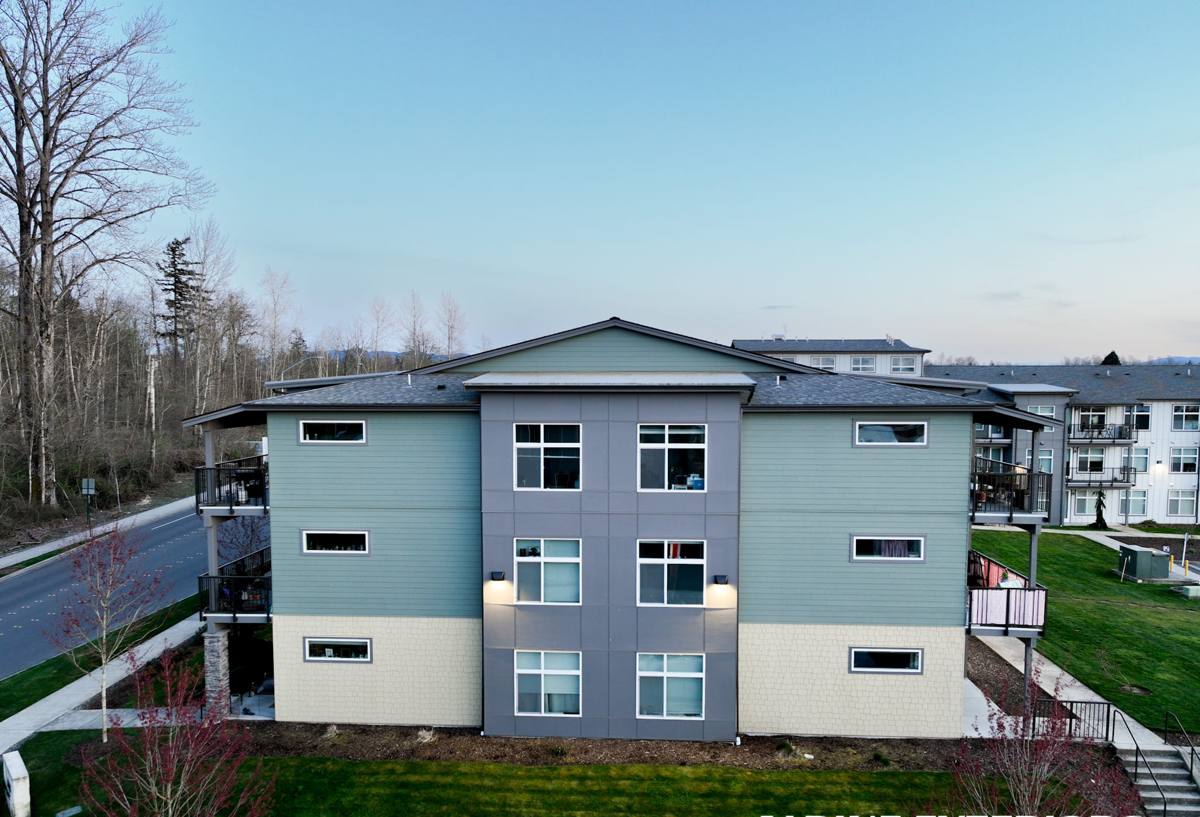
What's Actually Happening Behind the Siding When It Fails
Water Intrusion Points
Almost no siding failure starts in the middle of a flat panel. It starts at a transition point — somewhere two materials meet, or a seam interrupts an otherwise continuous surface. The most common entry points we find on Bradenton homes are:
- Butt joints between siding boards that weren't properly flashed or sealed
- Window and door trim where caulk has shrunk, cracked, or pulled away
- Areas where siding meets roof flashing, especially at roof-to-wall transitions
- Fastener holes where the sealant or coating has failed, exposing bare material
- Low corners and areas near sprinkler overspray that stay damp longer than the rest of the wall
What Happens Once Water Gets Behind the Cladding
Once moisture gets past the outer layer, what happens next depends entirely on the material behind it and how the wall was built. A properly installed wall has a water-resistive barrier (house wrap or building paper) and a drainage plane that lets incidental moisture run back out at the bottom. When that system works as designed, small amounts of intrusion are a non-event. When it doesn't — because of a nailing pattern that punctures the barrier, a missing weep path, or siding installed tight against trim with no place for water to escape — moisture sits against the sheathing and framing.
From there, the damage compounds. Wood-based sheathing absorbs moisture and softens. Framing members can develop rot in ways that aren't visible from outside. Insulation loses R-value when it's wet. And in Florida's heat and humidity, trapped moisture is also exactly what mold needs to establish itself inside wall cavities — a problem that often isn't discovered until drywall is opened up for an unrelated repair.
Why Some Siding Materials Handle This Better Than Others
Not all siding responds to moisture exposure the same way, and this is where material choice matters more than most homeowners realize.
| Behavior | What It Means for Your Wall |
|---|---|
| Absorbs water and swells | Panels lose shape at seams and edges, creating new gaps for water to enter |
| Expands/contracts heavily with heat and UV | Fasteners work loose over time, caulk joints open and close, seals fail faster |
| Softens or delaminates when wet repeatedly | Structural integrity of the panel itself degrades, not just the finish |
| Holds paint/finish poorly once damp | Peeling and blistering accelerate, exposing raw material underneath |
| Stable dimensionally, resists moisture absorption | Seams and fastener points stay tighter longer, slowing the whole failure chain |
Engineered wood products and some composite panels are particularly prone to swelling at cut edges and seams if the factory-sealed edge is compromised on site — which happens routinely during normal installation, cutting, and fitting around windows and corners. Once that edge swells even slightly, it holds more moisture next time, swells a little more, and the cycle accelerates. Traditional wood siding faces a similar problem, just on a faster timeline, especially at butt joints and anywhere end grain is exposed to weather.
This is a big part of why we standardized on James Hardie fiber cement siding for every installation we do. Fiber cement doesn't absorb and swell the way wood-based products do, it doesn't rely on a factory coating on the face alone to keep moisture out, and it holds its dimensions through Florida's heat-humidity-heat cycles instead of expanding and contracting enough to loosen fasteners and open seams. That doesn't mean fiber cement is immune to moisture problems — no siding is, if it's installed wrong — but the material itself isn't working against you the way some alternatives are.
Installation Mistakes That Cause Moisture Damage Regardless of Material
It's worth being honest here: a lot of siding failure isn't a materials problem at all. It's an installation problem, and it can happen with any product, including good ones. The most common mistakes we see when diagnosing failing siding include:
- Face-nailing or over-driving fasteners, which crushes the material and creates a water entry point
- Installing siding tight to the ground, roofline, or deck with no clearance for water to drain and dry
- Skipping or improperly lapping flashing at windows, doors, and roof intersections
- Caulking joints that should have been left open for drainage, trapping water instead of shedding it
- Reusing or skipping a proper water-resistive barrier during a re-side over old sheathing
This is why the contractor doing the installation matters as much as the product on the truck. A premium siding material installed with shortcuts will fail faster than a modest material installed correctly.
Warning Signs You Can Catch Before It Gets Expensive
From the Outside
Walk your home's perimeter a couple of times a year, especially after a named storm rolls through the Gulf. Look for soft spots when you press on siding near the bottom of walls, staining or dark streaks below seams, paint that's bubbling rather than just fading, gaps that have opened at corner trim, and any siding that looks slightly warped or wavy compared to the wall next to it.
From the Inside
Interior clues are often the first real evidence of a problem that's been building outside for a while: a musty smell in a specific room, a soft or spongy feel to drywall near an exterior wall, peeling interior paint or wallpaper that mirrors an exterior trouble spot, and unexplained increases in humidity in one part of the house.
Quick Self-Check List
- Press gently on siding near the bottom of walls and around window trim — any give means investigate further
- Check caulk lines at windows, doors, and corner trim for cracking or separation
- Look at fastener heads for rust streaks, a sign of corrosion working on the fastener itself
- Note any siding boards that look wavy, bowed, or slightly out of plane
- Check for soft or discolored drywall on interior walls that back up to problem exterior areas
Why This Matters More in Bradenton Than in a Lot of Places
Manatee County homes deal with a combination of stressors that a lot of siding products were never really tested against as a set: sustained hurricane-season wind-driven rain, near-constant UV load that never really lets up for a "winter break" the way it does up north, and a steady drip of salt air off the coast that speeds up corrosion on every metal component in the wall assembly — fasteners, flashing, and trim alike. Any one of those is manageable on its own. Together, over years, they punish weak points in a siding system faster than a moderate climate would.
That's the practical reason we don't install every siding product on the market. We install what we've found actually holds up to this specific combination of conditions, installed the way it's engineered to be installed, with attention to the flashing, fastening, and drainage details that determine whether a wall stays dry behind the siding for the next twenty-plus years.
What to Do If You Suspect a Problem
If you're seeing any of the warning signs above, the smart move is a professional inspection before the problem is bigger than the siding itself. In some cases what looks like widespread siding failure is actually isolated to a few trouble spots — a poorly flashed window, a section near a downspout that stays wet — and can be addressed without a full replacement. In other cases, moisture has been working behind the wall long enough that sheathing and framing need attention too, and that's information you want before you commit to a repair plan, not after.
If you're noticing soft spots, staining, or siding that just doesn't look right anywhere on your Bradenton home, we're happy to take a look and give you a straight answer about what's going on. We offer free, no-pressure estimates and can walk you through exactly what we find, what it means, and what your options are.