 Bradenton Siding
 Bradenton Beach sits on Anna Maria Island, which means every exterior surface on every home here lives closer to salt water, wind, and sun than almost anywhere else in Manatee County. The siding on a Bradenton Beach home isn't just cladding — it's the first line of defense against a barrier-island climate that doesn't let up. We install James Hardie fiber cement siding exclusively, and on an island like this, that's not a marketing preference. It's the only material system we're willing to put our name behind here.
What Bradenton Beach's Climate Actually Does to a House
Homes on Anna Maria Island face a combination of stresses that inland Manatee County properties simply don't see to the same degree. Salt-laden air moves off the Gulf and Sarasota Bay continuously, settling on siding, trim, and fasteners. Combined with near-constant humidity, that salt accelerates corrosion of anything metal and degrades the surface finish of anything that isn't engineered to resist it. Add in intense, near-year-round UV exposure that breaks down pigments and resins, wind-driven rain that gets pushed sideways into seams and laps during storms, and the real possibility of hurricane-force winds during the June-through-November season, and you have an environment that finds every weak point in a building envelope faster than almost anywhere else in Florida.
It's not one dramatic event that does most of the damage — it's the daily grind. A siding product that's marginal in a normal Florida suburb tends to fail noticeably faster on a barrier island. That's why the material choice on a Bradenton Beach home matters more here than it would twenty miles inland.
Salt Air and Corrosion
Salt is hygroscopic — it pulls moisture out of the air and holds it against whatever surface it lands on. On siding, that means prolonged surface wetness even on days it hasn't rained. On fasteners and trim, it means accelerated rust and pitting. Any exterior product that traps moisture behind it, or that relies on caulking and paint film to stay sealed, is fighting a losing battle against salt exposure over time.
UV and Sun Load
Florida sun is intense enough to fade and chalk ordinary paint finishes within a few years, and an island location adds reflected glare off open water on top of direct exposure. Siding finishes that aren't factory-engineered for UV resistance tend to show fading, chalking, and color mismatch on repairs well before the rest of the house shows its age.
Wind-Driven Rain and Hurricane Exposure
Wind-driven rain doesn't fall straight down — it drives horizontally into laps, seams, and penetrations, and it does it every time a squall line or a tropical system moves through. During an actual hurricane, siding also has to survive direct wind load and windborne debris impact. Both scenarios reward a product with proven wind ratings and a track record of staying attached and intact, not one that's marginal on either front.
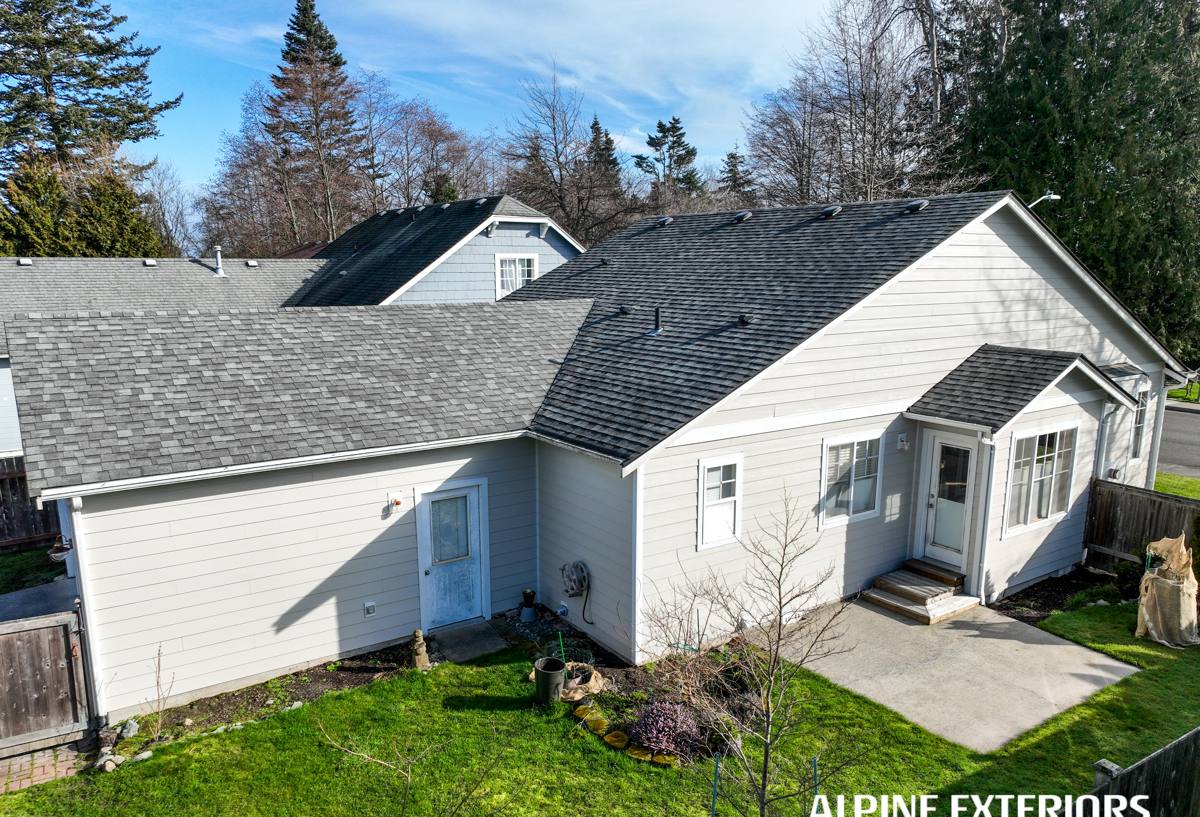
Why We Only Install James Hardie Fiber Cement
We made a deliberate decision years ago to stop installing anything other than James Hardie fiber cement siding, and we haven't found a reason to reconsider it — especially for barrier-island and coastal work. Hardie siding is non-combustible fiber cement, which matters for wildfire and fire-spread risk between structures, and it's engineered specifically for high-humidity, high-UV, coastal climates through Hardie's HZ10 product line, which is formulated for exactly the conditions Gulf Coast Florida delivers.
The factory-applied ColorPlus finish is baked on under controlled conditions rather than field-painted, which gives it far better UV and color resistance than a job-site paint job, and it carries its own finish warranty separate from the product warranty. Fiber cement also doesn't rot, doesn't attract termites, and doesn't warp or delaminate the way some engineered wood and composite products can when moisture gets behind them repeatedly — which, on an island, it eventually will.
None of this means other products are without merit. Vinyl is inexpensive and easy to source. LP SmartSide and similar engineered wood products install quickly and have improved their moisture engineering over the years. But every one of those systems asks a homeowner to accept some combination of trade-offs — thinner material that flexes and rattles in wind, seams that depend on caulk staying intact, or a moisture-sensitivity ceiling that a barrier-island climate tends to find. We'd rather install one product correctly than offer several and hope the cheaper ones hold up.
Siding Product Comparison for a Coastal Manatee County Home
| Factor | James Hardie Fiber Cement | Vinyl | Engineered Wood (e.g. LP SmartSide) |
|---|---|---|---|
| Combustibility | Non-combustible | Combustible, can soften/melt near heat sources | Combustible |
| Salt air / humidity resistance | Engineered HZ10 line for humid coastal climates | Resistant to corrosion but can warp/discolor | Moisture-sensitive at cut edges and seams |
| UV / fade resistance | Factory ColorPlus finish, separate finish warranty | Can fade and become brittle over time | Field-painted finish fades faster, needs repainting |
| Wind performance | Rigid, heavier profile, strong wind ratings | Lighter, can flex, rattle, or blow off in high wind | Moderate, dependent on proper fastening |
| Pests / rot | Not a food source, doesn't rot | Not a food source, doesn't rot | Wood-based core, vulnerable if moisture intrudes |
| Typical lifespan when installed to spec | Multiple decades | 15-25 years, more with good conditions | 15-30 years, highly install- and climate-dependent |
This table reflects general, well-documented product characteristics, not specific claims about any competitor's individual project outcomes. It's meant to explain why we chose to specialize rather than to disparage the alternatives.
How We Handle Siding, Roofing, Windows, and Decks Together
Most homes on Anna Maria Island don't need just one exterior trade addressed — the same salt, sun, and wind that stress siding are working on the roof, the windows, and any exterior decking at the same time. We handle all four because they function as one system. A siding replacement is a natural point to also evaluate flashing and roof-to-wall transitions, check window seals and impact ratings, and look at whether a deck's structure and fasteners are holding up to the same coastal exposure. Coordinating these trades under one crew means fewer separate contractors touching the same penetrations and seams, and fewer chances for gaps to open up between trades that didn't talk to each other.
What a Bradenton Beach Siding Project Typically Involves
- On-site evaluation of existing siding, sheathing, and any moisture damage before a quote is finalized
- Removal of old siding and inspection of the wall assembly underneath
- Repair of any compromised sheathing or framing found during removal
- Installation of a proper water-resistive barrier and flashing details at windows, doors, and penetrations
- Installation of James Hardie fiber cement siding per manufacturer fastening and clearance specifications
- Attention to ground clearance and drainage details that matter on flood-zone-adjacent island lots
- Final walkthrough covering warranty registration and basic care
Why a Local Crew Matters Here
Manatee County's building codes and wind-load requirements reflect its coastal exposure, and a barrier-island property like those in Bradenton Beach often carries additional considerations around flood zones, elevation, and permitting that inland crews may not deal with regularly. A contractor who works this area routinely understands what inspectors are looking for locally, how to sequence a job around island access and parking constraints, and what installation details actually hold up against Gulf Coast weather versus what merely looks fine on installation day. That local familiarity shows up in the details — correct fastener spacing for the wind zone, proper flashing at every penetration, and siding clearances that account for salt spray and splashback rather than generic manufacturer minimums.
Maintenance Realities for Coastal Siding
No siding product is maintenance-free on a barrier island, but the maintenance burden varies a lot by material. Fiber cement with a factory finish generally needs periodic rinsing to remove salt buildup and an occasional inspection of caulking at trim and penetrations — it doesn't need repainting on the schedule that field-finished materials do. Homeowners should still expect to walk their exterior after major storms, check for any impact damage, and keep gutters and drainage clear so water isn't sitting against the base of the siding. A five-minute annual check is far cheaper than discovering a moisture problem years into ownership.
What to Ask Any Exterior Contractor Before Hiring Them
- Are you licensed and insured to work in Florida, and can you provide proof?
- What wind rating and fastening schedule will you use for this specific location and elevation?
- Who handles the manufacturer warranty registration, and what does it actually cover?
- Will you inspect and repair sheathing before installing new siding, not just cover it up?
- Do you coordinate flashing and moisture barrier details with the roofing and window work, or treat each trade separately?
Any contractor working on a barrier-island home should be able to answer these clearly and specifically, not in generalities. If you're getting vague answers on wind rating or fastening schedule, that's worth pausing on before signing anything.
Cost Factors for a Bradenton Beach Siding Project
Every project is different, and we won't quote a number without seeing the house, but a few factors consistently move the price on island properties: the amount of sheathing repair needed once old siding comes off, the complexity of the roofline and number of penetrations, access constraints common to narrow island lots, and whether siding is being replaced alongside roofing, windows, or decking in the same visit. Bundling trades during one mobilization is often more efficient than spacing them out over separate projects and separate crews.
If you're weighing a siding, roofing, window, or deck project for a home in Bradenton Beach, we're glad to take a look and give you a straightforward, no-pressure estimate — just fill out the form below and we'll follow up to schedule a time that works.