 Bradenton Siding
 Decking Built for a Barrier Island, Not a Catalog Photo
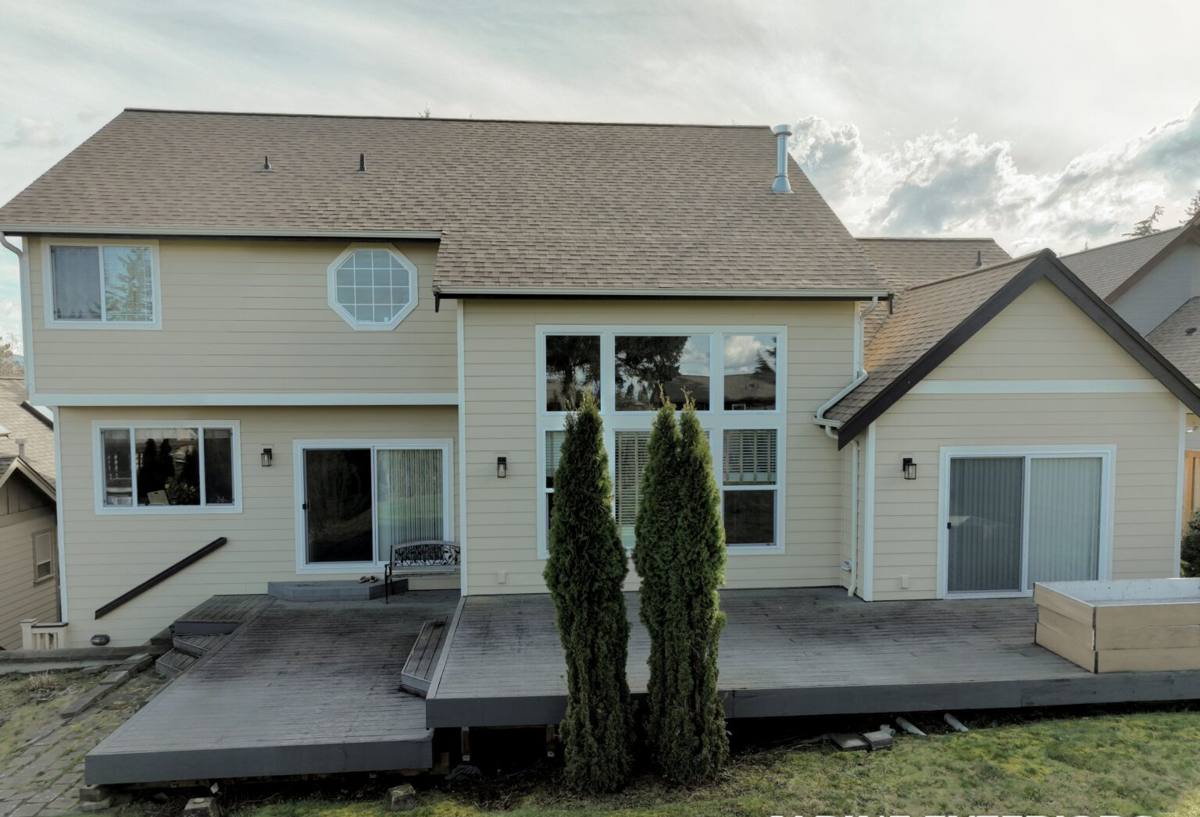
Bradenton Beach sits on Anna Maria Island, right where Manatee County meets the Gulf of Mexico. A deck out here doesn't live in the same world as a deck in a landlocked subdivision. It sits in salt-laden air almost every day of the year, takes direct sun with almost no seasonal break, and has to survive tropical storm and hurricane season wind and rain without coming apart at the fasteners. Composite decking can handle all of that, but only when it's specified and installed with that environment in mind. A lot of decking problems we get called out to fix weren't caused by the material — they were caused by someone treating a coastal Manatee County install like a standard mainland job.
This page covers what a composite deck actually needs to hold up in Bradenton Beach, what a correct installation looks like, and how we approach the job when we build one here.
What the Local Climate Actually Does to a Deck
Salt Air and Corrosion
Being this close to the Gulf means airborne salt settles on every exterior surface, including the underside of a deck where you're not looking every day. Salt accelerates corrosion in anything metal — fasteners, joist hangers, post bases, railing brackets. A deck built with standard hardware can start showing rust streaks and weakened connections years before the decking boards themselves show any wear.
UV Exposure
Florida sun is intense nearly twelve months a year, and a barrier island location means very little canopy shade to soften it. UV breaks down color and surface integrity in lower-grade composite and PVC products over time, which is why board selection and cap quality matter more here than in a climate with a real winter to slow things down.
Wind and Wind-Driven Rain
Anna Maria Island sees hurricane-force wind events, and even routine summer storms bring hard, sideways rain. A deck attached to the house needs a ledger connection and flashing detail that keeps water from working its way behind the siding, and a structure that isn't relying on undersized or corroded fasteners to stay put in a wind event.
Moisture and Ventilation
Humidity is high year-round and afternoon rain is routine in the wet season. Composite boards don't rot, but the framing underneath them can if it isn't pressure-treated, properly spaced, and ventilated to dry out between rain events.
Why Composite Makes Sense for This Location
Wood decking isn't a bad product everywhere, but it's a demanding one in a coastal, high-UV, high-humidity environment. It needs regular sealing or staining to resist moisture and sun damage, and skipping a season or two of maintenance in this climate shows up fast as graying, splintering, or soft spots. Composite decking, particularly capped composite, holds its color and surface longer under constant sun and doesn't absorb moisture the way wood fibers do, which matters when the board is wet from rain or dew more mornings than not.
| Factor | Wood Decking | Capped Composite |
|---|---|---|
| UV fading | Grays and fades within 1-2 seasons without refinishing | Fade-resistant cap holds color much longer |
| Moisture response | Absorbs water, prone to warping/splintering if not sealed | Shell resists moisture absorption into the board |
| Maintenance | Sealing/staining every 1-2 years in this climate | Periodic cleaning, no sealing or staining |
| Salt air tolerance | Fine if maintained; neglect shows quickly | Board itself is largely indifferent to salt exposure |
| Upfront cost | Typically lower material cost | Higher material cost, lower lifetime upkeep cost |
| Feel underfoot | Traditional, but can splinter over time | Consistent, no splinters, stays cooler with lighter colors |
Neither product is objectively "wrong." The honest trade-off is upfront cost versus ongoing maintenance labor, and in a climate that's this hard on exposed wood, most Bradenton Beach homeowners we talk to would rather pay more up front and do less upkeep for the next couple of decades.
What a Correct Composite Deck Build Involves
The composite boards themselves are the least likely part of a deck to fail. Problems almost always trace back to what's underneath or holding it together. A correct build in this area includes:
- Pressure-treated framing rated for ground contact where applicable, sized to the actual span and load, not just "what's standard"
- A properly flashed ledger board connection to the house, with butyl or self-adhering flashing tape to stop wind-driven rain from reaching the wall structure
- Corrosion-resistant fasteners and connectors rated for coastal/salt exposure — not general-purpose galvanized hardware
- Joist tape over the top of framing members to keep moisture from wicking into the wood under the composite boards
- Correct board spacing for drainage and thermal expansion, since composite expands and contracts more than wood with Florida's heat swings
- Ventilation and clearance beneath the deck so humid air can move and framing can dry out between rain events
- Post and footing depth appropriate to local soil and wind load requirements, not a minimum-code shortcut
Skip any one of these and the deck can still look fine for a while — composite is forgiving on the surface. But the failures that show up in coastal decks a few years later are almost always framing, fastener, or flashing failures, not board failures.
How We Approach a Bradenton Beach Composite Deck Project
- On-site assessment. We look at the attachment point to the house, existing structure if there is one, drainage, sun and wind exposure, and how the space will actually be used.
- Framing plan. We size and lay out the substructure for the local wind and load requirements, not a generic template, and specify hardware rated for salt air exposure.
- Board and color selection. We walk through capped composite options and color families, factoring in how much direct sun the deck will get and how that affects surface heat and long-term fade.
- Permitting. Deck work typically requires a permit and inspection in this area; we handle that process rather than leaving it to the homeowner.
- Build. Ledger flashing, framing, joist tape, and hardware go in first — the part nobody sees is where we spend the care, because it's what determines whether the deck is still solid in ten years.
- Board installation and finish work. Decking, fascia, and railing go in with attention to consistent spacing and clean fastening patterns.
- Final walkthrough. We go over the finished deck and basic care with the homeowner before calling the job done.
Hardware: The Part That Actually Determines Lifespan
In a salt air environment, the fasteners and connectors are usually the first thing to show damage — long before the composite boards do. Standard zinc-galvanized screws and brackets can start corroding within a few years this close to the Gulf. We use stainless steel or coated fasteners rated for coastal/marine-grade exposure on connections that matter structurally, and hidden fastener systems compatible with the board manufacturer's warranty terms where the homeowner wants a clean, screw-free surface. Cutting corners on hardware to save a small amount up front is the single most common cause of coastal deck problems we see, and it's the one place we won't shortcut.
What Drives the Cost of a Composite Deck Here
| Factor | Why It Matters |
|---|---|
| Deck size and shape | Square footage and the number of angles, steps, or level changes directly affect labor and material |
| Board tier | Entry-level capped composite vs. premium composite lines varies in price and warranty coverage |
| Substructure condition | New build vs. replacing failed framing on an existing deck changes scope significantly |
| Height and railing | Elevated decks need code-compliant railing systems, which add material and labor |
| Site access | Barrier island lots with tight access or limited staging space can affect labor time |
| Permitting requirements | Inspection requirements and load/wind specs for this area factor into the engineering and build |
We won't quote a per-square-foot number without seeing the site, because the framing condition and access on a given lot change the real cost more than the decking material does. What we can promise is a written estimate that breaks out material and labor clearly, with no surprise add-ons once the job starts.
Maintaining a Composite Deck in a Coastal Climate
Composite decking is low-maintenance, not no-maintenance. A little routine care keeps it looking and performing the way it should for the long haul:
- Rinse or sweep off salt residue, sand, and organic debris regularly, especially after storms
- Wash the surface periodically with mild soap and water to prevent mildew buildup in Florida's humidity
- Keep gaps between boards clear of debris so water can still drain properly
- Check railing posts, stair connections, and any visible hardware once or twice a year for early signs of corrosion
- Trim back vegetation that holds moisture against the deck edge or blocks airflow underneath
- After a major storm, do a quick visual check of framing and connections where accessible
Why Hiring a Crew That Already Works Bradenton Beach Matters
A contractor who builds decks primarily inland doesn't always think in terms of salt-rated hardware, wind load on an island lot, or how sun exposure on a west-facing deck near the Gulf differs from a shaded backyard forty miles inland. We work in Manatee County's coastal communities regularly, which means we're specifying hardware and flashing details for this environment as a default, not as an upsell someone has to ask for. We also know the practical side — permitting expectations for decks in this area and what inspectors are looking for — so the project moves without avoidable delays.
A composite deck is a long-term investment in how you use your outdoor space. Built correctly for Bradenton Beach's salt air, sun, and storm exposure, it should give you years of solid use with minimal upkeep. Built with mainland-standard hardware and shortcuts, it can develop problems well before the boards themselves ever wear out.
If you're considering a new composite deck or replacing an aging one in Bradenton Beach, we're happy to come take a look and put together a straightforward, no-pressure estimate. Use the form below to get started.