 Bradenton Siding
 Building a Deck That Actually Holds Up in Tara
Tara is one of those Bradenton neighborhoods where the outdoor living space matters as much as the house itself — pools, lanais, and decks get used year-round because the weather allows it. That's the upside. The downside is that Manatee County's climate is hard on wood, hardware, and fasteners in ways that homeowners from cooler, drier states rarely anticipate. A deck built to a generic national spec, or built by a crew that normally works somewhere with mild winters and low humidity, tends to show its age fast here: cupped boards, rust streaks down the siding, loose railings, and fasteners that back out within a few seasons.
A deck built correctly for this area has to account for four things at once — intense UV exposure nearly every day of the year, wind-driven rain that gets under flashing and ledger boards if they're not detailed right, salt-laden air that accelerates corrosion on anything metal, and the real possibility of hurricane-force wind loads on an exposed structure. None of these are exotic problems. They're just the baseline for building outdoors in this part of Florida, and the difference between a deck that lasts and one that doesn't usually comes down to details most homeowners never think to ask about.
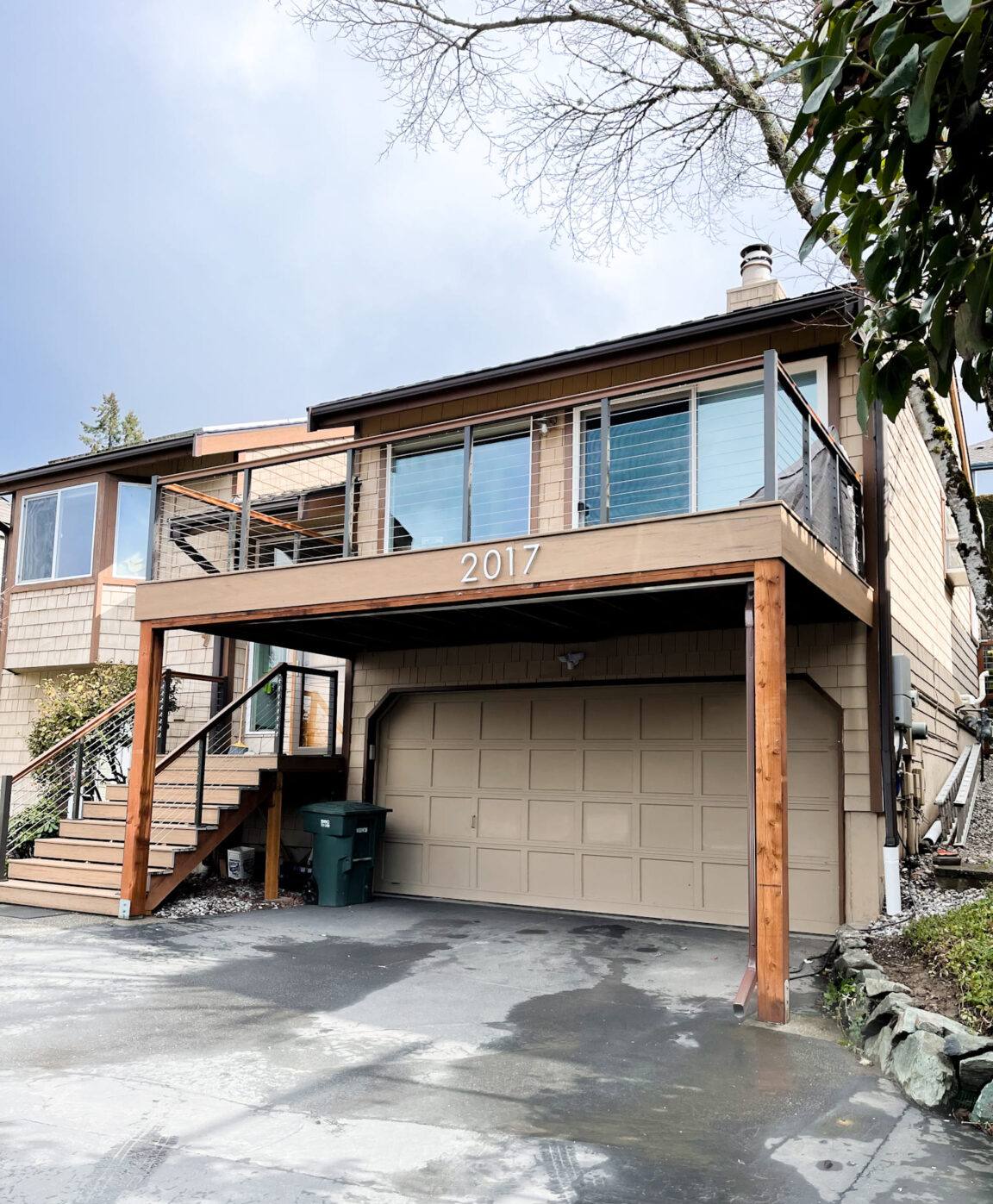
What a Correct Deck Build Involves in This Climate
A deck is really three systems stacked on top of each other: the footings and framing that carry the load, the decking surface people actually walk on, and the railing and hardware that hold it all together and keep it safe. Each one needs different attention in a coastal, high-UV, high-wind environment.
Footings and Framing
This is the part nobody sees once the deck is finished, and it's also the part that determines whether the structure survives a bad storm season. Footings need to be sized and set to local frost-free depth and soil-bearing requirements, ledger boards need proper flashing so water can't wick into the house rim joist, and joist spacing needs to match the actual load the deck will carry — not just the minimum the lumber yard suggests. Undersized or poorly fastened framing is the most common reason decks fail structurally, and it's almost never visible until something goes wrong.
Decking Surface
Whatever material sits on top has to handle direct sun for most of the day, near-constant humidity, and regular soaking rain. Materials that aren't rated for that combination will fade, warp, splinter, or grow mildew faster than the manufacturer's literature suggests, because most published performance data isn't tested against Gulf Coast conditions specifically.
Railings and Hardware
Every screw, bracket, and post anchor on an exposed deck is fighting corrosion from day one. The wrong fastener spec is a slow, quiet failure — it looks fine for a year or two, then starts bleeding rust stains and losing grip right when you need it most.
Choosing the Right Decking Material
There's no single "best" decking material — there's a best fit for your budget, your maintenance tolerance, and how much direct sun the deck gets. Here's how the common options compare for a Tara backyard specifically.
| Material | Upfront Cost | Maintenance | How It Handles This Climate |
|---|---|---|---|
| Pressure-treated wood | Lowest | Annual sealing/staining recommended | Affordable and repairable, but prone to cupping and graying without upkeep; needs re-sealing more often here than in drier climates |
| Composite decking | Mid to upper-mid | Occasional wash, no sealing | Resists rot and doesn't need staining; quality matters — cheaper composites can fade or flex more in constant heat |
| PVC/capped polymer | Highest | Lowest — soap and water | Best moisture and fade resistance of the common options; higher cost but least sensitive to sun and humidity over time |
| Tropical hardwood (e.g., ipe) | High | Periodic oiling to maintain color | Naturally dense and durable, but requires disciplined maintenance to prevent graying and surface checking |
We'll walk through this trade-off honestly during your estimate rather than pushing whatever has the best margin. If you want the lowest-maintenance option and the budget allows it, PVC or a quality composite is usually the right call for a deck that sits in full Florida sun most of the day. If budget is the priority and you're willing to reseal on a schedule, treated wood is still a legitimate choice — it just needs a homeowner who'll keep up with it.
Fasteners and Hardware for Salt Air Exposure
This is the detail that separates a deck built for this region from one built to a generic spec. Standard galvanized fasteners can corrode faster than expected in coastal Florida air, especially in fastener heads and cut ends where the coating is thinnest. For decks in this area, we spec stainless steel or coated fasteners rated specifically for coastal and ACQ-treated lumber contact, along with structural connectors (joist hangers, post bases, hurricane ties) rated for the same exposure. It costs a little more upfront. It's a lot cheaper than replacing rusted-out hardware — or worse, discovering a compromised connection — five years in.
Wind Resistance and Structural Attachment
Manatee County sits in a hurricane-exposed wind zone, and an elevated deck or one attached to the house is effectively an extension of the home's structure — it needs to be engineered and fastened accordingly. That means proper ledger-to-house attachment (not just nails into siding), adequately sized and spaced post anchors, joist hangers rated for the load, and railing posts that are actually through-bolted rather than just screwed to the rim joist. None of this is optional upgrading — it's what a code-compliant, storm-ready deck requires in this part of Florida, and it's the same reasoning that goes into every siding and exterior project we do here.
Permits and Local Code Considerations
Most new decks and significant deck replacements in Manatee County require a building permit, and the requirements typically cover footing depth, structural connections, guardrail height, and baluster spacing for fall protection. Permit requirements and inspection steps can vary depending on the specifics of your property and whether the deck is attached to the house, so we handle the permit process and coordinate inspections as part of the job rather than leaving that on the homeowner. It's one less thing to track down, and it means the finished deck is actually documented as code-compliant — which matters for insurance and resale down the road.
Our Process
The way we approach a deck project in Tara is the same whether it's a full rebuild or a first-time addition:
- Site visit and honest assessment. We look at sun exposure, drainage, existing structure (if there is one), and how the space actually gets used before recommending anything.
- Material and design conversation. We walk through the trade-offs in plain terms — cost, maintenance, and how each option holds up to Florida sun and humidity — so you're choosing based on real information, not a sales pitch.
- Written estimate. Scope, materials, and pricing spelled out before anything is scheduled.
- Permitting. We pull and manage the permit and coordinate required inspections.
- Build. Framing and structural connections first, with attention to flashing and fastener spec, then decking and railings.
- Final walkthrough. We go over the finished deck together, including basic care guidance for whatever material you chose.
Maintaining a Deck in Bradenton's Sun and Humidity
Even low-maintenance materials benefit from a little seasonal attention here. A simple annual routine goes a long way toward protecting the investment:
- Sweep and hose off debris, pollen, and organic buildup regularly — it holds moisture against the surface
- Check railing posts and stair connections for looseness at least once a year
- Inspect fastener heads for early rust staining, which signals it's time to address hardware before it spreads
- Reseal or restain wood decking on the schedule the product calls for — don't wait for visible graying
- Clear standing water and check that gaps between boards haven't closed up from swelling, which traps moisture underneath
- After any major storm, do a quick visual check of post bases and ledger attachment for movement
Why Hiring a Crew That Already Works Tara Matters
A lot of deck problems we get called to fix started with a contractor who did solid work — just not work specced for this climate. Framing details, fastener choices, and structural attachment that are perfectly adequate in a drier, calmer climate fall short against Gulf Coast sun, humidity, and wind. A crew that regularly builds and repairs decks around Bradenton and the rest of Manatee County already knows which fastener grades hold up, how local permitting actually works in practice, and where the common failure points are on a deck that's been through a few Florida summers and storm seasons. That local experience shows up in the parts of the job you can't see once it's finished — which, for a deck, is exactly where it counts most.
If you're planning a new deck or considering replacing one that's showing its age, we're happy to come take a look and give you a straightforward, no-pressure estimate — no obligation, just an honest read on what your space needs.