 Bradenton Siding
 Custom Decks Built for Village of the Arts' Distinct Homes
Village of the Arts is one of the more distinctive pockets of Bradenton — a walkable neighborhood of older bungalow and cottage-style homes, many of them converted into working studios, galleries, and live-work spaces. That character shapes what a good deck project looks like here. A deck in this neighborhood usually needs to do double duty: it has to function as real outdoor living space for a small-lot home, and it has to look like it belongs next to a house with real architectural personality, not like a generic add-on bolted to the back door.
We build custom decks for homeowners throughout Bradenton and Manatee County, and the work we do in Village of the Arts specifically accounts for smaller lot footprints, older framing and foundations, and an owner base that often cares as much about how the space looks and feels as it does about square footage. Whether the deck is a quiet spot off a kitchen, a display area for showing work, or simple space to sit outside in the evening, the build has to hold up to Gulf Coast weather while fitting the scale and style of the home it's attached to.
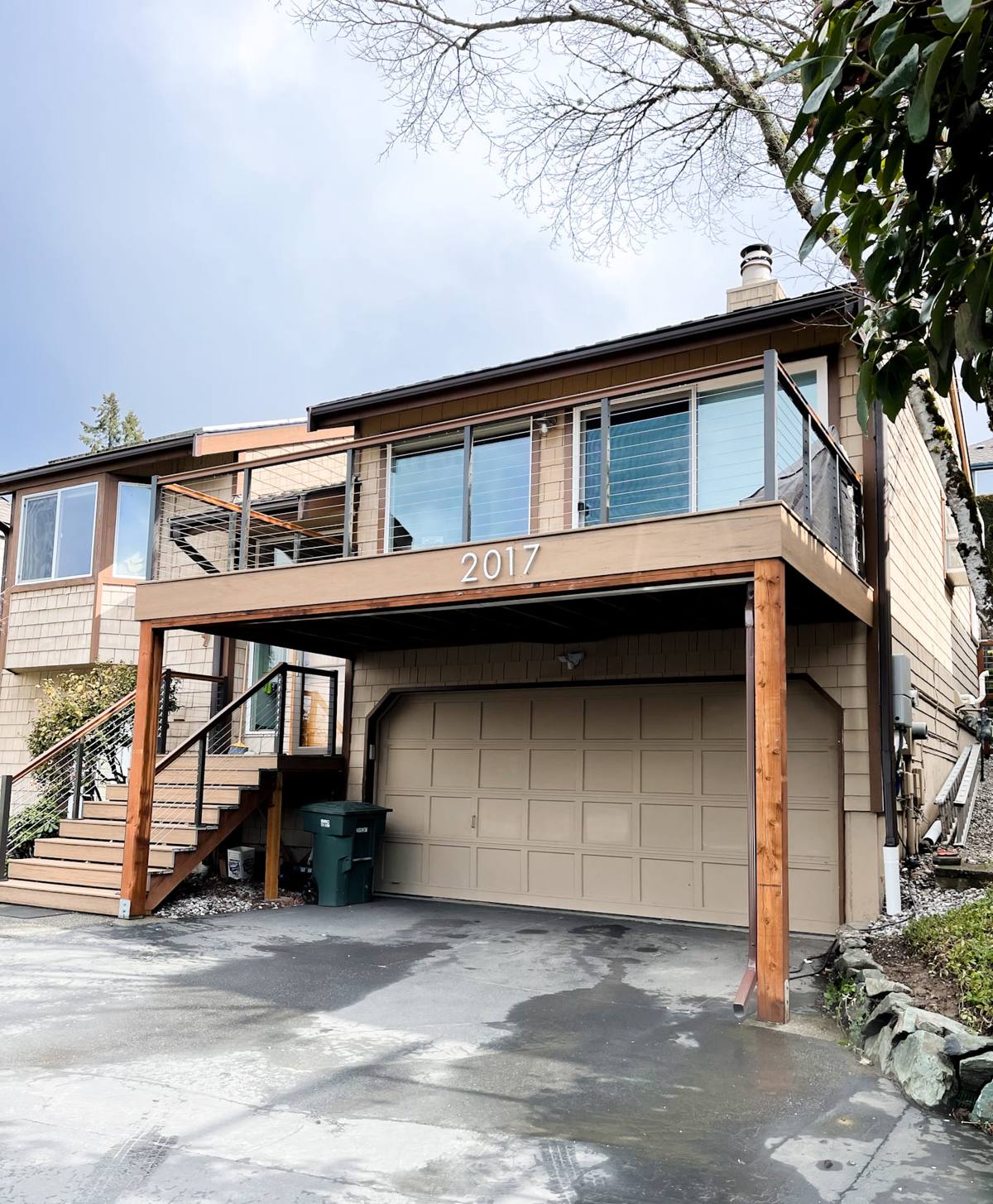
What Bradenton's Climate Actually Does to an Outdoor Deck
Manatee County sits in a climate that is genuinely hard on exterior structures, and a deck is one of the most exposed things on a property. A few specific stresses matter most for decking:
- Hurricane-force wind: Storm season brings sustained high winds and gusts that put real uplift and lateral load on ledger connections, posts, and railings — not just on the roof.
- Intense, year-round UV: Florida sun is harsher and more constant than most of the country's. UV breaks down wood fibers, fades finishes, and degrades lower-grade composite decking faster than manufacturers' national warranty language usually implies.
- Wind-driven rain: Storms here rarely fall straight down. Rain gets pushed sideways into ledger boards, fastener heads, and any gap where water can find a way behind the decking surface.
- Salt air: Even a few miles inland from the coast, salt in the air accelerates corrosion on fasteners, brackets, and any hardware that isn't rated for a marine or coastal environment.
None of these are exotic problems — they're the normal operating conditions for any deck built in this part of Florida. The difference between a deck that lasts and one that starts failing in five years usually comes down to whether the builder actually designed and fastened it for these conditions, or just used standard framing details that work fine in a drier, calmer climate.
Choosing a Decking Material That Actually Holds Up Here
Matching material to the house and the climate
There's no single "best" decking material — the right choice depends on budget, how much upkeep the homeowner wants to take on, and how the material will perform under constant sun and coastal humidity. For a Village of the Arts home, we also factor in appearance, since these are homes where curb appeal and character matter.
| Material | Upfront Cost | Maintenance | Heat & UV Performance | Typical Lifespan |
|---|---|---|---|---|
| Pressure-treated wood | Lowest | High — annual sealing/staining | Fades and checks without upkeep | 10–15 years with maintenance |
| Tropical hardwood | High | Moderate — periodic oiling | Naturally dense, handles UV well | 20–25 years with care |
| Composite decking | Mid–High | Low — occasional cleaning | Good, but quality varies by product line | 25–30 years |
| PVC/capped decking | Highest | Lowest — rinse only | Best resistance to fade and moisture | 25–30+ years |
We don't push one material on every homeowner. What we do insist on is being straight about trade-offs: cheap composite boards without a real cap can still fade and stain in Florida sun; wood needs a realistic maintenance commitment or it will look tired within a few seasons; and even premium materials fail early if the substructure underneath them wasn't built to shed water and resist wind uplift. The board is only as good as what it's fastened to.
Structural Details That Matter on Older Bungalow-Style Homes
A lot of homes in Village of the Arts predate modern deck-attachment standards, which means the ledger connection — where the deck ties into the house — needs extra attention rather than a standard assumption. On older framing, we check what we're actually fastening into before we ever attach a ledger board, because attaching a new deck to deteriorated or undersized framing is one of the most common causes of deck failure anywhere, not just in older neighborhoods.
What we look at before building
- Condition of the existing rim joist or wall framing at the ledger location
- Proper flashing so water is directed away from the house, not trapped behind the ledger
- Footing depth and post spacing suited to Manatee County's sandy soil conditions
- Hardware rated for coastal exposure — standard interior-grade fasteners corrode quickly here
- Railing and stair connections engineered for wind load, not just for looks
On small lots typical of this neighborhood, we also pay close attention to how the deck's footprint and step locations interact with property lines, existing landscaping, and the home's original architectural lines — the goal is a deck that reads as part of the house, not an afterthought.
Our Deck-Building Process, Start to Finish
Every custom deck we build follows the same basic sequence, though the details shift based on the home:
- On-site consultation: We walk the property, look at the existing structure, discuss how the space will actually be used, and take rough measurements.
- Design and material selection: We put together a layout and material recommendation based on budget, maintenance preference, and how the deck should relate to the house.
- Permitting: We handle the permit application with Manatee County, including any engineering documentation needed for wind-load compliance.
- Site prep and footings: Footings are dug and poured to the depth required for the soil conditions and structural load.
- Framing: The substructure goes in first, with ledger flashing, joist hangers, and hardware selected for coastal exposure.
- Decking, railing, and stairs: Surface material and railing system are installed per the approved design.
- Inspection: The completed structure is reviewed against permit requirements before final sign-off.
- Final walkthrough: We go over the finished deck with the homeowner, including care instructions specific to the material chosen.
Permits, Wind-Load Engineering, and Manatee County Requirements
Decks attached to a home in Manatee County require a building permit, and for good reason — an improperly attached deck is a genuine safety hazard in a region that sees hurricane-strength wind events. Permitted work means the ledger attachment, footing depth, post sizing, and railing system are all reviewed against Florida's wind-load requirements before the county signs off. It also means there's an official inspection record tied to the structure, which matters for insurance and for resale down the road.
We handle the permitting process as part of the build rather than treating it as an optional extra. Skipping permits on deck work is a common shortcut some contractors take to move faster or bid lower, but it leaves the homeowner holding the liability if something is built incorrectly and a storm exposes the weakness.
Deck Maintenance Checklist for Gulf Coast Homes
Even a well-built deck needs some routine attention in this climate. A short seasonal checklist goes a long way toward protecting the investment:
- Rinse salt residue and debris off the surface and between boards every few weeks, more often in windy or storm-heavy stretches
- Inspect visible fasteners and brackets annually for rust or corrosion, especially near the ledger
- Check wood decking for soft spots, cracking, or graying that signals it's due for cleaning and resealing
- Confirm gaps between boards are clear so water can drain instead of pooling
- Look underneath the deck once or twice a year for signs of moisture buildup or pest activity
- After any major storm, do a quick visual check of railings, stairs, and post connections before heavy use
Composite and PVC decking cut down on most of this list, but no material eliminates the need for a periodic look — sun, salt, and storms don't take a break for low-maintenance marketing claims.
Why Hiring a Crew That Already Works in Village of the Arts Matters
A deck contractor who regularly works this neighborhood already understands the practical realities: the smaller lot sizes, the older home framing, the tight setbacks, and the fact that homeowners here often care about design cohesion as much as function. That familiarity shortens the design conversation and reduces surprises once construction starts, because we're not guessing at what an older Bradenton bungalow foundation or framing situation typically looks like — we've already seen it.
Local experience also means faster response if a warranty question or minor adjustment comes up after the project is finished, and a better read on how Manatee County's permitting and inspection process actually runs in practice, not just on paper. For a neighborhood where the outdoor space often becomes an extension of how the home is used and shown, that local knowledge is part of what makes the finished deck feel like it was built specifically for the house — because it was.
If you're considering a custom deck for your Village of the Arts home, we're happy to walk the property, talk through material and design options, and give you a straightforward, no-pressure estimate. Use the form below to get started.