 Bradenton Siding
 Why Mill Creek Roofs Wear Out Faster Than the Brochure Says
Roofs in Mill Creek don't fail because homeowners neglected them. They fail because Manatee County asks more of a roof than most manufacturers' warranty language accounts for. Between hurricane-force wind events, near-constant UV exposure, wind-driven rain that finds every weak seam, and salt-laden air drifting in off the Gulf, a roof here is under load almost every day of the year, not just during a named storm.
UV breaks down asphalt shingle oils and granule adhesion years ahead of the schedule you'd see in a drier, cooler climate. Salt air accelerates corrosion on exposed fasteners, flashing, and any metal component that isn't rated for coastal exposure. And wind-driven rain doesn't need a hurricane to cause damage — a strong afternoon thunderstorm pushing rain sideways will find any shingle with lifted tabs or any flashing detail that was installed to minimum code rather than to hold up here.
None of that means every roof in the neighborhood needs replacing on the same clock. It means the decision point — repair versus replace — should be made by someone who's actually looked at what Bradenton's climate does to a roof over time, not just checked the age against a generic chart.
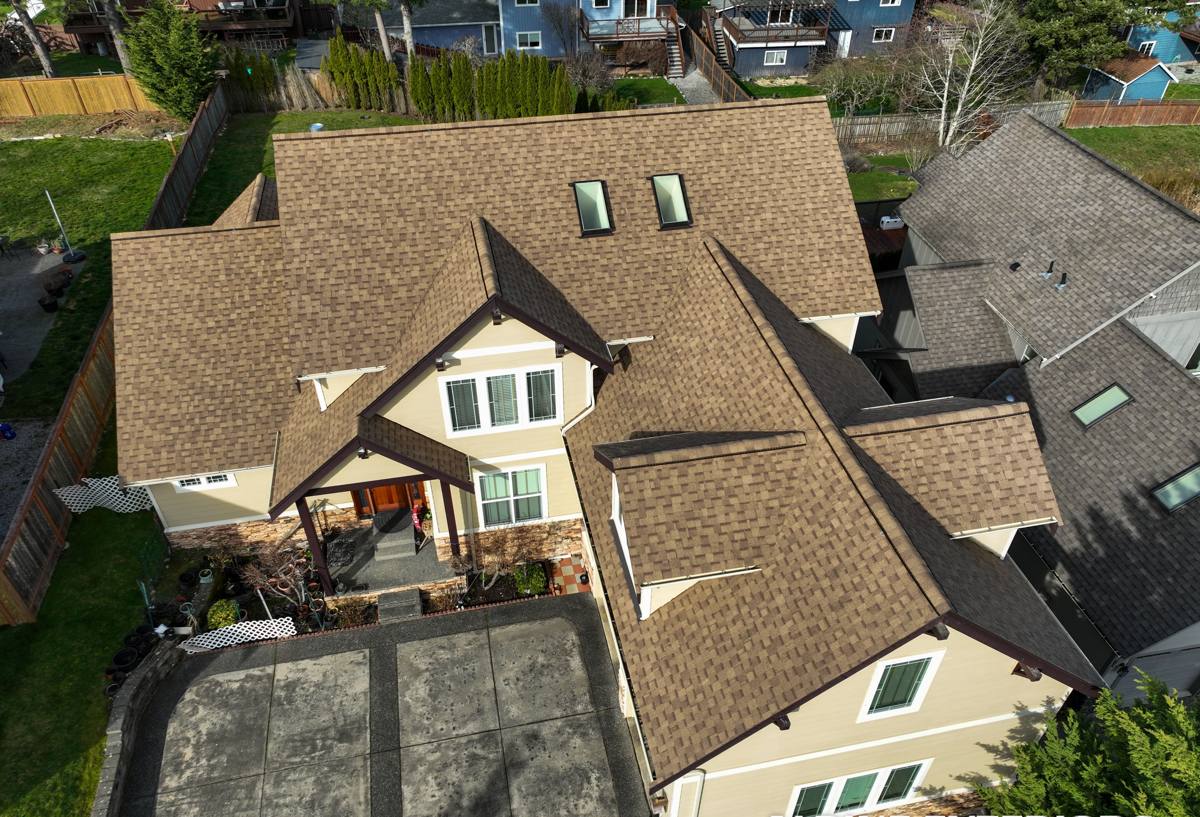
Signs a Mill Creek Roof Is Past the Point of Repair
- Granule loss heavy enough to see bald patches or granules collecting in gutters
- Shingles that are curling, cupping, or have lost their seal along multiple courses, not just one spot
- Soft or spongy decking felt underfoot during an inspection, indicating moisture has reached the wood
- Repeated leaks in different locations after previous patch repairs
- Visible rust streaking or corrosion at flashing, vents, or fastener heads
- A roof approaching or past the age range where insurers start requiring a wind mitigation or four-point inspection before renewing coverage
If two or more of these apply, a full replacement usually costs less over five years than another round of patch repairs — repairs that are treating symptoms while the deck underneath keeps absorbing moisture.
What a Correct Replacement Actually Involves
Full Tear-Off, Not Overlay
A second layer over old shingles hides problems instead of fixing them, and it prevents anyone from inspecting the decking underneath. A proper replacement strips the roof to the deck so every board can be checked and any water-damaged plywood or OSB gets replaced before anything new goes down.
Underlayment That Matches the Exposure
Given how much wind-driven rain this area sees, underlayment choice isn't a place to cut corners. A synthetic underlayment with taped seams, plus self-adhering ice-and-water-shield-style membrane at valleys, eaves, and penetrations, gives the roof a second line of defense if wind ever lifts a shingle edge during a storm.
Flashing Done Right
Most roof leaks in this region trace back to flashing, not the field shingles themselves. Chimneys, skylights, sidewall transitions, and vent pipes all need new flashing during a replacement — reusing old flashing to save a step is one of the most common shortcuts that leads to a callback within a year or two.
Fastening Built for Wind Uplift
Florida's building code sets minimum nailing patterns and fastener counts specifically because of wind uplift risk. A correct install follows the nailing pattern for the local wind zone, not the manufacturer's bare minimum for a calmer climate — this is one of the biggest factors in whether a roof holds its shingles during a bad wind event.
Ventilation That Actually Balances
Intake and exhaust ventilation need to work together. Under-ventilated attics trap heat and moisture, which shortens shingle life from underneath and can void manufacturer warranties. This gets checked and corrected as part of the replacement, not treated as an afterthought.
Comparing Roofing Materials for a Coastal Manatee County Home
| Material | Wind & Storm Performance | Maintenance | Typical Lifespan Here |
|---|---|---|---|
| Architectural asphalt shingle | Good with proper nailing pattern and rated shingle class | Periodic inspection; granule loss accelerated by UV and salt air | 15–22 years in this climate |
| Standing seam metal | Strong uplift resistance when properly fastened | Low; check fastener and coating condition periodically | 30–50 years with proper coastal-rated fasteners |
| Concrete or clay tile | Heavy and wind-resistant when correctly attached to deck | Occasional cracked-tile replacement; underlayment is the real wear point | Decades on the tile itself; underlayment often needs earlier attention |
There's no universally "best" material here — the right choice depends on the home's structure, the roof pitch, budget, and how long the homeowner plans to stay in the house. What matters more than the material itself is whether the installation details — nailing pattern, flashing, underlayment, ventilation — are done correctly underneath it.
A Note on Underlayment and Moisture Behavior
Some lower-cost felt underlayments simply don't hold up to the moisture cycling this climate puts a roof through — repeated wetting and drying, high humidity, and intense heat. Our standard is to use synthetic or self-adhering membrane products in the areas most exposed to wind-driven rain, because the cost difference is small relative to what a leak costs to repair later.
How Our Process Works
- On-site inspection. We walk the roof, check the decking where accessible, and look at flashing, vents, and any existing leak points before recommending anything.
- Written proposal. Material options, scope of work, and pricing laid out clearly — no vague line items.
- Permitting. We handle the permit process with the county so the job is inspected and documented properly, which also matters for insurance and future resale.
- Tear-off and deck inspection. Old roofing comes off, decking gets checked board by board, and any needed repairs are itemized before covering it back up.
- Underlayment, flashing, and material installation. Done to the wind zone's nailing and fastening requirements, not the bare minimum.
- Final walk-through and county inspection. We review the finished roof with the homeowner and make sure it passes required inspections.
- Cleanup. Magnetic sweep for nails, debris removal, and a final site check.
Timing a Replacement Around Hurricane Season
Scheduling matters more here than in most parts of the country. Roofing crews and material suppliers get busy fast once storm season approaches, and a roof that's already showing wear is a bigger liability sitting through a season of tropical activity than one that's already been replaced. Where possible, we recommend homeowners plan replacements in late winter or spring, ahead of the seasonal rush, rather than waiting until a storm forces the issue.
That said, if a roof is actively failing, we don't tell people to wait for a "better" time of year — a compromised roof heading into wind-driven rain season is a bigger risk than the inconvenience of scheduling around it.
Why a Crew That Already Works in Mill Creek Matters
Roofing crews familiar with this specific area move through the county permitting process faster because they've done it before and know what inspectors look for locally. They also know which flashing and fastening details tend to cause callbacks in homes built to older code cycles versus newer ones, and they're not guessing at wind zone requirements from a spec sheet — they're applying what's already worked on nearby roofs facing the same salt air and storm exposure.
There's also a practical side: a crew already working in the neighborhood can usually get material delivered and scheduled more efficiently than one traveling in from farther away, which matters when a homeowner has a leak that needs addressing before the next storm system moves through.
Choosing a Contractor for a Job Like This
- Ask whether the quote includes full tear-off or if overlay is being offered as a cheaper alternative
- Confirm the underlayment and flashing materials specified, not just the shingle or metal brand
- Verify the contractor is licensed and insured, and ask to see proof rather than taking it on faith
- Ask who pulls the permit — it should be the contractor, not left to the homeowner
- Get the nailing pattern and fastening approach in writing if wind performance is a concern
- Ask what happens if decking damage is found once the old roof is off, and how that's priced
A straightforward contractor answers these questions without hesitation. Vague answers on any of these points are worth treating as a warning sign, not a detail to skip over.
After the Replacement: What Keeps a New Roof Performing
A new roof still needs attention in this climate. A twice-yearly visual check — especially after any major storm — for lifted shingles, debris buildup in valleys, or granule loss helps catch small issues before they become leaks. Keeping gutters clear reduces water backing up under the roof edge during heavy rain, and trimming back overhanging branches limits both physical damage risk and the debris that traps moisture against the roof surface.
None of this requires a service contract or constant monitoring — it's the kind of basic upkeep that extends the life of a roof that was installed correctly in the first place.
If your Mill Creek home's roof is showing its age or you're just weighing repair versus replacement, we're glad to take a look and give you a straight answer. Fill out the form below for a free, no-pressure estimate — there's no obligation, just an honest assessment of where your roof stands.