 Bradenton Siding
 Storm Damage Roof Repair Built for Samoset's Climate
Samoset homes sit in one of the more exposed corners of Manatee County, close enough to the coast to catch salt-laden air and squarely in the path of every tropical system that crosses the Gulf or barrels up from the south. Between hurricane-force wind events, near-daily summer thunderstorms, and relentless UV exposure the other ten months of the year, roofs here take a beating that homes further inland simply don't experience at the same intensity. Storm damage roof repair in this neighborhood isn't a one-size-fits-all job — it requires knowing how Bradenton's specific weather pattern attacks a roof and repairing it in a way that holds up to the next round, not just the last one.
A roof that looks fine from the driveway can still be hiding lifted shingles, compromised flashing, or saturated decking underneath. Getting storm damage repaired correctly the first time protects the rest of the home — the attic insulation, the ceiling drywall, the electrical runs, and everything else a leak can ruin once it gets past the roof deck.
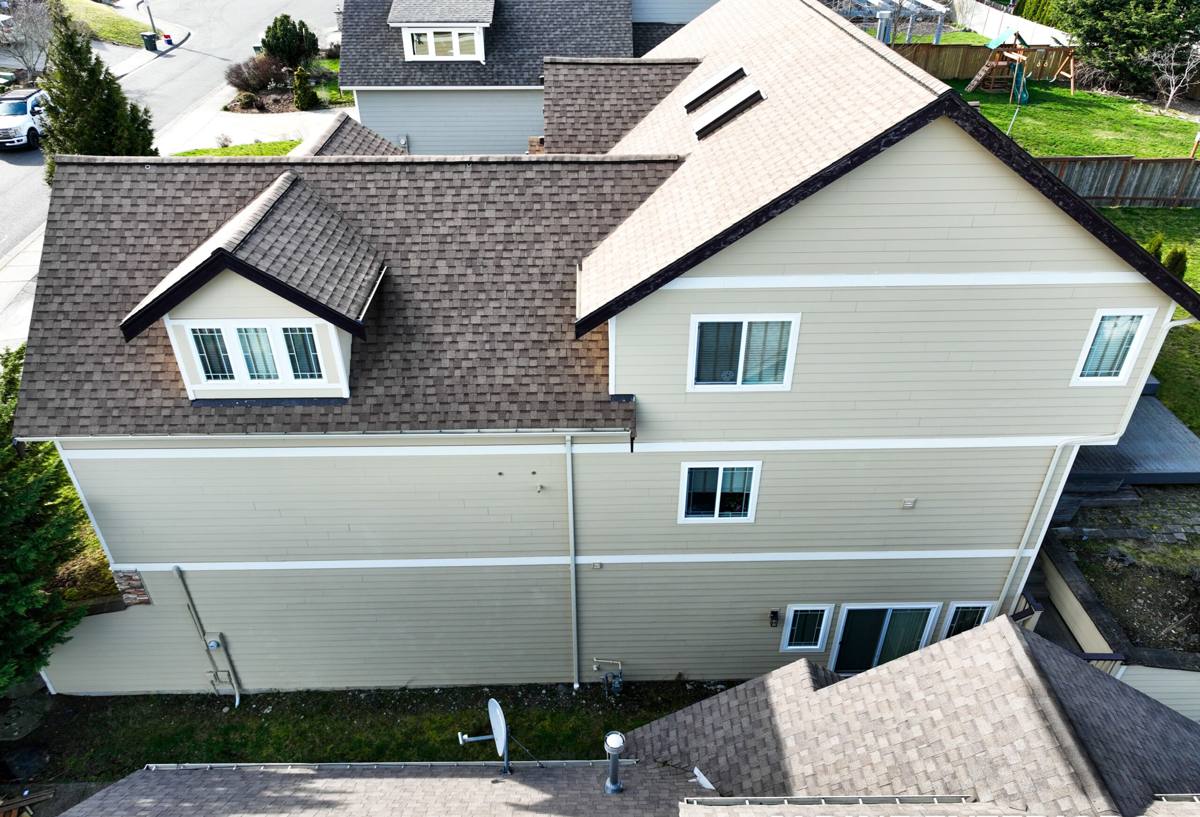
What Bradenton and Manatee County Storms Actually Do to a Roof
Wind-Driven Damage
Hurricane and tropical-storm-force winds don't just push against a roof — they get underneath it. Wind lifts shingle edges, pulls fasteners loose, and can peel back entire courses of roofing in a single gust cycle. Once a shingle's seal is broken, it rarely reseals on its own, which means a roof can look mostly intact after a storm while still being wide open to the next rain.
Wind-Driven Rain
Bradenton's storms rarely come straight down. Rain driven sideways at 40, 60, or 90+ mph finds every gap in flashing, every worn pipe boot, and every seam that wind has already loosened. This is why interior leaks often show up at odd spots — a wall-ceiling corner, above a window — that don't sit directly under any obvious roof damage.
Hail and Debris Impact
Hail is less frequent here than in some parts of the country, but wind-thrown debris — palm fronds, tree limbs, roofing gravel from neighboring properties — causes similar impact damage: bruised or fractured shingle mat, dented metal flashing, and granule loss that accelerates aging on the spots it hits.
UV and Salt Air Between Storms
What makes Samoset roofs different from a roof in, say, Ohio, is that storm damage doesn't happen to a fresh roof — it happens to a roof that's already been softened by year-round UV breakdown and salt air corrosion on metal components. A roofing system weakened by sun exposure and coastal air fails faster and more severely when wind and rain hit it, which is part of why we inspect the whole roof's condition, not just the storm-damaged section, before recommending a repair scope.
Signs Your Samoset Roof Has Storm Damage
- Missing, cracked, curled, or creased shingles, especially near ridges, edges, and valleys
- Granules collecting in gutters or at downspout outlets after a storm
- Visible gaps or lifted metal at flashing around chimneys, skylights, and roof-to-wall transitions
- Soft or spongy spots when walking the roof (a sign the decking underneath is wet)
- Water stains, discoloration, or sagging on interior ceilings or walls
- Bent, torn, or missing pipe boots and vent caps
- Debris damage — dented metal, punctured underlayment visible at shingle gaps
- A musty smell in the attic, which often shows up before any visible ceiling stain does
Some of these are obvious from the ground. Others — the soft decking, the lifted flashing seam, the granule loss on a north-facing slope — only show up on a proper roof-level inspection, which is why a drive-by look isn't enough after a real wind or rain event.
What a Correct Storm Damage Repair Involves
Full Roof Assessment, Not Just the Obvious Spot
We start by inspecting the entire roof, not just the area where a leak showed up inside. Wind damage is frequently worse on one slope than another, and a repair that only addresses the visible problem while leaving a compromised section untouched just delays the next leak.
Decking Check
If water has gotten past the shingle layer, the plywood or OSB decking underneath may be wet, soft, or delaminating. Repairing shingles over damaged decking doesn't fix anything — it just re-covers a problem that will keep spreading. Any compromised decking gets identified and replaced before new roofing goes down over it.
Flashing and Penetration Repair
Flashing around chimneys, skylights, vents, and roof-to-wall transitions is one of the most common failure points in wind-driven rain events. These areas get re-sealed or replaced with attention to how water actually moves across the roof during a sideways rain, not just a straight-down one.
Matching Materials and Proper Tie-In
A patch that doesn't tie in correctly with the surrounding roofing — mismatched shingle profile, exposed nail heads, a seam that isn't properly layered under the course above it — becomes the next leak point. We match materials as closely as possible and install repairs using proper shingle layering and fastening technique so the repaired section performs like the rest of the roof, not like a visible patch job.
Ventilation and Moisture Check
Because Samoset's humidity and heat don't let up for most of the year, we also check attic ventilation while we're up there. A roof that traps moisture heals slower after storm damage and is more prone to the kind of hidden rot that turns a simple repair into a bigger one down the line.
Repair or Replace? How We Help You Decide
| Factor | Favors Repair | Favors Replacement |
|---|---|---|
| Roof age | Under 12-15 years, otherwise sound | Nearing or past expected lifespan |
| Extent of damage | Isolated to one section or slope | Widespread across multiple slopes |
| Decking condition | Dry, solid where inspected | Multiple areas of wet or soft decking |
| Prior repair history | First or second repair | Long history of recurring leaks/patches |
| Material availability | Matching shingles still available | Discontinued color or profile |
| Insurance scope | Adjuster scopes a repair | Adjuster scopes full slope or full roof |
We'll give you an honest read on which side of that table your roof falls on. A roof with isolated, recent damage and sound decking is usually a straightforward repair. A roof with wet decking in several spots, or one that's already near the end of its service life, often makes more sense to replace rather than keep patching — we'll tell you which situation you're in and why, not just default to the bigger job.
Our Process, Start to Finish
- Inspection. We walk the full roof, check the attic from inside where accessible, and document what we find with photos.
- Written scope and estimate. You get a clear explanation of what's damaged, what needs repair, and what it costs — no vague line items.
- Insurance coordination (if applicable). If you're filing a claim, we can meet your adjuster on-site and provide documentation that reflects what we actually found.
- Repair work. Decking replacement where needed, flashing repair, matched shingle installation, and a final check of ventilation and surrounding areas.
- Final walkthrough. We show you the completed work and confirm the repair addresses what was found in the inspection.
Why It Matters to Hire a Crew That Already Works Samoset
Storm damage repair done by a crew unfamiliar with Manatee County's wind and rain patterns tends to under-scope the job — patching what's visible without checking the areas most likely to fail next in a coastal wind event. A crew that regularly works Samoset and the surrounding Bradenton area knows which roof styles and ages are common here, how local building code applies to storm repairs, and how to spot the damage patterns specific to wind-driven rain and salt-air corrosion rather than treating every repair like a generic hail claim from somewhere inland.
Local availability matters too. After a significant storm, response time is often the difference between a contained repair and a roof that sits open to more rain while you wait for an out-of-town crew to get scheduled. Being established in this area means we can typically get eyes on storm damage faster and follow up if anything needs adjustment after the repair settles in.
Materials and Standards We Use
We repair using shingle and flashing materials rated for Florida's wind zone requirements, matched as closely as possible to your existing roof. Where an exact match isn't available due to discontinued colors or profiles, we'll walk you through the closest options and where on the roof a slight variation will be least noticeable. Our standard is to repair to a level that holds up to the next storm, not just to get a roof back to "not leaking today" — that means proper nailing patterns, correctly layered flashing, and decking that's solid before anything new goes over it.
Get a Free, No-Pressure Estimate
If your Samoset home has visible storm damage, a leak that appeared after a recent weather event, or you just want a roof checked out before the next system rolls through, we're happy to take a look. Fill out the form below for a free estimate — no pressure, just a straight answer on what your roof needs.