 Bradenton Siding
 Siding Repair Built for Whitfield Estates Conditions
Whitfield Estates is one of the older, more established neighborhoods in the Bradenton/Sarasota area, with mature tree canopy, homes that have gone through decades of Gulf Coast weather, and a mix of original construction and updated remodels. That combination creates a specific repair profile: siding here has usually taken more cumulative sun and moisture exposure than siding on a newer subdivision across town, and it often sits under or near large trees that add their own wear pattern on top of the weather.
Siding repair in a neighborhood like this isn't just about patching whatever's visibly wrong. It's about understanding why that section failed in the first place, whether the same failure is quietly developing elsewhere on the house, and whether the repair material will actually match and hold up next to decades-old siding. That's a different job than repairing siding on a five-year-old build, and it's worth hiring a crew that treats it that way.
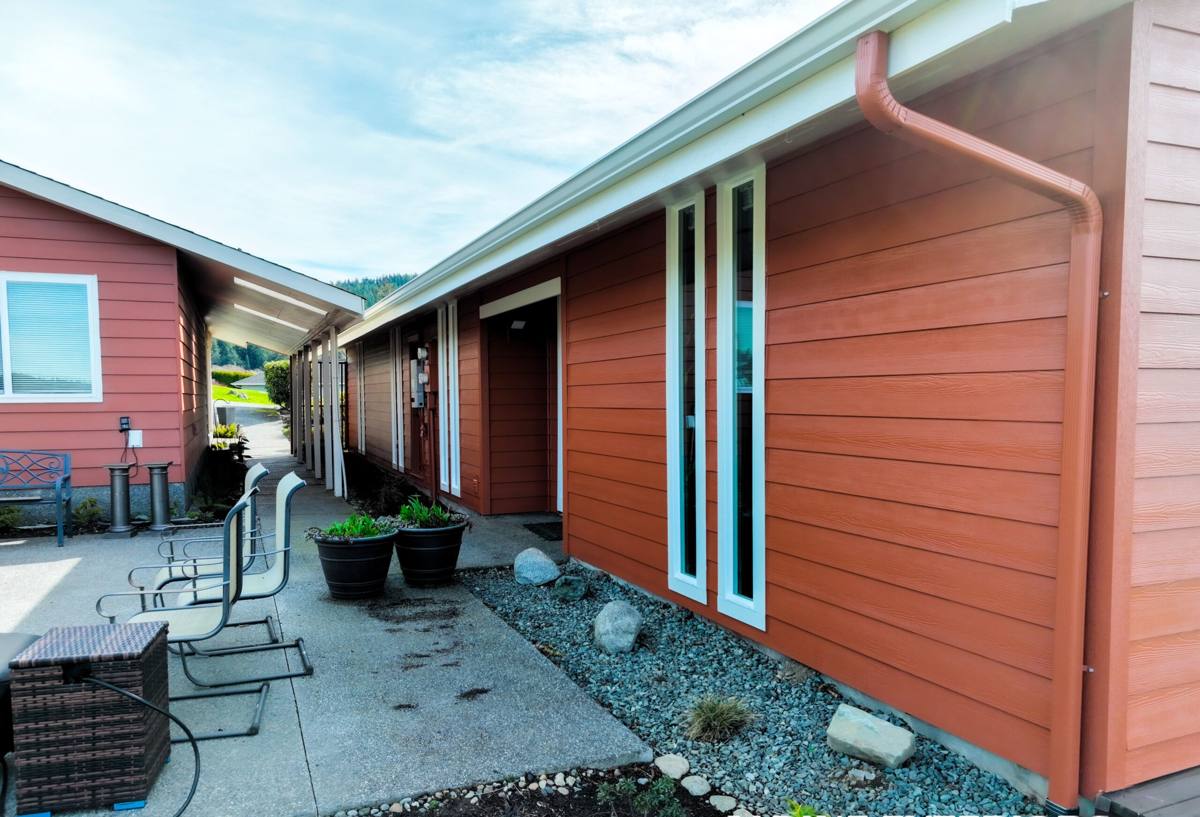
What Manatee County's Climate Does to Older Siding
Every siding repair call in this area is shaped by the same set of stressors, and Whitfield Estates gets all of them:
- Hurricane-force wind events that can crack, lift, or tear loose siding panels and trim, especially on sections that were already weakened by rot or old fastener failure.
- Intense, near year-round UV exposure that breaks down paint film, caulk, and in some materials the substrate itself, faster than in most of the country.
- Wind-driven rain that doesn't just wet the siding surface — it drives moisture sideways into laps, joints, and penetrations that a calm-weather rain would never reach.
- Salt air drifting off Sarasota Bay and the greater coastline, which accelerates corrosion on fasteners, flashing, and any exposed metal trim, and speeds up the breakdown of lower-grade siding materials.
On an older, established property, add a fifth factor: mature landscaping. Overhanging limbs keep siding shaded and damp longer after storms, drop debris that can gouge or trap moisture against a wall, and sometimes rub directly against a section of siding for years before anyone notices the wear line it leaves behind.
Why Older Homes Show Damage Differently
A newer home's siding failure is usually isolated — one bad panel, one poorly sealed penetration. An older home in Whitfield Estates is more likely to show compounding damage: a decade-old caulk failure that's been letting moisture in slowly, combined with sun-baked, brittle material around it, combined with a fastener pattern that's started to corrode. A repair that only addresses the visible crack or gap without checking what's happening underneath and around it tends to fail again within a season or two.
Signs Your Siding Needs Repair, Not Just a Look
Homeowners often wait until damage is obvious, but several of the most damaging problems start quiet. Watch for:
- Visible cracking, splitting, or buckling in individual panels or boards
- Soft or spongy spots when you press on the siding, especially near the bottom courses or trim
- Paint that's peeling, bubbling, or failing faster in one section than the rest of the house
- Gaps opening up at seams, corners, or where siding meets windows and doors
- Staining or discoloration that suggests water is tracking behind the siding rather than shedding off it
- Missing, loose, or visibly corroded fasteners and trim pieces
- A musty smell or interior wall staining on the room behind a suspect section of exterior wall
Any one of these can be a small fix caught early or a much larger repair if it's been developing for a year or two unnoticed. That's the core argument for a real inspection rather than a quick patch quote over the phone.
What a Correct Siding Repair Actually Involves
A repair that's done right is not just "cut out the bad piece, nail in a new one." It involves several steps that get skipped by crews trying to move fast:
1. Diagnose the Cause, Not Just the Symptom
Cracked siding next to a window is sometimes just impact damage. It's also sometimes the result of a flashing failure that's been feeding water into that spot for years. Repairing the panel without correcting the water source means paying for the same repair again.
2. Check for Hidden Moisture and Substrate Damage
Before any new material goes up, the sheathing and framing behind the damaged section need to be checked. If there's rot underneath, patching over it traps the problem rather than solving it.
3. Match Material, Profile, and Reveal
On an older home, matching the existing siding's exposure, profile, and finish matters visually and functionally. A mismatched patch is not just a cosmetic issue — a poor profile match can create a new spot for water to sit.
4. Correct Flashing and Fastening
Repairs are a chance to fix what was done wrong originally — improper flashing around windows and penetrations, fasteners driven at the wrong angle or spacing, or missing house wrap at a seam. Skipping this step just resets the clock on the same failure.
5. Seal and Finish to Spec
Caulking, painting, and finish work need to match the manufacturer's requirements, not just look acceptable from the street. This is especially true with fiber cement, where factory-finish integrity affects long-term performance.
Point Repair vs. Full Section Replacement
Not every damaged wall needs to be fully re-sided, but not every problem is a candidate for a quick patch either. Part of an honest inspection is telling you which situation you're actually in.
| Factor | Favors Point Repair | Favors Fuller Replacement |
|---|---|---|
| Extent of damage | Isolated to one or two panels/areas | Spread across multiple walls or elevations |
| Underlying moisture | Dry substrate, no hidden rot found | Rot or moisture found behind multiple sections |
| Age of existing siding | Siding still has years of service life left | Siding is near end of expected life anyway |
| Material availability | Matching profile/color still obtainable | Discontinued profile or faded color mismatch is unavoidable |
| Root cause | Isolated impact damage (storm debris, accident) | Systemic issue (bad original flashing, chronic wind-driven rain exposure) |
We'll tell you honestly which category your home falls into rather than defaulting to whichever option is more profitable for us. Sometimes that means a modest patch. Sometimes it means recommending you plan for a fuller re-side sooner rather than spending repair money on a wall that has one or two seasons left in it regardless.
Our Repair Process
- On-site inspection of the damaged area and a check of the rest of the exterior for related or developing issues, since problems rarely stay isolated for long in this climate.
- Moisture and substrate check behind the affected siding before quoting the scope of work.
- Clear explanation of what's actually wrong, what caused it, and what the repair will and won't fix.
- Material matching or upgrade discussion — including an honest conversation if your existing siding material is a poor long-term fit for this climate.
- Correct removal of damaged material without disturbing more of the wall than necessary.
- Proper flashing, house wrap, and fastening brought up to current best practice, not just replicated as-is.
- Finish work — caulking, painting, or factory-matched finish — done to spec, not just to look presentable at handoff.
- Cleanup and final walkthrough so you can see and understand exactly what was done.
Where James Hardie Fits Into a Repair
We install James Hardie fiber cement siding exclusively — we don't install vinyl, LP SmartSide, Cemplank, Allura, or primed wood siding, and that standard applies to repair work too. When we're repairing an existing Hardie installation, matching profile and ColorPlus finish is usually straightforward, and the repaired section holds up alongside the original for the long run.
When the existing siding is a different material and it's failing in a way that's tied to that material's limitations — moisture sensitivity, UV degradation, or a maintenance burden that doesn't fit Gulf Coast conditions — we'll say so plainly. A patch can buy time, but if a homeowner is going to reinvest in a section of wall, we think it's worth knowing that fiber cement is a non-combustible, climate-engineered option built and finished for exactly the sun, humidity, and salt-air exposure that Whitfield Estates deals with year-round. That's our professional recommendation, not a sales pitch — we'll still do honest repair work on whatever siding is currently on your home.
Why a Locally Experienced Crew Matters Here
Siding repair quality depends heavily on correctly reading what a specific climate and a specific house have been through. A crew that regularly works in and around Whitfield Estates and the greater Bradenton area already understands:
- The typical age and construction patterns of homes in this part of Manatee County
- How salt air and bay proximity accelerate fastener and trim corrosion compared to inland properties
- Where mature tree cover tends to create chronic moisture and debris problems on older homes
- What local permitting and inspection expectations look like for exterior repair work
- How to schedule and prioritize repairs responsibly around hurricane season rather than treating every job the same way in June as in December
That local pattern-recognition is the difference between a repair crew that treats your house like a generic job and one that catches the related issue two feet away from the one you called about.
What Affects Repair Cost
| Cost Factor | Why It Matters |
|---|---|
| Extent of hidden damage | Rot or moisture behind the wall adds sheathing and framing repair, not just siding |
| Material match difficulty | Discontinued colors or profiles may require refinishing or a broader repair area |
| Accessibility | Second-story sections, tight side yards, or areas crowded by mature trees take longer to access safely |
| Flashing and trim condition | Correcting old or improper flashing adds labor but prevents repeat failures |
| Scope creep risk | What looks like a one-panel fix sometimes reveals a wider problem once opened up |
We give straightforward, itemized numbers based on what we actually find on your house, not a flat "patch fee" that ignores the real scope.
If you've got damaged, cracking, or suspect siding on a Whitfield Estates home, we're happy to take a look and give you a clear, no-pressure assessment of what's actually going on and what it would take to fix it right. Use the form below to request a free estimate.