 Bradenton Siding
 Deck Repair Built for Cortez's Waterfront Conditions
Cortez sits right up against Sarasota Bay, and that proximity to open water shapes everything about how a deck ages here. This is one of the oldest working waterfront communities in Manatee County, and the homes and docks that surround it deal with a combination of stressors that inland Bradenton properties simply don't face to the same degree: near-constant salt air, intense UV exposure almost year-round, wind-driven rain that gets under flashing and railings, and the real possibility of hurricane-force wind loads during storm season. A deck that would hold up fine in a drier, more sheltered part of the county can develop serious problems here in half the time.
We repair decks throughout the Cortez area with those specific conditions in mind. That means looking past the surface for the structural and hardware issues that salt air causes first, and repairing in a way that's built to survive the next few storm seasons, not just look good for the next open house.
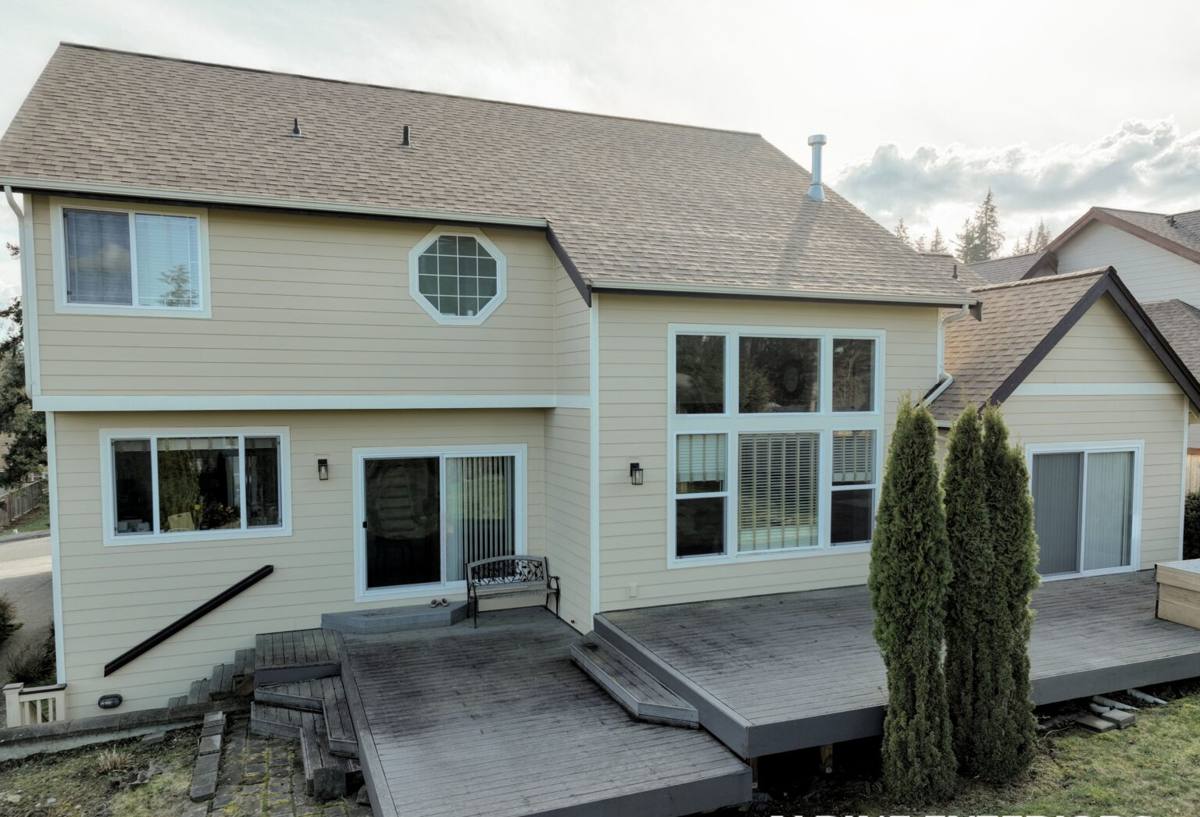
How Coastal Exposure Actually Damages a Deck
Most homeowners notice a deck problem when a board feels soft underfoot or a railing wiggles. By the time you can feel it, the damage has usually been developing for a while. In a coastal environment like Cortez, the failure sequence is fairly predictable:
Salt Air and Metal Fasteners
Nails, screws, joist hangers, and bolts are usually the first components to fail on a coastal deck, well before the wood itself gives out. Salt-laden air accelerates corrosion on standard fasteners, and once a fastener starts rusting, it loses grip strength and can also stain and weaken the wood fibers around it. A deck can look structurally sound on top while the connections holding it together underneath are quietly failing.
UV Breakdown
Florida sun is hard on every exterior material, but a deck gets it worse than siding or roofing because it's horizontal and takes direct overhead sun most of the day. UV breaks down the lignin in wood fibers, causing graying, splintering, and surface checking. On composite decking, UV exposure over many years can fade color and, on lower-grade products, make the surface more brittle.
Wind-Driven Rain and Moisture Cycling
Cortez gets its share of squalls and tropical moisture, and wind-driven rain doesn't just fall on a deck, it gets pushed sideways into railing joints, under ledger boards, and into any gap where two pieces of framing meet. The real damage comes from the repeated wet-dry cycling: wood swells when it's saturated and shrinks as it dries, and that constant movement loosens fasteners and opens up small gaps that let in even more water next time.
Storm Wind Loading
A deck attached to a house has to resist uplift and lateral load during high wind events, not just support the weight of people standing on it. Ledger board attachment, post-to-beam connections, and railing anchoring all matter more here than they would on a deck in a calmer inland setting.
Warning Signs Worth Calling About
Not every deck issue is obvious. Here's what we tell Cortez homeowners to check for, or to have us check for them:
- Soft, spongy, or spring-y spots when you walk across the deck surface
- Rust streaks running down from screw heads or bolt connections
- Gaps opening up between the deck and the house where the ledger board attaches
- Railings or posts that wiggle or flex more than they used to
- Visible splintering, graying, or cupping on individual boards
- Discoloration or a musty smell near ground-contact posts or under the deck
- Stair stringers that feel less solid than the deck surface itself
- Any sign of wood-boring insect activity, small holes or sawdust-like debris near framing
If you're seeing more than one or two of these, it's worth a proper inspection rather than a spot fix. On a coastal deck, one visible problem is often a sign that connected areas are further along than they look.
Wood vs. Composite: What We Consider for Repairs
When we're repairing a deck, we're not just matching what's already there, we're thinking about what will hold up longest in Cortez's specific conditions. Both materials have a place, and the right choice depends on the deck's age, structure, and how much of it needs replacing.
| Factor | Pressure-Treated Wood | Composite Decking |
|---|---|---|
| Upfront repair cost | Lower material cost | Higher material cost |
| Salt air resistance | Good if properly sealed and maintained | Strong, doesn't absorb moisture the same way |
| UV resistance | Needs periodic refinishing to prevent graying/splintering | Better fade resistance, varies by product grade |
| Maintenance | Requires cleaning and resealing every 1-2 years in this climate | Occasional cleaning, no sealing needed |
| Matching existing deck | Easier to blend with existing wood framing/surface | Best used when replacing full sections or surface |
| Structural framing use | Standard for joists, beams, posts | Not typically used structurally, surface/rail only |
In practice, most repairs on Cortez decks keep pressure-treated lumber for the structural framing, since that's what code requires and what composite systems are typically fastened to anyway. The decking surface itself is where wood-versus-composite becomes a real choice, and we'll walk you through the honest trade-offs for your specific deck rather than pushing one option.
What a Correct Deck Repair Actually Involves
A repair that only addresses the visible boards is a repair that will need to be redone. We approach deck repair as a structural job first, cosmetic second.
Structural Inspection
Before any repair work starts, we check the ledger board connection to the house, the condition of joists and beams, post footings, and every load-bearing connection. This is where coastal corrosion hides, and it's the part of the deck you can't see from the surface.
Fastener Upgrades
Where we find standard or corroding fasteners, we replace them with hardware rated for coastal and treated-lumber contact, hot-dip galvanized or stainless steel, depending on the application. Using the wrong fastener in a salt-air environment is one of the most common reasons a deck repair fails early.
Ledger Board and Flashing
The ledger board, where the deck attaches to the house, is one of the most common failure points because it's a horizontal wood member sitting right against the structure, catching whatever rain and moisture run down the wall. Proper flashing here is what keeps water from getting trapped between the deck and the house framing.
Board Replacement
Individual boards showing rot, splintering, or UV breakdown get replaced rather than patched. We match spacing and fastening pattern to the rest of the deck so repaired sections don't stand out or perform differently than the original.
Railings and Stairs
Railings take constant hand pressure and lateral wind load, and stairs take repeated foot traffic and weather exposure on every tread edge. Both get checked for post anchoring and connection integrity, not just surface wear.
Our Deck Repair Process
- Full inspection — We check the deck from the framing up, including areas underneath and around fastener connections, not just the walking surface.
- Honest assessment — We tell you what actually needs repair, what's still sound, and what to keep an eye on going forward. We're not going to sell you a full rebuild if a targeted repair will hold up.
- Written scope and estimate — You'll know exactly what's being repaired, with what materials and hardware, before work starts.
- Repair work — Structural fixes first (framing, fasteners, ledger connection), then surface boards, then railings and stairs.
- Final check — We walk the deck with you when it's done so you can see and feel the difference, and ask any questions about maintenance going forward.
Repair or Replace? What Actually Drives That Decision
This is one of the most common questions we get, and the honest answer depends on a few specific factors rather than the deck's age alone.
| Factor | Leans Toward Repair | Leans Toward Replacement |
|---|---|---|
| Structural framing condition | Joists, beams, posts still sound | Widespread rot or corrosion in framing |
| Ledger board condition | Solid connection, minor flashing fix needed | Rotted or failing ledger attachment |
| Extent of surface damage | Isolated boards affected | Damage spread across most of the deck |
| Deck age vs. material lifespan | Well within expected service life | At or past typical lifespan for the material |
| Code compliance | Meets current railing/attachment code | Older deck built before current wind/code standards |
A deck with a few soft boards and some rusted fasteners is usually a straightforward repair. A deck with a compromised ledger connection, rotted framing, or multiple failed footings is often more cost-effective to rebuild properly than to keep patching. We'll tell you plainly which category yours falls into.
Permits and Code Considerations in Manatee County
Deck repair work in Manatee County, including Cortez, may require permitting depending on the scope of the work, particularly anything involving structural framing, footings, or the ledger board connection. Florida's building code also has specific requirements for railing height, baluster spacing, and guardrail load resistance that older decks sometimes don't meet. When we're doing structural repair work, we make sure it brings the deck up to current code where applicable, not just back to its original condition, since "original condition" on an older coastal deck may not meet today's standards anyway.
Why Local Experience in Cortez Matters
A deck repair crew that mostly works inland properties may not think twice about fastener grade or ledger flashing detail, because those shortcuts don't fail as fast in a less corrosive environment. Working regularly in Cortez and along the rest of the Bradenton waterfront means we know which components fail first in this specific setting, and we build the repair around that reality instead of a generic checklist. It also means we're familiar with the wind and moisture exposure that comes with being this close to the bay, and we repair accordingly, not just to pass an inspection today, but to hold up through the next several hurricane seasons.
If your deck has a soft spot, a wobbly railing, or you just haven't had it looked at in a while, we're happy to come take an honest look. Use the form below to request a free, no-pressure estimate, and we'll tell you straight what your deck actually needs.