 Bradenton Siding
 Building Decks for a Working Waterfront Community
Cortez sits right up against Sarasota Bay, and that proximity to the water is exactly why a deck here needs to be planned differently than one going up a few miles inland. Between the salt-laden air rolling off the bay, the intensity of Gulf Coast sun, and the wind loads that come with every tropical system that brushes Manatee County, an outdoor structure in Cortez is under more stress, more often, than almost anywhere else in the region. A deck built to generic specs might look fine for a season or two, but the combination of salt, moisture, and UV here has a way of finding every weak point in materials and fasteners that weren't chosen with this environment in mind.
We build custom decks for homeowners throughout the Bradenton area, and Cortez projects get treated as their own category. That means different material recommendations, different hardware, and closer attention to how the structure ties into the house and the ground beneath it.
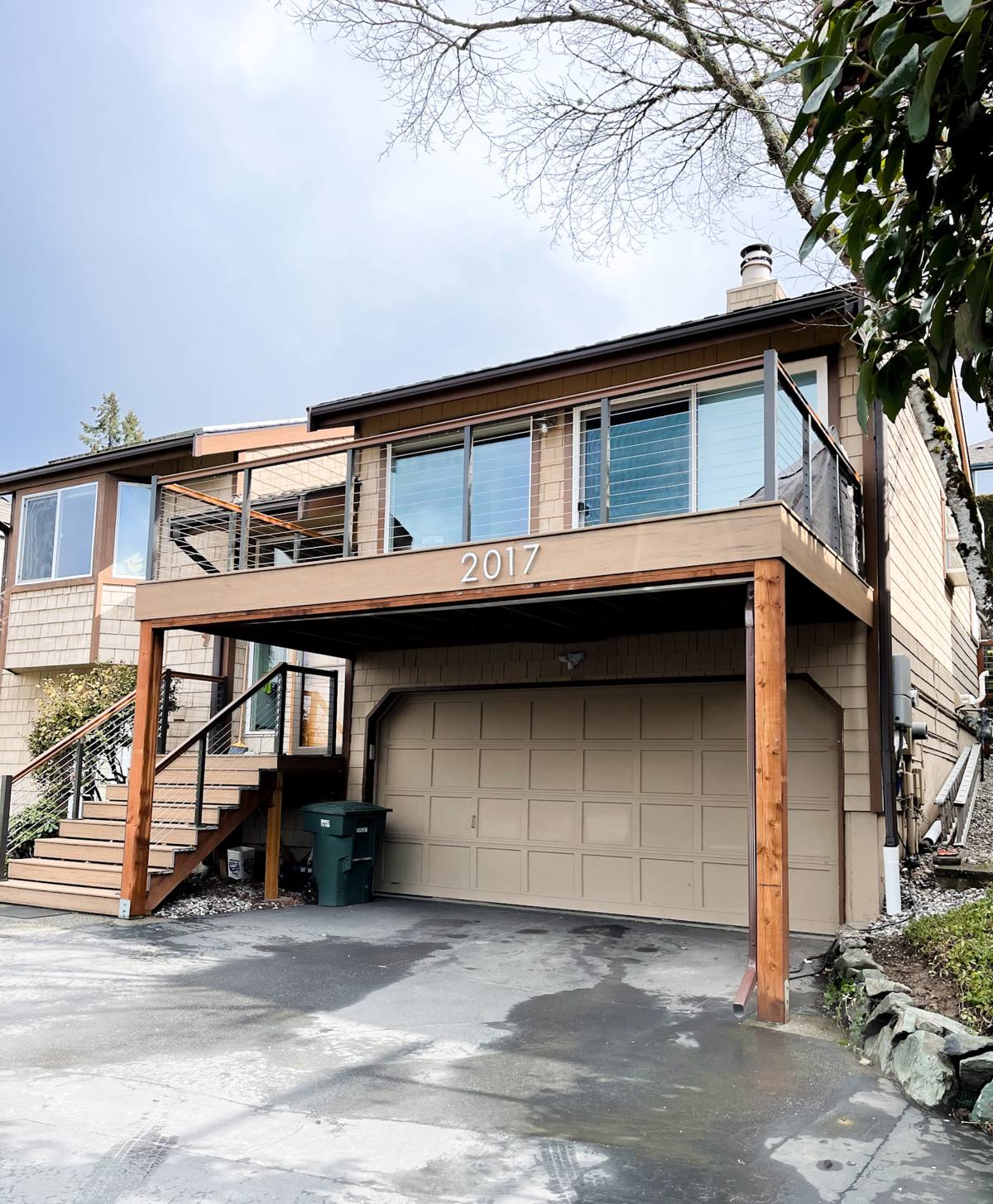
What Coastal Exposure Actually Does to a Deck
It helps to understand the specific ways this climate works against an outdoor structure, because it explains almost every decision that goes into a correct build:
- Salt air corrosion — airborne salt settles on any exposed metal and accelerates rust, especially on fasteners, brackets, and hinges that aren't rated for coastal use.
- Wind-driven rain — storms here don't just drop rain straight down; wind pushes water sideways into ledger connections, framing joints, and any gap in flashing.
- Year-round UV — Florida sun breaks down wood fibers, fades finishes, and degrades lower-grade composite decking faster than in northern climates.
- Humidity and mildew — constant moisture in the air keeps deck surfaces damp longer after rain, which invites mold and algae growth if the material and airflow underneath aren't right.
- Hurricane-force wind loads — framing, railings, and footings all need to resist uplift and lateral force, not just support weight.
None of these are unique to Cortez alone, but the combination is more concentrated here than in areas set back from the water, which is why we don't treat a waterfront deck build the same as one going up in a landlocked subdivision.
Choosing the Right Decking Material
There's no single "best" decking material for every home — it depends on budget, how much upkeep you're willing to do, and how close you are to the water. Here's how the common options actually compare in a coastal Cortez setting:
| Material | Upfront Cost | Salt Air & Moisture Resistance | Maintenance | Realistic Lifespan |
|---|---|---|---|---|
| Pressure-treated wood | Lowest | Fair — needs sealing to hold up | Annual cleaning and resealing | 10-15 years with upkeep |
| Composite decking | Mid to high | Good to excellent, depending on grade | Occasional washing, no sealing | 20-25+ years |
| Tropical hardwood | Highest | Naturally dense and rot-resistant | Periodic oiling to maintain color | 20-30 years |
Pressure-treated wood is a legitimate choice if you're comfortable staying on top of maintenance, but it's the option most likely to show splitting, graying, and fastener corrosion first in a salt air environment. Composite decking has become the most common request we get for Cortez homes because it doesn't absorb moisture the way wood does, which matters when a deck sits close to brackish air and humidity for most of the year. Tropical hardwoods are a premium option that hold up well structurally, but they come with a higher price tag and still need occasional oiling to keep their appearance — skip that upkeep and they'll gray out like any other wood.
Whatever material you choose, we'll walk you through the honest trade-offs rather than pushing whatever has the best margin — a deck is a long-term investment, and the right call depends on your budget and how hands-on you want to be with maintenance.
A Note on Fasteners and Hardware
The decking surface gets most of the attention, but the hardware holding everything together matters just as much in this environment. Standard galvanized fasteners can start showing rust streaks within a couple of years this close to the bay. We use stainless steel or coated fasteners rated for coastal and treated-lumber contact on every Cortez project, along with corrosion-resistant joist hangers and structural connectors — it costs more upfront than generic hardware, but it's the difference between a deck that stays solid and one that starts loosening at the joints in year three.
Framing, Footings, and What's Underneath
A deck is only as good as what you can't see once it's finished. In Cortez, three structural details matter more than they would inland:
Footing depth and design — footings need to be sized and set to resist both the weight of the structure and wind uplift, not just settle into sandy or waterlogged soil. Soil conditions close to the bay can vary block to block, so we don't assume a standard footing spec will work without checking the site.
Ledger board attachment — where the deck ties into the house is the single most common failure point on any deck, anywhere. Done wrong, wind-driven rain works its way behind the ledger and rots the rim joist from the inside, often before it's visible from outside. Correct flashing and structural attachment at this connection is non-negotiable.
Joist spacing and hardware — tighter joist spacing and properly rated hurricane connectors give a deck the ability to handle the wind loads this area sees, rather than just the vertical load of people standing on it.
Permits, Elevation, and Flood Considerations
Cortez's location on the water means flood zone designations and elevation requirements are part of almost every deck project here, not an occasional exception. Manatee County requires permits for deck construction, and depending on your property's flood zone, there can be additional requirements around how the structure is elevated or attached relative to base flood elevation. We handle the permitting process as part of the job — pulling the right permit, coordinating any required inspections, and making sure the design matches what the county actually requires for your specific lot, rather than a generic assumption about what's needed nearby.
Skipping permits might seem like a shortcut, but an unpermitted deck can complicate insurance claims after storm damage and create real problems when you go to sell the house. It's worth doing right the first time.
Railings, Stairs, and Wind Code Compliance
Railings and stair systems need to meet the same wind and structural standards as the deck frame itself — a railing that looks fine but isn't properly through-bolted into structural framing is one of the more common corner-cuts we see on older or poorly built decks in this area. Baluster spacing, railing height, and stair stringer support all fall under code requirements that exist specifically because loose railings and unstable stairs are a real injury risk, especially on an elevated waterfront deck. We build every railing and stair system to meet current code, not just to pass a quick visual check.
Our Process for a Cortez Deck Build
Every project follows the same sequence, adjusted for your home's specific site and design:
- On-site evaluation of your home's structure, soil conditions, and how the new deck will attach to the existing building.
- Material and layout discussion, including honest trade-offs between decking options based on your budget and maintenance preference.
- Permit preparation and submission to Manatee County, including any flood zone or elevation review your property requires.
- Footing and framing installation using coastal-rated fasteners and connectors throughout.
- Decking, railing, and stair installation to current wind and safety code.
- Final walkthrough covering how to maintain your specific decking material in a salt air environment.
Before we start any project, here's what should be part of the plan — a useful checklist whether you're hiring us or evaluating any contractor for a Cortez deck:
- Permit pulled through Manatee County before construction begins
- Flood zone or elevation requirements confirmed for your specific property
- Stainless steel or coated fasteners specified, not standard galvanized
- Ledger board flashing detailed to keep wind-driven rain out of the connection
- Footings sized for both structural load and wind uplift resistance
- Railings and stairs built to current code, not just visually similar to code
- A clear maintenance plan for whichever decking material you choose
Maintaining a Deck in a Coastal Environment
Even the right materials and construction need some ongoing attention in this climate. Salt residue should be rinsed off periodically, especially after storms or high-wind days that carry more salt spray inland. Composite decking generally just needs occasional washing to prevent buildup of grime and mildew. Wood surfaces, whether pressure-treated or tropical hardwood, need periodic sealing or oiling to keep moisture from working into the grain. Metal hardware and railings are worth a visual check once or twice a year for early signs of corrosion, since catching a loosening connector early is a lot cheaper than repairing storm damage that started at that weak point. None of this is heavy maintenance, but skipping it in a salt air environment shortens a deck's life more than it would somewhere further from the water.
Why Local Experience in Cortez Matters
Deck-building fundamentals don't change much from one town to the next, but the details that determine whether a deck lasts 10 years or 25 in this specific environment come from having actually worked on homes here — knowing which fastener grades hold up, how Manatee County's permitting and flood zone review process actually runs, and what soil and site conditions tend to look like on waterfront lots. A crew that's built decks elsewhere in Florida can still do competent work, but a crew that already works in Cortez isn't guessing about any of that — they've already run into the site conditions, the permitting questions, and the coastal wear patterns that come up here specifically.
If you're planning a new deck or replacing one that's showing its age, we're happy to take a look at your property and talk through what makes sense for your home, your budget, and this stretch of the Gulf Coast. Reach out for a free, no-pressure estimate using the form below.