 Bradenton Siding
 Windows Built for Whitfield Estates' Coastal Conditions
Whitfield Estates sits close enough to the water that homeowners deal with a specific combination of stresses most inland Florida neighborhoods don't face to the same degree: salt-laden air that corrodes hardware and finishes, wind-driven rain that finds every gap in an aging window frame, and near-constant UV exposure that breaks down seals, glazing compounds, and vinyl or aluminum finishes faster than manufacturers' glossy brochures suggest. Add Gulf hurricane season into the mix, and a window in this neighborhood is being asked to do a lot more than just open, close, and look decent from the street.
Energy-efficient windows done right in this part of Manatee County have to solve two problems at once: keep conditioned air inside so the AC isn't fighting a losing battle all summer, and hold up structurally against wind pressure and impact requirements without turning into a maintenance headache five years down the road. A window that's efficient on paper but poorly installed or mismatched to coastal conditions will underperform fast — fogged glass, swollen frames, corroded hardware, and energy bills that creep back up are the usual result.
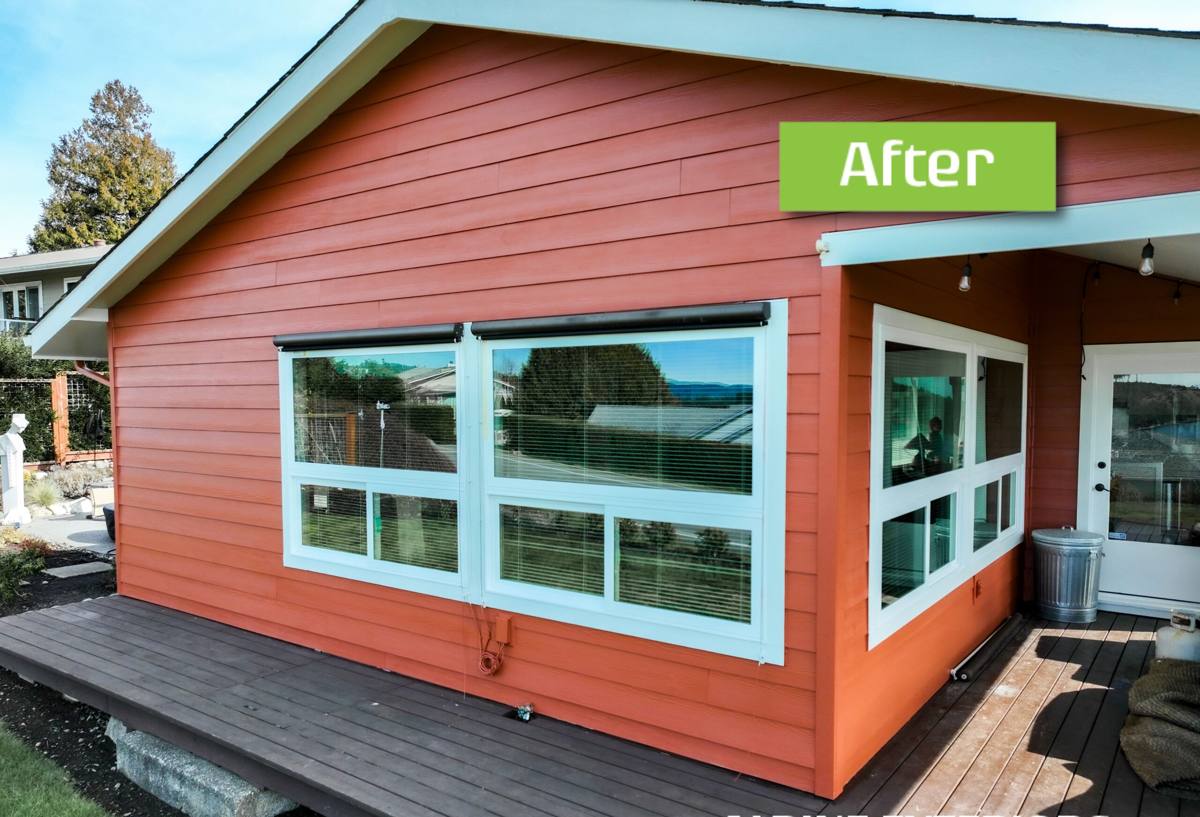
Why Older and Established Neighborhoods Like This One Need a Different Approach
A lot of homes in and around Whitfield Estates were built well before current Florida energy and wind-load codes existed. That means original window openings are often slightly out of square, framed for single-pane glass, or sized for products that simply aren't made the same way anymore. Retrofitting energy-efficient, impact-rated windows into an older opening isn't a matter of ordering a stock size and dropping it in — it requires accurate field measurements, attention to how the existing stucco or siding meets the frame, and flashing details that actually shed water instead of trapping it.
We've done this work throughout Bradenton and the surrounding Manatee County communities enough to know where older construction typically causes problems: wood bucks that have absorbed moisture over the decades, stucco returns that were never properly sealed to begin with, and openings that have shifted slightly with the house settling. None of that is unusual, and none of it should be a surprise mid-project — it's something we check for before a single window is ordered.
What "Energy-Efficient" Actually Means Here
In this climate, energy efficiency isn't just about a U-factor sticker. The window has to manage:
- Solar heat gain — how much of Florida's relentless sun turns into heat inside your home
- Air infiltration — how much conditioned air leaks out around the frame and sash
- Condensation resistance — how the glass and frame handle the humidity swings between AC-cooled interiors and hot, moist exterior air
- Long-term seal integrity — whether the insulated glass unit stays sealed under years of thermal cycling and salt exposure
A window that scores well on efficiency ratings but uses hardware or seal materials that degrade quickly in coastal salt air will lose those efficiency gains within a few years. That's why product selection matters as much as the rating label.
Impact Rating and Energy Efficiency Aren't Separate Decisions
Because of where Whitfield Estates sits relative to the coast and Manatee County's wind-borne debris requirements, most replacement windows here need to meet impact standards, not just energy standards. The good news is that modern impact-rated windows — laminated glass with a durable interlayer, reinforced frames — generally also perform well thermally, since the same laminated glass that resists wind-borne debris also cuts down on UV transmission and noise. The two goals reinforce each other more often than they conflict.
Where trade-offs do come up is in frame material and glazing package selection. We walk homeowners through the real differences rather than pushing whatever has the best margin — every option has honest trade-offs in cost, maintenance, and long-term performance in a salt-air environment.
Frame Material Comparison for Coastal Bradenton Homes
| Frame Material | Salt Air Durability | Maintenance | Typical Trade-Off |
|---|---|---|---|
| Vinyl | Good — won't corrode | Low | Can expand/contract with heat; quality varies widely by manufacturer |
| Aluminum | Fair — needs marine-grade coating near coast | Moderate | Conducts heat more than vinyl or fiberglass unless thermally broken |
| Fiberglass | Excellent | Low | Higher upfront cost |
| Wood-clad | Poor without diligent upkeep | High | Best interior look, but moisture and salt air are hard on exposed wood |
For most homes in this neighborhood, we steer people toward vinyl or fiberglass frames with impact-rated laminated glass, because they hold up to salt exposure with the least ongoing maintenance. Aluminum still has a place, especially where larger spans or specific architectural styles call for it, but it needs the right coating and thermal break to perform well here long-term.
What a Correct Installation Actually Involves
The window unit itself is maybe half the equation. The other half is installation detail, and this is where a lot of energy loss and water intrusion problems actually originate — not from a bad window, but from a rushed or generic install that didn't account for the existing structure.
Our process on a typical Whitfield Estates project:
- On-site assessment — we check each opening for square, level, and condition of the substrate (stucco, wood buck, or block), and flag any moisture damage or settling before quoting.
- Accurate field measurement — older openings are rarely uniform, so each window is measured individually rather than assumed to match the original spec.
- Product selection review with the homeowner — we go over frame material, glazing package, and impact rating options based on the specific exposure of that side of the house (a west-facing window catching afternoon sun and wind has different needs than a shaded, protected opening).
- Removal and prep — old windows come out carefully to avoid damaging the surrounding stucco or framing, and any deteriorated wood or flashing is addressed before the new unit goes in.
- Flashing and sealing — proper flashing tape and sealant application around the rough opening, so water is directed out and away rather than trapped behind the frame.
- Installation and shimming — the window is set plumb, level, and square, then shimmed and fastened per the manufacturer's specifications to maintain the impact rating.
- Interior and exterior finish work — trim, caulking, and paint-matching so the finished opening looks intentional, not patched.
- Final inspection and walkthrough — operation check on every window, plus a review of care and warranty details with the homeowner.
Signs Your Current Windows Are Working Against Your Energy Bill
Homeowners in Whitfield Estates often call us after noticing one or more of these, not realizing how much they're related:
- AC runs constantly but rooms near windows still feel warm
- Visible condensation or fogging between panes of an insulated unit
- Frames that feel warm to the touch on the interior during peak sun hours
- Difficulty opening or closing due to swelling, corrosion, or warping
- Fading furniture, flooring, or window treatments from UV exposure
- A noticeable draft or whistling sound during windy conditions
- Visible gaps, cracked caulking, or stained stucco around the frame
Any one of these can usually be traced back to failed seals, degraded weatherstripping, or an installation that never sealed the opening correctly in the first place — all of which compound in a climate that runs hot and humid most of the year.
Why Local Experience with This Neighborhood Matters
Whitfield Estates has its own mix of housing ages and construction styles, and a crew that's worked in the area already knows what to expect before pulling the first window: how the stucco was typically applied on homes of a certain era, what kind of substrate issues tend to show up near the water, and which permitting and wind-load requirements Manatee County applies to replacement window work. That familiarity shortens the guesswork and reduces surprises mid-project.
It also means we're not learning coastal Florida installation practices on your house. Salt air, humidity, and storm exposure punish shortcuts faster here than in most parts of the country — a sealant bead that's slightly thin, a fastener that's the wrong grade, or a flashing detail that's skipped will show up as a problem within a year or two instead of a decade. Hiring a crew with direct experience in this specific area and climate is less about convenience and more about getting a job that's still performing correctly five or ten years from now.
What to Look for When Choosing a Window Contractor
- Proper Florida licensing and insurance, verifiable on request
- Products with current Florida Building Code approval (NOA or equivalent) for your wind zone
- A written scope that specifies frame material, glass package, and impact rating — not just "impact windows"
- Clear explanation of flashing and sealing methods, not just the product being installed
- A manufacturer warranty on the product plus a separate labor warranty from the installer
- Willingness to walk the property and explain condition-specific findings before quoting
Get an Honest Assessment for Your Home
Every home in Whitfield Estates has its own combination of age, orientation, and exposure to sun and salt air, so there's no one-size-fits-all window package that makes sense for every house on the block. We'll walk your property, look at what your current windows are actually doing (or failing to do), and give you a straightforward rundown of what would genuinely improve comfort and efficiency without overselling products you don't need. If you'd like a free, no-pressure estimate, fill out the form below and we'll get in touch.