 Bradenton Siding
 Deck Building in Lakewood Ranch, Built for the Climate It Sits In
Lakewood Ranch homeowners want their outdoor living space to actually get used — for morning coffee, evening dinners, watching kids in the pool, or just sitting outside without frying in the sun. A deck that looks good on installation day but starts warping, rusting, or fading within a couple of Florida summers isn't doing its job. Building decks correctly in this part of Manatee County means designing and constructing for the specific abuse that Gulf Coast weather delivers: intense year-round UV, hurricane-force wind loads, wind-driven rain, and salt-laden air that finds its way inland more than people expect.
We build decks for homes throughout the Bradenton area, and Lakewood Ranch has its own set of considerations — deed-restricted communities, pool cage and lanai attachments, drainage planning around irrigation-heavy landscaping, and a building department that has specific expectations for wind-rated construction. This page walks through what actually matters when you're planning a new deck here, so you know what a correctly built one looks like before you hire anyone.
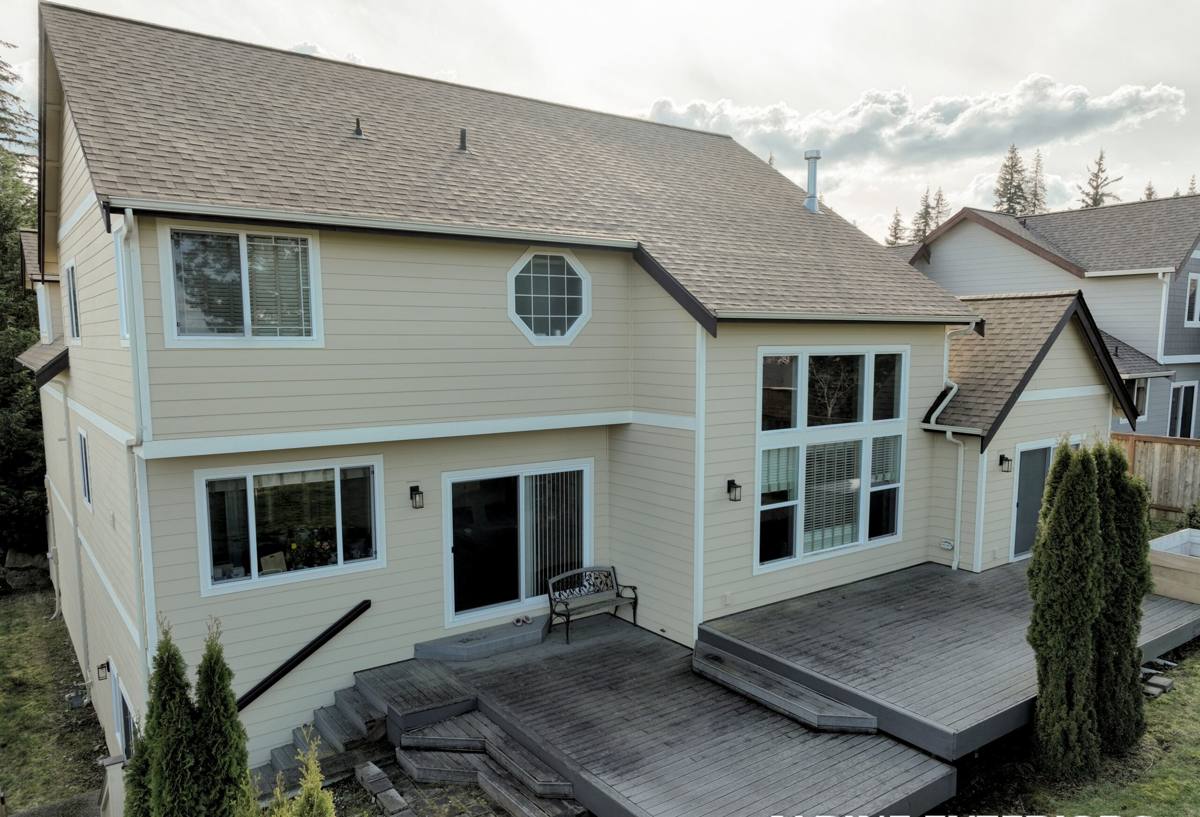
What Manatee County Weather Actually Does to a Deck Over Time
It's easy to underestimate how hard Florida conditions work on an outdoor structure, because the damage is gradual. Understanding the mechanism helps explain why certain shortcuts show up as problems two or three years down the road instead of on day one.
UV Exposure
Florida sun is close to overhead for much of the year, and a deck gets full exposure with no seasonal break. Untreated or poorly finished wood grays and checks quickly. Lower-grade composite boards without real UV-stabilized capping can fade unevenly, especially on the side that faces south or west.
Wind-Driven Rain and Humidity
Rain here rarely falls straight down. Storms push it sideways into ledger boards, fastener holes, and end grain that isn't sealed. Combined with Manatee County's humidity, any spot where water gets trapped instead of draining and drying becomes a rot or corrosion starting point — often hidden under the decking where you won't see it until it's structural.
Salt Air
Lakewood Ranch isn't beachfront, but it's close enough to the Gulf that airborne salt still accelerates corrosion on hardware, fasteners, and connectors over the years. Standard hardware store screws and brackets that would be fine in a dry inland climate corrode faster here than most homeowners expect.
Wind Load
Manatee County sits in a hurricane-prone wind zone, and structures — decks included — have to be built and connected to resist uplift and lateral loads, not just support weight straight down. This affects post connections, joist hangers, and how the deck ties back to the house.
Decking Material Options: What We Recommend and Why
There's no single "best" decking material — it depends on budget, how much upkeep you want to do, and how the deck will be used. Here's an honest breakdown of the main options for this climate.
| Material | Upfront Cost | Maintenance | How It Handles Florida Sun & Rain |
|---|---|---|---|
| Pressure-treated pine | Lowest | Needs re-sealing every 1-2 years | Prone to graying, splintering, and warping if maintenance lapses; solid if kept sealed |
| Composite (capped) | Mid-to-high | Occasional washing, no sealing | Good UV and moisture resistance with quality capped boards; can run hot underfoot in direct sun |
| PVC/vinyl decking | Highest | Lowest — just cleaning | Excellent moisture resistance since it doesn't absorb water; strong fade resistance with quality products |
| Tropical hardwood (ipe, etc.) | High | Periodic oiling to maintain color | Naturally dense and rot-resistant, but requires upkeep to prevent graying |
For most Lakewood Ranch homeowners who want a deck they're not constantly maintaining, we steer conversations toward capped composite or PVC boards from established manufacturers with real warranty backing. We're generally cautious about the cheapest uncapped composite products — early-generation composite decking had real moisture-absorption and mold issues in humid climates, and we'd rather set that expectation up front than have a client deal with a disappointing board a few years in. Pressure-treated wood is still a legitimate choice for homeowners on a tighter budget who are willing to keep up with sealing on a schedule.
Structural Basics: Footings, Framing, and Fasteners That Matter Here
The decking surface is the part everyone sees, but the structure underneath is what determines whether the deck is still solid — and still attached to your house — after the next tropical storm.
Footings and Post Connections
Footings need to be sized and set to the depth and bearing capacity the local code requires for the loads involved, with post bases and connectors rated for wind uplift, not just standard vertical load. This matters more here than in a lot of the country because the design wind speed Manatee County codes are built around is genuinely high.
Ledger Attachment and Flashing
Where a deck attaches to the house, the ledger board connection and its flashing are one of the most common failure points nationwide, and wind-driven rain makes it worse here. Done right, flashing sheds water away from the house structure rather than letting it wick into the wall assembly behind the ledger.
Fasteners and Hardware
We use stainless steel or high-corrosion-resistant coated fasteners and connectors rated for coastal-adjacent environments, not standard interior-grade hardware. This is a small line-item cost difference that has an outsized effect on how the deck looks and performs in year five and beyond — rust streaking around fastener heads is one of the most common complaints we see on decks built with the wrong hardware.
Joist Spacing and Drainage
Board spacing and joist layout should account for water drainage and airflow underneath, so the structure can dry out between rain events instead of staying damp. On raised decks or those over a lanai, drainage planning also has to work with how water sheets off the deck edge relative to the house foundation and landscaping.
Permits, Codes, and HOA Considerations in Lakewood Ranch
Lakewood Ranch is largely made up of deed-restricted, HOA-governed communities, and most of them require architectural review and approval before you build a new deck, regardless of what Manatee County permitting requires separately. These are two different approval processes, and missing either one can mean a stop-work order or a deck you have to modify after the fact.
- Manatee County (or the applicable municipal jurisdiction) building permit for the structure itself
- Engineering or plan review for wind load compliance where required
- HOA/community architectural review board approval — often with specific rules on materials, height, color, and setback from property lines
- Inspection sign-off at the appropriate framing and final stages
We handle the permit side of the process and can work from whatever design parameters your HOA sets, but the HOA submission itself is typically the homeowner's responsibility to file — we'll tell you exactly what documentation you'll need to hand over.
Our Deck Building Process
Every deck project follows roughly the same sequence, though the details shift based on whether it's a freestanding deck, one attached to the house, or one tied into a pool cage or lanai structure.
1. Site Visit and Design Conversation
We look at the space, talk through how you'll actually use it, and discuss material options honestly — including what each choice costs to maintain over time, not just to install.
2. Engineering and Permitting
We prepare the plans needed for permit submission, including any engineering sign-off required for wind load, and file with the county or applicable jurisdiction.
3. Footings and Framing
Footings go in first and get inspected before we build on top of them. Framing follows with wind-rated connectors and properly flashed ledger attachment where applicable.
4. Decking, Railing, and Finish Work
Decking boards, railing systems, and any trim or fascia go on last, with fasteners and hardware matched to the material and the coastal-adjacent climate.
5. Final Inspection and Walkthrough
We walk the finished deck with you, confirm everything passed final inspection, and go over any maintenance the specific material you chose will need going forward.
Signs Your Current Deck Needs Attention
If you already have a deck in Lakewood Ranch and you're wondering whether it needs repair, replacement, or just maintenance, these are the warning signs worth taking seriously:
- Soft or spongy spots underfoot, especially near the ledger board or post bases
- Visible rust streaking around fastener heads or connectors
- Boards that have cupped, split, or separated significantly at the seams
- Railings or posts that wobble or flex under normal pressure
- Gaps or cracking where the deck meets the house, which can let water behind the siding
- Persistent damp or musty smell underneath the deck after rain
Some of these are cosmetic and fixable with maintenance; others point to structural issues that need a proper inspection before the deck sees another storm season.
Why Hire a Crew That Already Works in Lakewood Ranch
A deck built to generic national standards can still fall short here, because the wind zone, humidity, and HOA landscape in this part of Florida aren't generic. A crew that regularly works Lakewood Ranch and the surrounding Bradenton area already knows which fastener and hardware upgrades are worth the cost, how the local permitting process runs, and what the common HOA architectural requirements tend to look like. That familiarity translates into fewer surprises during permitting, fewer callbacks for corrosion or drainage issues down the road, and a deck that's actually built for the climate it has to survive in — not just the climate a national spec sheet was written for.
If you're planning a new deck or need an honest assessment of an existing one, we're happy to take a look and talk through your options. Reach out for a free, no-pressure estimate using the form below.