 Bradenton Siding
 Storm Damage Roof Repair Built for Mill Creek's Climate
Mill Creek sits inland from Sarasota Bay in Manatee County, but "inland" doesn't mean sheltered. When a tropical system or a strong summer squall line moves through Bradenton, Mill Creek roofs take the same beating as anything closer to the water: sustained wind loads, wind-driven rain that finds every gap in flashing, and hail-sized debris riding on gusts. What makes storm damage here tricky isn't just the initial hit — it's the follow-up. Intense year-round UV bakes shingles and sealants for months afterward, and salt-laden air drifting off the Gulf and the bay accelerates corrosion on any exposed metal. A roof that "looks fine" after a storm can already be failing underneath, and by the time a stain shows up on a ceiling, water has usually been getting in for weeks.
We repair storm-damaged roofs on Mill Creek homes with that pattern in mind. This isn't a generic patch-and-go service — it's a repair process built around how Manatee County weather actually breaks roofs down over time.
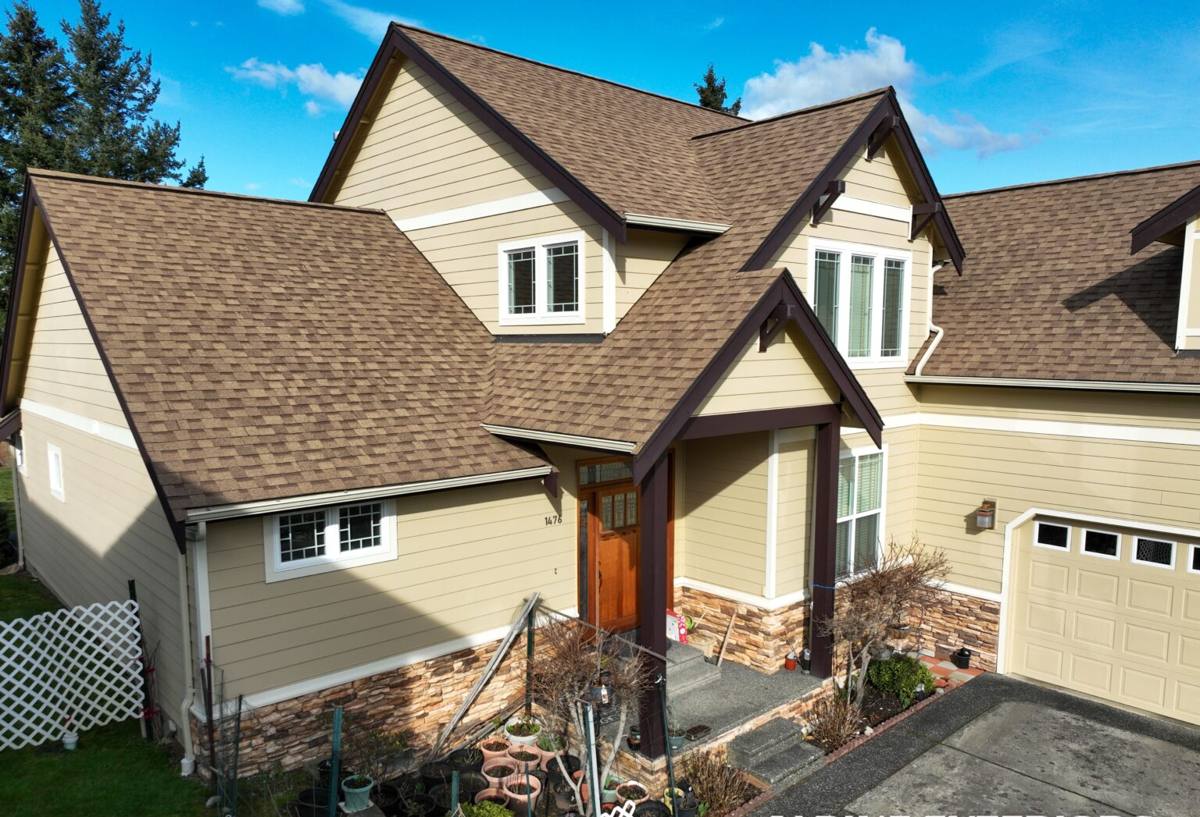
How Storms Actually Damage a Mill Creek Roof
Most storm damage isn't one dramatic event — it's a combination of smaller failures that compound.
Wind Uplift
Florida building code requires roofing systems rated for high wind, but even a code-compliant roof can lose shingles or tiles at the edges, ridges, and corners first, since that's where uplift pressure concentrates. Once a few pieces lift or blow off, the underlayment beneath is directly exposed to the next round of rain.
Wind-Driven Rain
Rain that falls straight down is rarely the problem. Rain pushed sideways at 40-60+ mph finds its way under shingle tabs, around flashing, and into any nail pop or gap that a calm-weather roof would shrug off. This is how interior leaks show up in rooms that are nowhere near visible roof damage.
Impact Damage
Tree limbs, loose gutters, and airborne debris can bruise or crack shingles and tiles without punching an obvious hole. Bruised shingles lose their granule protection in that spot, and that small weak point turns into a leak path months later under ordinary UV exposure and afternoon rain.
Cumulative Sun and Salt Exposure
After the wind and rain damage is done, the sun and salt air keep working. UV breaks down asphalt shingle oils and rubberized sealants faster here than in most of the country, and salt air speeds up rust on exposed fasteners and metal flashing. A repair that doesn't account for this will fail again faster than the surrounding roof.
Signs a Mill Creek Roof Needs Storm Repair
Some damage is obvious after a storm. A lot of it isn't. Walk the exterior and check the following once weather clears:
- Missing, cracked, curled, or lifted shingles — especially along ridges, edges, and valleys
- Granules collecting in gutters or at downspout outlets
- Dented, bent, or missing flashing around chimneys, vents, and skylights
- Soft spots or visible sagging when viewed from the ground or an attic
- Water stains or discoloration on interior ceilings, especially near exterior walls
- Gutters pulled loose or separated from the fascia
- Debris embedded in the roof surface, or limbs that struck the roof and rolled off
- Visible daylight through the roof deck when viewed from inside the attic
If any of these are present, the safest move is a professional inspection before the next rain event — not after.
What a Correct Storm Repair Actually Involves
A quick shingle swap over damaged underlayment is the most common shortcut we see, and it's also the most common reason a "repaired" roof leaks again during the next storm. A correct repair addresses three layers, not one.
The Roof Deck
Wet decking loses structural integrity and won't hold fasteners properly. Any section that's been exposed to standing water gets checked and, where needed, replaced before anything goes back on top of it.
Underlayment and Flashing
This is the layer that actually stops water — the visible shingles or tiles are the first line of defense, but underlayment and flashing are what keep a small breach from becoming an interior leak. Storm repairs on Mill Creek homes get self-adhering or synthetic underlayment appropriate for wind-driven rain exposure, with flashing resealed or replaced at every penetration point, not just the obviously damaged one.
The Surface Material
Matching existing shingles or tiles as closely as possible matters both for appearance and for even wear — a patch of newer material next to older, sun-faded material ages differently and can telegraph as a visible seam for years.
Ventilation Check
Storm repair is a good moment to confirm attic ventilation is still working correctly. Damaged or blocked vents trap heat and moisture, which shortens the life of the very repair just completed.
Repair Materials: Cost Factors and Trade-offs
Not every storm repair calls for the same material decisions. What's already on the roof, the extent of damage, and how long the homeowner plans to stay in the home all factor in.
| Factor | Shingle Repair/Replacement | Tile Repair | Metal Roof Repair |
|---|---|---|---|
| Typical wind resistance | Good, rated for FL code | Very good when properly fastened | Excellent |
| UV/heat aging | Moderate — sealants degrade fastest | Low — material itself is stable | Low, but fastener sealant ages |
| Salt-air corrosion risk | Low (fasteners galvanized) | Low | Moderate — depends on coating/fastener quality |
| Repair visibility/matching | Can be tricky on sun-faded roofs | Usually blends well | Panel replacement can be very close match |
| Relative repair cost | Lower per repair | Higher — breakage during access is common | Moderate to higher, depends on panel profile |
None of these is universally "better" — the right call depends on what's already installed and what shape the rest of the roof is in. We'll walk through the honest trade-offs for the specific roof in front of us rather than pushing one material by default.
Our Storm Repair Process
1. Inspection and Documentation
We inspect the full roof, not just the area that's obviously damaged, since storm damage tends to show up in more than one spot. Photos and notes are taken throughout — useful for the homeowner's own records regardless of whether an insurance claim is involved.
2. Temporary Protection
If there's active exposure — missing shingles, a hole, lifted flashing — we get the roof weathertight first with appropriate temporary measures. This step alone prevents a lot of the interior damage that turns a roof repair into a full interior remediation project.
3. Written Scope and Estimate
Before any repair work starts, we provide a clear, written scope: what's being replaced, what materials are used, and what the repair actually addresses layer by layer — deck, underlayment, flashing, surface material.
4. The Repair
Work is done to match existing code requirements for the area, with attention to proper fastening patterns and flashing details — the parts of a repair that don't show but determine whether it holds up in the next storm.
5. Final Walkthrough
We review completed work with the homeowner, including attic access where relevant, so there's a clear understanding of what was done and what to watch for going forward.
Insurance Claims for Storm Damage
Many Mill Creek homeowners deal with insurance after a named storm or a severe wind/hail event. A few things make that process smoother:
Documentation Matters More Than Memory
Dated photos of the damage, taken as close to the event as safely possible, carry more weight than a description after the fact. We document what we find during inspection, which the homeowner is welcome to use for their own claim file.
Scope Should Match Damage, Not Exceed or Undercut It
An honest repair scope reflects what the storm actually damaged — no more, no less. Adjusters review scopes closely, and an accurate one from the start avoids delays.
Timing
Most policies have windows for reporting storm damage. Getting an inspection scheduled promptly after a storm — even if repair work happens later — protects the homeowner's ability to file.
Why Local Experience in Mill Creek Matters
A roofing crew that regularly works in Bradenton and greater Manatee County has already dealt with the specific way local storms behave — the wind direction that tends to strip a particular roof orientation, how quickly UV degrades a repair here compared to a cooler climate, and which flashing details hold up against salt air over years rather than months. That experience shows up in decisions a homeowner never sees directly: fastener choice, sealant selection, how flashing is lapped at a valley. A crew unfamiliar with Gulf Coast conditions can do technically competent work that still underperforms here simply because it wasn't built for this climate.
It also matters for response time. After a wide-area storm, demand for roof repair spikes across the whole region at once. A crew already established in the Bradenton area, including Mill Creek, isn't starting from zero on local permitting, material sourcing, or scheduling logistics when that happens.
Preventing Repeat Damage After Repair
A storm repair is only as good as what happens to the roof afterward. A few habits extend the life of any repair in this climate:
- Trim tree limbs that overhang or come close to the roofline
- Clean gutters and downspouts at least twice a year, more often under heavy tree cover
- Have the roof inspected after any named storm, even if no interior leak appears
- Check attic ventilation annually — blocked vents shorten the life of any roofing material in Florida's heat
- Address small issues (a lifted shingle, a small rust spot on flashing) before the next storm season rather than after
If your Mill Creek home has storm damage — or you're not sure whether recent weather affected the roof — we're glad to take a look and give an honest assessment. There's a free, no-pressure estimate form below; use it to get a straightforward read on what your roof needs, with no obligation attached.