 Bradenton Siding
 Why Decks in Palmetto Wear Out Faster Than Homeowners Expect
Palmetto sits right where the Manatee River meets Tampa Bay, and that location comes with a specific set of problems for anything built outdoors. A deck here isn't just exposed to sun and rain like it might be somewhere inland — it's exposed to salt-laden air blowing off the water, long stretches of intense UV that don't let up for most of the year, sudden wind-driven downpours, and the real possibility of hurricane-force gusts during storm season. Each of those does damage in a different way, and most decks that fail early are failing from a combination of all four at once.
Salt air accelerates corrosion in fasteners and hardware long before the visible wood or decking shows a problem. UV breaks down the lignin in wood fibers and degrades the surface resins in some composite products, leading to graying, splintering, or fading. Wind-driven rain gets pushed sideways into ledger boards, stair stringers, and any gap where flashing wasn't done right, which is how rot starts from the inside out. And when a tropical system rolls through, a deck that wasn't fastened and framed to hold up under uplift and lateral load is one of the first things to fail — sometimes taking part of the house's exterior with it.
None of this means a deck in Palmetto can't last. It means the materials, the fasteners, and the way the structure is built all have to be chosen with this specific climate in mind, not a generic build that would be fine in a drier, milder part of the country.
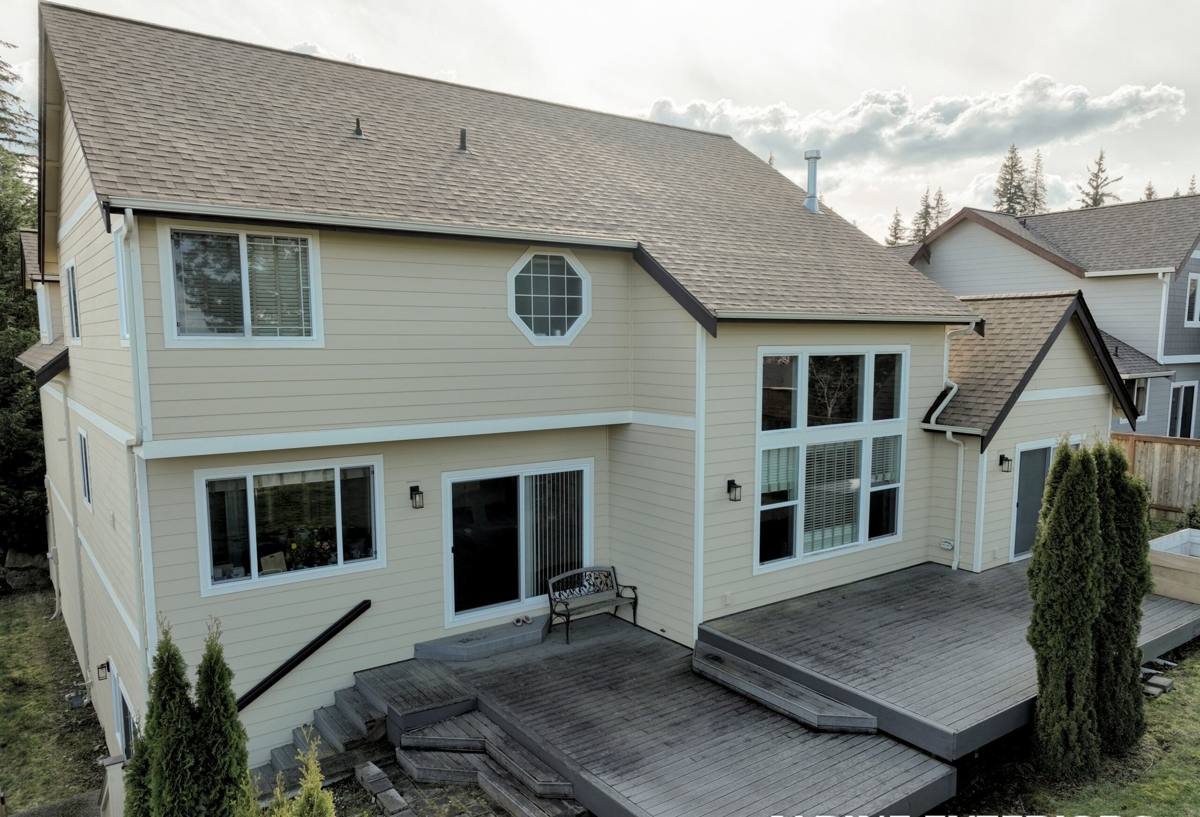
Signs a Deck Needs Replacement, Not Just Repair
We get calls where a homeowner just wants a few boards swapped, and sometimes that's genuinely all that's needed. Other times, patching a symptom leaves the real problem — usually in the framing or the ledger connection — untouched. Here's how to tell the difference.
Repair is usually enough when:
- A handful of boards are cupped, splintering, or discolored but the frame underneath is solid
- Railings are loose but the posts themselves aren't rotted at the base
- Fasteners are surfacing (called "nail pop" or "screw backout") on an otherwise sound deck
Replacement is the honest answer when:
- A screwdriver sinks into the ledger board, joists, or posts with light pressure — that's active rot
- The deck feels bouncy or soft underfoot in more than one spot
- The ledger board attachment to the house shows gaps, rust streaks, or missing flashing
- Multiple structural members were installed with nails instead of proper structural screws or bolts
- The deck predates current wind-load and connection code requirements for this area
A deck can look cosmetically fine from a few feet away and still have a compromised frame underneath. That's why any honest inspection includes checking the ledger connection, the posts and footings, and the joist hangers — not just the surface boards.
Choosing a Decking Material for Manatee County's Climate
There's no single "best" decking material — there's a best fit for how you'll use the deck, your maintenance tolerance, and your budget. What matters is understanding how each option actually performs under Gulf Coast sun, humidity, and salt exposure, not just how it looks in a showroom.
| Material | How It Handles This Climate | Maintenance | Typical Lifespan Here |
|---|---|---|---|
| Pressure-treated wood | Affordable, but UV and humidity cycles cause checking, splintering, and warping faster than in drier climates | Annual sealing/staining recommended | 10-15 years with upkeep |
| Composite decking | Resists rot and doesn't splinter; quality matters — cheaper composites can fade or stain more in strong UV | Occasional washing, no sealing/staining | 20-25+ years, varies by brand |
| PVC/capped polymer | Fully sealed surface handles humidity and salt air well; among the most UV-stable options | Minimal — soap and water | 25+ years |
| Tropical hardwoods | Naturally dense and rot-resistant, but requires regular oiling to prevent graying and checking in heavy sun | Oiling 1-2 times per year | 20-25 years with upkeep |
We're straightforward with clients about trade-offs. Pressure-treated wood costs less up front but asks more of you over time — if you're not going to keep up with sealing on a schedule, that cost gap closes fast in repairs. Composite and PVC cost more initially but ask almost nothing of you afterward, which matters if the deck sees direct sun most of the day, which most Palmetto decks do.
Fasteners and Hardware Matter as Much as the Decking
This is the part that gets skipped by crews trying to save money, and it's the part that fails first near saltwater. Standard galvanized fasteners corrode faster in coastal air than most homeowners realize. For a deck replacement in this area, we specify stainless steel or coated fasteners rated for coastal/salt exposure, hot-dip galvanized structural hardware at minimum, and hidden fastener systems where the decking product supports them — both for appearance and to reduce the number of penetration points where water and salt air can work into the wood.
What a Correct Deck Replacement Actually Involves
Replacing a deck is more than pulling up old boards and screwing down new ones. Done right, it starts below the surface.
Ledger Board Connection
This is the single most important connection on the whole structure — it's what ties the deck to your house, and it's the point most likely to have been done wrong on an older deck. A correct ledger installation includes proper flashing to keep water from getting behind it, lag bolts or through-bolts (not nails) rated for the load, and a gap or flashing detail that lets any water that does get in drain back out instead of pooling against your home's structure.
Footings and Posts
Footings need to be sized and set to local frost-line and soil-bearing requirements — which in this part of Florida is less about frost and more about proper depth and concrete encasement to resist movement in sandy or moisture-variable soil. Posts need to be rated for ground contact where they meet the footing.
Framing for Wind Load
This is where coastal building code differs meaningfully from a generic deck build. Joist hangers, hurricane ties, and post-to-beam connections need to be specified for uplift and lateral wind resistance, not just vertical load. A deck that only accounts for people standing on it, and not wind trying to lift or rack it, is a deck that's more likely to fail in a storm.
Stairs and Railings
Stringers need full bearing at both ends, not just toe-nailed connections. Railings need to meet current height and baluster-spacing requirements, and post attachments need to be through-bolted, not just screwed to the rim joist.
Our Deck Replacement Process
- On-site assessment — we check the ledger, framing, footings, and posts, not just the decking, and tell you honestly what's actually failing versus what's cosmetic
- Material walkthrough — we go over wood, composite, and PVC options against your budget, sun exposure, and how you actually use the space
- Demolition — full removal of the old decking, and framing if it's compromised, with debris hauled off
- Structural rebuild — new or reinforced ledger connection, footings, framing, and hardware rated for coastal wind exposure
- Decking and railing installation — installed with corrosion-resistant fasteners and correct spacing for material expansion in Florida heat
- Final walkthrough — we check the deck with you before we consider the job done, not before
Permits and Local Code Considerations
Deck replacements in Manatee County typically require a permit, and that requirement exists for a good reason — it's the mechanism that catches under-built framing before it becomes a problem during the next tropical system. Permitted work also gets inspected at key stages, which is a second set of eyes on the structural connections that matter most. We handle the permitting process as part of the job, and we build to the load and connection requirements that apply in this area, not to whatever the minimum happens to be somewhere else.
What Replacement Costs Depend On
| Factor | Why It Moves the Price |
|---|---|
| Decking material | Pressure-treated costs least up front; PVC and premium composite cost more but need far less upkeep |
| Deck size and height | Larger square footage and multi-level decks require more framing, footings, and labor |
| Framing condition | If the substructure is sound, only the surface is replaced; rotted framing adds rebuild cost |
| Railings and stairs | Style, material, and code-compliant baluster spacing affect both material and labor |
| Ledger and footing work | Bringing an older ledger connection or undersized footings up to current standards adds cost but is not optional if they're deficient |
We give a real, itemized estimate after we've actually looked at the structure — not a number pulled from a phone call, since the condition of what's underneath the old decking is usually the biggest cost variable.
Why It Matters to Hire a Crew That Already Works Palmetto
A deck built for inland Georgia or a drier climate isn't automatically wrong here, but a crew that hasn't worked this coastline regularly can miss the details that actually matter — the fastener grade that resists salt air, the ledger flashing detail that keeps wind-driven rain from getting behind your siding, and the wind-load connections that hold up when a storm comes through Manatee County. We work on homes in Palmetto and throughout the Bradenton area regularly, which means we already know what tends to fail first in this environment and we build to prevent it, not to react to it after the fact.
We also know the local permitting process and inspection expectations, which keeps a replacement project moving instead of stalling on paperwork or a failed inspection that a generic build would have avoided.
Get a Free, No-Pressure Estimate
If your deck is showing its age, feels soft in spots, or you're just ready to stop maintaining it every year, we're happy to take a look and give you an honest read on what's actually going on underneath. There's no pressure and no obligation — just a straight assessment and a real number, using the form below.