 Bradenton Siding
 Why Mill Creek Homes Need a Different Kind of Siding Repair
Mill Creek is a well-established residential community in Manatee County, and like most neighborhoods in this part of Bradenton, the homes here take a real beating from the weather. Siding repair sounds like a simple job on paper — patch the damaged section, caulk the seams, repaint if needed. But siding that's failed once in this climate is telling you something about how it was installed or how it's aging, and a repair that ignores that message just buys you a few quiet months before the same spot fails again.
We work on homes throughout Bradenton and Manatee County, and the repair calls we get from Mill Creek follow patterns tied directly to how long homes here have been standing and what kind of siding they were originally built with. Understanding those patterns is the difference between a repair that lasts and one that's really just a delay.
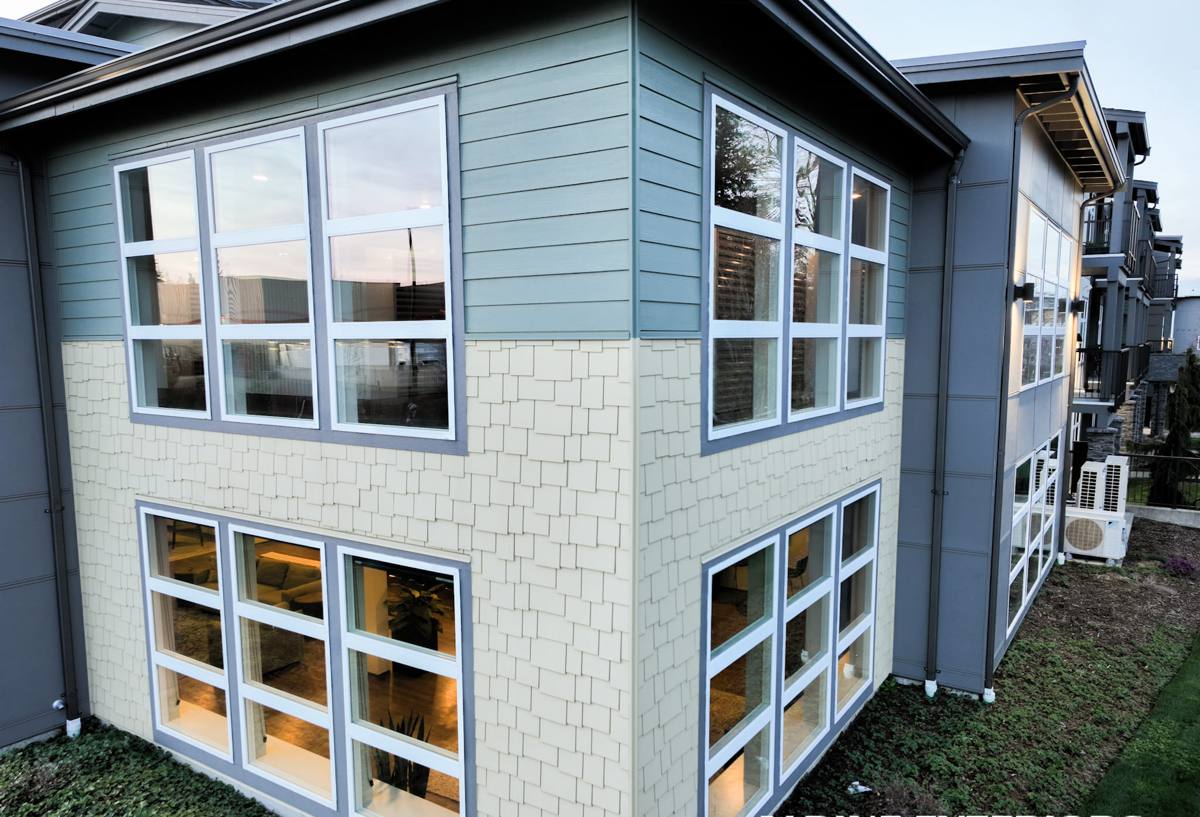
What Manatee County's Climate Actually Does to Siding
Every siding repair job in this area has to account for four things working on the material at the same time, not one at a time.
Hurricane-Force Wind
Wind doesn't just tear siding off in a named storm. Repeated wind-loading over years works panels loose at the fastener points, opens up seams that were tight when installed, and flexes lower-quality boards until they crack or bow. A lot of what looks like "one storm did this" damage is actually years of wind fatigue that finally gave out.
Intense, Year-Round UV
Bradenton doesn't get a real winter break from sun exposure. UV breaks down paint film and the resins in some composite and wood-based sidings faster here than in most of the country. Chalking, fading, and brittle caulk are UV symptoms, and they show up years ahead of schedule compared to homes further north.
Wind-Driven Rain
Rain that comes in sideways during a squall finds every gap a normal rainstorm would never reach — under-lapped seams, unsealed cuts around windows and vents, nail heads that back out slightly over time. Once water gets behind siding, the damage keeps spreading even after the surface looks dry.
Salt Air
Mill Creek isn't right on the water, but Manatee County as a whole sits close enough to Tampa Bay and the Gulf that salt-laden air travels well inland, especially on onshore wind. Salt accelerates corrosion on fasteners, trim flashing, and any exposed metal components, and it speeds up the breakdown of lower-grade caulks and sealants.
What We Typically Find on Mill Creek Repair Calls
The exact damage varies by the age and original siding type of the home, but a few issues come up again and again:
- Cracked or split boards near corners and window trim, where wind stress concentrates
- Soft or delaminating spots on wood-based or engineered wood siding where moisture got behind the surface
- Buckled or warped panels from heat cycling combined with moisture exposure
- Failed caulk joints at seams, trim, and penetrations, letting wind-driven rain track behind the siding
- Rust staining or corroded fasteners bleeding through the paint film
- Isolated impact damage from storm debris that wasn't addressed right after the event
None of these are unusual for the climate. What matters is how each one gets diagnosed and repaired, because the visible damage is often smaller than the hidden damage behind it.
What a Correct Repair Actually Involves
A siding repair that's done right isn't just about matching color and closing the gap. It has three parts, and skipping any of them is how "repaired" siding fails again within a year or two.
1. Find Out Why It Failed
Before we touch a damaged section, we look at what caused it. Was water getting behind the siding from a bad seam above it? Is a fastener pattern letting the board move in the wind? Is the substrate underneath damp or compromised? Replacing the visible damage without addressing the cause means the new material fails the same way.
2. Check What's Behind the Siding
Any time we open up a section, we check the water-resistive barrier, flashing, and sheathing underneath. In a humid, storm-exposed climate like this one, hidden moisture damage behind a small crack is common. A repair that only replaces the surface piece while leaving compromised sheathing or trapped moisture behind it isn't a repair — it's a cosmetic patch.
3. Match and Integrate the New Material
The repaired section needs to match the surrounding siding in profile, reveal, and finish, and it needs to be integrated into the existing seams, flashing, and caulk lines so water sheds the way the whole wall was designed to shed it. A patch that's proud, recessed, or caulked instead of properly lapped becomes the next failure point.
Patch Job vs. Proper Repair
| Approach | What It Involves | Typical Outcome in This Climate |
|---|---|---|
| Quick patch | Caulk over the crack, spot-paint, no investigation of the cause | Fails again within 1-2 storm seasons; hidden moisture keeps spreading |
| Surface-only replacement | Swap the damaged piece, no check behind the siding | Looks fixed, but trapped moisture or a bad fastening pattern causes a repeat failure nearby |
| Proper repair | Diagnose the cause, inspect behind the siding, replace and correctly integrate the section | Holds up through wind, UV, rain, and salt exposure for years |
Why We Repair With James Hardie Fiber Cement — Not Alternatives
We install and repair James Hardie fiber cement siding exclusively. We don't install vinyl, LP SmartSide, Cemplank, Allura, or primed wood siding, and when we're called out to repair an existing non-Hardie product, we're honest with the homeowner about what we're seeing rather than pretending every siding type performs the same in this climate.
Fiber cement is non-combustible, holds paint and factory ColorPlus finishes far longer under intense Florida UV than most alternatives, and doesn't swell, rot, or delaminate the way wood-based products can once moisture gets behind them. Hardie's HZ5 product line is engineered specifically for high-humidity, storm-prone climates like Manatee County's, which matters as much for repairs as it does for full replacements — patched-in sections need to perform as well as the surrounding wall for as long as the rest of the siding is expected to last.
When a Mill Creek home already has Hardie siding, repairs are usually straightforward: we can source matching profiles and colors and integrate a repair cleanly. When a home has a different siding product with a failure pattern tied to the material itself — not just storm damage — we'll say so plainly and lay out the options, including whether a full or partial re-side with fiber cement makes more sense long-term than continuing to patch a product that's fighting the climate.
Why a Crew That Already Works Mill Creek Matters
Siding repair isn't a one-size-fits-all trade. A crew that regularly works Bradenton and Manatee County neighborhoods has already seen how homes of a given era and construction type in this area tend to fail, which speeds up diagnosis and avoids guesswork. Local experience also means:
- Faster response after storm events, when demand for repairs spikes across the county
- Familiarity with the wind-load and moisture conditions specific to this part of Florida, not generic national guidance
- Established relationships with material suppliers, so matching profiles and colors doesn't turn into a long delay
- Accountability — a company with an ongoing local presence has a reputation to protect, not just a one-time job to finish
Chasing the lowest bid from a crew passing through after a storm is one of the most common ways homeowners end up paying for the same repair twice.
What Affects the Cost of a Siding Repair
| Factor | Why It Matters |
|---|---|
| Extent of hidden damage | Moisture behind the siding often costs more to address than the visible crack or gap |
| Number and location of repair sections | Scattered repairs across multiple wall areas cost more than one concentrated area |
| Access and height | Second-story and hard-to-reach sections require more time and equipment |
| Color and profile matching | Older siding may need repainting of adjacent sections to blend properly |
| Underlying cause | A repair tied to a systemic issue (bad original install, widespread moisture) costs more to fix correctly than isolated impact damage |
We won't give a number without seeing the actual damage — anyone who quotes a firm repair price sight unseen is guessing, and in this climate the hidden damage is often the real story.
When Repair Makes Sense — and When It Doesn't
Not every damaged section is worth repairing on its own. If a home's siding is isolated storm or impact damage on an otherwise sound, well-installed system, a targeted repair is the right call. But if we find the same failure pattern repeating across multiple areas of the house — widespread moisture intrusion, a product that's chronically struggling with UV and humidity, or an original installation with systemic gaps — patching section by section just means more service calls over time. In those cases, we'll tell you directly and let you weigh a full or partial re-side against ongoing repairs, rather than stringing along a series of temporary fixes.
If you're dealing with damaged, cracked, or failing siding on a Mill Creek home, we're happy to take a look and give you a straight answer about what caused it and what it'll take to fix it right. Reach out for a free, no-pressure estimate using the form below.