 Bradenton Siding
 Ellenton sits along the US-301/I-75 corridor just north of Bradenton, close enough to the Manatee River and the Gulf that homes here take on the same coastal punishment as properties much closer to the beach — just with a little less salt in the air and a little more open exposure to storms rolling up from Tampa Bay. If your siding is chalking, cracking, buckling, or showing soft spots around trim and windows, it's not just cosmetic. It's a sign the weather has finally worked its way past the surface, and that's worth taking seriously before it reaches the sheathing underneath.
This page covers what siding replacement actually means for an Ellenton home — what the local climate demands from the material, what a correct installation looks like, and what our process involves from first visit to final walkthrough.
What Ellenton's Climate Does to Siding
Manatee County doesn't get a break between seasons. Ellenton homes face intense, near year-round UV exposure that breaks down pigments and resins in lower-grade siding, wind-driven rain that forces water into every gap and seam a storm can find, and salt-laden air carried inland off the Gulf and the bay that accelerates corrosion on fasteners and trim. Add hurricane-force wind events — not hypothetical, but a recurring reality for this part of Florida — and you have a combination that exposes weak siding fast.
The result on a lot of older homes in this area is predictable:
- Fading and chalking on sun-facing walls, especially south and west exposures
- Swollen, delaminating, or soft panels where wind-driven rain has been getting behind the siding for years
- Cracked or lifted caulk joints around windows, doors, and trim that let moisture in even when the siding itself looks fine
- Corroding fasteners and streaking stains from rust bleeding through the finish
- Warping or buckling from repeated wet-dry cycles in humid Florida summers
None of this is a defect unique to your house — it's what happens to siding that wasn't engineered for this specific climate, or that was installed without the attention to detail this climate demands.
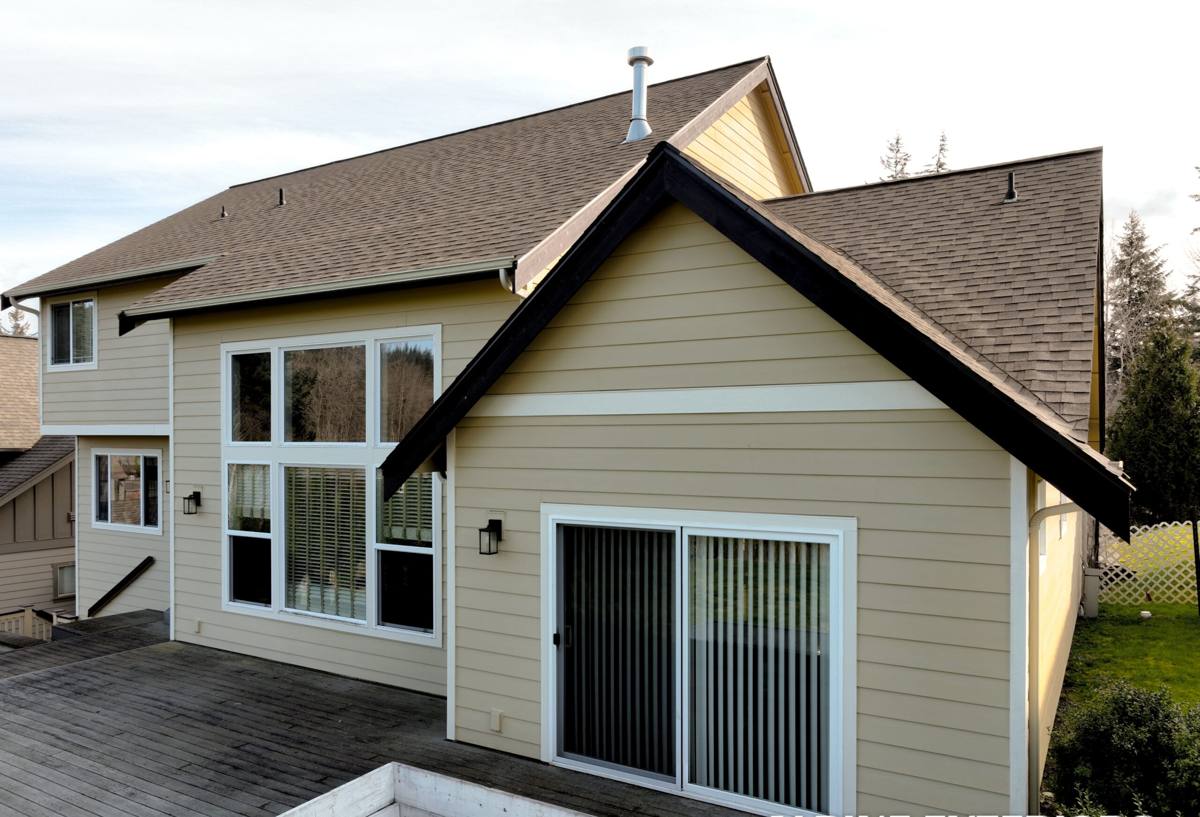
Why the Material Choice Matters More Here Than Most Places
In a drier, milder climate, siding material choice is partly an aesthetic decision. In Ellenton, it's a durability decision first. We install James Hardie fiber cement siding exclusively, and specifically the HZ5 product line engineered for high-humidity, hurricane-prone regions like ours. It's non-combustible, it doesn't swell or rot the way wood-based products can when moisture gets behind them, and it holds its shape and color under sustained UV exposure far better than vinyl or engineered wood alternatives.
We don't install vinyl, LP SmartSide, primed wood, or other fiber cement brands — not because there's no market for them, but because after years of servicing homes in this exact climate, we've standardized on the one product system that consistently holds up to what Gulf Coast weather actually does to a house. That's a professional judgment call we stand behind, not a sales pitch.
How Fiber Cement Compares for This Climate
| Factor | Vinyl Siding | Wood/Engineered Wood | James Hardie Fiber Cement |
|---|---|---|---|
| UV / fade resistance | Fades and chalks over time | Fades; needs repainting | ColorPlus finish holds color long-term |
| Wind-driven rain / moisture | Can warp; seams leak if installed loosely | Prone to swelling, rot at exposed edges | Engineered for moisture resistance |
| Hurricane-force wind rating | Lower impact and wind resistance | Varies by product and install quality | Rated for high-wind coastal regions |
| Salt air / corrosion exposure | Panel itself is inert, but fasteners and trim still corrode | Accelerated wear near coast | Stainless/coated fasteners, non-combustible core |
| Long-term maintenance | Low, but cracks and becomes brittle with age | Regular repainting and caulk maintenance | Minimal — factory finish, occasional wash |
What a Correct Siding Replacement Involves
Replacing siding on an Ellenton home isn't just pulling off old panels and nailing up new ones. Done right, it's a full building-envelope job:
1. Tear-Off and Substrate Inspection
Once the old siding comes off, we inspect the sheathing underneath for water damage, rot, or soft spots — especially common around window and door openings where old caulk has failed. Any compromised sheathing gets repaired or replaced before anything new goes up. Covering damaged substrate with new siding just hides the problem; it doesn't fix it.
2. Weather-Resistive Barrier
A properly lapped and sealed weather-resistive barrier (house wrap) goes on before the siding. In a climate where wind-driven rain is a regular event, this layer is what keeps incidental moisture from reaching the sheathing even if it gets past the outer siding layer.
3. Flashing at Every Penetration
Windows, doors, hose bibs, light fixtures, vents — every penetration in the wall is a potential entry point for water. Correct flashing detail at each one is one of the biggest differentiators between a siding job that lasts fifteen years and one that lasts thirty-plus.
4. Fastening and Clearances to Manufacturer Spec
James Hardie siding has specific fastening patterns, nail penetration requirements, and minimum clearances from grade, roof lines, and other flashing that are engineered for wind and moisture performance — and that are also required to keep the manufacturer's warranty intact. Cutting corners here is invisible on install day and expensive later.
5. Trim, Caulking, and Paint Detail
The finish details — trim boards, caulk joints, touch-up at cut edges — are where a lot of lesser installs fail first in this climate. We treat this stage as part of the weatherproofing, not just the cosmetics.
Signs an Ellenton Home Needs Siding Replacement (Not Just Repair)
- Soft, spongy panels when pressed, especially near the bottom courses or window sills
- Visible warping, buckling, or gaps between panels
- Persistent moisture, mold, or musty smell on interior walls that back up to exterior siding
- Siding that's more patch than original material after years of storm repairs
- Paint or finish that won't hold anymore no matter how often it's redone
- Rising energy bills that track with failing insulation behind aging siding
A handful of cracked boards can often be repaired. Widespread moisture intrusion, soft sheathing, or siding original to an older home usually means replacement is the more honest and more cost-effective path — repeated patch jobs on failing siding tend to cost more over time than doing it right once.
Our Process for Ellenton Homeowners
- Free on-site assessment — we walk the exterior, check for moisture and substrate issues, and give you a straight answer on repair versus replacement.
- Written estimate — scope, materials, and cost laid out clearly, no pressure to decide on the spot.
- Substrate and moisture check during tear-off — any hidden damage gets flagged and addressed before new siding goes on, not discovered after.
- Installation to manufacturer spec — correct fastening, flashing, and clearances so the warranty and the wind rating are both intact.
- Final walkthrough — we go over the finished work with you before we consider the job done.
Why Local Experience in Ellenton Matters
A crew that already works Manatee County knows how differently exposure varies block to block here — a home on a more open, wind-exposed lot needs different attention to fastening and flashing than one tucked behind mature trees. We know which failure points show up first on homes in this area, what inspectors here expect, and how to sequence a job around Florida's summer storm patterns so your home isn't sitting exposed longer than it needs to be. That's the kind of judgment that only comes from doing this work repeatedly in this specific climate, not from a general contractor passing through.
Cost Factors to Expect
| Factor | Why It Affects Cost |
|---|---|
| Home size and wall complexity | More linear footage, corners, and trim detail means more labor and material |
| Substrate condition | Hidden rot or water damage found during tear-off adds repair scope |
| Siding profile and finish | Lap width, texture, and ColorPlus finish options vary in material cost |
| Trim and accessory work | Fascia, soffit, and trim replacement alongside siding adds to scope |
| Access and site conditions | Multi-story sections, tight lots, or landscaping can affect labor time |
We don't quote ballpark numbers without seeing the house — too many of these factors vary from one Ellenton property to the next to make a blanket estimate honest.
Get a Straight Answer on Your Siding
If your siding is aging, storm-damaged, or just never installed right the first time, it's worth getting an honest, no-pressure look before another Florida summer and hurricane season put more stress on it. Fill out the form below for a free estimate, and we'll walk your Ellenton property, tell you what we actually see, and lay out your options clearly.