 Bradenton Siding
 Parrish sits in the northern stretch of Manatee County, along the Manatee River corridor between Bradenton and the Hillsborough County line, and it's a community that's been changing fast. New subdivisions have gone up alongside older rural homesteads and long-established neighborhoods, so on any given street a siding crew might be replacing builder-grade material that's barely a decade old right next to original siding on a home that's been standing since long before Parrish saw this kind of growth. Different ages, same problem: Manatee County's climate doesn't wait for siding to be "old enough" before it starts working on it. Hurricane-force winds, intense year-round UV, wind-driven rain, and salt-laden air all take a toll here, and siding replacement done right has to account for all four, not just whichever one happens to be top of mind that season.
Why Parrish's Growth Changes the Siding Conversation
A lot of Parrish's newer homes were built quickly during a period of heavy regional demand, and builder-grade siding specs on production homes don't always reflect what actually holds up best under Manatee County conditions long-term — they reflect what met code and budget at the time of construction. That means we see plenty of newer Parrish homes already showing siding problems well before the 20-25 year mark that would be normal for a properly specified, correctly installed product. At the same time, Parrish still has older homes on larger lots and rural parcels where the original siding has simply reached the natural end of its service life after decades of Florida weather.
Both situations lead to the same conversation: does this siding get repaired one more time, or is it time for a full replacement with something built to actually last in this climate. We treat that as an honest assessment, not a foregone conclusion — but for a lot of Parrish homes we're called out to, the siding has already passed the point where patching makes financial sense.
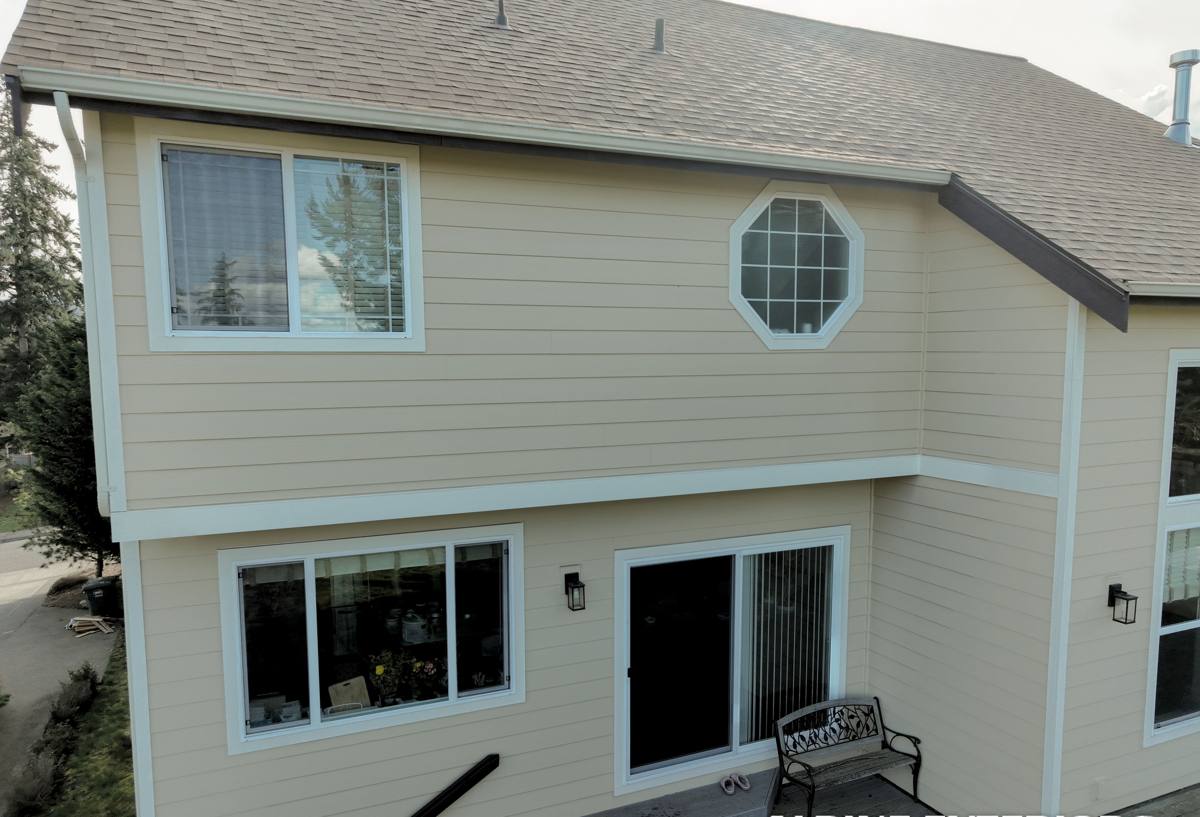
What Manatee County's Climate Actually Does to Siding
Hurricane-Force Wind
Parrish sits far enough from the immediate coastline to avoid the most extreme storm-surge exposure, but it's still fully within Manatee County's wind zone, and hurricane-force gusts don't stop at the water's edge. Siding that isn't properly fastened, or that relies on flexible attachment rather than rigid mechanical fastening, is at real risk of being torn loose or lifted at the edges during a significant wind event. On newer subdivisions with more open lots and less mature tree cover to break up wind, that exposure can be more direct than on an older, tree-shaded rural property.
Year-Round UV
Florida's sun angle and long day length mean siding here takes far more cumulative UV exposure annually than siding in most of the country. Lower-grade paint and coating systems break down under that load — pigment binders degrade, colors chalk and fade unevenly, and south- and west-facing walls typically show it years before the shaded sides of the same house. It's a slow, predictable failure pattern, and it's one of the clearest signs that a factory-applied, climate-engineered finish is worth paying for over a field-painted alternative.
Wind-Driven Rain
A calm rain is easy for almost any siding to handle. Rain pushed sideways by strong wind is a different test — it finds its way into butt joints, fastener penetrations, and trim intersections that stay bone dry in normal weather. Homes with aging caulk lines or marginal flashing details are the ones that start showing interior staining or soft sheathing after a storm season or two of that kind of exposure, and it's usually the flashing and joint details that fail first, not the siding material itself.
Salt Air, Even This Far Inland
Parrish isn't beachfront property — it's set back from the Gulf along the river rather than sitting on a barrier island like Anna Maria or Longboat Key. That distance does soften the effect, but it doesn't eliminate it. Tampa Bay and the Gulf are close enough that salt-laden air still moves inland on prevailing winds, especially during onshore weather patterns, and it settles on exterior surfaces throughout Manatee County, Parrish included. The practical effect is slower and less severe than what a direct waterfront home deals with, but it still accelerates corrosion on exposed fasteners and trim hardware over years of exposure, which is why fastener choice still matters here even though Parrish isn't sitting right on the water.
Signs a Parrish Home Needs Replacement, Not Another Repair
Not every siding problem means a full tear-off. But a few signs consistently mean patching is no longer the economical choice, and they're worth checking for before committing to another round of spot repairs:
- Paint that's chalking, peeling, or fading unevenly, especially on south- and west-facing walls
- Soft or spongy areas when pressed near windows, doors, corners, or the bottom courses
- Visible warping, buckling, or gaps between panels, particularly after a wind event
- Rust streaks around fasteners or corrosion on exposed trim and hardware
- Musty smells or staining on interior walls that back up to exterior siding
- Siding that's original to a home 20+ years old with no documented replacement
- Repeated repairs to the same section of wall within just a few years
Any one of these on its own might still be repairable. Several at once, or a pattern of repeat problems in the same spot, usually means the siding system as a whole has stopped doing its job.
What a Correct Siding Replacement Job Involves
Tear-Off and Sheathing Inspection
Once the old siding comes off, we check the sheathing and framing underneath before anything new goes on. This is where hidden damage from years of minor moisture intrusion actually shows up — soft or delaminated sheathing, rot at window and door openings, or corrosion at old fastener points. Any of that gets repaired before the new siding goes up, not discovered after the fact.
Water-Resistive Barrier and Flashing
The barrier and flashing behind the siding do most of the actual work of keeping wind-driven rain out of the wall assembly. We install a proper water-resistive barrier and integrate flashing at every roof-to-wall transition, window, and door opening, lapped in the correct sequence so water sheds outward instead of finding a way behind the cladding.
Fastening to Manatee County Wind Requirements
Fastener type, spacing, and penetration depth aren't cosmetic choices — they're what determines whether siding stays attached in a significant wind event. We fasten to the manufacturer's published specifications and to what Manatee County's building code requires for the local wind zone, and we pull the proper permits rather than treating fastening schedules as optional.
Finish and Trim
Corner boards, trim, and fascia get finished to match the siding product and to hold up to the same UV and moisture exposure as the field material. A mismatched or under-specified trim detail is a common place for problems to start even when the main siding field was installed correctly.
Why We Install Only James Hardie Fiber Cement
We don't offer vinyl, LP SmartSide or other engineered wood siding, or other fiber cement brands like Cemplank or Allura. That's a deliberate standardization decision, not an oversight. Vinyl is inexpensive and easy to maintain in mild climates, but as a non-rigid product it's more vulnerable to being lifted or torn in sustained hurricane-force gusts than a mechanically fastened, rigid material. Engineered wood products have a genuine track record, but they're still wood-fiber at the core, and in a humid climate where surfaces rarely get a long stretch to fully dry out, any compromise in the factory edge seal — an unsealed field cut, a cracked fastener point, a joint that opens over time — creates a path for moisture to reach that wood core.
James Hardie's fiber cement is non-combustible, holds a rigid, mechanically fastened profile that performs well under wind load, and its ColorPlus factory finish is engineered to resist the fading and chalking that Florida UV causes on field-painted alternatives. Hardie also builds climate-specific HZ product lines rather than a single generic formulation, which matters in a state where humidity and moisture exposure are the dominant long-term stress, not freeze-thaw cycling. We'd rather install one product to a high standard across every job than spread our crews across several products we can't back with the same confidence.
Comparing Siding Options for a Parrish Home
| Factor | Vinyl | Engineered Wood | James Hardie Fiber Cement |
|---|---|---|---|
| Performance in hurricane-force wind | Can be lifted or torn loose in sustained high gusts | Adequate when properly fastened and sealed | Rigid, mechanically fastened, engineered for local wind loads |
| Behavior under year-round UV | Can fade, chalk, and become brittle over time | Factory finish quality varies by product | ColorPlus finish resists fading and chalking |
| Moisture and humidity tolerance | Doesn't rot, but traps humid air behind it | Wood-fiber core can swell if edge seal fails | Non-organic, doesn't swell or support rot |
| Salt air exposure (inland Parrish) | Generally stable; fastener corrosion possible | Generally stable; fastener corrosion possible | Generally stable; quality fastener specs matter |
| Combustibility | Can melt or deform under extreme heat | Combustible (wood-based) | Non-combustible |
Our Process, Start to Finish
- On-site inspection — we walk the exterior, check for soft spots and existing damage, and give an honest assessment of repair versus replacement
- Straightforward estimate — a clear number based on your home's size, condition, and the Hardie product line that fits your budget and design goals
- Tear-off and sheathing check — old siding removed, sheathing and framing inspected, any damage repaired before new material goes on
- Water-resistive barrier and flashing — installed and integrated at every penetration and transition before siding goes up
- Hardie siding installation — fastened to manufacturer specification and Manatee County wind code, with permits pulled and inspections scheduled
- Trim, caulking, and final walkthrough — finish work completed and the whole job reviewed with you before we call it done
Why Hiring a Crew That Already Works Parrish Matters
A lot of what determines whether siding performs for decades or starts failing in a few years happens in details a homeowner never sees once the job is finished — how much a flashing lap actually overlaps, whether cut ends got sealed before installation, whether fasteners were driven to the correct depth rather than over- or under-driven. A crew that works Parrish and the surrounding Manatee County area regularly has already seen how those details play out on this specific mix of newer subdivisions and older rural properties, under this specific combination of wind, sun, rain, and salt exposure.
It also matters for permitting. Manatee County's wind zone requirements affect fastening schedules and product specifications, and a contractor who pulls permits in this county routinely knows what local inspectors actually check for, rather than working from a generic standard that doesn't reflect Parrish's actual code requirements.
If you're weighing a repair against a full siding replacement, or you're just not sure what condition your current siding is really in, we're happy to take a look. We offer free, no-pressure estimates for Parrish and the rest of the greater Bradenton area — use the form below to get a time on the schedule.