 Bradenton Siding
 Why Anna Maria Island Decks Fail Faster Than Inland Decks
A deck on Anna Maria Island lives a harder life than one ten miles inland in Bradenton. The barrier island sits directly in the path of salt-laden air moving off the Gulf, and that salt exposure never really stops — it's not just a storm-season issue, it's a daily one. Add in near-constant UV exposure, wind-driven rain that gets pushed sideways under railings and into ledger connections, and the occasional direct hit from tropical-storm or hurricane-force wind, and you have a structure that's being attacked from every angle at once. Fasteners corrode faster. Wood fibers break down faster. Coatings chalk and fade faster. This is why we see decks on the island needing replacement 5 to 10 years sooner than comparable decks in drier, less coastal parts of Manatee County.
Replacing a deck here isn't just about swapping old boards for new ones. It's about understanding which failure points are specific to a barrier island environment and building those weak points out of the new structure from the start.
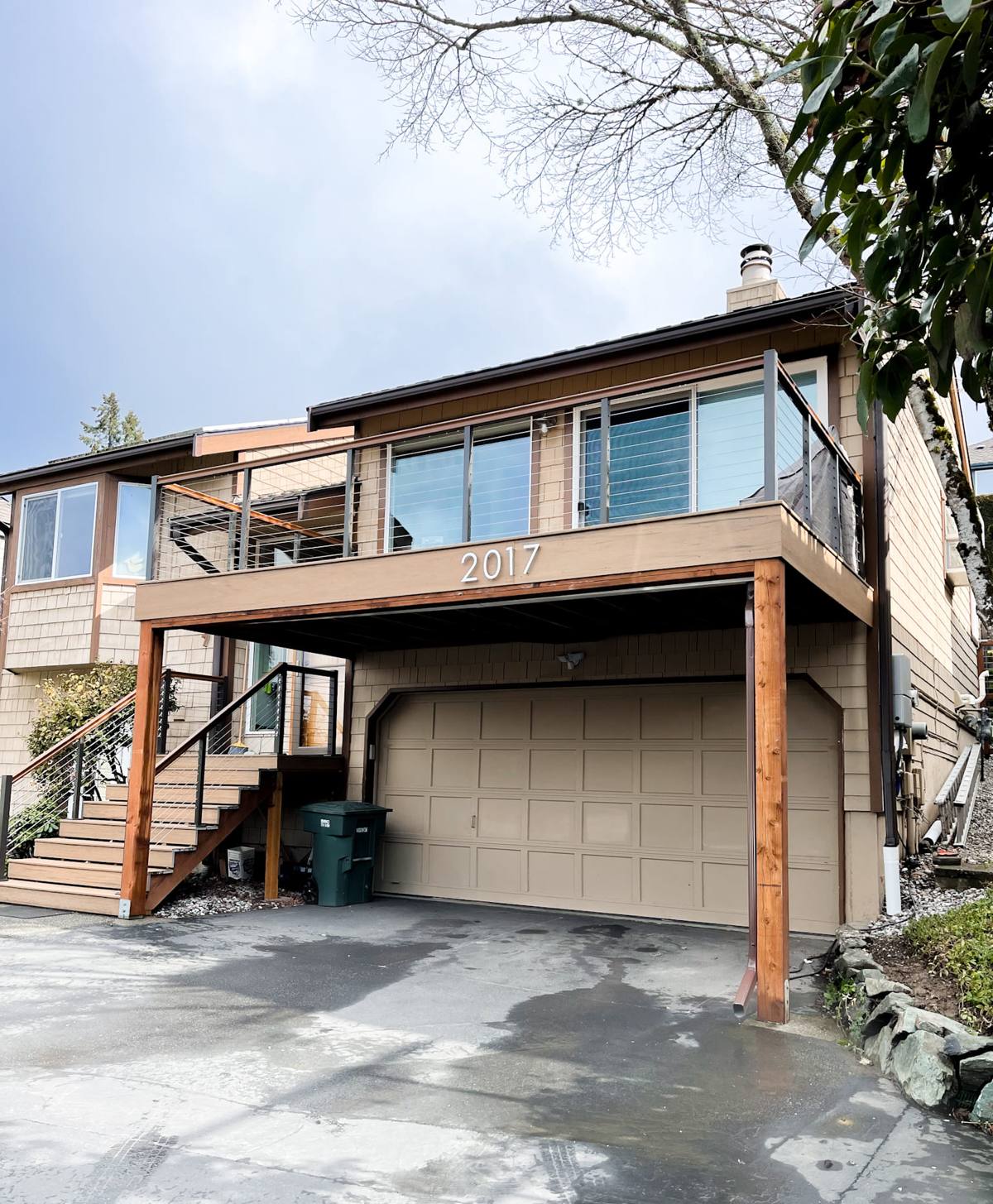
What Salt Air, UV, and Storm Wind Actually Do to a Deck
Salt Air and Corrosion
Airborne salt settles on every exposed surface — fasteners, joist hangers, structural connectors, even the cut ends of boards. Standard hot-dip galvanized hardware, which holds up fine in most of the country, corrodes noticeably faster this close to the Gulf. Once a fastener starts rusting, it loses holding strength long before it looks visibly bad, which is part of what makes island decks deceptively risky — they can look fine on the surface while the connections underneath have already weakened.
UV Exposure
Florida sun is intense year-round, not seasonal. On wood decking, UV breaks down the lignin that holds wood fibers together, leading to graying, splintering, and surface checking. On composite decking, UV causes fading and can accelerate the breakdown of lower-quality cap layers over time. Full southern and western exposure — common on many Anna Maria Island lots — accelerates all of this.
Wind-Driven Rain and Moisture Intrusion
Wind off the Gulf doesn't just bring rain straight down — it drives it sideways and upward, forcing water into places a standard rain event never would: under railing base plates, behind ledger board flashing, into stair stringer connections. That moisture, combined with heat, is what drives rot in framing and decay in structural posts, often starting from the inside out where it's invisible until a board or post fails.
Hurricane-Force Wind Loads
Wind uplift on an open deck structure — especially elevated decks common on island homes — is a real structural load, not just a comfort issue. Undersized post connections, insufficient joist hangers, or ledger boards that aren't properly through-bolted into the house structure are the parts of a deck most likely to fail first in a serious wind event.
Signs Your Anna Maria Island Deck Needs Replacement, Not Repair
- Soft or spongy spots in decking boards, especially near the house or around posts
- Visible rust streaking from fasteners or metal connectors
- Railings that flex, wobble, or feel less rigid than they used to
- Gaps opening up between the ledger board and the house wall
- Popped or backed-out fasteners across multiple boards
- Posts that show soft wood, splitting, or discoloration at the base
- A deck older than 12-15 years that has never had structural connections inspected
If you're only seeing one or two of these on a deck that's otherwise sound, a repair may be enough. Once several of these show up together, or the framing itself is compromised, replacement is almost always the more honest recommendation — patching a structurally weak deck just delays the real cost and adds risk in the meantime.
Decking Material Options for Barrier Island Conditions
Every decking material has trade-offs in this environment. We walk homeowners through these honestly rather than pushing whichever product has the best margin.
| Material | Salt Air Performance | Maintenance | Notes |
|---|---|---|---|
| Pressure-treated wood | Fair — needs sealing | Annual cleaning, periodic re-sealing | Lowest upfront cost, but requires the most upkeep in salt air |
| Composite decking | Good to very good | Low — occasional washing | Cap-stock quality varies significantly between product lines |
| PVC decking | Very good | Low | Fully synthetic, doesn't absorb moisture; higher upfront cost |
| Tropical hardwoods (e.g., ipe) | Good | Moderate to high | Dense and durable but needs regular oiling to hold appearance |
We generally steer island homeowners away from lower-grade composite products with thin or uncapped surfaces — not because the category is bad, but because in full sun and salt exposure, a thin cap layer is exactly the kind of shortcut that shows up early as fading, staining, or surface wear. That's a maintenance-burden and warranty-structure conversation we have honestly, not a scare tactic.
Hardware and Fasteners Matter as Much as the Decking
Most deck failures near the Gulf start below the decking boards, not on top of them. On every replacement we do on Anna Maria Island, we use stainless steel or coated fasteners rated for coastal/high-corrosion environments, along with structural connectors sized correctly for the framing. This is a place where cutting corners doesn't show up for a few years — and then it shows up all at once, usually as a soft spot or a loose railing that turns out to be a much bigger problem underneath.
What a Properly Fastened Coastal Deck Includes
- Stainless steel or coastal-rated coated screws and bolts throughout
- Corrosion-resistant joist hangers and structural connectors, correctly sized
- Ledger boards through-bolted (not just lag-screwed) into house framing where required
- Proper flashing between the ledger and the house wall to stop wind-driven rain intrusion
- Post bases set to keep wood off standing water and direct ground contact
Our Deck Replacement Process
1. On-Site Assessment
We inspect the existing deck's framing, posts, ledger connection, and fasteners — not just the surface boards — to understand what's actually failing and why. On an island property, we're also looking at sun exposure, prevailing wind direction, and how close the structure sits to open water or salt spray.
2. Material and Design Discussion
We go over decking material options, railing style, and any code or permitting considerations specific to Manatee County and the barrier island, and give you a straightforward recommendation based on your home, your budget, and how you actually use the space.
3. Demolition and Structural Evaluation
Old decking, railings, and framing are removed. This step often reveals hidden issues — rot at the ledger, corroded hardware, undersized framing — that weren't visible from the surface. We'll flag anything that changes the scope before we proceed, not after.
4. Framing and Structural Rebuild
New framing is built to current code with corrosion-resistant hardware and correctly sized structural connections, sized for both the live load of the deck and the wind loads this area sees.
5. Decking, Railing, and Finish
Decking material is installed per manufacturer spacing and fastening specs, which matter more here than in drier climates because of how much boards expand, contract, and move with humidity and heat. Railings are set and checked for rigidity, not just appearance.
6. Final Walkthrough
We walk the finished deck with you, point out any maintenance you'll want to stay on top of, and answer questions before we consider the job done.
What a Correct Deck Replacement Costs — and What Drives the Range
Costs vary based on square footage, decking material, deck height and complexity (multi-level decks, built-in seating, stairs), and how much structural repair the framing needs once it's opened up. Rather than quote a number that doesn't mean much without seeing the property, here's what actually moves the price:
| Cost Factor | Why It Matters on Anna Maria Island |
|---|---|
| Decking material choice | PVC and quality composite cost more upfront but reduce salt-air maintenance |
| Framing condition | Rot or corrosion found during demo often requires additional structural work |
| Deck height and elevation | Elevated coastal homes often need more substantial post and footing work |
| Railing style and code requirements | Height and baluster spacing requirements affect material and labor |
| Hardware grade | Coastal-rated stainless fasteners cost more than standard hardware but last longer |
Why Hiring a Crew That Already Works Anna Maria Island Matters
A contractor who mostly works inland jobs may not think twice about using standard galvanized hardware or a lower-grade composite — because in most of Manatee County, that's a reasonable choice. On the island, those same choices lead to early failures. Working this area regularly means we already know which fastener grades hold up, which decking products perform honestly in full Gulf sun and salt spray, and how wind-driven rain finds its way into a ledger connection if it isn't flashed correctly the first time. That's not something you learn from a spec sheet — it's something you learn by seeing what actually fails out here after a few Florida summers and a few named storms.
It also means we're familiar with the practical realities of working on the island — property access, HOA or community expectations where they apply, and building a deck that's going to perform through the next hurricane season, not just look good on installation day.
If your deck is showing its age or you're planning a full replacement, we're happy to take a look and give you a straightforward, no-pressure estimate. Use the form below to get started.