 Bradenton Siding
 Board & Batten Siding Built for Whitfield Estates
Whitfield Estates sits close enough to the water that every exterior material on a home has to earn its keep. Board and batten siding — with its clean vertical lines, deep shadow reveals, and classic-to-modern versatility — is one of the most requested looks in this part of Manatee County, and for good reason. It reads as substantial and architecturally intentional in a way that flat lap siding sometimes doesn't, and it pairs well with the mix of home styles found in and around Whitfield Estates, from traditional coastal cottages to more contemporary rebuilds.
But board and batten is also one of the least forgiving siding profiles when it's installed by someone who doesn't understand what Bradenton's climate does to a home's exterior over time. The vertical boards and raised battens create more joints, more fastener penetrations, and more edges than a standard horizontal lap job — every one of those details is a potential entry point for water if it's not handled correctly. This page walks through what board and batten actually needs to hold up in Whitfield Estates specifically, what a correct installation looks like, and why we only do this work in James Hardie fiber cement.
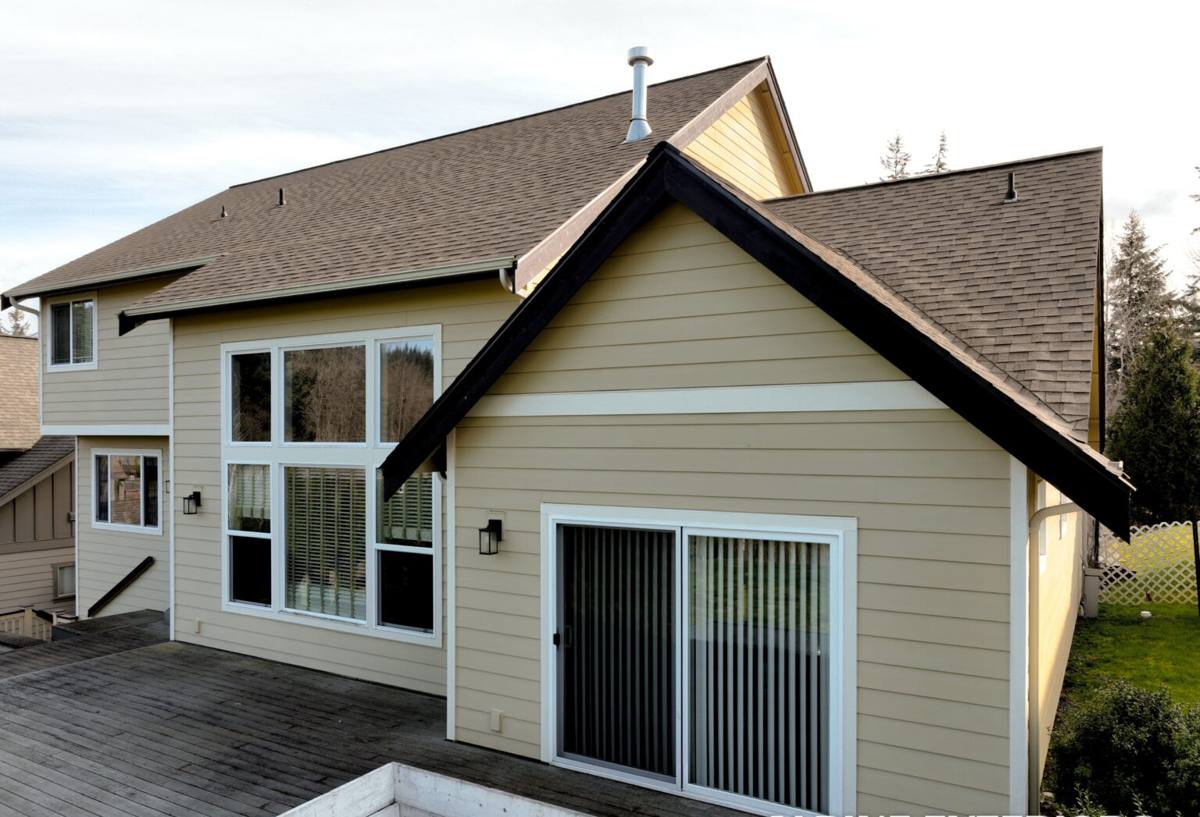
What Bradenton's Climate Actually Does to This Siding Profile
It's easy to talk about "harsh weather" in the abstract. On a real board and batten installation, the damage shows up in specific, predictable places.
Hurricane-Force Wind Loads
Wind doesn't just push against a wall — it gets under loose or improperly fastened boards and batten strips and pries them outward. Board and batten has more individual pieces than lap siding, which means more fastening points that all have to be done to spec. A batten that's face-nailed instead of blind-nailed correctly, or spaced beyond the manufacturer's requirement, becomes the piece that peels first in a tropical storm or hurricane-force gust.
Year-Round, High-Intensity UV
Florida sun is relentless on painted wood and engineered wood products in particular. Field-applied paint on batten strips and trim breaks down faster here than almost anywhere else in the country, and once the paint film starts to chalk and crack, the substrate underneath is exposed. This is one of the biggest reasons we standardized on a factory-applied finish rather than site-painted boards.
Wind-Driven Rain
Vertical board and batten siding has to shed water down, not let it work sideways into the joints between boards and under battens. Storms that come in off the Gulf don't fall straight down — they drive rain horizontally into walls, and a siding system that isn't detailed for that will take on moisture at every batten edge and every horizontal joint.
Salt Air and Coastal Corrosion
Homes near the coast in the Bradenton area deal with airborne salt that accelerates corrosion on fasteners, flashing, and any hardware that isn't rated for coastal exposure. Salt air also degrades certain paints and coatings faster than inland exposure would, which matters a lot when you're choosing a siding material and a finish system that's supposed to last decades, not years.
What a Correct Board & Batten Installation Actually Involves
Board and batten looks simple from the curb — vertical boards, battens over the seams — but the parts that determine whether it lasts are the parts you don't see once the job is done.
- Weather-resistive barrier (WRB): A continuous, properly lapped and taped water barrier goes on before a single board goes up. This is the layer that actually stops bulk water if wind-driven rain gets past the siding face.
- Furring or direct-to-sheathing installation done to spec: Depending on the wall assembly, board and batten may be installed over vertical furring strips to create a drainage plane, or direct to sheathing per manufacturer instructions — the wrong choice for the wall type is a common source of trapped moisture.
- Fastener pattern and embedment: Both the boards and the battens have specific nailing schedules — fastener type, spacing, and depth — that are engineered for wind resistance. Skipping or shortcutting this is invisible until a storm tests it.
- Batten spacing and reveal consistency: Battens need to land over the board joints correctly and stay consistent across the elevation, which takes careful layout before the first piece is cut.
- Flashing at every penetration: Windows, doors, hose bibs, light fixtures, and vents all need proper flashing integrated with the WRB — not just caulk over the top of the siding.
- Correct starter strips and terminations: Where board and batten meets trim, soffit, foundation, or roofline, the termination detail is what keeps water from tracking behind the assembly.
Any one of these steps done wrong won't necessarily show up at final walkthrough. It shows up two, five, or ten years later — as a soft spot behind a batten, a stain migrating from a window head, or a board that's swollen at the bottom edge. That's exactly why board and batten needs a crew that treats the hidden layers with as much care as the visible ones.
The James Hardie System We Install
We install James Hardie fiber cement exclusively — no vinyl, no engineered wood, no primed spruce or cedar board and batten. For a vertical board and batten look, that generally means James Hardie's vertical panel or board products paired with Hardie trim battens, finished in the factory-applied ColorPlus finish rather than a field-painted coating.
Why Fiber Cement for This Profile Specifically
Fiber cement doesn't expand and contract with humidity the way wood-based products do, which matters enormously on a profile with this many seams and joints. It's non-combustible, resists the moisture absorption that causes wood-based boards to swell and rot at butt joints and bottom edges, and it holds a factory finish far longer than field-applied paint can survive under Florida UV.
Climate-Engineered for This Region
James Hardie engineers its HZ product lines specifically for humid, high-moisture climates like ours, accounting for the way moisture cycles through a wall assembly in Gulf Coast conditions rather than treating Florida the same as a dry inland climate.
ColorPlus Factory Finish
Instead of relying on field-applied paint that has to fight UV and salt air from day one, ColorPlus finish is baked on at the factory under controlled conditions, which gives a more durable, more fade-resistant color layer — and it comes backed by its own finish warranty separate from the product warranty.
A Real, Transferable Warranty
James Hardie backs its siding with a strong product warranty that's transferable if the home sells — a meaningful detail for Whitfield Estates, where homes do change hands and buyers increasingly ask what siding is on the house and what's left on the warranty.
Board & Batten vs. Other Common Siding Choices in Coastal Manatee County
| Factor | James Hardie Board & Batten | Vinyl Board & Batten | Engineered Wood / Primed Spruce |
|---|---|---|---|
| Wind resistance (properly installed) | Engineered fastening rated for high-wind zones | Prone to flexing, cracking, and blow-off in sustained gusts | Depends heavily on fastener quality and moisture condition |
| UV / fade resistance | Factory ColorPlus finish resists fading for years | Color is molded through material but can chalk over time | Field paint fades and chalks faster in intense Florida sun |
| Moisture behavior | Does not swell, rot, or absorb water like wood-based products | Doesn't absorb water but can warp with heat | Prone to swelling and rot at joints if moisture gets in |
| Salt air / coastal exposure | Engineered for humid coastal climates | Generally stable but seams can degrade | More vulnerable without diligent recoating |
| Combustibility | Non-combustible | Combustible | Combustible |
We're not going to pretend vinyl or engineered wood board and batten can't be installed reasonably well by someone — they can. But the trade-offs in wind performance, moisture behavior over time, and long-term appearance are exactly why we made fiber cement our standard rather than an upsell option.
Our Installation Process
- On-site assessment: We look at the existing wall assembly, current siding condition, moisture history, and any problem areas — window heads, corners, roof-to-wall transitions — before quoting anything.
- Tear-off and substrate check: Old siding comes off and we inspect the sheathing underneath for any hidden rot or moisture damage that needs addressing before new siding goes on.
- Weather barrier installation: A continuous, properly lapped WRB goes down first, with all penetrations flashed correctly.
- Layout planning: Board spacing and batten placement are laid out across each elevation before cutting begins, so reveals stay even and battens land correctly over joints.
- Installation to manufacturer and wind-zone specification: Boards and battens go up with the fastener type, spacing, and pattern required for our local wind zone.
- Trim, flashing, and sealant detailing: All terminations, corners, and penetrations are finished and sealed per James Hardie's installation requirements.
- Final walkthrough: We go over the completed job with the homeowner and address anything before calling it finished.
Why It Matters That We Already Work in Whitfield Estates
A siding crew that's unfamiliar with this specific area is starting from zero on things that actually affect the job — how Manatee County permitting and inspection typically go, what wind-load documentation is expected on a re-side in a coastal-influenced zone, and what board and batten actually looks like sitting next to the other homes on the block. A crew with local experience in Whitfield Estates has already worked through those logistics and isn't learning on your project.
There's also a practical maintenance angle. Homes this close to Sarasota Bay and the Gulf deal with salt exposure that inland Bradenton and Manatee County homes don't see nearly as much. A contractor who regularly works this specific corridor understands that difference and installs — and recommends maintaining — accordingly, rather than applying a generic, one-size-fits-all approach.
Homeowner Maintenance Checklist for Coastal Board & Batten
- Rinse salt residue off exterior walls periodically, especially after long dry spells followed by wind events
- Inspect caulking at window and door trim annually and have gaps re-sealed before storm season
- Watch for any staining or discoloration streaking down from batten joints — a sign water is tracking somewhere it shouldn't
- Keep gutters and downspouts clear so roof runoff isn't sheeting down wall sections
- Have the siding visually inspected after any major named storm, even if no damage is obvious from the ground
- Trim back vegetation that holds moisture against the siding face
Cost Factors to Expect
Every home is different, but a few factors reliably move the price on a board and batten project in this area: the amount of tear-off and substrate repair needed, the home's total square footage and wall height, the number of window and door openings requiring flashing and trim work, and whether the project is a full re-side or a partial elevation. We'll walk through all of that with you directly rather than quoting a number before we've seen the house.
If you're weighing board and batten for a home in Whitfield Estates, we're glad to come take a look, answer your questions honestly, and put together a straightforward, no-pressure estimate. There's a form just below this section — reach out and we'll get a time on the calendar.