 Bradenton Siding
 Siding Installation for Ellenton Homes
Ellenton sits in unincorporated Manatee County, tucked along the Manatee River corridor between Bradenton and Palmetto, close enough to Tampa Bay that its homes take on the same coastal weather pattern the rest of the region deals with. That means a siding installation here has to be planned around more than curb appeal. Hurricane-force wind events, intense year-round UV exposure, wind-driven rain that gets pushed sideways into walls during storms, and salt-laden air moving in off the bay all put real, sustained stress on exterior materials. We install siding across Manatee County, and Ellenton properties get the same climate-first approach: the material and the installation detail both have to hold up to what this specific area actually throws at a house, not just look good on install day.
We install James Hardie fiber cement siding exclusively. For a property exposed to this combination of wind, sun, moisture, and salt, it's the system we stand behind without reservation.
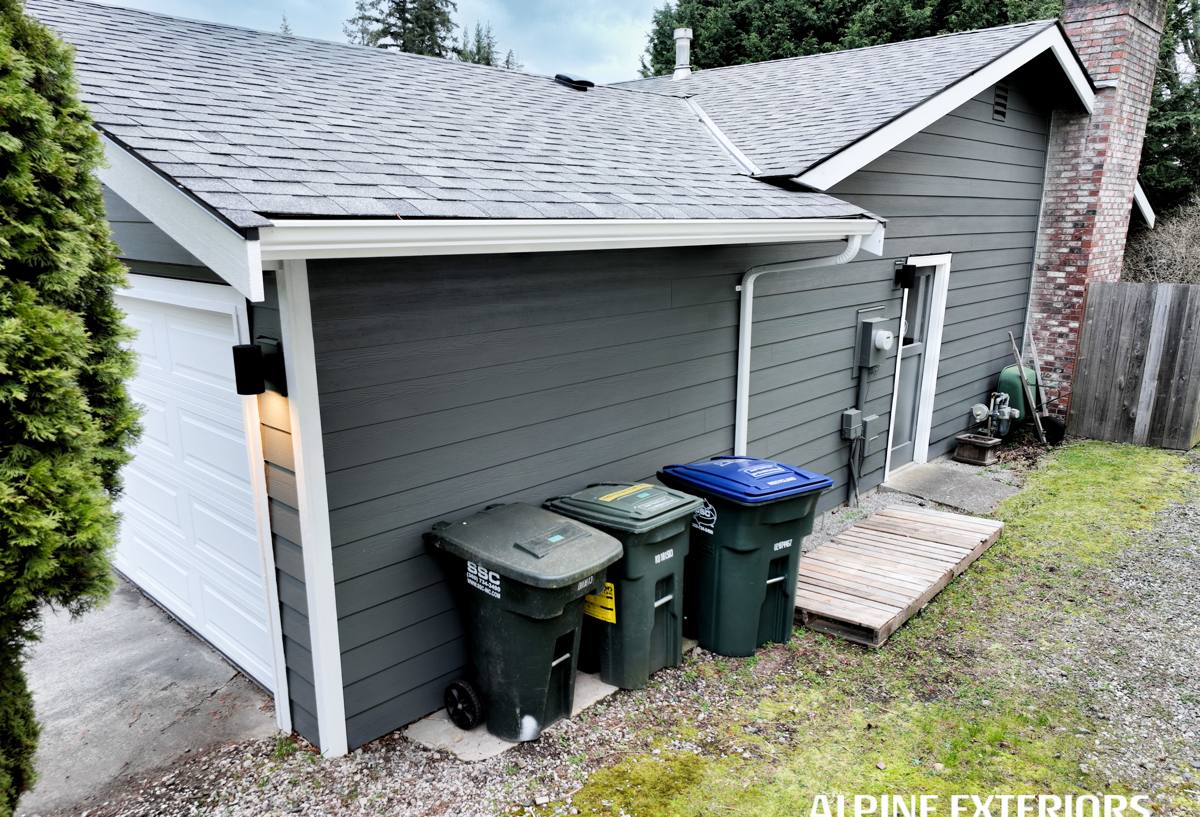
What Ellenton's Climate Demands From Siding
Hurricane-Force Wind
Manatee County sits inside a hurricane-prone stretch of Florida's Gulf Coast, and Ellenton's exposure means siding has to be rated and fastened for real wind load, not just installed to a minimum national standard. Wind doesn't just push against a wall — it gets under loose panels, works fasteners free over repeated storm cycles, and turns any weak point in the installation into the place where a hurricane does its worst damage. Siding that's under-fastened or installed with the wrong nailing pattern for this wind zone can fail catastrophically in a single event, even if it looked fine the week before.
Intense, Year-Round UV
Florida sun is relentless on exterior materials, and Ellenton gets nearly the same UV load in December as it does in July. Site-applied paint chalks, fades, and breaks down under that kind of sustained exposure, and materials that aren't engineered for it will show color loss and surface degradation well before a homeowner expects to be repainting. A finish that's baked on at the factory under controlled conditions holds color and integrity far longer than anything applied on site.
Wind-Driven Rain
During tropical systems and even routine summer thunderstorms, rain in this part of Florida rarely falls straight down — wind pushes it sideways into siding, trim, and window flashing. A wall assembly that's only detailed to shed vertical rain will let water track in at seams, laps, and corners during exactly the storms that matter most. Correct installation has to assume rain is coming in at an angle, not just from above.
Salt Air
Ellenton isn't directly on the Gulf, but it's close enough to Tampa Bay and the surrounding estuary system that salt-laden air still reaches homes here, especially with onshore wind. Salt accelerates corrosion in fasteners, flashing, and any metal components in a siding system, and it degrades porous or poorly sealed materials faster than a dry inland climate would. Fasteners, flashing, and trim all need to be spec'd with that corrosion risk in mind, not just the wind and rain.
New Installation vs. Replacing Failing Siding
"Siding installation" covers more than one situation, and the right approach depends on what's actually happening at the house. Some Ellenton homeowners are re-siding a house where the existing material has reached the end of its service life — cracked, faded, or letting moisture into the wall assembly. Others are installing siding as part of an addition, a full renovation, or replacing an older, non-Hardie product that's simply not holding up to Gulf Coast conditions anymore. Either way, the installation itself follows the same standard: correct prep, correct moisture management, and fastening detail matched to this area's wind zone.
Common Signs an Ellenton Home Needs New Siding
- Visible cracking, warping, or buckling panels, especially on sun-exposed walls
- Soft or spongy spots when pressed, indicating moisture has reached the substrate
- Paint that's chalking, peeling, or fading unevenly faster than expected
- Gaps opening at seams, corners, or around windows and doors
- Rising energy bills that suggest the wall assembly is no longer sealing properly
- Visible fastener corrosion or staining running down from nail heads
What a Correct Installation Involves
Tear-Off and Substrate Inspection
A proper installation starts with removing the old siding down to the sheathing and actually looking at what's underneath. Hidden rot, soft sheathing, or water damage that's been building behind old siding for years has to be repaired before anything new goes up — covering over a compromised substrate just hides the problem for the next owner to find.
Weather-Resistive Barrier
A correctly installed water-resistive barrier behind the siding is the wall's real line of defense against wind-driven rain that gets past the outer surface. It has to be lapped correctly, sealed at penetrations, and integrated properly with window and door flashing, not just stapled up as an afterthought before the siding goes on.
Flashing at Every Penetration
Windows, doors, vents, and any other wall penetration need flashing detailed to shed water outward and downward, layered correctly with the weather barrier so water can't get trapped behind it. In a climate with this much wind-driven rain, flashing shortcuts are one of the most common sources of hidden leaks that don't show up until real damage has already occurred.
Fastening for This Wind Zone
James Hardie specifies fastener type, spacing, and placement based on wind zone, and Manatee County's hurricane exposure means those specs matter more here than in a calmer inland market. Under-fastened siding, or siding fastened with the wrong nail type for coastal conditions, is exactly what fails first when a storm brings sustained high wind.
Joints, Caulking, and Trim Detail
Panel joints need to be lapped and sealed according to Hardie's installation spec, not simply butted together and caulked over as a fix. Trim has to be installed with the same attention to moisture management as the field siding itself, since a poorly detailed corner or window casing can undermine an otherwise correct installation.
Why We Install Only James Hardie Fiber Cement
We narrowed our installations to one product system after years of exterior work across this region, watching which materials actually held up to sustained coastal sun, wind, and moisture, and which ones quietly turned into maintenance problems within a decade. For a home in Ellenton, dealing with hurricane wind exposure, relentless UV, and salt air together, the case for fiber cement is a strong one.
- Non-combustible core: Fiber cement doesn't feed a fire the way wood-based or wood-derived siding can, which matters for household safety and can matter for insurance underwriting too.
- Factory-applied ColorPlus finish: Color is baked on under controlled conditions instead of brushed on in the field, resisting fading and chalking far longer than site-applied paint under Florida's UV load.
- Climate-engineered HZ product lines: Hardie builds formulations specifically for high-moisture, high-humidity climate zones like Florida's Gulf Coast — engineering that's a direct match for what an Ellenton property is exposed to.
- Dimensional stability: Fiber cement doesn't swell, cup, or warp the way engineered wood siding can after repeated humidity cycles, which matters in a climate this humid nearly year-round.
- Strong transferable warranty: Hardie backs its products with a solid warranty structure when installed to spec, giving homeowners real protection instead of a marketing claim.
We don't install LP SmartSide, vinyl siding, Cemplank, Allura, primed spruce, or cedar. Each has a place in the broader market, and plenty of homeowners elsewhere are satisfied with them. But we made a professional decision to install one system we trust completely, done correctly, rather than offer a cheaper option that quietly shifts maintenance risk back onto the homeowner a few years down the road — especially in a climate that punishes shortcuts as fast as this one does.
Choosing the Right Hardie Product for an Ellenton Home
| Product Line | Best Use | Why It Fits This Area |
|---|---|---|
| HardiePlank lap siding | Most single-family homes | Traditional lap profile sheds wind-driven rain effectively when lapped and flashed to spec |
| HardiePanel vertical siding | Accent walls, gables, modern designs | Clean lines that hold up well under sustained UV without the seam count of horizontal lap |
| HardieShingle siding | Coastal and Craftsman-style homes | Textured look without the moisture absorption and upkeep of real wood shingle in humid air |
| HardieSoffit panels | Eaves and overhangs | Resists moisture and pest issues common with wood soffit in Florida's humidity |
| HardieTrim boards | Corners, window and door casing, fascia | Factory-finished trim resists the same UV and salt exposure as the field siding |
Color and profile come down to the individual home and the owner's preference, but the underlying product family and installation approach stay consistent — we spec what actually fits an Ellenton property's exposure rather than defaulting to whatever's easiest to install.
Our Installation Process
Free Estimate and Inspection
We start with an in-person walk of the home, looking at the current siding condition, the substrate where it's exposed, wind and sun exposure by wall orientation, and any trouble spots around windows, doors, or roof-to-wall connections. That inspection is what a real estimate gets built on, not a generic square-footage number.
Prep and Protection
Landscaping, walkways, and outdoor fixtures get protected before tear-off begins. Old siding comes off down to the sheathing, and any rot, soft spots, or hidden moisture damage gets identified and repaired before new material goes up.
Installation Day
The weather-resistive barrier goes up first, lapped and sealed correctly, followed by flashing at every window, door, and penetration. Hardie siding is then installed with fastening spec'd for Manatee County's wind zone, joints lapped and sealed per manufacturer instructions, and trim detailed with the same moisture-management attention as the field siding.
Cleanup and Final Walkthrough
We clear the site of old material and debris, then walk the finished job with the homeowner to review the work directly rather than just handing over an invoice.
Cost Factors for Siding Installation in Ellenton
| Factor | Why It Matters |
|---|---|
| Home size and wall complexity | More square footage, corners, and roofline transitions mean more material and labor |
| Substrate condition | Hidden rot or moisture damage found during tear-off adds repair work before new siding can go on |
| Product line and profile | HardiePlank, HardiePanel, and HardieShingle carry different material and labor costs |
| Trim and detail work | Homes with more windows, corners, and architectural detail take more time to flash and finish correctly |
| Access and site conditions | Multi-story sections, tight lot lines, or limited staging area can affect labor time |
Exact costs depend on the specific property and its exposure, which is why we walk the home in person before giving a real number instead of quoting off a generic price sheet.
Why a Crew That Already Works in Ellenton Matters
A crew that installs siding across Manatee County regularly understands how hurricane wind exposure, intense UV, wind-driven rain, and salt air behave on real homes here through a full storm season, not just how a product performs on a spec sheet. That experience shapes practical decisions on install day — which wall orientations take the most sun and salt exposure, where extra flashing attention pays off around river- and bay-adjacent lots, and which fastening details are worth the added time so a homeowner isn't dealing with storm damage or a callback after the next named system moves through. Local familiarity also means knowing how permitting and wind-load requirements are handled for Manatee County jobs, so an installation is actually built to what current code and this area's exposure require, not just installed and hoped for.
What to Ask Before Hiring a Siding Contractor
- Are you licensed and insured to do exterior work in Manatee County?
- What fastening spec do you use for this property's wind zone?
- Will you handle the permit, or is that left to me?
- What happens if you find rot or moisture damage once tear-off starts?
- Do you install one product system, or several — and why?
- Can I see how you detail flashing around windows and doors?
If your Ellenton home needs new siding, or you just want an honest opinion on whether your current siding is holding up to what this climate demands, we're glad to take a look. Reach out using the form below to schedule a free, no-pressure estimate.