 Bradenton Siding
 Building Decks for a Barrier Island Climate
Holmes Beach sits on Anna Maria Island, which means every deck built here has to survive conditions that inland Manatee County homes never see. Salt-laden air moves through the wood and metal in a deck's structure daily, not occasionally. Summer sun is intense and constant, UV exposure runs nearly year-round, and when a tropical system or strong onshore wind event rolls through, an outdoor structure takes the full force of it with no windbreak. Composite decking was developed specifically to handle this kind of punishment better than wood, but "composite" is not a single product with one performance level — the board quality, the substructure underneath it, and the way it's fastened together determine whether a deck holds up for twenty-five years or starts failing in five.
As a siding and exterior contractor working throughout Bradenton and the surrounding barrier islands, we see the same failure patterns on decks that were built without accounting for local conditions: corroded fasteners, warped or sagging boards near ground contact, and finishes that chalked or faded within a couple of seasons. A correctly built composite deck in Holmes Beach avoids all of that, but only when it's approached as a coastal-grade build from the ground up.
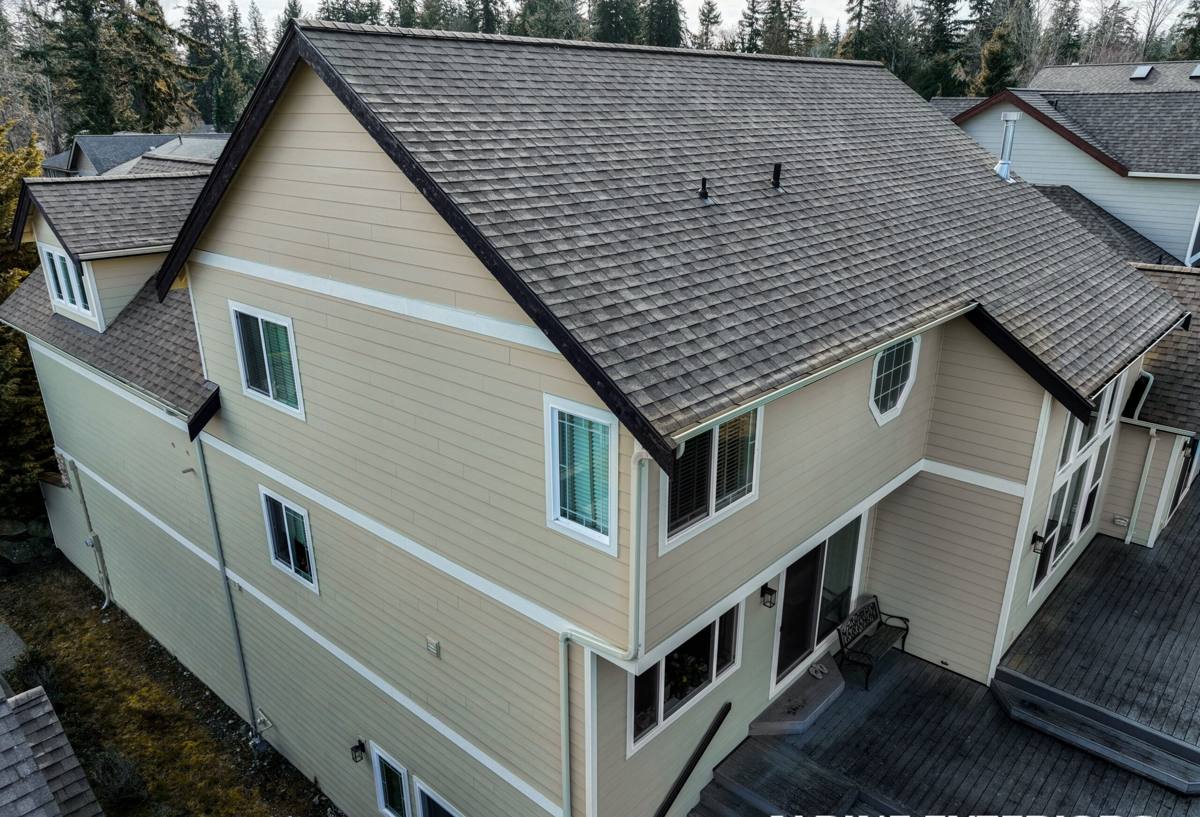
What Holmes Beach Homes Need From a Deck
Corrosion Resistance Below the Surface
The boards are the visible part of a deck, but the framing, fasteners, and hardware underneath do the structural work — and they're what actually fails first in a salt air environment. Standard galvanized hardware corrodes faster near the water than most homeowners expect, especially on ground-level or low-clearance decks where airflow is limited and moisture sits longer. We spec stainless steel or coated fasteners rated for coastal exposure, and we pay close attention to any joist hangers, post bases, and structural screws — not just what's visible from the yard.
UV Stability That Doesn't Fade in a Few Years
Florida sun is a year-round factor, not a summer problem. Lower-grade composite boards can chalk, fade unevenly, or lose their color depth within a few seasons of full sun exposure. Better composite formulations use UV-stabilized capping and pigment systems designed to hold color and resist surface breakdown far longer. We steer homeowners toward boards with a documented fade and stain warranty rather than boards priced lower with no real UV performance backing.
Moisture and Ventilation Management
Composite boards handle moisture far better than wood, but they still need proper airflow underneath and around the perimeter. Trapped moisture under a deck with poor ventilation can lead to mold, mildew staining, and accelerated wear on fasteners and framing — problems that show up as cosmetic issues at first but point to a structural airflow mistake. Correct joist spacing, gapping between boards, and clearance above grade all matter more here than in a drier inland climate.
Composite vs. Other Decking Materials for This Climate
Homeowners in Holmes Beach often ask why we lean toward composite over pressure-treated wood or full PVC decking. Each material has real trade-offs, and we'd rather walk through them honestly than oversell one option.
| Material | Coastal Durability | Maintenance | Typical Lifespan Locally |
|---|---|---|---|
| Pressure-Treated Wood | Prone to warping, splitting, and fastener corrosion in salt air; needs consistent sealing | Annual staining/sealing recommended | 8-15 years with upkeep |
| Composite (capped) | Strong resistance to moisture, salt, and UV fade with quality boards | Periodic washing; no staining or sealing | 25-30+ years |
| Full PVC | Very moisture-resistant but can show heat expansion issues and a more plastic appearance | Low, similar to composite | 25-30+ years |
PVC decking is a legitimate option and performs well against moisture, but it behaves differently in Florida heat — boards can expand and contract more noticeably, which affects gapping and fastening requirements. Composite with a quality cap gives most Holmes Beach homeowners the best balance of coastal durability, a natural wood-look appearance, and manageable long-term cost. We'll walk through the honest trade-offs of each material for your specific deck rather than defaulting to one answer.
What a Correct Installation Actually Involves
Framing and Substructure First
The composite boards get the attention, but the framing underneath determines whether the deck stays flat, level, and structurally sound for decades. We evaluate joist spacing against the specific board manufacturer's span requirements — composite boards often need tighter joist spacing than traditional lumber decking to prevent long-term sagging, especially on longer runs. We also check post footings and ledger attachment, since a deck is only as strong as where it connects to the house.
Fastening Systems
Hidden fastener systems have become the standard for composite decking because they eliminate exposed screw heads that can corrode, stain the board, or work loose over time from wind uplift. We use fastening systems matched to the specific board profile being installed, since not every hidden-fastener clip is compatible with every composite product.
Board Layout and Expansion Gaps
Composite boards expand and contract with temperature swings, and Florida's daily heat cycling makes this more pronounced than in cooler climates. Gapping between boards and at end joints has to follow the manufacturer's specification exactly — too tight and boards can buckle in peak summer heat; too loose and the deck looks unfinished and collects debris.
Hurricane and High-Wind Considerations
Manatee County's building requirements for outdoor structures reflect the real risk of hurricane-force wind events, and a deck that isn't properly anchored can become a liability during a storm — both from structural failure and from becoming wind-borne debris. We build ledger connections, post anchoring, and railing systems to hold up under wind loads specific to this area, not generic minimums. Railings in particular deserve attention: a loose or under-fastened railing system is one of the more common failure points we find on older decks during inspections after wind events.
If your deck includes stairs, pergola framing, or attached structures, those connections need the same scrutiny as the deck itself. A wind event doesn't just test the largest surface — it finds the weakest attachment point.
Salt Air and UV: The Slow Failures
Unlike storm damage, salt air and UV exposure cause failures that develop slowly and are easy to miss until they're advanced. Fasteners can corrode from the inside of a connection point before any visible rust shows on the surface. Board color can fade unevenly depending on sun exposure patterns around the yard, leaving a deck that looks patchy rather than uniformly weathered. We specify boards and hardware rated for coastal exposure specifically because these slow-developing issues are far more expensive to fix after the fact than to prevent during installation.
Our Process for Holmes Beach Deck Projects
- On-site assessment: We look at sun exposure, drainage, existing structure (if replacing a deck), and how the space will actually be used before recommending a board and layout.
- Material selection: We walk through composite board options, colors, and warranty terms in plain language, including honest trade-offs against PVC or wood if you're weighing alternatives.
- Framing and structural work: Joists, footings, and ledger connections are built or reinforced to coastal wind and load standards before any decking goes down.
- Board installation: Hidden fastening, correct expansion gapping, and proper board orientation for drainage and appearance.
- Railing, stairs, and finish details: Fastened and inspected to the same coastal standard as the deck surface itself.
- Final walkthrough: We review the finished deck with you, including maintenance expectations and warranty documentation.
Maintaining a Composite Deck in This Climate
Composite decking is low-maintenance compared to wood, but "low-maintenance" doesn't mean zero-maintenance in a coastal environment. A short seasonal routine keeps a deck performing the way it should for its full warranty life.
- Rinse or wash the deck surface periodically to clear salt residue and airborne grit before it builds up in the board texture
- Sweep debris out from between boards and around railing posts to keep drainage paths clear
- Check railing and stair fasteners annually, especially after any significant wind event
- Inspect under-deck ventilation areas for trapped moisture or organic buildup
- Address any hardware showing early corrosion signs before it spreads to adjacent connections
What Affects the Cost of a Composite Deck
| Factor | Why It Matters |
|---|---|
| Board tier and brand | Entry-level composite costs less upfront but typically carries a shorter UV and stain warranty than premium capped boards |
| Substructure condition | Replacing or reinforcing framing and footings adds cost but is not optional if the existing structure won't support a coastal-grade build |
| Fastener and hardware grade | Stainless or coastal-rated hardware costs more than standard galvanized but is the difference-maker in salt air longevity |
| Deck size, height, and layout complexity | Multi-level decks, curves, and built-in features (benches, planters, stair configurations) add labor and material |
| Railing system | Composite, aluminum, and cable railing options vary significantly in both material cost and wind-load performance |
We give straightforward, itemized pricing rather than a single number with no explanation, so you can see exactly where your budget is going and where there's room to adjust without compromising the deck's ability to hold up in this environment.
Why Local Experience Matters on Anna Maria Island
A contractor who mostly builds decks inland doesn't have daily exposure to how fast salt air corrodes standard hardware, or how differently boards expand in barrier island heat compared to a shaded mainland yard. We work across Bradenton and the surrounding Manatee County communities regularly, and that repetition is exactly what surfaces the small decisions — fastener grade, ventilation gaps, railing anchoring — that separate a deck that lasts three decades from one that needs early repairs. Holmes Beach homes deserve a build that accounts for the specific conditions they face, not a generic installation adapted after the fact.
If you're planning a new composite deck or replacing one that hasn't held up, we're happy to take a look and talk through what your specific property needs. Reach out for a free, no-pressure estimate using the form below.