 Bradenton Siding
 Why Holmes Beach Siding Takes More Abuse Than Most of Manatee County
Holmes Beach sits on Anna Maria Island, close enough to the Gulf that salt air reaches every exterior surface on a home, not just the ones facing the water. Add in intense year-round Florida UV, wind-driven rain during storm season, and the higher sustained winds that barrier island homes see compared to inland Bradenton properties, and you have a combination that ages ordinary siding fast. Paint chalks and fades sooner. Seams and edges take on moisture they can't dry out from quickly. Fasteners and trim corrode. None of this is unique to any one house on the island — it's the baseline environment every home here has to withstand, and it's why the siding material and installation details matter more in Holmes Beach than they would in a drier, calmer inland climate.
We work Holmes Beach regularly, and the patterns repeat: homes with siding that was installed without the right clearances, fasteners, or flashing details show problems years before they should. Homes with siding installed to spec, in the right material, hold up the way they're supposed to. The difference almost always comes down to what happened during installation, not bad luck.
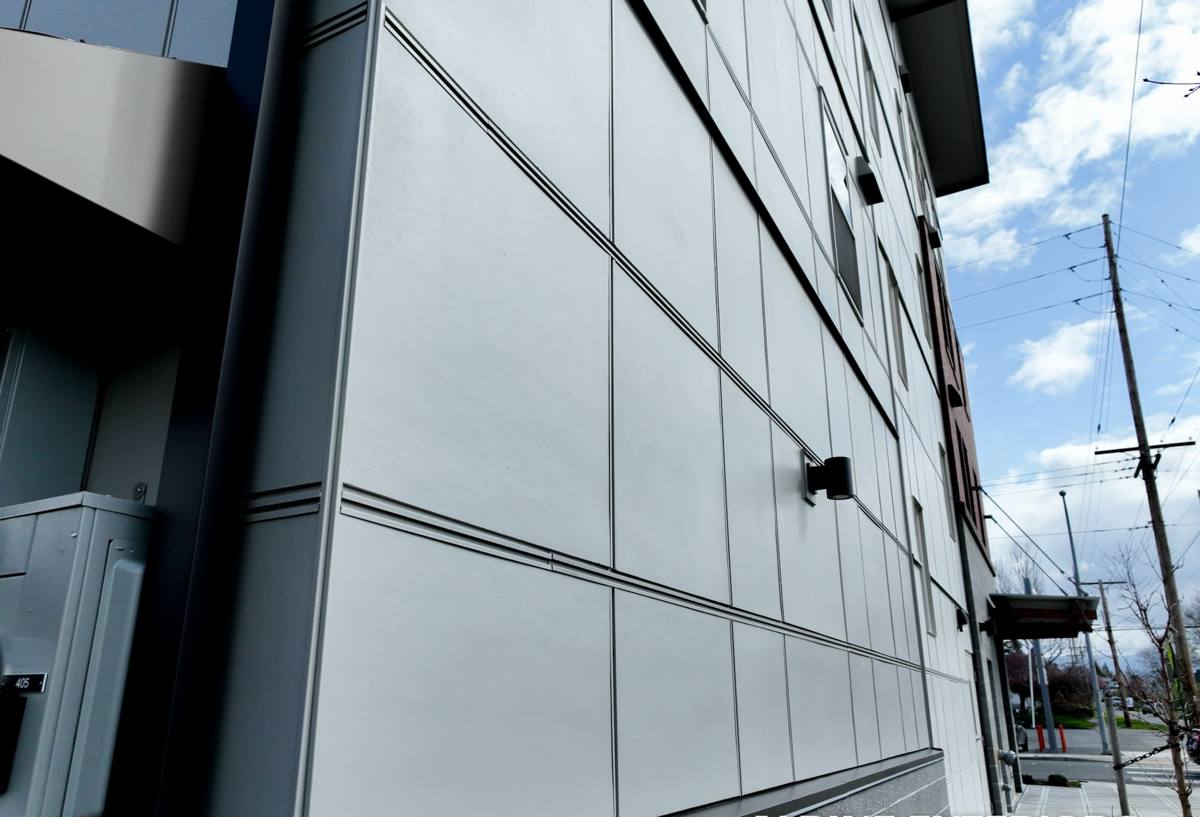
What Barrier Island Conditions Actually Do to Siding Over Time
Salt Air
Airborne salt settles on every surface, including siding, trim, and fasteners. On materials that aren't designed for it, salt accelerates corrosion of metal components and can work into seams and joints, holding moisture against the substrate. Over years, this shows up as rust streaking, degraded caulk lines, and soft spots at butt joints and corners.
UV Exposure
Florida sun is intense nearly all year. Siding finishes that aren't formulated for it fade unevenly, chalk, and lose their seal, which lets moisture behind the surface. Once a finish fails, the siding underneath is exposed to everything else on this list with no protection.
Wind-Driven Rain
It's not the rain itself that causes most siding failures — it's rain being driven sideways and upward under wind pressure, finding any gap in flashing, caulking, or panel overlap. A siding system that isn't installed with the correct laps and clearances will let water in during a tropical storm even if it looks fine on a calm day.
Wind Load and Storm Cycles
Holmes Beach homes are built to withstand real wind events, and the siding is part of that envelope. Panels or fasteners that aren't rated and installed for the wind exposure on the island can loosen or fail well before a full hurricane, sometimes in a strong seasonal storm.
Why We Only Install James Hardie Fiber Cement
We install James Hardie fiber cement siding exclusively. We don't install vinyl, LP SmartSide, Cemplank, Allura, primed spruce, or cedar, and we're upfront with Holmes Beach homeowners about why. Each of those products has real strengths, but each also carries a trade-off — moisture sensitivity, maintenance burden, installation tolerance, or warranty structure — that we don't think holds up well against this specific climate over the long run. Fiber cement is non-combustible, dimensionally stable in heat and humidity swings, and doesn't feed insects. James Hardie's HZ5 product line is engineered specifically for high-humidity, high-moisture climates like ours, and their ColorPlus factory-applied finish is baked on under controlled conditions rather than field-painted, which matters a great deal in a location where UV and salt air are constantly testing the finish.
This isn't a sales pitch dressed up as education — it's the standard we hold every job to, on the island or off it. If a homeowner wants a different product, that's a conversation worth having, but it won't be a job we take on.
What Correct Fiber Cement Installation Involves
Fiber cement siding is only as good as the installation behind it. A correct job on a Holmes Beach home includes:
- A weather-resistant barrier installed and lapped correctly behind the siding, sealed at every penetration
- Proper flashing at windows, doors, and all roof-to-wall transitions, so wind-driven rain has nowhere to enter
- Correct fastener type and placement — corrosion-resistant fasteners driven per Hardie's specifications, not just "whatever holds"
- Manufacturer-specified clearances between siding and roofing, decking, and grade, so the bottom edge of the siding isn't sitting in standing water or debris
- Panel and joint treatment that follows Hardie's installation instructions exactly — field-cut edges primed or sealed, joints backed and caulked with compatible sealant
- Attention to corners, trim, and butt joints, which are the first places a rushed job shows itself in a coastal climate
Skipping or rushing any one of these doesn't usually show up on day one. It shows up two, three, or five years later as a soft spot, a stain, or a section that's pulling away from the wall — and by then the fix is more involved than it would have been to do it right the first time.
Our Process for a Holmes Beach Fiber Cement Project
1. On-Site Assessment
We walk the property and look at the current siding condition, the substrate underneath where accessible, and any trouble spots — areas near the ground, around windows, or facing prevailing wind and salt exposure that have taken more punishment than the rest of the house.
2. Scope and Product Selection
We talk through which Hardie product line and profile fits the home — lap siding, shingle-style panels, or a mix with trim — and which ColorPlus finish makes sense for the house and the neighborhood context, without inventing details about specific colors we haven't discussed on site.
3. Substrate and Barrier Prep
Before any new siding goes up, we address what's underneath: sheathing condition, the weather-resistant barrier, and flashing at every penetration. This step gets skipped on rushed jobs and is usually the root cause of early failures.
4. Installation to Manufacturer Spec
Panels go on with the fastener pattern, clearances, and joint treatment Hardie specifies for our exposure category, not a generic approach borrowed from a milder climate.
5. Final Walkthrough
We review the completed work with the homeowner, covering what was done, what to expect from the finish over time, and any basic care that helps it hold up.
Comparing Siding Options for a Holmes Beach Home
| Factor | James Hardie Fiber Cement | Vinyl | Wood (Cedar/Spruce) |
|---|---|---|---|
| Salt air resistance | Strong — non-organic, engineered finish | Can become brittle and discolor over time | Vulnerable to moisture and rot without constant upkeep |
| UV/fade resistance | Factory-baked ColorPlus finish | Fades and can warp in intense sun | Needs repainting or staining on a recurring cycle |
| Wind performance | Rated for high-wind installation | Can loosen or crack under sustained wind load | Depends heavily on fastening and maintenance |
| Fire resistance | Non-combustible | Combustible | Combustible |
| Maintenance burden | Low — periodic cleaning and caulk checks | Low but prone to cracking with age | High — recurring sealing/painting required |
Cost Factors Homeowners Should Understand
There's no honest single number for a fiber cement project — cost depends on the home's size, the current siding condition, how much substrate repair is needed, trim complexity, and the product profile chosen. What we can say plainly is that most of the cost variation between a "cheap" siding job and a correctly done one isn't the siding material itself — it's the labor, prep, and details underneath it. A homeowner comparing quotes should ask what's included in substrate repair, flashing, and fastening, not just the per-square-foot number for panels.
What to Look for When Hiring a Siding Contractor on the Island
Holmes Beach and the rest of Anna Maria Island present a different set of demands than an inland Bradenton neighborhood, and a contractor who mostly works inland may not have the same working knowledge of salt exposure, wind detailing, and moisture management that island homes need. Before hiring, ask:
- Are they a certified James Hardie installer, and can they explain the specific installation details for our climate zone?
- Do they have experience with barrier island or coastal Manatee County homes specifically, not just Bradenton in general?
- Will they detail the substrate and flashing work, or only quote visible panel replacement?
- Are they licensed and insured to work in Manatee County, and can they provide proof?
- Do they stand behind the installation with a workmanship warranty in addition to the manufacturer's product warranty?
The Warranty Side of the Equation
James Hardie backs its fiber cement products with a strong, transferable limited warranty, which matters to Holmes Beach homeowners for two reasons: it reflects the manufacturer's confidence in the product's performance in coastal climates, and it holds value at resale, since a transferable warranty follows the home to the next owner. That warranty is tied to correct installation, which is another reason installation quality isn't a place to cut corners — a warranty claim can be affected by how the siding was originally put on.
Signs Your Current Siding Needs Attention
Homeowners in Holmes Beach should watch for soft or spongy spots when pressing gently on siding, visible gaps or separation at joints and corners, persistent staining or streaking that doesn't wash off, paint or finish that's chalking heavily, and any bubbling or peeling near window and door trim. Any of these can indicate moisture has already gotten behind the siding, and the earlier it's addressed, the less extensive the repair.
If you own a home in Holmes Beach and want a straight answer about your siding's condition, or you're planning a replacement and want to understand what James Hardie fiber cement would involve for your specific house, we're happy to take a look. The estimate is free, there's no pressure, and you'll get a clear explanation of what we find — just fill out the form below.