 Bradenton Siding
 Why Holmes Beach Siding Wears Out Faster Than Inland Homes
Homes on Anna Maria Island sit in one of the toughest exterior environments in Manatee County. Holmes Beach is barrier-island property, which means every wall faces near-constant salt-laden air, direct Gulf sun, and wind that rarely lets up. Siding that might last two or three decades a few miles inland can start failing in half that time out here, and the failure often isn't obvious from the curb. It shows up as chalky paint, soft spots at corners and butt joints, warped panels, or a musty smell that means moisture has already gotten behind the cladding.
Three forces do most of the damage. Salt air corrodes fasteners and accelerates the breakdown of paint films and adhesives. Year-round UV bakes color and flexibility out of anything not engineered for it. And wind — both steady coastal breeze and the occasional named storm — drives rain sideways into laps, seams, and trim joints that were never designed to handle water moving in that direction. Add the humidity that keeps everything on the island slightly damp most of the year, and you have a climate that punishes siding that was installed for looks rather than performance.
Repair or Replace? Reading the Signs Correctly
Not every siding problem on a barrier-island home means a full tear-off. But a few signs almost always do, because they point to damage behind the surface rather than on it.
- Soft, spongy panels when pressed, especially near the bottom courses or around window trim
- Persistent staining or dark streaks that return after cleaning
- Visible gaps, buckling, or panels that have pulled away from the wall in wind
- Peeling or bubbling paint across large sections rather than one isolated spot
- A musty odor inside near exterior walls, which often means trapped moisture
If only one or two panels show minor wear and the underlying sheathing is sound, targeted repair can make sense. Once damage is spread across a wall, or moisture has clearly reached the sheathing, patch repairs just delay a replacement that's coming anyway — and they let the underlying problem keep spreading in the meantime.
What a Correct Siding Replacement Actually Involves
Siding replacement is not a panel swap. On a coastal home, the work that happens before the new siding goes up matters more than the siding itself.
Inspecting What's Underneath
Once the old siding comes off, the sheathing gets inspected for rot, delamination, and fastener corrosion. Any compromised sheathing gets replaced before anything new goes on — installing new siding over damaged sheathing just hides the problem for a few more years. This is also the point where the weather-resistive barrier gets replaced and flashing gets corrected at windows, doors, and any wall penetrations. On a salt-air property, this step is not optional; it's the difference between siding that lasts and siding that fails from the inside out.
Choosing a Material That Matches the Environment
Not every siding product is built for this exposure. Some hold up to salt air and wind-driven rain far better than others, and the difference shows up in how the home looks and performs ten years later, not on day one.
| Material | Salt Air Resistance | Wind Performance | Maintenance |
|---|---|---|---|
| Vinyl | Can fade, chalk, and become brittle with UV/salt exposure | Can deform or blow off in sustained high wind | Low, but limited repair options once faded or cracked |
| Untreated wood / primed spruce | Poor — absorbs moisture, prone to rot near salt air | Moderate, dependent on fastening | High — regular painting and moisture monitoring |
| LP SmartSide (engineered wood) | Moderate — vulnerable at cut edges and moisture entry points | Good when installed to spec | Moderate — edge sealing and paint upkeep |
| Fiber cement (James Hardie) | Strong — non-organic material resists salt and moisture degradation | Strong when installed to manufacturer wind ratings | Low — factory finish holds color and flexibility |
Why We Install Only James Hardie Fiber Cement
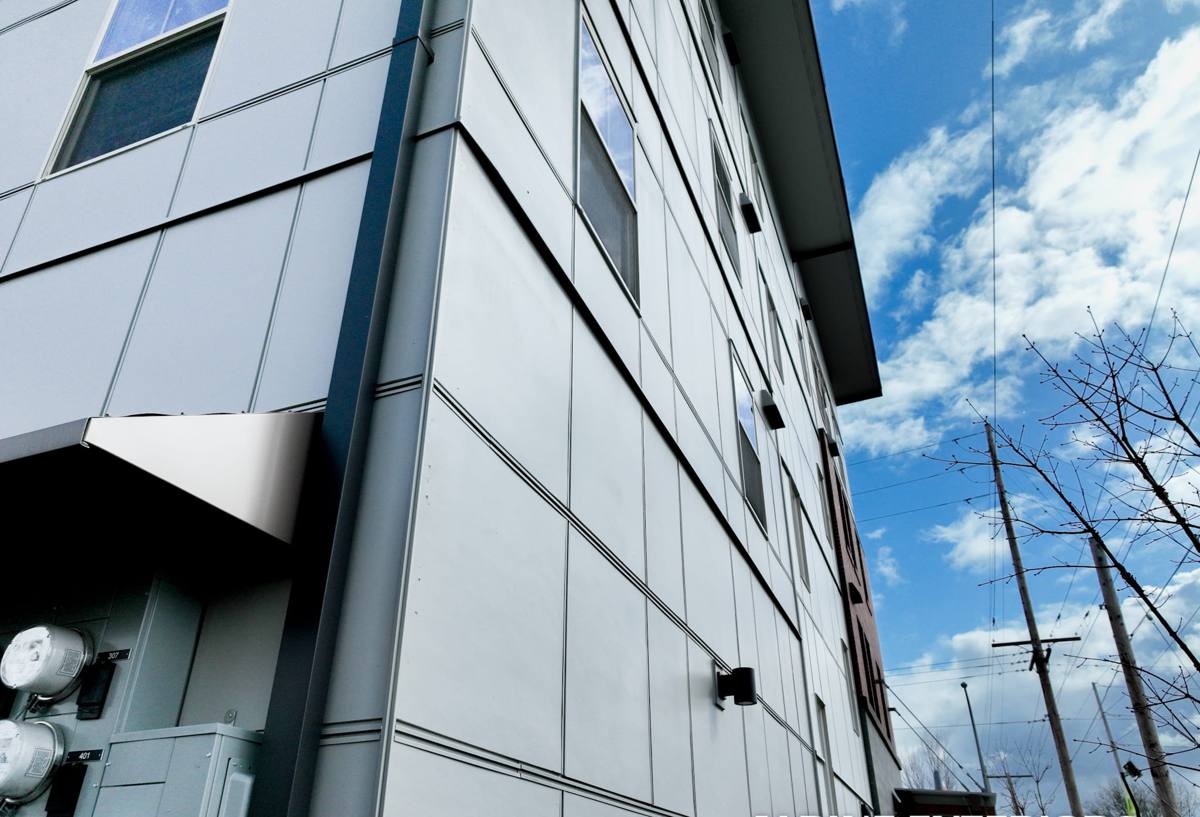
We standardized on James Hardie for coastal work because it's a fiber cement product, not a wood-based or PVC-based one. That matters here specifically. Fiber cement doesn't absorb moisture and swell the way engineered wood products can at cut edges, and it doesn't get brittle or lose its shape under sun and heat the way vinyl can. It's also non-combustible, which is worth something on a densely built barrier island where homes sit close together.
James Hardie's ColorPlus finish is baked on at the factory under controlled conditions, which gives it better fade and chip resistance than field-applied paint — a real advantage against year-round Florida UV. Hardie also builds specific product lines engineered for high-humidity, coastal climates, which is what we spec for Holmes Beach homes rather than a standard inland formulation. The product carries a strong transferable warranty, which matters to owners who may sell in a few years and want that coverage to follow the house.
We're upfront that this isn't the only siding product on the market, and other materials have their place. But for a barrier-island home taking direct salt air and wind exposure, we won't put our name on a product we don't believe will hold up, and that's why LP SmartSide, vinyl, Cemplank, Allura, and primed wood aren't part of what we install.
Our Holmes Beach Replacement Process
- On-site assessment — we walk the exterior, check for soft spots and moisture signs, and identify problem areas before any tear-off starts.
- Tear-off and sheathing check — old siding comes off, sheathing is inspected and repaired where needed.
- Moisture barrier and flashing — a new weather-resistive barrier goes on, with corrected flashing at windows, doors, and penetrations.
- Installation to wind and fastening spec — James Hardie panels are installed using the manufacturer's fastening pattern and corrosion-resistant fasteners suited to coastal exposure.
- Trim, caulking, and finish detail — joints and trim are sealed correctly rather than just caulked over.
- Cleanup and walkthrough — we go over the finished work with the homeowner before calling the job done.
Wind, Code, and Coastal Installation Details
Coastal Manatee County properties are held to Florida Building Code wind requirements, and a barrier-island location like Holmes Beach means those requirements are taken seriously, not treated as a minimum to squeak by. Fastening schedules, panel overlap, and flashing details all affect how siding performs in sustained wind and wind-driven rain — this is exactly the kind of work where following the manufacturer's installation instructions to the letter is not a formality. Improperly fastened panels are one of the most common causes of siding failure in a storm, and it's a problem that's invisible until wind actually tests it.
Living With New Siding on the Island
Fiber cement with a factory finish needs less upkeep than most alternatives, but "low maintenance" doesn't mean "no maintenance" in a salt-air environment. A periodic rinse to clear salt residue, an annual look at caulking around trim and penetrations, and prompt attention to any impact damage will keep the siding performing for its full service life. Because the finish is factory-applied, repainting isn't something owners need to plan for the way they would with site-painted wood siding.
What Drives the Cost of a Holmes Beach Siding Job
Every home is different, so we don't quote broad numbers until we've seen the property, but a few factors consistently move the price on barrier-island jobs:
- Extent of sheathing damage found once old siding comes off
- Home size, wall complexity, and number of corners, gables, and penetrations
- Access on a narrow island lot, which can affect staging and disposal logistics
- Trim and detail work — window and door surrounds, fascia, soffit coordination
- Product line and color selection within the Hardie system
We walk through these factors during the estimate so there are no surprises once work starts.
Why Hiring a Crew That Already Works Holmes Beach Matters
Barrier-island jobs have logistics that inland jobs don't — tighter lot access, coordination around narrow island roads, and, often, homeowner associations or architectural guidelines specific to beach communities that affect exterior appearance and materials. A crew that already works Holmes Beach and the surrounding Anna Maria Island area has already solved these logistics and knows what correct fastening and flashing look like for this exact wind and salt exposure. That experience shows up in fewer surprises during the job and siding that's actually built for where the house sits, not just installed to a generic spec.
If you're weighing repair against replacement, or just want an honest read on what your home's siding needs, we're happy to take a look. Reach out for a free, no-pressure estimate — someone will walk the property with you and lay out exactly what we'd recommend and why.