 Bradenton Siding
 Building a Deck That Belongs in Samoset
Samoset sits close enough to the Manatee River and Tampa Bay that every outdoor structure on your property deals with the same combination of stresses: heat, humidity, salt-laden air, wind-driven rain, and the occasional direct hit from a tropical system. A deck built the way it might be built in a drier, milder climate simply won't hold up here. Fasteners corrode faster, wood dries and cracks under constant UV exposure, and anything not properly tied down becomes a liability in a storm.
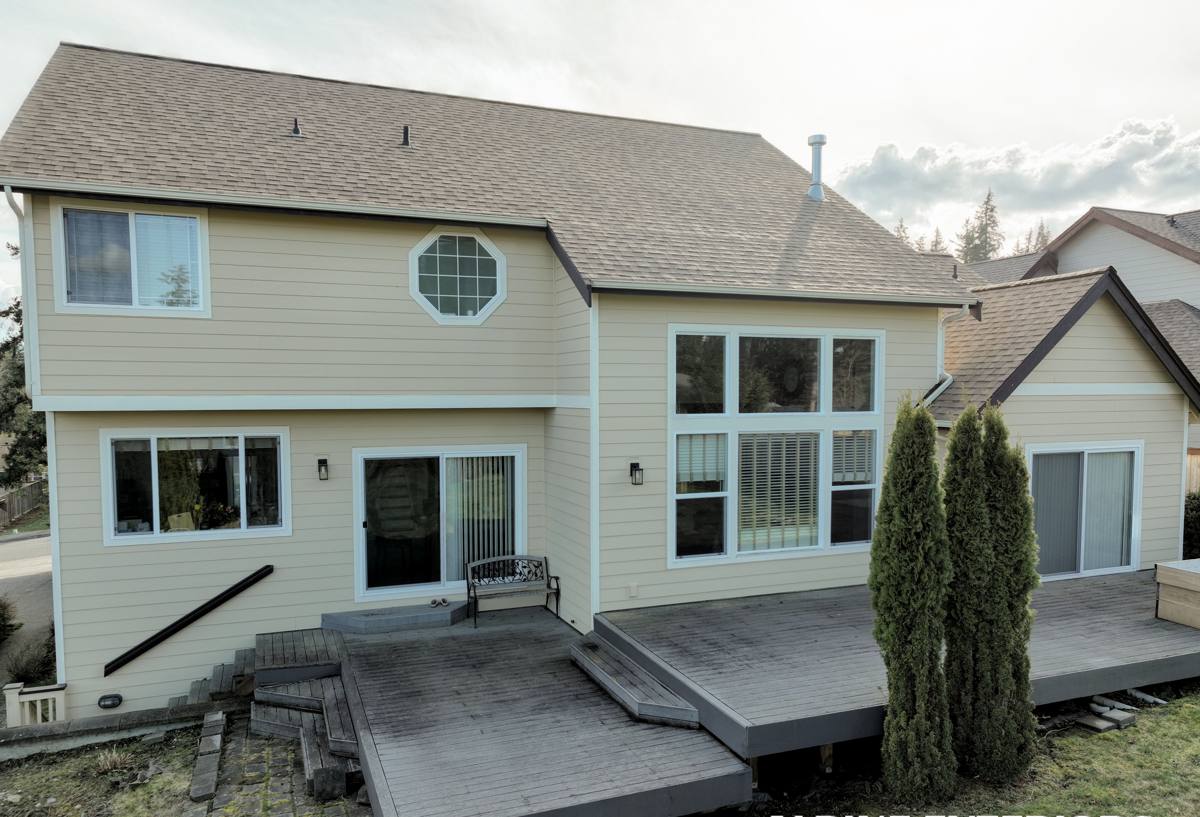
We build decks for homeowners throughout Bradenton and Manatee County, and Samoset is one of the neighborhoods we work in regularly. That matters more than it sounds like it should — the permitting office, the soil conditions, the typical lot layouts, and the way homes here were sited all shape how a deck should be designed and built. This page covers what a correct deck build looks like for this specific area, not a generic checklist.
What Bradenton's Climate Actually Does to a Deck
Wind
Manatee County is designed and permitted under Florida Building Code wind provisions that assume real hurricane exposure. A deck isn't just a platform sitting on posts — it's a structure that has to resist uplift and lateral loads, especially where it's attached to the house. Ledger connections, post-to-beam connections, and railing posts are all places where an under-built deck fails first.
UV and heat
Florida gets more direct, intense sun than almost anywhere else in the country, and it doesn't let up seasonally the way it does farther north. UV breaks down wood fibers, fades and chalks composite surfaces, and dries out sealants and finishes far faster than manufacturer ratings written for northern climates would suggest.
Wind-driven rain and humidity
Rain here doesn't fall straight down during storms — it drives sideways under eaves, into ledger connections, and between deck boards. Combined with year-round humidity, that moisture load means any wood-to-wood or wood-to-house connection that isn't properly flashed and ventilated will eventually rot or promote mold, regardless of the wood species.
Salt air
Even set back from open water, homes in this part of Manatee County are close enough to Tampa Bay and the Gulf that airborne salt accelerates corrosion on standard fasteners, hardware, and metal railing components. This is one of the most commonly overlooked factors in deck failures we get called to look at — the wood is often fine, but the fasteners holding it together aren't.
What a Correctly Built Deck Involves
Footings and framing
Florida doesn't have a frost line to dig below, but footings still need to be sized and embedded to resist wind uplift, not just support vertical weight. Undersized or shallow footings are a common shortcut on lower-cost deck jobs, and they're one of the first things we check when evaluating an older deck for repair or replacement.
Fasteners and hardware
We use stainless steel or high-grade coated fasteners rated for contact with modern pressure-treated lumber, which is more corrosive to metal than older treatment chemicals were. In a salt-air environment, this isn't optional upgrade territory — it's the difference between hardware that lasts and hardware that rusts through in a few seasons.
Ledger attachment and flashing
Where a deck attaches to the house, proper flashing keeps wind-driven rain from getting behind the siding or into the rim joist. This connection also carries a significant share of the structural load, so it has to be both watertight and mechanically sound — not just nailed or lag-bolted through the siding without flashing, which we still see on older decks in the area.
Railings and code compliance
Railing height, baluster spacing, and post connections are all governed by code, and inspectors in this county check them. Beyond passing inspection, a railing system that isn't properly through-bolted into framing is one of the more dangerous shortcuts in deck construction — it can look fine for years and then fail under load.
Choosing Decking Material for This Climate
There isn't one universally "best" decking material — the right choice depends on how much upkeep you want to do, your budget, and how exposed the deck is to sun and salt air. Here's how the common options actually compare for a Bradenton property:
| Material | Upfront Cost | UV / Fade Resistance | Maintenance | Coastal Durability |
|---|---|---|---|---|
| Pressure-treated wood | Lowest | Fades and grays without upkeep | Annual cleaning and sealing recommended | Good if hardware and sealing are kept up |
| Wood-plastic composite | Mid-range | Moderate — some fading over years | Periodic cleaning, no sealing needed | Good; check manufacturer coastal warranty terms |
| Capped / PVC composite | Highest | Best available fade resistance | Low — occasional washing | Very good; fully synthetic, doesn't absorb moisture |
| Hardwood (e.g., ipe) | High | Fades to gray without regular oiling | Regular oiling required to maintain color | Excellent structurally; finish upkeep is the tradeoff |
We don't push one product line over another. Our job is to lay out the real tradeoffs — maintenance burden, moisture behavior, and how each material actually performs under Florida sun and salt exposure — so you're choosing based on how you'll actually use and maintain the deck, not a sales pitch.
Site Conditions We Watch for in Samoset
Lots in this part of Bradenton vary — some are inland, some back up to canals or open water. If your property is on or near the water, we factor in additional considerations: elevated moisture and humidity at ground level, closer proximity to salt spray, and in some cases setback or elevation requirements tied to your lot's location. Soil composition in this area also tends to be sandy, which affects how footings are sized and compacted. None of this is unusual for the area, but it's exactly the kind of detail that gets missed by a crew that doesn't regularly build here.
How We Approach a Deck Project
1. On-site evaluation
We walk the property, look at the house's ledger wall, check grade and drainage, and talk through how you actually plan to use the space — dining, grilling, lounging, pool-adjacent — since that affects layout and material choice.
2. Design and material selection
We put together a design and go through material options honestly, including cost ranges and realistic maintenance expectations for each.
3. Permitting
Most deck construction and significant deck repairs in Manatee County require a building permit. We handle the permitting process and build to the plans that get approved — this isn't a step worth skipping, since unpermitted work can complicate a future home sale or insurance claim.
4. Construction
Footings, framing, decking, and railing are installed in sequence, with attention to the connections most likely to be tested by wind and moisture over time — not just the parts that are visible when the job is finished.
5. Final walkthrough and inspection
We go through the finished deck with you, and the work is completed to pass the required county inspections.
Maintaining a Deck in Salt Air and Year-Round Sun
Whatever material you choose, a little regular attention goes a long way in this climate. A simple seasonal routine we recommend to homeowners:
- Rinse the deck surface periodically to remove salt residue, pollen, and organic debris, especially between boards
- Inspect visible fasteners and railing hardware for rust or corrosion, particularly if the deck is closer to open water
- Check the ledger board area and flashing for signs of water staining or soft wood after heavy rain seasons
- Reseal or re-oil wood decking on the schedule recommended for the specific product — UV exposure here shortens typical intervals
- Look for soft, spongy, or discolored spots in decking boards, which can indicate trapped moisture
- Confirm railings and stair connections are still tight — wood movement and hardware corrosion can loosen them over time
- Clear leaves and debris from under the deck to keep airflow moving and reduce moisture buildup
Why Local Experience on This Type of Build Matters
A deck contractor who works Samoset and the surrounding Bradenton neighborhoods regularly already knows the county's permitting process, the typical soil and lot conditions in the area, and which construction details actually hold up against this coastline's combination of sun, salt, and storm exposure. That's different from a crew building the same deck design they'd use in a climate with none of those pressures. It shows up years later — in fasteners that haven't rusted, railings that are still solid, and a ledger connection that's never let water into the house.
Get a Straightforward Estimate
If you're planning a new deck or need an honest look at an existing one, we're happy to come out, walk the property, and give you a clear picture of what the job actually involves — no pressure, no upsell. Use the form below to request a free estimate for your Samoset property.