 Bradenton Siding
 Deck Repair Built for Lakewood Ranch's Climate
Lakewood Ranch decks live a harder life than most homeowners realize. Between the intense year-round Florida UV, the wind-driven rain that comes through during summer storms, and the humidity that never really lets up, a deck here is under constant stress even when it looks fine from the porch. Add in the occasional hurricane-force wind event that Manatee County sees every few years, and you've got a structure that needs to be built and repaired differently than a deck in a drier, milder climate.
We're a Bradenton-based crew that works Lakewood Ranch regularly, and most of the repair calls we get here follow a pattern: a deck that was installed correctly enough to pass a look-over, but wasn't detailed out for the specific way Southwest Florida weather attacks wood, fasteners, and framing over time. Our job is to fix what's actually wrong, not just what's visible, and to leave the deck in a state where it can handle the next ten Florida summers, not just look good for the next open house.
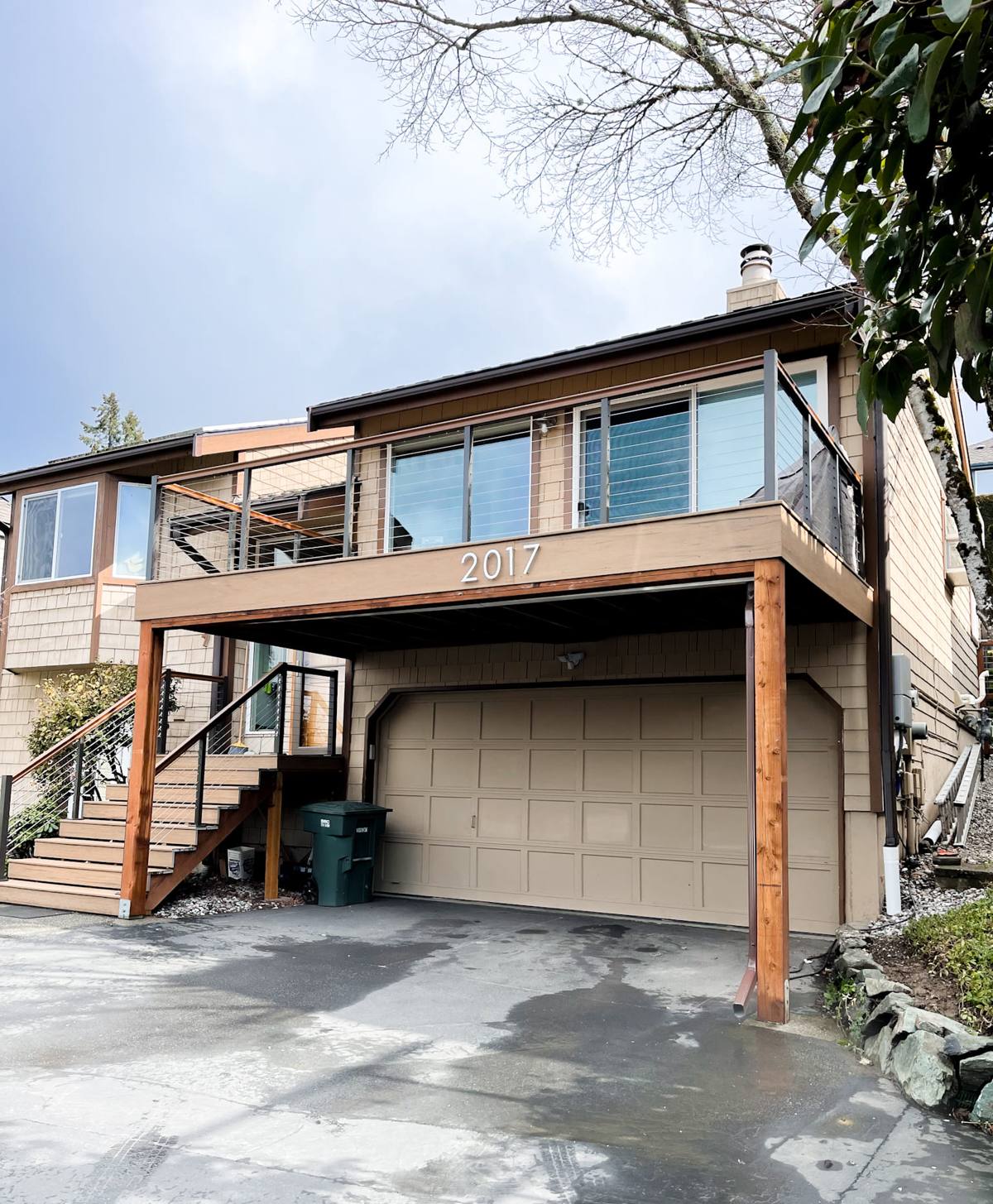
What Actually Fails on Decks Around Here
Before we talk about repair, it helps to understand why decks in this area fail the way they do. It's rarely one dramatic thing — it's usually a combination of smaller issues that compound.
UV and Heat Cycling
Florida sun breaks down the lignin in wood fibers and dries out the natural oils that keep boards flexible. Composite decking isn't immune either — UV exposure over years can fade color and, on lower-quality boards, cause the surface to become brittle. Add daily heat cycling (deck surfaces here can swing 40+ degrees between morning and mid-afternoon), and you get expansion and contraction that loosens fasteners and opens up joints over time.
Wind-Driven Rain and Moisture Intrusion
Afternoon storms in this part of Florida don't fall straight down — wind pushes rain sideways and up under railings, ledger boards, and stair stringers. That moisture finds its way into joints, screw holes, and end grain that isn't properly sealed. Once water gets into wood framing and can't dry out quickly because of shade or poor airflow underneath the deck, rot starts, often invisibly, from the inside of a joist or post base.
Salt Air Corrosion
Lakewood Ranch is inland compared to the immediate coast, but Gulf-influenced salt air still travels and accelerates corrosion on fasteners, brackets, and any exposed metal hardware. Once a screw head or joist hanger starts rusting, it loses holding strength long before it looks obviously bad — this is one of the most common "hidden" causes of a deck that suddenly feels wobbly.
Ground Contact and Drainage
Manatee County's sandy soil drains fast in some spots and holds water in others, depending on grading and where downspouts empty out. Deck posts and footings that sit in periodically wet soil are far more prone to rot and insect activity than ones on properly drained, elevated footings.
Signs Your Lakewood Ranch Deck Needs Repair, Not Just Cleaning
A pressure wash and a fresh coat of stain can hide a lot of problems temporarily. Here's what actually signals a repair need:
- Boards that feel spongy, soft, or flex noticeably underfoot in specific spots
- Railings or posts that wiggle when pushed — even slightly
- Visible gaps opening up between deck boards or at the ledger board where the deck meets the house
- Rust streaks running down from screw heads or metal brackets
- Stair stringers that feel less solid than they used to, or steps that have started to sound hollow
- Discoloration or a musty smell near the base of posts or under the deck
- Fasteners backing out or popping up above the board surface
- Any area where you can see daylight or gaps at a joist connection
If you're seeing more than one or two of these, it's worth having someone look underneath the deck, not just at the walking surface. Most of the structural story is told below the boards.
How We Approach a Deck Repair
1. Full Inspection, Top and Bottom
We start by inspecting the walking surface, railings, stairs, and then get underneath to check joists, beams, posts, and footings. A deck can look fine on top and still have compromised framing underneath — that's the part a lot of quick estimates skip.
2. Probing for Soft Wood
We test suspect areas with a screwdriver or awl rather than guessing by eye. Wood that's actively rotting gives way easily under light pressure even when the surface paint or stain looks intact.
3. Isolating the Real Cause
If a section is failing, we want to know why before we replace it — a rotted ledger board caused by poor flashing will fail again in a few years if we just swap the board and ignore the flashing. Fixing root causes, not just symptoms, is the difference between a repair that lasts and one you'll pay for twice.
4. Repair or Replace, Section by Section
Not every issue means a full rebuild. We replace individual boards, joists, posts, or hardware where that solves the problem, and we're upfront when a section has degraded enough that partial patching won't hold up. We use fasteners and hardware rated for coastal/humid environments, since standard hardware corrodes faster in this climate.
5. Addressing Moisture Sources
Where drainage, grading, or missing flashing contributed to the damage, we address that as part of the repair — not as an upsell, but because skipping it means the new work fails the same way the old work did.
Repair vs. Full Rebuild — What Determines the Difference
| Factor | Points Toward Repair | Points Toward Rebuild |
|---|---|---|
| Framing condition | Joists/beams solid, isolated soft spots | Widespread rot in structural framing |
| Age of deck | Under 10-12 years, built to code | Older deck, unclear or outdated construction |
| Post/footing condition | Footings sound, posts stable | Footings undersized, cracked, or shifting |
| Extent of damage | Localized to a few boards or one area | Damage spread across multiple structural zones |
| Code compliance | Railings, spacing, attachment meet current code | Deck predates current code requirements |
| Cost comparison | Repair cost is a fraction of rebuild cost | Repair cost approaches 50%+ of rebuild cost |
We'll walk you through where your deck falls on this before we recommend anything. A lot of decks in Lakewood Ranch are candidates for solid, targeted repair — full rebuilds are the exception, not the default recommendation.
Decking Materials — What Holds Up Locally
Pressure-Treated Wood
Still a common and reasonable choice for framing and even decking, provided it's properly sealed and maintained. The tradeoff is ongoing upkeep — resealing every couple of years to keep UV and moisture from working past the treatment.
Composite Decking
Composite has become popular here because it resists rot and doesn't need staining. Our standard is not to install composite over framing that hasn't been verified sound, since composite boards can mask a moisture problem in the structure underneath rather than prevent it — the framing still needs to be correct regardless of what's on top.
Hardware and Fasteners
This matters more than most homeowners expect. Standard zinc-coated screws and brackets corrode noticeably faster in Gulf Coast humidity and salt air than stainless steel or coated fasteners rated for coastal use. We consider fastener quality part of the repair, not an optional upgrade, because it directly determines how long the fix lasts.
Why a Local Crew Matters for This Job
Deck repair is one of those jobs where local experience shows up in the details. A crew that works Bradenton and Lakewood Ranch regularly knows which fastener grades actually hold up here, how Manatee County's permitting and inspection process works for structural deck repairs, and what soil and drainage conditions look like in this area specifically. That's different from general deck knowledge — it's knowing what fails first in this exact climate and building the repair to account for it from the start.
Being local also means we're a known, findable crew if you ever have a follow-up question or warranty concern — not a name that disappears once the invoice is paid.
A Straightforward Way to Think About Timing
Deck repair issues in this climate rarely improve on their own. A soft board today is a bigger structural repair in a year or two, because moisture intrusion and wood decay don't slow down in Florida's humidity — they accelerate. Catching problems while they're still isolated to a board, a bracket, or a single post is almost always less invasive and less costly than waiting until the issue spreads into the main framing.
If you're noticing any of the warning signs above, or it's simply been a few years since your deck was last inspected, it's worth having a local crew take a look before the next Florida storm season puts more stress on it.
If you'd like an honest read on what your Lakewood Ranch deck actually needs, we're happy to come take a look and give you a straightforward, no-pressure estimate — just fill out the form below.