 Bradenton Siding
 Longboat Key Roofs Face a Tougher Environment Than Most
Longboat Key sits out on a barrier island between the Gulf of Mexico and Sarasota Bay, straddling the Manatee County and Sarasota County line. That location is part of what makes the island beautiful, and it's also exactly why roofs here take more punishment than roofs even a few miles inland. Homes on Longboat Key deal with a combination that few other parts of the region see all at once: sustained salt-laden air, intense year-round UV exposure, wind-driven rain that gets pushed sideways under normal flashing details, and the real risk of hurricane-force wind events during storm season.
None of those conditions cause damage on their own overnight. They wear a roof down gradually, then a storm finds whatever weak point that wear created. That's why storm damage repair on Longboat Key isn't just "patch what the wind tore off" — it has to account for what the salt air and sun already did to the roof before the storm ever arrived.
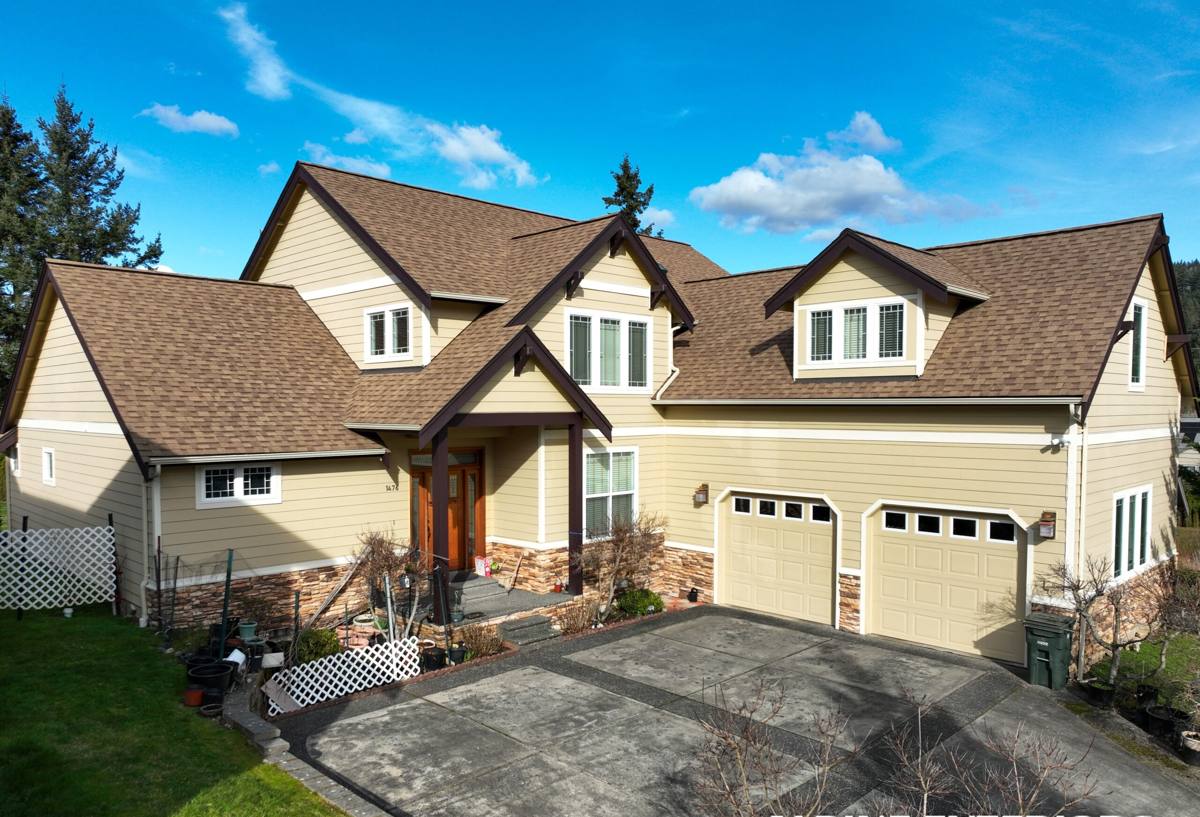
What Storm Damage Actually Looks Like on a Coastal Roof
Storm damage isn't always as obvious as missing shingles. On barrier island homes, we typically see a mix of the following after a wind or rain event:
- Wind uplift at edges and ridges — shingles or tiles lift starting at roof edges, hips, and ridges where wind load concentrates first, then work loose across the field.
- Wind-driven rain intrusion — water pushed sideways or upward under flashing, at wall-to-roof transitions, and around vents and penetrations, even when the roof covering itself looks intact.
- Corroded or fatigued fasteners — salt air accelerates corrosion of nails, screws, and metal flashing, so fasteners that were already weakened by salt exposure fail under wind loads that a fastener in better condition would have handled.
- Granule loss and UV-brittled materials — constant sun exposure makes shingles and sealants brittle over time, so they crack or tear in wind rather than flexing.
- Hidden deck and underlayment damage — the roof covering can look fine from the ground while the decking or underlayment underneath has already taken on moisture.
A proper storm damage assessment checks all of these, not just the visibly missing pieces.
Repair, Not Just Patch: Getting the Full Picture First
The fastest thing to do after a storm is throw a tarp over the obvious hole and call it handled. That's fine as an emergency measure, but it's not a repair. Before we recommend any fix, we walk the whole roof — not just the damaged section — because storm-driven wind and water rarely stay confined to one spot. A section that looks fine from the driveway can have lifted flashing on the back slope or saturated insulation above a soffit that won't show itself until the next rain.
That inspection also tells us whether we're looking at a true repair or a situation where repair isn't the honest answer. If the underlying roof was already near the end of its service life — which happens faster here than in less coastal climates — a storm repair that only addresses the visible damage can leave a homeowner paying for the same problem again at the next named storm. We'll tell you plainly which situation you're in.
Signs a Repair Is the Right Call
- Damage is localized to a specific area (a section of ridge, one slope, around a single penetration).
- The roof covering elsewhere is still in serviceable condition with normal wear for its age.
- The decking underneath the damaged area is dry and sound once opened up.
Signs Repair Alone Won't Solve the Problem
- Multiple unrelated failure points across different slopes.
- Soft or delaminating decking found once the covering is pulled back.
- A roof covering that was already past mid-life and showing widespread granule loss, brittleness, or prior patch work.
Our Storm Damage Repair Process
We keep this process consistent whether the damage is minor or extensive, because skipping steps is how secondary problems get missed.
- Emergency mitigation first. If a roof is actively open to weather, our first priority is stopping water intrusion — proper tarping and temporary sealing, not a quick cosmetic cover.
- Full-roof inspection. We check the entire roof, not just the reported damage area, including flashing, penetrations, and edges most exposed to wind.
- Written scope and documentation. You get a clear explanation of what's damaged, what's causing it, and photos documenting the condition — useful for your own records and for insurance if you're filing a claim.
- Repair plan review. We walk through the repair approach with you before starting, including what materials we're using and why, so there are no surprises.
- Repair execution. Damaged decking is replaced, not covered over. Underlayment and flashing are rebuilt to shed wind-driven rain, not just standard straight-down rain. Fastening is matched to the exposure the section actually sees.
- Final walkthrough and cleanup. We confirm the repair with you and clear debris and old material from the site.
Material and Fastening Choices That Matter in This Exposure
Not every material or fastening pattern that works fine on an inland home holds up the same way on a barrier island roof. The table below outlines the trade-offs we weigh on Longboat Key repairs.
| Factor | Standard Approach | Coastal-Aware Approach We Use |
|---|---|---|
| Fasteners | Standard galvanized nails/screws | Corrosion-resistant fasteners rated for salt air exposure, matched to the roof system's wind rating |
| Underlayment | Standard felt underlayment | Self-adhering or synthetic underlayment with better wind-driven rain resistance at seams and penetrations |
| Flashing | Reused or spot-patched flashing | Replaced flashing at repair areas, since salt-corroded flashing is a repeat failure point |
| Shingle/tile fastening pattern | Manufacturer minimum nailing | Enhanced fastening pattern at edges, hips, and ridges where wind uplift concentrates |
| Sealants | Standard roofing cement | UV- and salt-stable sealants selected for the specific application, not a one-product-fits-all approach |
None of this is about over-building for the sake of it — it's matching the repair to the exposure the roof actually faces on this stretch of coastline.
Insurance Claims: What to Know Before You Call Us or Your Adjuster
Most storm damage repairs on Longboat Key involve an insurance claim at some point. A few honest points on that process:
- Documentation matters more than speed. Photograph what you can safely see from the ground before any tarping or cleanup begins, if it's safe to do so.
- We provide our own inspection findings and photos, which are useful whether or not they match what an adjuster reports — a second, independent set of eyes on the damage helps you understand the full picture.
- We don't inflate scopes to chase a bigger payout, and we won't tell you a full replacement is required if a proper repair genuinely solves the problem. Our estimate reflects what the roof needs.
- Claim timelines vary and are outside our control, but temporary mitigation shouldn't wait on claim approval — protecting the home from further water damage comes first.
Why Working With a Crew That Already Knows Longboat Key Matters
Barrier island jobs come with logistics that inland jobs don't: limited bridge access during and after storms, tighter lot setbacks and proximity to neighboring structures, and in many cases HOA or condo association requirements that have to be coordinated before work starts. A crew that's worked the island before knows to ask about those things up front instead of discovering them mid-job.
Just as important is knowing what actually holds up here versus what fails first. That's not theoretical knowledge — it comes from repeatedly seeing which flashing details, fastening patterns, and materials hold up to this specific combination of wind, salt, and sun, and which ones show up as repeat callbacks a year or two later. We bring that experience to every Longboat Key repair rather than applying a generic inland approach to a coastal home.
What to Do Immediately After Storm Damage
If your Longboat Key home has visible or suspected roof damage after a storm, here's the order of operations we'd recommend:
- Stay off the roof and out of the area directly below any visibly damaged section until it's been assessed.
- Photograph visible damage from the ground if it's safe to do so, before any tarping.
- Check attic spaces and ceilings for water staining, even if the roof looks fine from outside.
- Get emergency tarping done properly — a loose or improperly secured tarp can cause more damage in follow-on wind.
- Contact your insurer to open a claim, and get an independent roofing inspection rather than relying solely on the adjuster's assessment.
- Avoid signing any contract or assignment of benefits with a contractor who showed up unsolicited immediately after the storm without a local track record.
If you've had storm damage to your roof or just want a second, honest opinion on its condition, we're happy to take a look. The estimate is free, there's no pressure to move forward, and you'll walk away with a clear, straightforward explanation of what your roof actually needs — just fill out the form below.