 Bradenton Siding
 Why Holmes Beach Puts More Stress on a Roof Than Most Bradenton-Area Homes
Holmes Beach sits on Anna Maria Island, out where the Gulf air hits a roof directly with almost nothing to slow it down. That's a different exposure than a home a few miles inland in Bradenton proper. Salt-laden air corrodes unprotected metal faster, sun exposure is more intense with reflected glare off the water, and wind loads during storm season run higher because there's no tree line or neighboring development to break the gusts. Add wind-driven rain, which doesn't behave like ordinary rainfall and finds its way through seams and laps that would hold up fine in a calmer climate, and you have a roofing environment that punishes shortcuts quickly.
Metal roofing can handle all of this well when it's specified and installed correctly for a barrier island property. The problem is that "metal roofing" covers a wide range of products and installation quality, and a system that performs fine on an inland Manatee County home isn't automatically the right call two blocks from the beach. This page covers what a Holmes Beach metal roof actually needs, what a correct installation involves, and why local experience on this specific stretch of coastline matters.
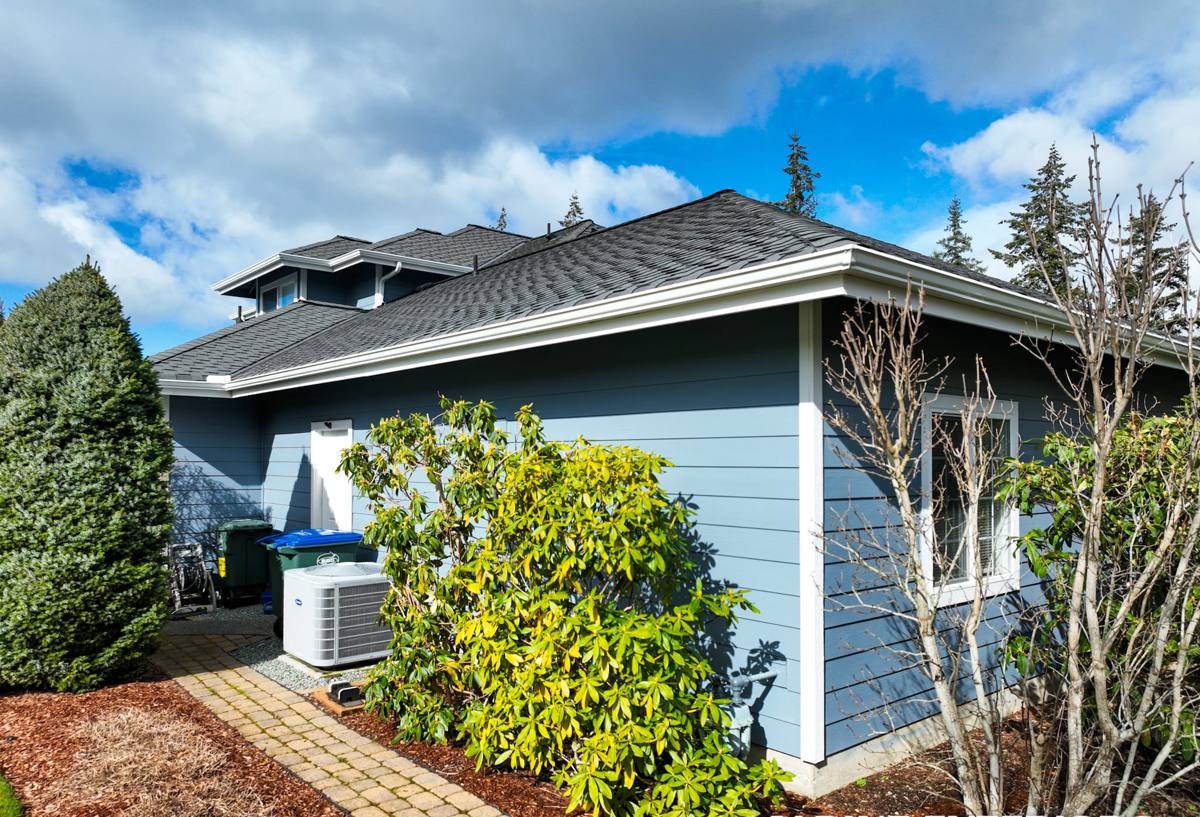
What a Correct Metal Roof Needs in a Barrier Island Environment
Corrosion resistance from the fasteners up
The metal panel itself usually isn't the weak point on a coastal roof — the fasteners, flashing, and trim details are. Standard galvanized screws and clips will show rust well before the panels do in a salt-air environment. We spec stainless steel or high-grade coated fasteners and matched, compatible trim so the whole system ages at the same rate instead of the hardware failing first and taking the roof down with it.
Finishes that hold color and don't chalk out
Year-round Florida UV breaks down cheaper paint finishes faster than most homeowners expect, leading to chalking, fading, and eventually a roof that looks a decade older than it is. Higher-grade PVDF (Kynar-type) finishes resist that breakdown far better than basic polyester coatings, which matters more here than it would in a shadier, less sun-exposed setting.
Underlayment and sealing built for wind-driven rain
Wind-driven rain during a tropical storm or hurricane doesn't run downhill the way normal rain does — it gets pushed sideways and even upward under panel laps and around penetrations. A self-adhered, high-temperature underlayment beneath the metal, combined with properly lapped and sealed seams, is what actually keeps water out when the wind is blowing rain nearly horizontal. Skipping to a lighter felt underlayment to save cost is one of the most common ways a coastal metal roof ends up leaking in its first big storm.
Choosing a Panel System That Fits a Beach Property
Not every metal roofing system is built for the same conditions. For a Holmes Beach home, the choice usually comes down to standing seam versus exposed-fastener panels, and the tradeoffs are worth understanding before you pick one based on price alone.
| Factor | Standing Seam (concealed fastener) | Exposed-Fastener Panel |
|---|---|---|
| Fastener exposure | Clips are hidden under the seam, out of direct sun and rain | Screws penetrate the panel face, exposed to UV and moisture |
| Long-term maintenance | Very low — no exposed screws to re-tighten or reseal | Screw gaskets degrade over time and need periodic inspection |
| Wind uplift performance | Generally rated higher due to concealed clip attachment | Can still meet code but with more attachment points to fail |
| Upfront cost | Higher material and labor cost | Lower upfront cost |
| Best fit | Direct beachfront or first-row properties, long-term ownership | Secondary structures, budget-driven projects set back from the water |
For homes directly on or very near the water in Holmes Beach, we generally recommend standing seam because the concealed fastener system removes the single biggest long-term maintenance headache in a salt-air environment: exposed screw gaskets breaking down and needing re-sealing every few years. It costs more up front, but it's honest to say the lifecycle cost is often lower.
Fasteners, Flashing, and the Details That Actually Fail First
Almost every metal roof leak or premature failure we get called out to inspect traces back to a detail, not the panel itself. A few specifics that matter more here than inland:
- Galvanic compatibility: mixing incompatible metals (like uncoated steel fasteners with aluminum panels, or copper flashing against the wrong panel material) sets up corrosion that eats through metal from the inside of the joint out — it's avoidable, but only if it's planned for before install.
- Closure strips at ridges and eaves: these block wind-driven rain and pests from getting up under the panel profile at the roof's high and low points.
- Penetration flashing: vent stacks, skylights, and any roof-mounted equipment need boots and flashing rated for the same wind and UV exposure as the rest of the roof, not generic hardware-store parts.
- Fastener spacing and torque: over-driven screws crush the gasket and stop sealing; under-driven ones back out under wind cycling. Both show up as leaks months or years later.
Wind Ratings, Permits, and Inspections for Holmes Beach Homes
Florida's building code sets wind design requirements based on location, and a barrier island property in Manatee County is typically in a higher wind-speed design zone than homes further inland. That means the roofing system — panels, fasteners, and underlayment together — needs a wind uplift rating and product approval that actually matches what's required for this location, not just what's required county-wide as a baseline.
Holmes Beach also runs its own permitting process. A roof replacement here goes through plan review and inspection tied to the city, and barrier island properties can carry additional considerations around elevation and flood zone requirements depending on the structure. We pull the correct permits, use products with valid Florida product approval for the wind zone, and schedule inspections so there's a clean paper trail if you ever need it for insurance or resale.
Our Process, Start to Finish
- On-site inspection and measurement — we look at the existing roof deck, flashing conditions, and any signs of past water intrusion before quoting anything.
- Deck evaluation and repair — metal roofing is only as good as what it's fastened to; soft or water-damaged decking gets replaced, not covered over.
- Underlayment installation — self-adhered, high-temp-rated underlayment goes down as the roof's actual water barrier, with the metal as the second line of defense.
- Panel installation — panels are run, seamed, or fastened per the manufacturer's wind-rated installation spec, not a generalized standard.
- Flashing, trim, and closures — ridges, hips, valleys, and penetrations get finished with matched, corrosion-resistant components.
- Final walkthrough and inspection — we review the completed roof with you and coordinate any required city inspection.
- Site cleanup — magnetic sweep for debris and full material haul-away before we consider the job done.
Keeping a Coastal Metal Roof Sound After Installation
Metal roofing is low-maintenance compared to most other roofing materials, but "low-maintenance" isn't "no-maintenance" on a barrier island. A short annual routine catches small issues before they become leaks:
- Rinse accumulated salt residue off the roof surface periodically, especially after long dry stretches without rain
- Check exposed fasteners (if the roof has any) for backing out or gasket wear
- Clear debris from valleys, gutters, and closure strips so water isn't pooling against a seam
- Look at flashing around any roof penetrations after major storms
- Have the roof looked at after any named storm that produced sustained high winds in the area, even if nothing looks obviously wrong from the ground
Why It Matters to Hire a Crew That Already Works Holmes Beach
Working on Anna Maria Island isn't the same logistically as working a mainland Bradenton neighborhood. Material staging, bridge access, and city-specific permitting timelines all move differently, and a crew that hasn't dealt with it before is learning on your project. We already know the local permitting process, we've priced material delivery and staging for barrier island jobs, and we understand the wind exposure differences between a Holmes Beach roof and one a few miles inland — so the spec we write for your roof reflects the actual conditions it has to survive, not a generic Manatee County default.
What Influences the Cost of a Holmes Beach Metal Roof
| Cost Factor | Why It Matters Here |
|---|---|
| Panel system (standing seam vs. exposed fastener) | Concealed-fastener systems cost more but reduce long-term maintenance in salt air |
| Finish grade (PVDF vs. standard polyester) | Higher-grade finishes resist UV fading and chalking longer under year-round sun |
| Roof complexity (valleys, penetrations, dormers) | More flashing detail work means more labor and material for a weathertight result |
| Deck condition | Any rotted or water-damaged decking found during tear-off adds repair cost before install can proceed |
| Wind rating requirements | Higher wind-zone specifications may require heavier gauge panels or tighter fastener spacing |
We give straightforward, itemized pricing so you can see where the cost is actually going rather than a single lump number.
If you're weighing a metal roof for a Holmes Beach property, we're happy to take a look and walk you through what your specific roof needs — no pressure, no obligation. The form below gets you a free estimate from a Bradenton crew that already knows this stretch of coastline.