 Bradenton Siding
 Siding Built for Palmetto's Specific Punishment
Palmetto sits close enough to the water and open enough to the weather that its homes take a different kind of beating than siding a few miles inland ever sees. Hurricane-force wind gusts test every seam and fastener line at once. Year-round UV bakes painted and coated surfaces without much of a seasonal break. Wind-driven rain gets pushed sideways into laps and trim instead of falling straight down where it's easy to shed. And salt air moving in off the water works quietly on fasteners and flashing every day, not just during a named storm. None of these on their own is unusual for a Gulf Coast property, but stacked together, year after year, they narrow the list of siding materials that actually hold up here — and they raise the bar for how that siding gets installed.
This page is specifically about fiber cement siding installation for Palmetto homes: what the material needs to do here, what a correct installation actually involves, and how we approach the job differently than a crew treating it like any other siding install anywhere in the state.
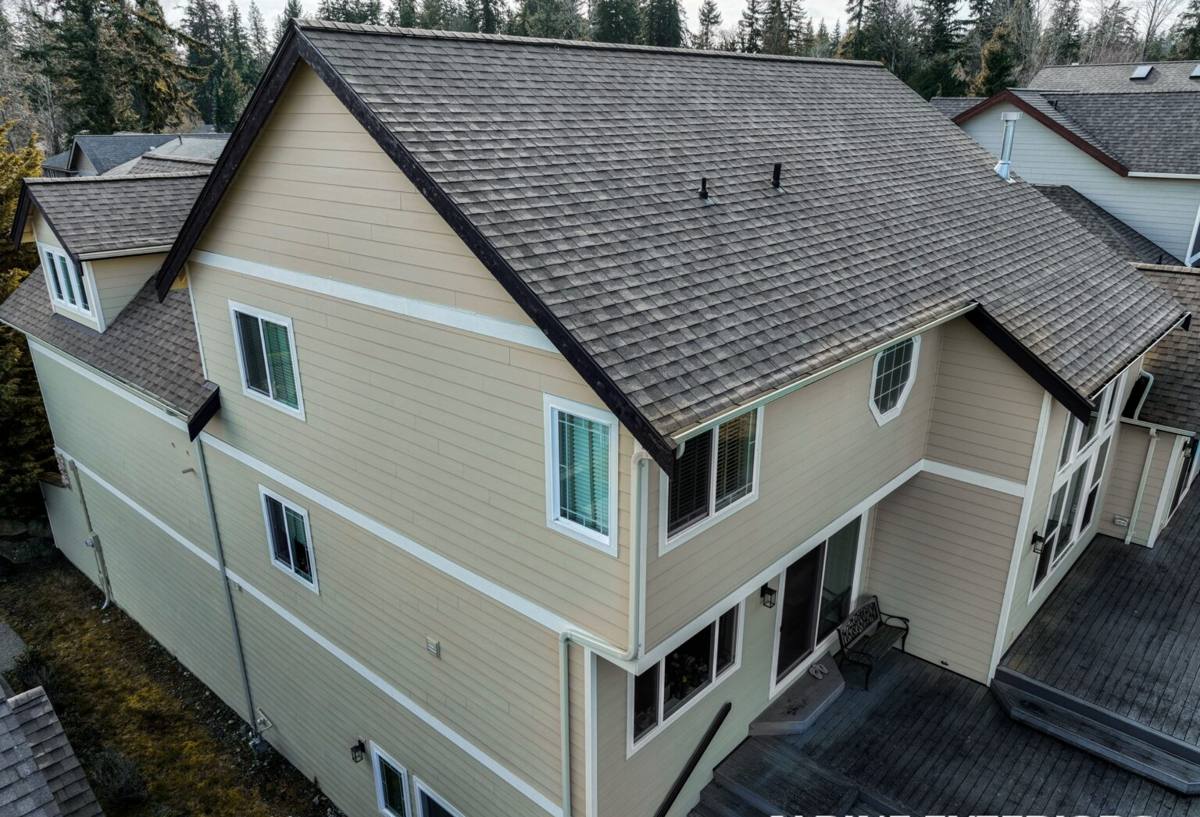
What Palmetto Homes Actually Need From Their Siding
Before talking about product or process, it's worth being specific about the job the siding has to do in this location. A wall system in Palmetto isn't just decorative — it's the first line of defense against sustained wind loads, standing up to intense sun exposure without chalking or fading prematurely, shedding wind-driven rain that hits the wall at an angle rather than straight down, and resisting corrosion and surface breakdown from salt-laden air. A siding product that only handles one or two of those well tends to show its weak point within a handful of years on a property like this, whether that's paint failure from UV, corrosion at the fasteners, or moisture intrusion at a seam that was fine in a milder climate but not here.
Wind
Manatee County construction has to account for real wind loads, and siding is no exception. Fastener pattern, fastener type, and how the siding is attached to the substrate all affect how well a wall performs when it's tested by sustained high wind — not just whether the boards look good on a calm day.
UV
Florida sun is relentless and mostly year-round, which means a painted or coated exterior surface here ages faster than the same product would somewhere with a real off-season. Finish quality and how that finish is bonded to the substrate matter more here than in most parts of the country.
Wind-Driven Rain
Storms coming off the water don't drop rain straight down — they push it sideways into every seam, corner, and penetration in the siding. Flashing details and how courses overlap matter more when rain is hitting the wall at an angle instead of falling.
Salt Air
Salt in the air accelerates corrosion in exposed metal — fasteners, flashing, trim edges. A fastener that starts corroding loses holding strength and can open a small gap right where it penetrates the siding, which only gets worse with time.
Why We Install Only James Hardie Fiber Cement
We standardized on James Hardie fiber cement siding for every home we work on, including in Palmetto, and we don't install vinyl, LP SmartSide, Cemplank, Allura, primed spruce, or cedar. That's not a marketing position — it's a practical one based on how these materials perform under sustained wind, UV, and moisture exposure over years, not just how they look on installation day.
Fiber cement is made from cement, sand, and cellulose fiber, which gives it dimensional stability that wood-based products don't have — it doesn't swell, cup, or warp with humidity swings the way solid or engineered wood siding can. It's also non-combustible, which matters to a lot of homeowners independent of the climate conversation. James Hardie's HZ5 product line is specifically engineered for high-humidity, high-UV climates like Florida's, and the ColorPlus factory finish is baked on and warrantied against fading, chipping, and cracking in a way that a field-applied paint job on other materials generally isn't.
None of that means other products are unusable everywhere — it means that after years of installing and standing behind our work, fiber cement is what we're willing to put our name on for homes exposed to this specific mix of wind, sun, rain, and salt air.
How Fiber Cement Compares on the Factors That Matter Here
| Factor | Fiber Cement (James Hardie) | Vinyl | Wood-Based (cedar, primed spruce, engineered wood) |
|---|---|---|---|
| Wind resistance | Strong when fastened per spec; rigid, doesn't flex or pop loose easily | Can deform or blow off in sustained high wind if not rated and installed correctly | Depends on fastening; boards can work loose over time as wood moves |
| UV / fade resistance | Factory-baked ColorPlus finish warrantied against fading | Color is through the material but can chalk and fade over time in intense sun | Field-applied paint or stain fades and needs repainting on a shorter cycle |
| Moisture behavior | Dimensionally stable, doesn't absorb and swell | Doesn't absorb water but seams and channels can trap it | Absorbs moisture, swells and contracts, prone to cupping and rot at cut edges |
| Salt air / corrosion | Material itself doesn't corrode; fastener and flashing quality still matter | Material doesn't corrode but can become brittle over time | Fasteners and any metal trim still at risk; wood itself can degrade faster near salt air |
| Combustibility | Non-combustible | Combustible | Combustible |
What Correct Fiber Cement Installation Involves
Fiber cement performs the way it's engineered to only when it's installed to spec — the material itself is only part of the story. A rushed or corner-cut installation can undermine even the best product. Here's what we treat as non-negotiable on every fiber cement job:
- Proper fastener type, length, and spacing per James Hardie's published installation guidelines, not a generic pattern used across every siding brand
- Correct clearance between the bottom of the siding and grade, decks, roof lines, and any other surface where water could collect against the board
- A water-resistive barrier installed and lapped correctly behind the siding, with flashing integrated at every window, door, and penetration in the correct sequence
- Caulking and sealant used only where specified — not as a substitute for proper flashing and lap detailing
- Panel and lap siding joints staggered and detailed to shed wind-driven rain rather than collect it
- Cut edges sealed, since an unsealed cut edge is one of the more common points where moisture eventually finds its way in
- Corner and trim details that account for both appearance and the wind and water exposure specific to the wall orientation
Any one of these done wrong doesn't necessarily show up on day one. It shows up two, five, or ten years later as a soft spot, a stain, a fastener pop, or a paint failure that shouldn't have happened yet — and by then it's a repair job instead of a five-minute fix during installation.
Our Process for a Palmetto Fiber Cement Job
1. On-Site Assessment
We start by walking the property and looking at the existing siding, the substrate underneath where it's accessible, and any problem areas — soft spots, staining, gaps around trim, or previous repair patches. We also look at wall orientation relative to prevailing wind and sun exposure, since that affects how we detail specific elevations.
2. Scope and Product Selection
We walk through the applicable James Hardie product lines, profiles, and ColorPlus finish options, and put together a scope that's specific to your home rather than a generic package. This is also where we go over realistic cost factors so there aren't surprises later.
3. Tear-Off and Substrate Check
Old siding comes off and we check the sheathing and water-resistive barrier underneath. Any rot, moisture damage, or barrier gaps get addressed before new siding goes on — covering a compromised substrate with new siding just hides the problem instead of fixing it.
4. Installation to Spec
Installation follows James Hardie's published guidelines for fastening, clearance, flashing, and lap detailing, adjusted for the specific wind and rain exposure of each elevation on your home.
5. Final Walkthrough
We walk the finished job with you, cover care and maintenance basics, and make sure the warranty registration is handled correctly so it's actually in place if you ever need it.
Cost Factors for a Palmetto Fiber Cement Project
Every home is different, but the main variables that move the price on a fiber cement project here are fairly consistent. This isn't a quote — it's a starting point for the conversation.
| Factor | Why It Matters |
|---|---|
| Home size and wall area | More square footage of siding and more corners, trim, and penetrations means more material and labor |
| Substrate condition | Rot or moisture damage found during tear-off adds repair work before new siding can go on correctly |
| Profile and finish selection | Different James Hardie profiles and ColorPlus finish options carry different material costs |
| Story height and access | Multi-story walls and difficult access points add labor time and equipment needs |
| Trim and detail complexity | Homes with more architectural detail, corners, and penetrations take more time to flash and finish correctly |
| Existing siding removal | What's coming off, and how it's disposed of, factors into the overall scope |
Why It Matters That We Already Work in Palmetto
A crew that already works in and around Palmetto isn't guessing at how the local wind and rain patterns hit a wall — they've seen it on other jobs in the area and detail accordingly. That familiarity shows up in small decisions: which elevations get extra attention on flashing, how clearance is handled near typical Florida landscaping and drainage patterns, and what to look for when checking a substrate that's been exposed to this climate for years. It also means we're not learning Manatee County permitting and inspection expectations for the first time on your project.
Being local also means we're still reachable after the job is done — for warranty questions, a follow-up look at a detail, or advice on maintenance, rather than being a crew that did one job in the area and moved on.
Maintaining Fiber Cement Siding in This Climate
Correctly installed James Hardie siding is low-maintenance, not no-maintenance. A few habits go a long way in a climate like Palmetto's:
- Rinse siding periodically to clear salt residue and general grime, especially on walls facing the water or prevailing wind
- Walk the exterior after major storms and check for loose trim, gaps at caulk lines, or fastener issues rather than waiting for a visible leak
- Keep landscaping and irrigation from spraying directly onto the siding, which adds unnecessary moisture exposure at the base of the wall
- Address any caulk cracking or gapping at trim and penetrations promptly, since small gaps are far easier to fix than the moisture damage they can eventually cause
- Watch for chalking or color change on paint or coatings on other materials nearby — it's a sign of UV breakdown that ColorPlus-finished Hardie siding is specifically engineered to resist
If you're planning a re-side in Palmetto, dealing with storm damage, or just want a straight assessment of what your current siding is doing, we're happy to take a look. Reach out below for a free, no-pressure estimate.