 Bradenton Siding
 Palmetto sits right across the Manatee River from Bradenton, and homes here take the same beating as the rest of Manatee County's Gulf Coast: long stretches of intense subtropical sun, salt-laden air drifting in off the water, wind-driven rain during summer storms, and the real possibility of hurricane-force gusts during the season. Siding on a Palmetto home isn't just an appearance item — it's the building's first line of defense against moisture intrusion, wood rot, and wind damage. When it's time to replace it, the material choice and the installation quality matter more here than they would in a drier, calmer climate.
Why Palmetto Homes Wear Out Siding Faster
A lot of homeowners are surprised when siding that's only 12-15 years old is already cupping, cracking, or growing mold streaks. In this part of Florida, that's the climate doing its job on a product that wasn't built for it. A few specific stressors show up over and over on siding jobs in this area:
- UV degradation: Year-round sun bakes paint finishes and breaks down resins in lower-grade composite and vinyl products, leading to fading, chalking, and brittleness.
- Salt air corrosion: Being close to the Manatee River and the broader Tampa Bay/Gulf coastline means airborne salt settles on exterior surfaces, accelerating the breakdown of fasteners, trim, and some siding substrates.
- Wind-driven rain: Florida storms don't just drop rain — they push it sideways into seams, laps, and panel joints. Siding that isn't installed with the right flashing and clearances lets that water behind the cladding.
- Humidity and moisture cycling: Constant high humidity keeps wood-based and improperly sealed products damp longer, which is exactly the condition that feeds rot and mold.
None of this means siding is a lost cause in Palmetto — it means the product and the installation both have to be matched to the environment, not just picked for upfront price.
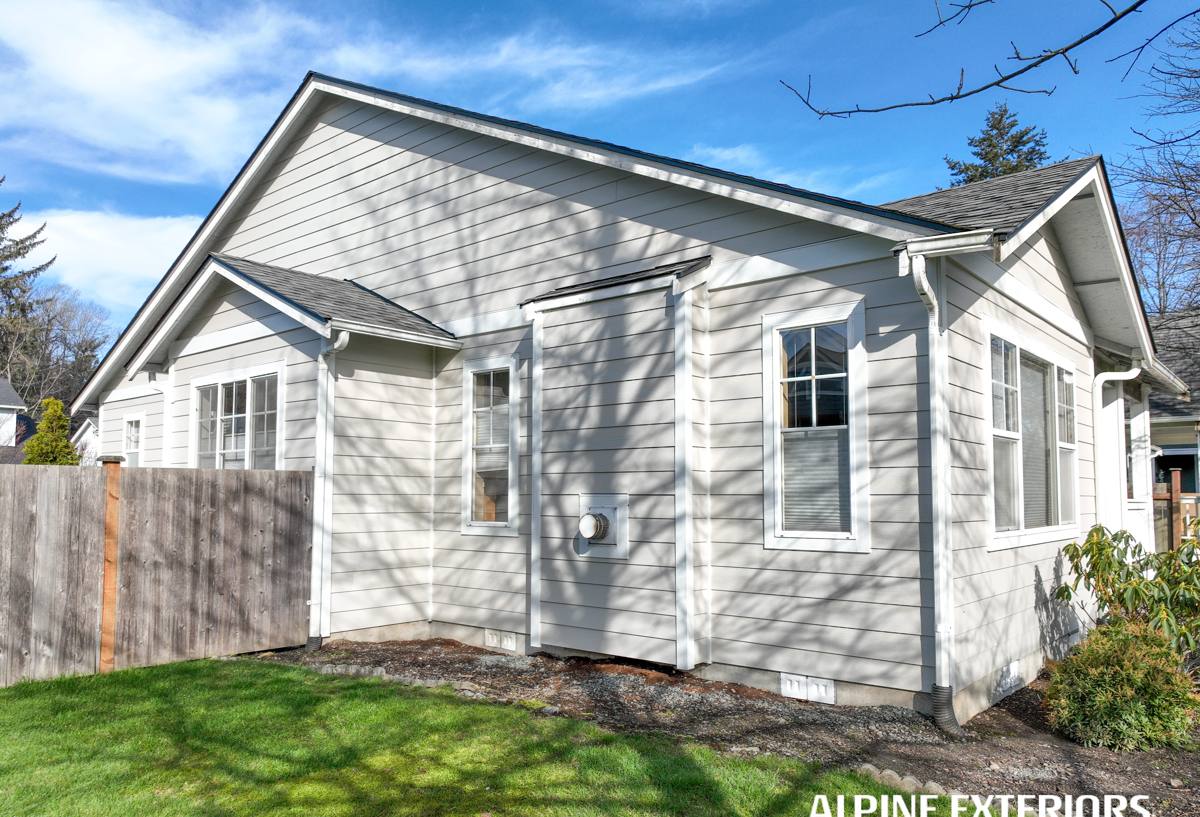
Signs a Palmetto Home Needs Siding Replacement, Not Just Repair
Not every siding problem calls for a full tear-off. But there's a point where patching becomes throwing money at a system that's already failed underneath. Watch for:
- Soft or spongy spots when you press on the siding, especially near the bottom courses and around window and door trim
- Visible cupping, buckling, or separation at panel seams
- Paint that's peeling or bubbling in a pattern that follows the seams, not just the sun-facing side
- Persistent mold or algae staining that comes right back after cleaning
- Rising energy bills with no other explanation — gaps in siding and the barrier behind it let conditioned air escape
- Visible rot at the bottom edge, especially on the sides of the home that catch prevailing wind and rain
If more than one or two of these show up in multiple areas of the exterior, it's usually a sign the water-resistive barrier behind the siding has been compromised for a while, and repair-only work would just be sealing over a bigger problem.
What a Correct Siding Replacement Actually Involves
Siding replacement done right is not just pulling off old panels and nailing up new ones. In a coastal wind and rain environment like Palmetto, the work happening underneath the visible siding matters as much as the siding itself.
Tear-Off and Substrate Inspection
Once the old siding is off, the sheathing underneath gets inspected for rot, soft spots, and prior water damage. This is the point where hidden problems — often from years of small leaks — get found and fixed before they're sealed behind new siding for another decade or more.
Water-Resistive Barrier
A new weather-resistive barrier (housewrap or equivalent) goes on correctly lapped, shingle-style, so any water that does get behind the siding sheds downward and out rather than pooling against the wall assembly.
Flashing at Every Penetration
Windows, doors, hose bibs, light fixtures, and any other penetration through the wall need proper flashing details. This is one of the most commonly skipped steps in low-cost siding jobs, and it's usually where wind-driven rain finds its way in first.
Fastening to Manufacturer and Wind-Zone Spec
Manatee County sits in a wind zone that calls for specific fastener spacing, type, and embedment depending on the siding product and the home's exposure. Under-fastening is invisible on install day and shows up as blow-off or loosening after the first serious storm.
Trim, Caulking, and Paint Details
The finish details — corner trim, joint sealant, touch-up paint on cut edges — are what keep water from wicking into the edges of the panels over time. Skipping or rushing this step is a common source of early failure that has nothing to do with the siding product itself.
Why We Install Only James Hardie Fiber Cement
We made a deliberate decision not to install vinyl siding, LP SmartSide, Cemplank, Allura, or unfinished wood siding like primed spruce or cedar. Each of those products has legitimate uses and reasonable arguments in its favor, but none of them, in our professional judgment, holds up to Gulf Coast conditions as reliably as James Hardie fiber cement over the long run.
- Vinyl siding is affordable and easy to install, but it can warp and deform in extreme heat, and high wind events can peel it off if it isn't rated and installed carefully — a real concern given Palmetto's storm exposure.
- Engineered wood products like LP SmartSide perform well in many climates, but wood-based substrates are more sensitive to sustained humidity and moisture intrusion than fiber cement, which raises the stakes if installation details or maintenance slip.
- Unfinished wood siding (primed spruce, cedar) requires an ongoing paint and sealing schedule that most homeowners underestimate; skip a cycle in this climate and rot risk climbs fast.
- Other fiber cement brands (Cemplank, Allura) are legitimate competitors to James Hardie, but we standardized on Hardie specifically for its ColorPlus factory-applied finish, its HZ5 product engineering for humid climates, and the strength of its transferable warranty backing.
James Hardie fiber cement is non-combustible, resists moisture-driven swelling and rot because it isn't wood-based, and its ColorPlus finish is baked on at the factory under controlled conditions rather than field-applied — which means a more consistent, longer-lasting color bond than job-site paint. Its HZ5 product line is specifically engineered for high-humidity, high-moisture climates like ours. That combination is why it's the only siding system we put on homes.
Comparing Common Siding Options for This Climate
| Factor | James Hardie Fiber Cement | Vinyl | Engineered Wood / Untreated Wood |
|---|---|---|---|
| Moisture/rot resistance | Strong — cement-based, not wood-based | Not affected by rot, but seams can trap moisture | Vulnerable if finish or sealing fails |
| Wind performance (properly installed) | Strong holding power with correct fastening | Can deform or blow off in high wind if under-rated | Adequate but depends on substrate condition |
| UV/fade resistance | Factory ColorPlus finish resists fading | Can fade and become brittle over time | Requires repainting on a maintenance cycle |
| Fire resistance | Non-combustible | Combustible | Combustible |
| Typical maintenance | Low — occasional wash, caulk checks | Low but limited repair options if damaged | Higher — periodic repainting/sealing needed |
Our Siding Replacement Process
Every Palmetto and Bradenton-area siding replacement follows the same disciplined sequence, whether it's a single-story ranch or a two-story home closer to the water:
- On-site assessment: We walk the exterior, check for existing damage, note wind exposure on each elevation, and measure for material.
- Proposal and product selection: We go over the right James Hardie line and profile for the home, colors, and a clear, itemized scope of work.
- Tear-off and inspection: Old siding comes off, sheathing is inspected, and any rot or damage found is addressed before anything new goes up.
- Barrier and flashing installation: Water-resistive barrier and flashing details go in at every penetration and transition.
- Hardie installation to spec: Panels are fastened per manufacturer and local wind-zone requirements, with attention to clearances at grade, roofline, and trim.
- Final detailing and walkthrough: Caulking, touch-up, and trim work are finished, and we walk the completed job with the homeowner before calling it done.
Cost Factors for a Palmetto Siding Replacement
Every home is different, so we won't quote a number without seeing the property, but a few factors consistently move the price:
| Factor | How It Affects Cost |
|---|---|
| Home size and number of stories | More square footage and taller walls mean more material and labor, plus added access equipment for two-story homes |
| Extent of substrate damage | Rotted sheathing found during tear-off adds repair work before new siding can go on |
| Siding profile and trim complexity | Lap width, shingle-style accents, and detailed trim work take more time than a simple flat lap install |
| Number of penetrations | Homes with more windows, doors, and fixtures need more flashing detail work |
| Site access | Tight lots, fencing, or landscaping close to the house can slow tear-off and material staging |
Why Hiring a Crew That Works Palmetto Regularly Matters
Siding installation isn't uniform across Florida, let alone across the country. A crew that regularly works Palmetto and Bradenton already knows the wind-zone fastening requirements for this part of Manatee County, has a feel for which elevations on a given home take the worst of the salt air and storm-driven rain, and isn't guessing about local permitting expectations. That familiarity shows up in the details — flashing choices, fastener schedules, clearance at grade — that separate a siding job that lasts fifteen years from one that lasts thirty.
Ready to Talk Through Your Siding Replacement?
If your Palmetto or Bradenton home's siding is showing its age — or you just want an honest read on whether it's a repair or a replacement — we're happy to take a look. Reach out for a free, no-pressure estimate using the form below, and we'll walk the exterior with you and lay out exactly what we'd recommend and why.