 Bradenton Siding
 Why Samoset Siding Takes More Punishment Than Most
Samoset sits inland enough from the Gulf to feel like it should be sheltered, but it isn't spared. Homes here still deal with the same combination that wears down siding across Manatee County: hurricane-force wind gusts during storm season, wind-driven rain that gets pushed sideways into seams and laps, salt-laden air drifting in off Tampa Bay and the Gulf, and some of the most intense, sustained UV exposure of any climate in the country. None of those forces are dramatic on their own in a single afternoon. The damage shows up over years, as fasteners work loose, seams open up, paint chalks and fades, and moisture finds its way behind panels that look fine from the curb.
That's the core problem with siding repair in a climate like this: the damage that matters most is usually the damage you can't see from the driveway. A cracked or buckled panel is obvious. A slow moisture path behind a butt joint that's been opening a little more with every wind event is not — and it's the one that costs real money if it's ignored.
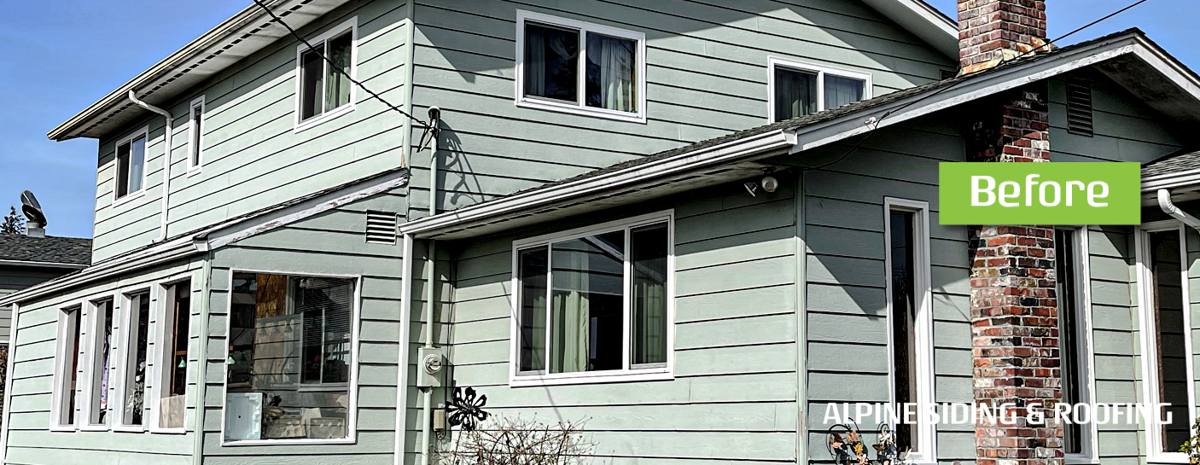
Common Siding Problems We See on Samoset Homes
Wind and Storm Damage
Bradenton doesn't need a direct hurricane hit to damage siding. Tropical storm bands, straight-line wind events, and even a hard summer thunderstorm with gusty outflow can crack panels, pop them loose from fasteners, or drive debris into a wall section hard enough to punch through it. Older or improperly fastened siding is especially vulnerable because wind uplift finds the weak point — a nail that missed the stud, a panel that was never fully seated — and works it loose over repeated events.
Moisture and Rot at Seams and Butt Joints
Wind-driven rain doesn't fall straight down here; it gets pushed sideways and upward under eaves and into horizontal laps and vertical butt joints. If those joints weren't caulked, flashed, or gapped correctly at installation, water works its way behind the siding and into the wall assembly. On wood-based products this shows up as soft, swollen, or delaminating material. On any siding type, it can mean rotted sheathing or framing underneath long before the surface looks obviously bad.
Sun-Baked Paint and Chalking
Year-round UV exposure breaks down paint film faster in Florida than almost anywhere else in the country. Factory-finished siding holds up better than field-painted siding, but even good finishes eventually chalk, fade unevenly (especially on sun-facing walls), and lose their ability to shed water the way they did when new.
Fastener and Panel Movement
Repeated wet-dry and heat-cool cycles cause siding materials to expand and contract. Over years, that movement backs out nails, widens gaps, and can telegraph as visible waviness or "oil-canning" in the wall plane — especially on lower-quality or improperly fastened panel systems.
What a Correct Siding Repair Actually Involves
A lot of "siding repair" in this market amounts to swapping a cracked panel for a new one and calling it done. That fixes the symptom, not necessarily the cause, and it can leave hidden moisture damage to keep spreading behind a fresh-looking patch. A repair done right has a few non-negotiable steps.
Diagnosing What's Behind the Damaged Panel
Before anything gets replaced, the area around the visible damage needs to be checked for soft spots, staining, or trapped moisture — not just the panel itself, but the house wrap or building paper and sheathing behind it. Damage that looks like "one bad panel" is sometimes the visible edge of a wider moisture problem that's been building for a while.
Matching Material, Profile, and Color
Siding ages and fades unevenly across a wall, especially on sun-exposed elevations. A patch repair using new material next to years-old weathered siding can leave a visible mismatch, particularly with field-painted products or discontinued profiles. Matching reveal, profile, and color as closely as possible — or making an honest call that a section needs to be replaced instead of patched — is part of doing the job right, not an upsell.
Correcting the Underlying Cause
If a joint failed because it was never properly flashed or gapped, replacing the panel without fixing the flashing detail just guarantees the same failure again in a few years. Proper repair means addressing water management — flashing, gapping, caulking at the right joints (and not caulking joints that are supposed to breathe) — not just cosmetic panel replacement.
Our Repair Process for Samoset Homes
- On-site inspection. We walk the exterior, identify all visibly damaged areas, and probe suspect spots for soft or moisture-compromised material — not just the spot the homeowner called about.
- Honest assessment. We tell you plainly whether an area is a straightforward panel swap, a moisture-repair job that needs sheathing work, or a section where patching won't hold up and replacement is the better long-term call.
- Material and color matching. Where a true match isn't available, we explain the trade-offs up front rather than surprising you at the end of the job.
- Proper water management. Flashing, joint treatment, and fastening are corrected to current best practice, not just repeated as they were originally installed.
- Cleanup and final check. We walk the repaired area with you before we consider the job finished.
Repair vs. Replacement: How to Think About It
Not every damaged section needs a full re-side, and not every "small repair" request should actually be treated as small. Here's the honest breakdown of what tends to favor each path.
| Factor | Repair Usually Makes Sense | Replacement Usually Makes Sense |
|---|---|---|
| Damage extent | Isolated to one or a few panels/sections | Widespread cracking, warping, or fading across multiple elevations |
| Moisture findings | Localized, sheathing intact | Rot or moisture found at multiple points behind the siding |
| Age of existing siding | Siding is relatively young and otherwise sound | Siding is near or past its expected service life |
| Material match | Close match available (color, profile) | Product discontinued or fading makes a seamless match impossible |
| Underlying cause | A single fixable detail (one bad joint, storm impact) | Systemic issue — poor original installation, wrong product for the climate |
When Repair Isn't the Right Long-Term Answer
Sometimes an inspection turns up more than a homeowner expected — moisture damage at multiple wall sections, siding that's been failing slowly for years, or a product that simply wasn't built for Gulf Coast conditions. When that's the honest finding, we say so, and we'll walk you through what full replacement looks like rather than stacking patch repairs on a system that's already compromised.
When that conversation happens, our recommendation is James Hardie fiber cement siding, and it's the only siding product we install. It's non-combustible, engineered for high-heat, high-humidity climates through Hardie's HZ5 product line, and finished with a factory-applied ColorPlus finish that resists the fading and chalking that plain field-painted siding struggles with under constant Florida sun. It carries a strong transferable warranty when installed to Hardie's specifications. We don't install vinyl, LP SmartSide, primed wood, or other fiber cement brands — not because every one of those products is without merit, but because after years of repair calls in this climate, Hardie is what we're comfortable standing behind on a Samoset roofline.
Why It Matters to Hire a Crew That Already Works This Area
Siding repair isn't a one-size-fits-all trade. A crew that regularly works Bradenton and the surrounding Manatee County communities has already seen how salt air, humidity, and storm exposure play out on real homes in this specific environment — which joints fail first, which materials hold up and which don't, and what a "small" repair call usually turns out to actually need once the siding comes off. That local pattern recognition is the difference between a repair that lasts and one that's back on the schedule in two years.
It also matters for practical reasons: knowing how local permitting works, understanding typical wall assemblies used in homes built during Samoset's different development eras, and being available for follow-up if something needs a second look after the next storm season.
Signs Your Siding Needs a Repair Call
- Visible cracks, holes, or missing sections after a storm
- Panels that look warped, bowed, or no longer sit flat against the wall
- Soft or spongy spots when you press on the siding near the bottom edges or seams
- Peeling, bubbling, or heavily chalking paint that rubs off on your hand
- Visible gaps opening up at butt joints or corners
- Staining or discoloration that keeps reappearing in the same spot after cleaning
- A musty smell or interior wall staining on the other side of an exterior wall
- Nail heads popping through the surface or visible fastener trails
If you're seeing any of that on a Samoset home, it's worth getting a straight answer on what's actually going on before it turns into a bigger repair. We offer free, no-pressure estimates — use the form below and we'll take a look and tell you honestly what the siding needs.