 Bradenton Siding
 Decking Built for Southgate's Specific Climate Load
Southgate sits close enough to the Gulf and to Sarasota Bay that decks here take a different kind of beating than decks a hundred miles inland. It isn't one big event that wrecks a deck — it's the accumulation of four things happening year-round: intense UV exposure that fades and embrittles lesser materials, wind-driven rain that finds its way into any gap in the fastening or flashing, salt-laden air that accelerates corrosion on hardware, and the occasional hurricane-force wind event that tests every connection point at once. A deck built to a generic national spec, installed by a crew that doesn't work this coastline regularly, tends to show its weaknesses within a few seasons — cupping boards, rust streaks around fasteners, or a railing post that's gone soft at the base.
Composite decking, installed correctly, handles this environment better than most alternatives. But "composite" is not a single product with one behavior — it's a category with real differences between brands and generations, and the installation details matter as much as the material choice. This page covers what a Southgate homeowner actually needs to know before committing to a composite deck project.
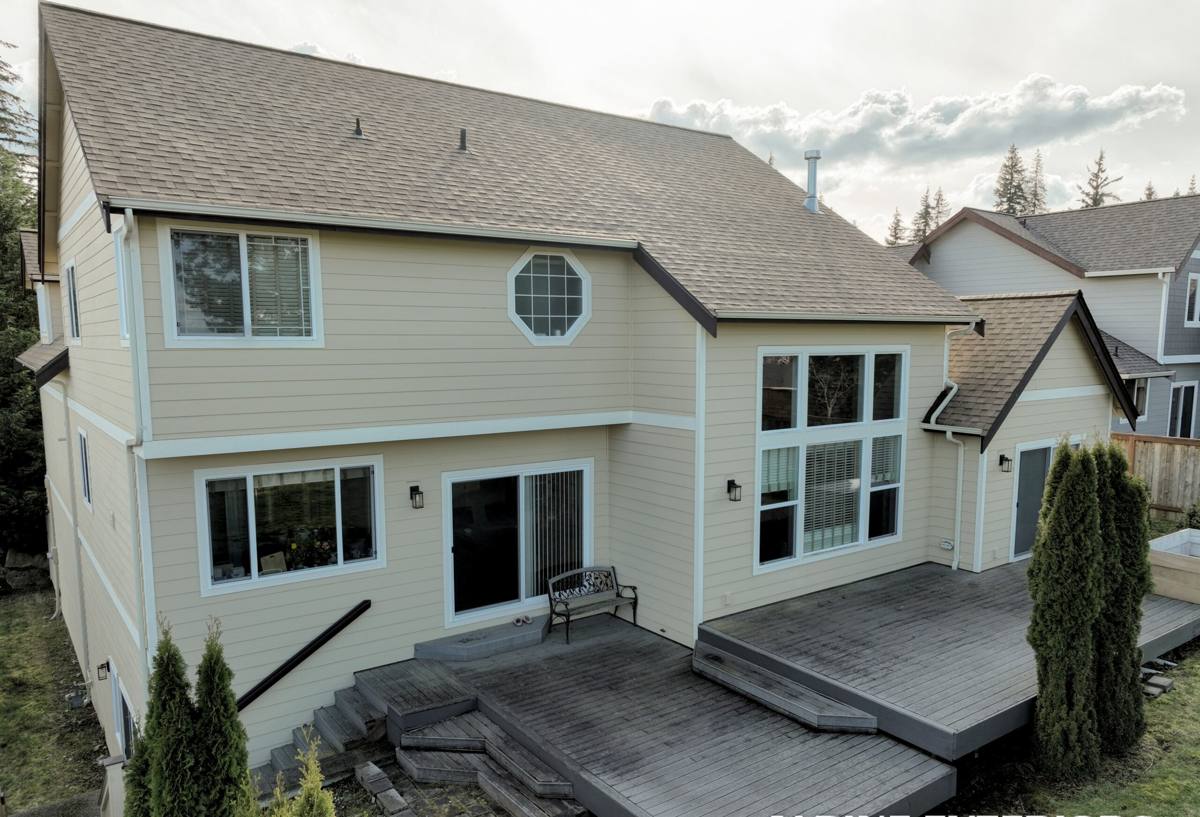
What Composite Decking Solves — and What It Doesn't
Composite boards (a blend of wood fiber and plastic, capped or uncapped) were developed specifically to address the problems wood decking has in wet, sunny climates: rot, splintering, warping, and the endless cycle of sanding and re-staining. In a Manatee County backyard, that's a meaningful upgrade. Composite doesn't absorb water the way real wood does, it won't splinter underfoot, and a quality capped board resists UV fading far better than an uncoated wood surface exposed to Florida sun all day.
What composite doesn't do is eliminate the need for a correctly engineered substructure. The decking surface is only as good as what's underneath it — the framing, the fasteners, the flashing where the deck meets the house, and the way air and water are allowed to move underneath the boards. We've been called out to look at composite decks that were failing not because the boards were bad, but because the frame underneath was standard lumber with no ventilation gap, trapping moisture and rotting from below while the composite surface looked fine on top. The material choice is half the job. The installation is the other half, and it's the half that gets skipped when a crew is unfamiliar with how these products actually perform on the Gulf Coast.
Capped vs. Uncapped Composite
Capped composite boards have a polymer shell wrapped around the wood-fiber core, which is what actually gives them their stain and fade resistance. Uncapped composite is cheaper but behaves more like the older generation of composite decking — more prone to moisture absorption at cut ends and more susceptible to surface fading under constant sun. For a Southgate property with full sun exposure most of the year, we generally steer homeowners toward capped boards specifically because of the UV load this area gets, not because uncapped composite is unusable everywhere.
What a Correct Composite Deck Installation Actually Involves
A composite deck is a system, and every part of that system has to be right for the deck to perform over the long haul in a coastal climate. Here's what we consider non-negotiable on every job:
- Ledger board attachment and flashing — where the deck ties into the house is the single most common source of hidden water damage. Proper flashing (not just caulk) keeps wind-driven rain from getting behind the ledger and into the house framing.
- Joist spacing matched to the board manufacturer's spec — composite boards flex differently than wood, and spacing that's fine for a wood deck can cause a composite board to sag or bounce over time.
- Corrosion-resistant fasteners and hardware — standard galvanized hardware degrades faster in salt air. We use fasteners and structural connectors rated for coastal/corrosive environments, not just whatever is cheapest at the supply house.
- Hidden fastener systems where appropriate — reduces surface penetration points where water and heat can work into the board over years of sun cycling.
- Proper ventilation beneath the deck — airflow under the structure lets any moisture that does get in dry out instead of sitting against the framing.
- Correct board gapping — composite expands and contracts with heat more than people expect; gapping has to account for a Florida summer, not just the day of installation.
- Post bases isolated from standing water — post-to-concrete connections detailed so water doesn't pool against the base of a support post.
Skip any one of these and the deck can still look fine for a year or two. The problems show up later, which is exactly why the installation crew's habits matter more than the brand name on the boards.
Our Process, Start to Finish
1. On-Site Assessment
We look at the existing structure (if there is one), grade and drainage around the deck footprint, sun exposure, proximity to the house's water management (gutters, downspouts), and how the deck will actually be used. A deck off a kitchen for grilling and a deck built for a pool area have different practical needs even if the square footage is identical.
2. Design and Material Selection
We walk through board options, color, railing style, and fastening approach, and give an honest comparison of trade-offs — we're not pushing one brand because of a rebate. Budget, expected sun exposure, and how much low-maintenance matters to the homeowner all factor into the recommendation.
3. Permitting
Deck construction in Manatee County typically requires a permit and inspection, particularly for anything attached to the house structure or above a certain height. We handle the permitting process rather than leaving it to the homeowner.
4. Demolition and Structural Work (if applicable)
Removal of any failing existing deck, and correction of any structural issues found underneath — this is often where hidden rot or undersized framing from a prior build gets discovered.
5. Framing, Flashing, and Decking Installation
Built to the details above, with inspections at the structural stage before boards go down.
6. Final Walkthrough
We go over the finished deck with the homeowner, including basic care expectations, before calling the job done.
Composite vs. Other Decking Materials
| Material | UV/Fade Resistance | Salt Air Durability | Maintenance | Typical Lifespan |
|---|---|---|---|---|
| Capped Composite | Strong | Good with proper hardware | Occasional wash | 25-30+ years |
| Uncapped Composite | Moderate | Fair | Occasional wash | 15-25 years |
| Pressure-Treated Wood | Weak (fades/grays) | Fair, hardware-dependent | Annual sealing/staining | 10-15 years |
| Tropical Hardwood | Moderate | Good | Regular oiling | 20-25 years |
| Aluminum Decking | Strong | Very good | Minimal | 30+ years |
Composite hits a practical middle ground for most Southgate homeowners: better weather performance than wood without the cost premium of aluminum, and far less upkeep than any wood species over the life of the deck.
What Actually Drives the Cost of a Composite Deck
| Factor | Why It Matters Here |
|---|---|
| Square footage and shape | Complex shapes and multiple levels increase framing and cutting time |
| Board tier (capped vs. uncapped) | Capped boards cost more upfront but hold up better under constant Florida sun |
| Substructure condition | Replacing rotted or undersized existing framing adds cost but is not optional |
| Railing and fastener systems | Hidden-fastener systems and coastal-rated hardware cost more than standard hardware |
| Height and code requirements | Elevated decks need engineered railings and additional structural support |
| Permitting and inspections | Manatee County permit and inspection requirements add time and fees regardless of material |
We give a firm, itemized quote after the on-site assessment rather than a rough number over the phone — deck pricing without seeing the site is close to guesswork.
Living With a Composite Deck: Realistic Maintenance
One of the honest selling points of composite is how little it asks of the homeowner compared to wood, but "low maintenance" isn't "no maintenance." A composite deck in this climate still needs:
- Periodic washing to remove pollen, salt residue, and organic buildup (mold and mildew can grow on any decking surface in Florida's humidity, composite included)
- Prompt cleanup of standing debris in corners or against railings where moisture and organic matter can collect
- An annual check of railing connections and fastener points, especially after a significant storm
- Keeping gutters and downspouts near the deck functioning, so runoff isn't dumping directly onto or under the deck structure
None of this is heavy labor. It's the difference between a deck that looks the same in year ten as it did in year one, and one that shows neglect.
Permits, Wind Ratings, and Local Code in Manatee County
Decks attached to a home, or built above a certain elevation, generally fall under Manatee County's building permit and inspection process, and structural elements need to meet the wind load requirements for this region. This isn't paperwork for its own sake — it's the mechanism that catches undersized framing or inadequate railing attachment before it becomes a safety issue during a wind event. We pull permits as a standard part of the job and coordinate inspections, so the homeowner isn't left navigating that process alone or discovering after the fact that unpermitted work complicates a future home sale.
Why a Crew That Already Works Southgate Matters
A contractor who works this area regularly already knows what tends to go wrong here — where drainage typically pools after a summer downpour, which hardware actually holds up under sustained salt exposure versus what fails early, and what Manatee County inspectors look for on a deck permit. That local repetition shows up in fewer surprises during the job: fewer change orders from unexpected framing conditions, fewer callbacks for details that get missed by a crew doing its first deck in this specific climate. It also means we're not learning on a homeowner's project which composite brands and fastening systems genuinely hold up here versus which ones look fine in a showroom but underperform after a few Gulf Coast summers.
Questions to Ask Before Hiring Anyone for This Job
- Will you pull the required permit and coordinate inspections, or is that left to me?
- What fastener and hardware brand do you use, and is it rated for coastal/salt-air environments?
- How do you flash and waterproof the ledger board connection to my house?
- What board spacing and ventilation approach do you use under the decking?
- Can you show me the manufacturer's installation spec you're following for joist spacing?
- What's your warranty on labor, separate from the manufacturer's product warranty?
Any established local contractor should be able to answer these without hesitation. Hesitation on the flashing and fastener questions in particular is worth paying attention to.
Get a Straight Answer on Your Southgate Deck Project
If you're weighing a new composite deck or replacing a tired wood deck in Southgate, we're glad to walk the site, look at what's there now, and give you a straightforward, itemized estimate — no pressure, no inflated scare tactics about your existing deck. Use the form below to request a free estimate and we'll schedule a time to take a look.