 Bradenton Siding
 Siding Repair Built for Southgate's Climate, Not a Generic Checklist
Southgate is one of Bradenton's established residential neighborhoods, and homes here carry the marks of decades under Gulf Coast sun, salt-laden air, and seasonal tropical systems. Siding damage in this part of Manatee County rarely comes from one dramatic event. More often it's the slow accumulation of UV exposure baking caulk joints brittle, wind-driven rain finding its way behind a loose panel, and humidity swings that expand and contract materials until seams start to fail. A siding repair here has to account for all of that, not just patch the visible problem.
We approach every Southgate repair call the same way: figure out what actually caused the damage before touching a panel. A crack that looks cosmetic can be a symptom of moisture already working its way into the wall assembly. Fixing the surface without addressing the cause just means we'll be back at the same spot in a year or two, and the homeowner pays twice.
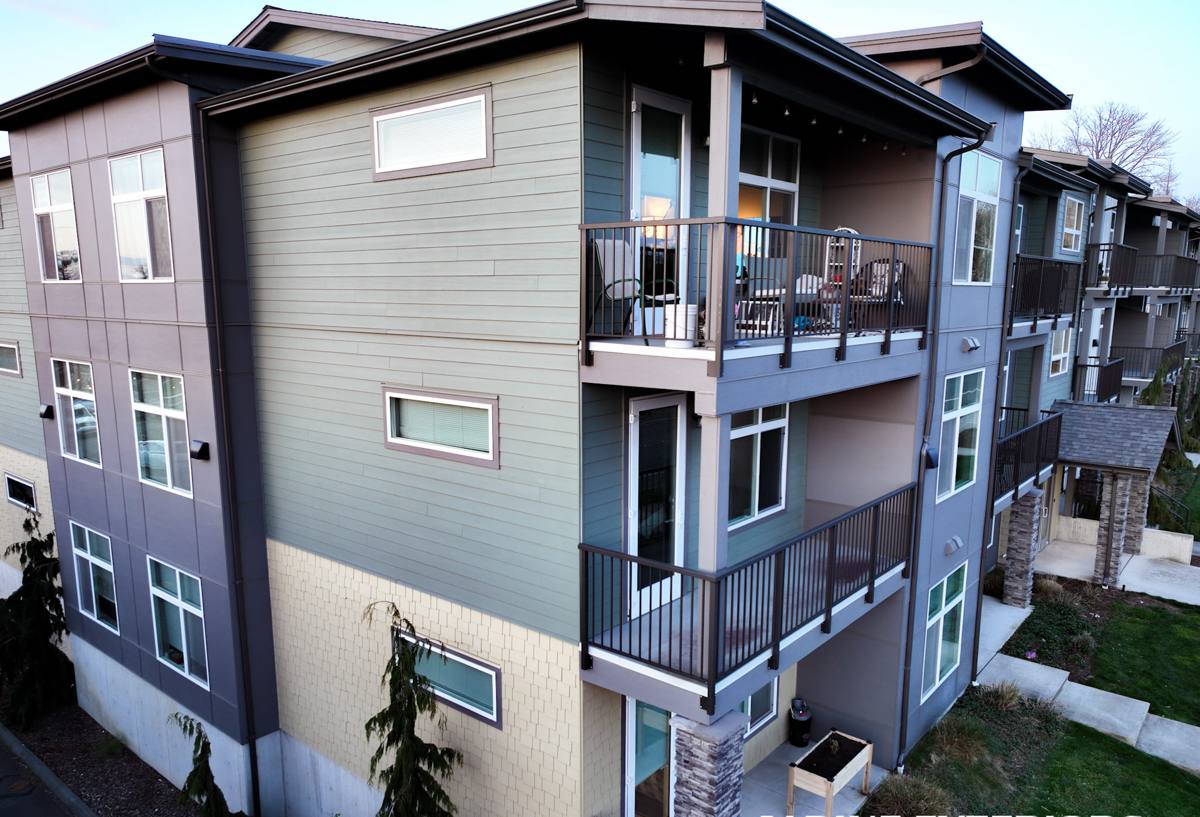
Why This Neighborhood's Homes Take a Particular Kind of Beating
Hurricane-Force Wind and Wind-Driven Rain
Manatee County sits squarely in the path of tropical systems that move through the Gulf each season. Even storms that don't make direct landfall nearby can push sustained winds and horizontal rain hard enough to lift siding edges, tear loose fasteners, and drive water behind panels that were never designed to handle rain coming in sideways. Southgate's mature tree canopy adds another variable: falling limbs and wind-thrown debris are a common cause of localized impact damage that homeowners don't always notice until they're looking closely at the exterior.
Intense, Year-Round UV
Florida sun is relentless twelve months a year, not just in summer. UV breaks down caulking, fades and chalks certain siding finishes faster than manufacturers' marketing suggests, and accelerates the drying-out of any wood-based product. On older homes in Southgate, this shows up as brittle trim, cracked caulk lines, and paint that's failed well ahead of schedule.
Salt Air
Southgate isn't beachfront, but Bradenton's proximity to Tampa Bay and the Gulf means salt-laden air still travels inland and settles on exterior surfaces. Over years, that salt content accelerates corrosion on fasteners, hinges, and any exposed metal trim or flashing, which is often the real reason a siding joint that looked fine last year is suddenly leaking.
Signs a Southgate Home Needs Siding Repair
Most siding problems give warning signs well before they become expensive. Homeowners who catch these early save significant money over the life of their siding.
- Visible cracks, splits, or chips in siding panels, especially near corners and butt joints
- Soft or spongy spots when you press on siding, a sign of moisture already trapped behind it
- Peeling, bubbling, or chalking paint concentrated in one area rather than spread evenly
- Gaps opening up at seams, trim boards, or where siding meets windows and doors
- Staining or discoloration that runs downward from a seam or fastener
- Caulk that has cracked, shrunk, or pulled away from the joint it was meant to seal
- Warping, buckling, or panels that no longer sit flush against the wall
- A musty smell or visible mold near an exterior wall inside the home
The Repair Issues We See Most Often in This Area
Southgate's mix of home ages means we handle everything from isolated storm damage on newer fiber cement installations to widespread deterioration on original siding that's reaching the end of its service life. The most common categories:
- Impact damage from wind-thrown debris or falling branches, usually isolated to one or two panels
- Moisture intrusion at poorly flashed windows, doors, or roof-to-wall transitions, where water has been getting behind the siding gradually
- Failed caulk joints at seams and trim, which look minor but are one of the most common entry points for water
- Fastener failure, where corroded or improperly driven nails let panels shift, buckle, or separate
- Deterioration of older wood or non-fiber-cement siding, particularly where paint has failed and moisture has been absorbed over multiple seasons
Repair or Replace? How We Actually Decide
Not every damaged section needs a full re-side, and we don't push replacement when a targeted repair will genuinely hold up. But there's a point where patching stops making financial sense. We walk every homeowner through this honestly before recommending either path.
| Situation | Typical Recommendation | Why |
|---|---|---|
| Isolated impact damage, one to a few panels, siding otherwise sound | Repair | Localized fix restores the wall without disturbing surrounding material |
| Failed caulking and sealant joints, no underlying moisture damage found | Repair | A resealed and properly flashed joint solves the actual problem |
| Moisture found behind siding in a limited area, wall sheathing still sound | Repair with moisture barrier correction | Addresses the water path, not just the visible symptom |
| Widespread deterioration across multiple wall sections or elevations | Replacement | Repeated repairs cost more over time than one correct installation |
| Original siding is an aging wood or composite product nearing end of service life | Replacement | Patching a failing material only delays an inevitable, larger cost |
| Structural rot found in sheathing or framing behind the siding | Replacement, with structural repair first | Siding can't be properly reattached to compromised substrate |
Repair costs on a straightforward, localized job are typically the least expensive path available for exterior maintenance. Once moisture has spread to the sheathing or framing, or damage covers a large percentage of a wall, the math shifts toward replacement being the more cost-effective long-term choice. We'll tell you honestly which situation you're in rather than defaulting to whichever is more profitable for us.
What a Correct Siding Repair Actually Involves
Inspection Before Anything Else
Every repair starts with a close inspection of the damaged area and everything around it, not just the section that's visibly broken. We check for soft spots, probe suspect areas, and look at flashing, trim, and fastening in the surrounding zone. Damage is often more extensive underneath than it appears on the surface.
Finding and Fixing the Water Path
If moisture is involved, the repair isn't complete until we know how water got in and have corrected that path, whether that's a flashing detail, a gap at a penetration, or a failed sealant joint. Replacing a panel without correcting the entry point just resets the clock on the same failure.
Matching Material and Profile
A repair should be close to invisible once finished. That means matching the existing siding's profile, reveal, and finish as closely as possible. On homes already sided in James Hardie fiber cement, this is straightforward since Hardie's ColorPlus finish and product lines are manufactured to consistent specifications. On homes with older or discontinued siding products, matching can be harder, and it's a factor we discuss honestly when the existing material is no longer produced in a matching profile.
Proper Fastening and Clearances
Manufacturer-specified fastening patterns and ground, roof, and deck clearances exist for a reason in a climate like this one. A repair that skips them may look fine on install day and fail again the next time a tropical system moves through.
Our Repair Process, Step by Step
- On-site inspection of the damaged area and surrounding siding, trim, and flashing
- Moisture assessment where water intrusion is suspected, including checking sheathing condition
- Honest recommendation: targeted repair, or replacement if the damage or underlying conditions warrant it
- Clear, written scope before work begins, no surprise add-ons once we've started
- Removal of damaged material and correction of any underlying water-path issue found
- Installation of matched material with correct fastening, flashing, and sealant per manufacturer spec
- Final walkthrough so you can see the completed repair before we consider the job done
Why We Only Install and Repair with James Hardie Fiber Cement
We standardized on James Hardie fiber cement siding, and it's not a coincidence that it's also the easiest product to keep in good repair long-term in a Gulf Coast climate. Hardie's fiber cement is non-combustible, engineered for high-humidity, storm-prone regions through its HZ product lines, and finished with a factory-applied ColorPlus coating that resists the fading and chalking we see on painted wood and lower-grade composite siding in this climate. When repair work is needed on a home already sided in Hardie product, matching panels are manufactured to a consistent standard, which makes an invisible repair realistic instead of a guessing game.
When a Southgate home's existing siding has deteriorated beyond a reasonable repair, we recommend James Hardie for the replacement rather than vinyl, LP SmartSide, primed wood, or other fiber cement alternatives. That's a professional standard we hold to based on how these products perform, and behave when they eventually need repair, in this specific climate: vinyl can warp and crack under intense heat and impact, engineered wood products carry more moisture sensitivity than most homeowners are told upfront, and Hardie's transferable warranty and factory finish give homeowners a siding system that holds up and stays serviceable for decades.
Why a Crew That Already Works Southgate Makes a Difference
Siding repair in this neighborhood isn't a generic task you can hand to any contractor passing through. A crew that regularly works in Southgate and the surrounding Bradenton area understands the local permitting requirements through Manatee County and the City of Bradenton, knows what wind-load and flashing details actually hold up here, and has likely already seen how this neighborhood's tree cover, home ages, and salt-air exposure play out over time. That local familiarity shows up in faster, more accurate diagnosis and repairs that are built to the conditions this specific area produces, not a one-size-fits-all national playbook.
If you're noticing cracked panels, failing caulk, or a soft spot on your home's exterior, don't wait for the next storm season to find out how far it's spread. We offer free, no-pressure estimates for Southgate homeowners, and we'll give you an honest read on whether your siding needs a repair or something more. Fill out the form below to get started.