 Bradenton Siding
 Deck Building for Palmetto Homes on the Gulf Coast
Palmetto sits right along the water in Manatee County, and that location is exactly what makes it a beautiful place for an outdoor deck — and exactly what makes deck building here different from deck building almost anywhere else in the country. A deck in Palmetto isn't just outdoor furniture with a roof over it. It's a structure that has to survive Gulf Coast humidity, intense year-round sun, wind-driven rain, salt-laden air off the water, and the real possibility of hurricane-force wind loads. Build it the way a deck gets built in a dry inland climate, and you're looking at premature fastener failure, warped boards, and a structure that needs major repair years before it should.
This page is about one thing: building decks correctly for Palmetto and the surrounding Bradenton area, using materials and methods matched to this specific climate.
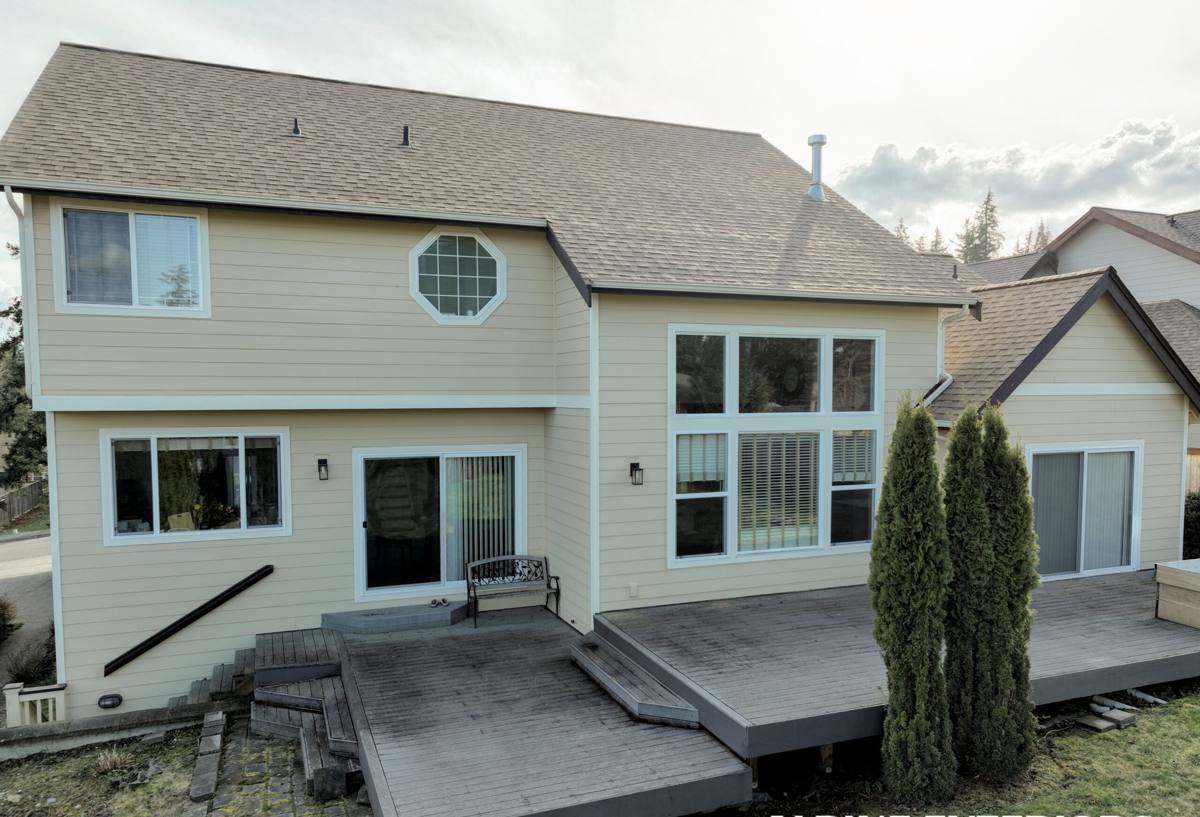
What Palmetto's Climate Does to a Deck
Every material and fastening decision on a Gulf Coast deck traces back to four environmental factors that Palmetto homeowners live with every year.
Heat and UV
Manatee County gets strong, direct sun for most of the year. On an exposed deck, surface temperatures climb well above the air temperature. UV exposure breaks down the surface fibers of untreated or poorly finished wood, fades color, and dries out sealants and finishes faster than manufacturers' timelines assume for northern climates.
Wind-Driven Rain
Afternoon storms here don't fall straight down — they come in sideways, driven by onshore wind. That means water gets forced into joints, fastener holes, and any gap where two deck components meet, not just onto the top surface of the boards. A deck built without that in mind will trap moisture in places a dry-climate deck never would.
Salt Air
Palmetto's proximity to the water means a steady exposure to salt in the air, even on properties that aren't waterfront. Salt accelerates corrosion in standard fasteners, hardware, and connectors. Hardware that would last decades inland can start showing rust and weakening in a fraction of that time near the coast.
Hurricane-Force Wind
Manatee County is built to hurricane wind-load standards for a reason. A deck attached to a house has to handle uplift and lateral loads during a storm, not just support foot traffic on a calm day. Ledger attachment, post connections, and railing anchoring all get engineered with that in mind — not treated as an afterthought.
What a Correctly Built Deck Involves Here
A deck that's going to hold up in this environment gets a few things right from the ground up.
Footings and Framing
Footings need to be sized and set to local soil conditions and depth requirements, not just poured to a generic minimum. Framing lumber should be rated for ground contact or exterior exposure where applicable, and every structural connection point is a place where water can collect if it isn't detailed correctly.
Fasteners and Hardware
This is where a lot of decks fail early in coastal Florida. Standard galvanized fasteners corrode faster near salt air than most homeowners expect. We use fasteners and structural connectors rated for coastal and treated-lumber exposure, matched to the decking material being used, so the hardware isn't the weak point in an otherwise solid structure.
Ledger Board Attachment and Flashing
Where a deck attaches to the house is the single most important — and most commonly under-built — connection on the whole structure. It has to be flashed correctly so wind-driven rain can't get behind it and into the house framing, and it has to be fastened to resist the uplift and lateral forces a storm puts on it. A poorly flashed ledger board is one of the most common sources of hidden water damage on older decks.
Decking Surface and Drainage
Board spacing, direction, and the framing underneath all affect how fast a deck sheds water after a storm. A surface that holds standing water or traps debris between boards stays wet longer, which speeds up rot in wood and can lead to mildew staining on composite and PVC products.
Choosing the Right Decking Material for This Climate
There's no single "best" decking material for every homeowner — it depends on budget, maintenance tolerance, and how the deck will be used. Here's how the main options actually perform in Palmetto's climate.
| Material | Sun and Heat Performance | Moisture and Salt Air | Maintenance |
|---|---|---|---|
| Pressure-Treated Wood | Fades and can check/split under intense UV without regular sealing | Treated for ground contact, but hardware and fastener choice matters most | Needs cleaning and re-sealing on a regular schedule |
| Composite Decking | Holds color better than wood; some early composite products could get hot underfoot | Resists rot; won't splinter or absorb water like wood | Low — periodic cleaning, no sealing or staining |
| Capped Composite / PVC | Strong UV and fade resistance; the outer cap resists surface wear | Excellent resistance to moisture and salt exposure | Lowest — occasional washing is generally all it needs |
We'll walk through these trade-offs honestly during your estimate. A well-built wood deck, properly fastened and maintained, is a perfectly good choice for plenty of homeowners — it just requires more upkeep in this climate than composite or capped composite does. What matters most is that whichever material you choose gets installed with fasteners, spacing, and detailing that match how that specific product behaves in heat, rain, and salt air.
Permitting and Code Considerations in Manatee County
Deck construction in Palmetto and the rest of Manatee County falls under local permitting and inspection requirements, and structures near the water may also involve additional review depending on elevation and setback rules for the specific property. Wind-load requirements for ledger attachment, post spacing, and railing anchoring are part of what gets inspected — this isn't optional paperwork, it's what keeps a deck attached to the house in a storm instead of becoming a hazard. We handle the permitting process as part of the project so homeowners aren't left navigating it alone.
Our Deck Building Process
The process is straightforward, and every step exists to avoid problems down the line rather than to pad the timeline.
- Site assessment — We look at grade, drainage, sun exposure, proximity to water, and how the deck will attach to the existing structure.
- Design and material selection — We talk through layout, size, and decking material honestly, including how each option holds up long-term in Palmetto's climate.
- Permitting — We prepare and submit what's required for Manatee County approval before construction starts.
- Construction — Footings, framing, ledger attachment and flashing, decking, and railing, built to the wind and moisture standards this climate calls for.
- Final walkthrough — We go over the finished deck with you, including basic care guidance for whatever material you chose.
Living With a Deck in a Coastal Environment
Even a well-built deck needs some ongoing attention in this climate. A short seasonal checklist goes a long way toward protecting the investment:
- Rinse salt residue and debris off the surface periodically, especially after storms
- Check fastener heads and structural connectors for early signs of corrosion
- Inspect the ledger board flashing area for any staining or soft spots after heavy rain seasons
- Re-seal or re-stain wood decking on the schedule appropriate to the product used
- Clear standing water and debris from between boards so surfaces dry fully between rains
- Have railings and stair connections checked periodically, since these take direct wind load during storms
None of this is complicated, but skipping it is how a well-built deck ends up needing early repairs anyway.
Why a Palmetto-Familiar Crew Matters
A deck built by a crew that hasn't worked in coastal Manatee County before is a gamble — not because the work is necessarily bad, but because the details that matter here aren't the same ones that matter in a drier, inland climate. Fastener selection, flashing at the ledger board, wind-load connections, and material choices all need to account for what Palmetto's sun, salt air, and storms actually do to a structure over time. A crew that already works in this area knows the local permitting process, has already seen how different decking materials hold up locally, and builds with the region's wind and moisture demands as the baseline, not an afterthought.
That local track record is the difference between a deck that needs attention every couple of years and one that's still solid a decade or more from now.
Get a Free, No-Pressure Estimate
If you're considering a new deck or replacing one that's showing its age in Palmetto or anywhere around Bradenton, we're happy to come take a look, talk through material options honestly, and give you a straightforward estimate — no pressure, no sales script. Use the form below to get started.