 Bradenton Siding
 Longboat Key's Climate Is Harder on Siding Than Most of Florida
Longboat Key sits on a barrier island between Sarasota Bay and the Gulf of Mexico, which means the siding on every home here is doing a different job than siding fifteen miles inland in Bradenton or Sarasota proper. It's not just heat and rain — it's the combination. Salt-laden air moves across the island constantly, carried by onshore breezes that never fully stop. UV exposure runs close to year-round at high intensity. And when a tropical system or hurricane pushes through, wind-driven rain gets forced sideways into every seam, joint, and fastener point on the exterior of a house.
Most siding materials are engineered for an "average" climate. Longboat Key doesn't have an average climate — it has a coastal one, and coastal conditions accelerate every weakness a siding product has. Materials that hold up fine in a Midwest suburb can fail here in a fraction of the time. That's why the siding decision for a Longboat Key home isn't really about looks first — it's about what the material and the installation can actually survive.
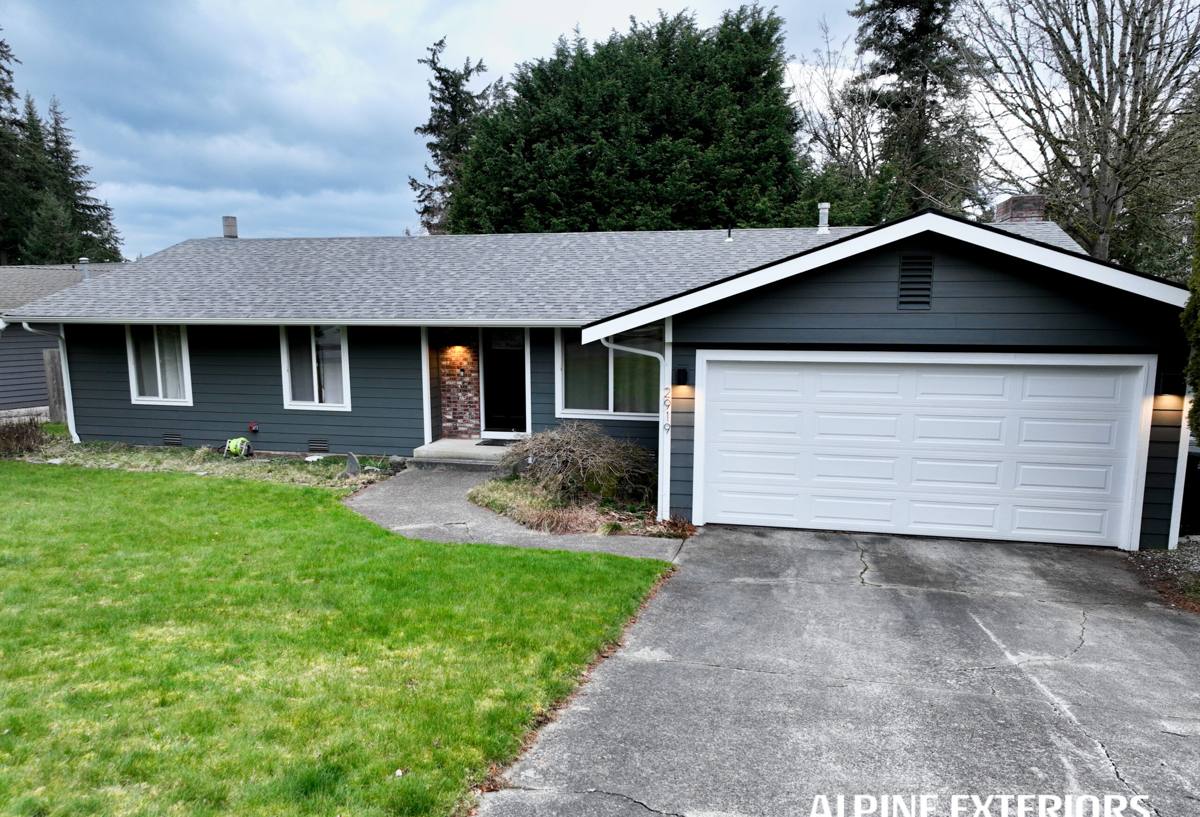
What Salt Air and Wind-Driven Rain Actually Do to a Home's Exterior
It helps to understand the specific mechanisms at work, because they explain why some siding choices age gracefully on the island and others don't:
- Salt air is corrosive and hygroscopic — it pulls moisture out of the air and deposits fine salt particles on every exterior surface, which then attract and hold additional moisture against the siding.
- UV breaks down organic binders and pigments — paint films chalk, fade, and lose adhesion faster under Gulf Coast sun than almost anywhere else in the continental U.S.
- Wind-driven rain finds gaps — during a squall or tropical system, rain doesn't just fall, it's pushed horizontally into lap joints, butt seams, and any fastener that isn't sealed correctly.
- Humidity cycling stresses materials — constant swings between saturated, humid air and hot sun cause expansion and contraction that loosens poorly installed siding over years.
None of these forces are exotic — they're just constant here in a way they aren't elsewhere in Manatee County. A siding system for Longboat Key has to be chosen and installed with all four of these in mind at once, not just wind rating on a spec sheet.
Why We Install James Hardie Fiber Cement — and Nothing Else
We only install James Hardie fiber cement siding. We don't install vinyl, LP SmartSide, primed wood, or other fiber cement brands, and on a barrier island home that's a deliberate choice, not a brand preference. Fiber cement is a blend of cement, sand, and cellulose fibers — it's non-combustible, doesn't rot, and doesn't provide a food source for pests. Unlike vinyl, it doesn't soften and warp under sustained high heat and direct sun. Unlike wood-based products, there's no organic substrate for moisture to break down over time.
James Hardie specifically engineers product lines for different climate zones through its HZ5 designation, which is built for Florida's combination of humidity, heat, and storm exposure. The ColorPlus factory finish is baked on in a controlled environment rather than field-applied, which matters enormously on a project exposed to the level of UV and salt Longboat Key sees — factory-cured finishes hold color and adhesion longer than paint applied on-site under variable weather.
What This Means in Practice
On a barrier island home, this translates into a siding system that resists moisture intrusion at the board level, holds its color without chalking prematurely, and carries a transferable warranty backed by a manufacturer that engineered the product for exactly this kind of exposure — not a generic climate assumption.
What a Correct Fiber Cement Installation Involves Here
The product is only half the equation. Fiber cement siding fails prematurely almost exclusively because of installation mistakes, not material defects — and on Longboat Key, those mistakes get exposed faster than anywhere inland. A correct installation includes:
- Proper water-resistive barrier and flashing behind the siding, so any moisture that does get past the outer layer has a path to drain out instead of sitting against the wall sheathing.
- Correct fastener pattern, type, and depth — James Hardie specifies exact nailing schedules, and using the wrong fastener or driving it too deep or shallow creates a failure point exactly where wind-driven rain concentrates.
- Proper clearances from rooflines, decks, and grade, so siding isn't sitting in standing water or trapped moisture.
- Correctly caulked and sealed joints at butt seams, trim, and penetrations — this is the single most common place we find prior installations failing on older island homes.
- Factory-cut and field-cut edges properly sealed where the ColorPlus coating has been exposed, so raw material edges aren't left vulnerable to moisture.
Any one of these done wrong won't necessarily show up in year one. On Longboat Key, it tends to show up in year three or four, once enough storm seasons have tested the weak point. That's the trap with cheap or rushed siding work here — the mistakes are invisible until they're expensive.
Working on a Barrier Island: What's Different About the Job
A siding job on Longboat Key isn't logistically identical to one a few miles inland, and a crew that hasn't worked the island regularly tends to learn this the hard way, on your project. Considerations that come up consistently include:
- Access and staging — many Longboat Key properties have tighter lots, limited street parking, and HOA or community rules about work hours, staging areas, and material storage that need to be worked out before the first board goes up.
- Weather windows — coastal squalls can move in with little warning, and a crew needs to sequence work so that open wall sections aren't left exposed longer than necessary.
- Existing construction quirks — older island homes were often built or renovated in phases, and matching flashing details and transitions correctly takes more judgment than a standard new-construction wrap.
- Salt exposure during the job itself — fasteners, tools, and even temporary protective materials corrode faster here, which affects how a crew manages a multi-day install.
None of this is complicated for a crew that already works the area regularly — it's just second nature. For a crew coming from outside Manatee County or without barrier-island experience, it's a list of things they're solving for the first time on your house.
Fiber Cement vs. Other Siding Materials for Barrier Island Homes
| Factor | James Hardie Fiber Cement | Vinyl | Wood-Based Siding |
|---|---|---|---|
| Salt air / corrosion resistance | Strong — non-organic, engineered HZ5 line for coastal climates | Moderate — doesn't corrode but can become brittle over time | Weak — organic material vulnerable to moisture-driven decay |
| UV / color retention | Strong — factory-baked ColorPlus finish | Moderate — can fade and chalk under intense sun | Weak — field-applied paint needs frequent recoating |
| Wind / storm performance | Strong when installed to spec — rigid, holds fastener lines well | Moderate — can crack, warp, or blow off in high wind if not rated correctly | Moderate — dependent on substrate condition and fastening |
| Fire resistance | Non-combustible | Combustible | Combustible |
| Long-term maintenance | Low — occasional wash, recaulk as needed | Low — but degrades cosmetically faster | High — regular repainting, moisture inspection |
This isn't a knock on every alternative — it's simply why, for the specific combination of salt, sun, and storm exposure on Longboat Key, we standardized on one material and one installation standard rather than offering several tiers of durability.
Cost Factors Homeowners Should Understand
| Factor | How It Affects the Project |
|---|---|
| Home size and wall complexity | More corners, dormers, and trim details increase labor time and cutting |
| Existing siding removal | Tear-off and disposal of old material adds cost versus a bare wall |
| Substrate condition | Water-damaged sheathing found during tear-off needs repair before new siding goes on |
| Product line and profile | Lap width, texture, and trim style selections vary in material cost |
| Access and staging | Tight island lots or HOA staging restrictions can affect crew efficiency |
We give honest, project-specific numbers after seeing the home — broad ranges without a look at your walls, trim, and existing substrate aren't useful to you and we'd rather not guess.
Maintenance Longboat Key Homeowners Should Actually Do
Fiber cement is low-maintenance, not no-maintenance, and the coastal environment means a short annual routine goes a long way:
- Rinse salt residue off the siding periodically with a garden hose — a pressure washer isn't necessary and can damage caulk lines if used improperly.
- Inspect caulk joints at trim, corners, and penetrations once a year, especially after hurricane season, and recaulk any cracked or separated joints.
- Check for any areas where landscaping or irrigation is spraying water directly onto the siding, which accelerates wear regardless of material.
- Walk the exterior after any major storm and look for loose boards, damaged trim, or exposed fastener heads rather than waiting for the next scheduled look.
- Keep gutters and downspouts clear so runoff isn't sheeting down wall sections repeatedly.
Why Hiring a Crew That Already Works Longboat Key Matters
Siding installation quality is inconsistent industry-wide, and the margin for error shrinks on a barrier island. A crew unfamiliar with Longboat Key's HOA processes, access constraints, and weather patterns is more likely to make sequencing mistakes, leave wall sections exposed during a squall, or miss the flashing details that matter most in a high-salt, high-wind environment. A crew that works the island regularly has already solved those problems on other homes nearby, and brings that judgment to yours from day one.
We're based in the Bradenton area and work throughout Manatee County, including Longboat Key, on a routine basis — this isn't occasional or out-of-territory work for us. That matters when something on the job requires a judgment call specific to coastal conditions, not just a generic installation manual.
If your Longboat Key home needs new siding, storm-damage repair, or you're planning ahead of a renovation, we're happy to take a look and give you a straightforward, no-pressure estimate. Use the form below to get started.