 Bradenton Siding
 Samoset Decks Take a Different Kind of Beating
A deck in Samoset doesn't fail the way a deck in a dry, mild climate fails. Here in Manatee County, the damage comes from several directions at once: months of intense, nearly overhead UV that breaks down wood fibers and finishes, wind-driven rain that gets pushed sideways under railings and through gaps that would stay dry anywhere else, and salt-laden air moving in off Tampa Bay and the Gulf that quietly corrodes metal fasteners and connectors long before the wood itself looks bad. Add in the occasional hurricane-force wind event that racks a structure and loosens joints that were never quite tight enough to begin with, and you have a structure that ages faster than most homeowners expect.
None of that means every deck problem here is dramatic. Most of what we repair started small — a soft spot near a post, a railing with a little more give than it used to have, a few popped fastener heads. Left alone through another Florida summer and hurricane season, small problems become expensive ones. Caught early, they're usually a straightforward repair.
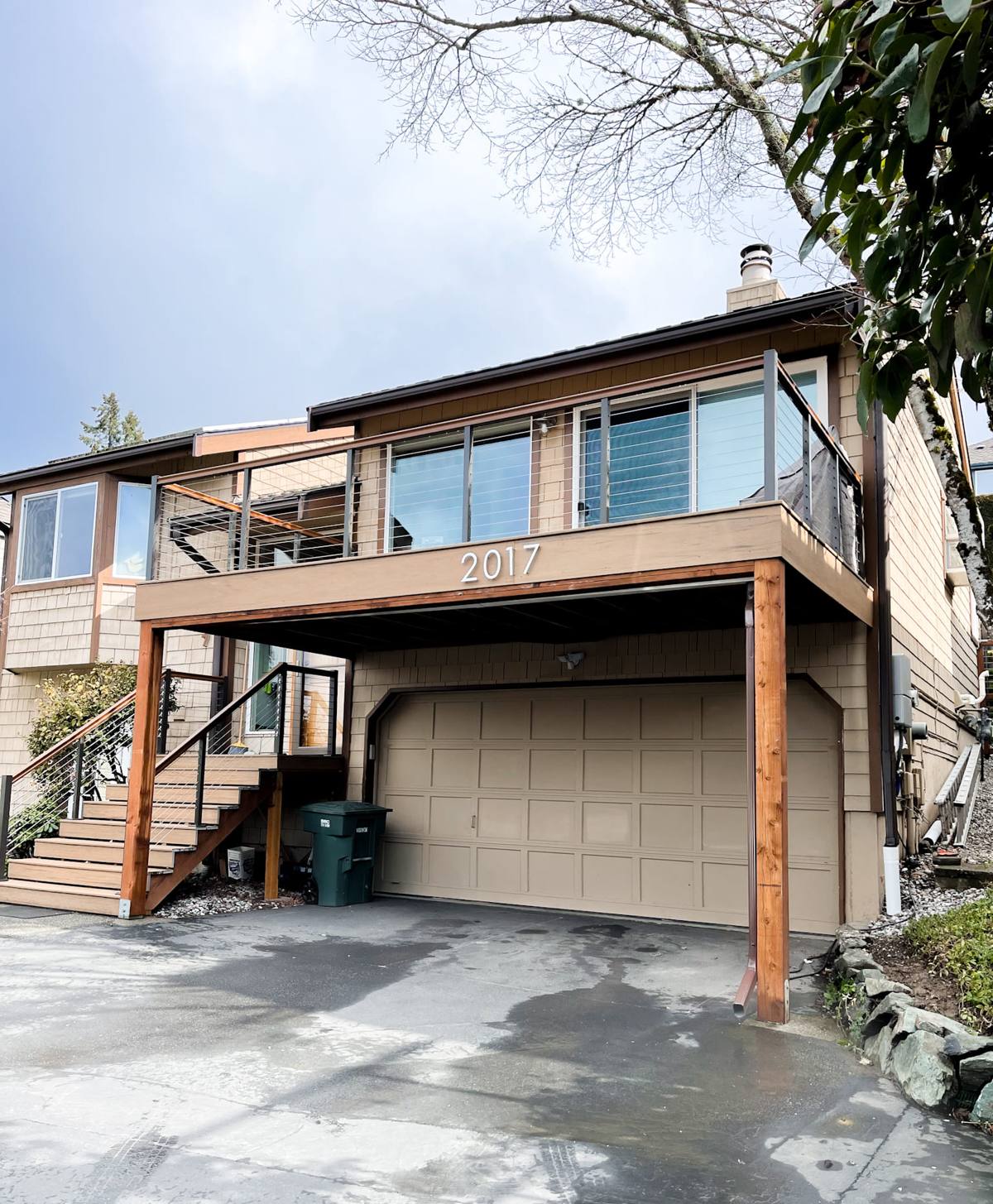
Signs Your Deck Is Telling You Something
Decks rarely fail without warning. The warning is just easy to ignore because it shows up gradually. Here's what we ask homeowners to watch for between inspections:
- Boards that feel spongy, bouncy, or slightly soft underfoot, especially near the house or stair landings
- Railings or posts that wobble more than a firm push should allow
- Rust streaks bleeding out from screw heads, brackets, or joist hangers
- Gaps opening up where the deck meets the house (the ledger board connection)
- Cracked, cupped, or splintering boards, particularly on the side that gets the most afternoon sun
- Stair stringers that flex or steps that feel uneven
- Visible daylight or moisture staining underneath the deck where boards meet framing
Any one of these on its own might be minor. Two or three together, especially around the same area, usually means the underlying framing is involved, not just the surface.
What We Actually Find Under Samoset Decks
Ledger Board Attachment
The ledger board — the piece bolted to the house that the deck hangs from — is the single most important connection on the whole structure, and it's also the one most exposed to wind-driven rain that gets forced against the house siding. When flashing is missing, deteriorated, or was never installed correctly, water tracks behind the ledger and rots it from the inside. This is often invisible until the deck starts to separate slightly from the house.
Support Posts and Footings
Posts that sit in or near standing water after heavy rain, or that were set without proper post bases keeping wood off concrete, take on moisture and start to break down at the base. A post can look solid at eye level and still be soft or hollow at the bottom where it matters most.
Decking Boards and Fascia
Board-level damage is the most visible and the most commonly over-repaired or under-repaired. UV exposure dries and cracks the top surface while moisture works the underside, so a board can look fine from above and be failing from below. Fascia boards along the edge take the brunt of both sun and rain and are often the first thing to go.
Railings and Stairs
Code exists for railing height and baluster spacing for a reason, and older decks — or decks that have had ad hoc repairs over the years — often drift out of compliance without anyone noticing until it's pointed out. Stair stringers carry concentrated weight and show stress earlier than open deck framing.
Fasteners and Hardware
This is the one homeowners underestimate most. Standard galvanized fasteners and connectors have a limited service life in a salt-air environment. Once corrosion starts at a joist hanger or a structural screw, the connection is weaker than it looks, even if the wood around it seems fine.
Repair or Replace? How We Actually Make That Call
We don't default to "replace everything" because it's an easier sale, and we don't patch over structural problems because it's cheaper up front. The honest answer depends on what's actually compromised versus what's just weathered.
| Factor | Repair Usually Makes Sense | Replacement Usually Makes Sense |
|---|---|---|
| Framing & structure | Isolated soft spots, one or two damaged joists or posts | Widespread rot at ledger, multiple posts, or main beams |
| Decking surface | Scattered damaged boards, most of the deck still sound | Cupping, splitting, or fading across most of the surface |
| Age of structure | Under 10-12 years with good original construction | Older deck already showing multiple failure points |
| Code compliance | Minor railing or fastener updates needed | Structure predates current code by a wide margin |
| Cost relationship | Repair cost is a small fraction of full rebuild cost | Repair cost starts approaching 50-60% of replacement |
We walk every deck with this in mind and tell you plainly which side of that line your deck falls on. If a repair is the honest answer, that's what we quote. If the framing is too far gone to responsibly patch, we'll say that too, and explain why.
Our Deck Repair Process
1. Inspection From the Ground Up
We check the ledger connection and flashing, get underneath to look at joists and posts, test railings for movement, and inspect fasteners and hardware for corrosion — not just walk the surface and look at the boards.
2. A Written Scope You Can Understand
You get a clear breakdown of what's damaged, what's causing it, and what we recommend, separated into what needs attention now versus what can be monitored. No pressure to approve more than the deck actually needs.
3. The Repair Itself
We address the cause before the symptom — fixing flashing and water paths before replacing the boards that were failing because of them. Corroded fasteners get replaced with hardware rated for coastal exposure, not swapped one-for-one with whatever's cheapest.
4. Final Check and Walkthrough
Before we consider a job finished, we test the railings, check the stairs, and walk the deck with you so you know exactly what was done and why.
Materials We Use — and Why
For structural repairs, we favor pressure-treated framing lumber rated for ground contact where posts and beams are involved, paired with fasteners and connectors built for coastal, high-moisture environments rather than standard interior-grade hardware. On decking surfaces, the right choice depends on the rest of the deck and your own maintenance appetite — matching existing wood keeps appearance and cost consistent, while composite boards in a repair area can reduce future maintenance if you're open to a slightly different look. We'll walk you through the honest trade-offs for your specific deck rather than pushing one material as a default.
Keeping a Repaired Deck Solid
A good repair buys you years, but Samoset's sun, humidity, and salt air don't stop working on a deck just because it's been fixed. A little regular attention goes a long way:
- Rinse off salt residue and debris every few weeks, more often after storms
- Keep gutters and downspouts clear so water isn't dumping near posts and footings
- Check railings for looseness a couple of times a year, not just when something feels off
- Reseal or refinish wood surfaces on the schedule the product actually needs, not just when it looks faded
- Trim back vegetation that keeps the underside of the deck shaded and damp
- Have the ledger connection and fasteners checked every year or two, since that's the damage you can't see from the surface
Why a Crew That Already Works Samoset Matters
Deck problems in this part of Manatee County follow patterns — where flashing tends to fail, which fastener types hold up and which don't, how a particular style of older construction tends to age after a decade of Gulf Coast summers and storm seasons. A crew that repairs decks across Samoset and the rest of Bradenton on a regular basis has already seen your specific problem several times before, which means less guesswork and a more accurate scope from the first visit. It also means someone who understands the county's permitting requirements for structural deck work and won't leave you dealing with that paperwork alone.
If your deck has a soft spot, a wobbly railing, or you just want an honest read on how much life it has left, we're happy to take a look. The estimate is free, there's no pressure attached to it, and you'll get a straight answer about whether you need a repair, a rebuild, or nothing at all right now. Fill out the form below to get started.