 Bradenton Siding
 Longboat Key Siding Faces a Harder Job Than Most
Longboat Key sits out on a barrier island between the Gulf of Mexico and Sarasota Bay, which means the exterior of every home there is doing more work than siding on a typical inland Manatee County property. Salt-laden air moves across the island constantly, UV exposure is intense and nearly year-round, and wind-driven rain during tropical systems doesn't just fall on siding — it drives sideways into laps, seams, and trim. Any siding product installed on Longboat Key has to hold up to all of that at once, not just one or two of those stresses in isolation.
This is why we treat Longboat Key jobs differently from a standard mainland Bradenton install. The product choice, the flashing details, and the fastening approach all get evaluated against what a barrier-island exposure actually does to a home over the following one to two decades, not just what looks right on installation day.
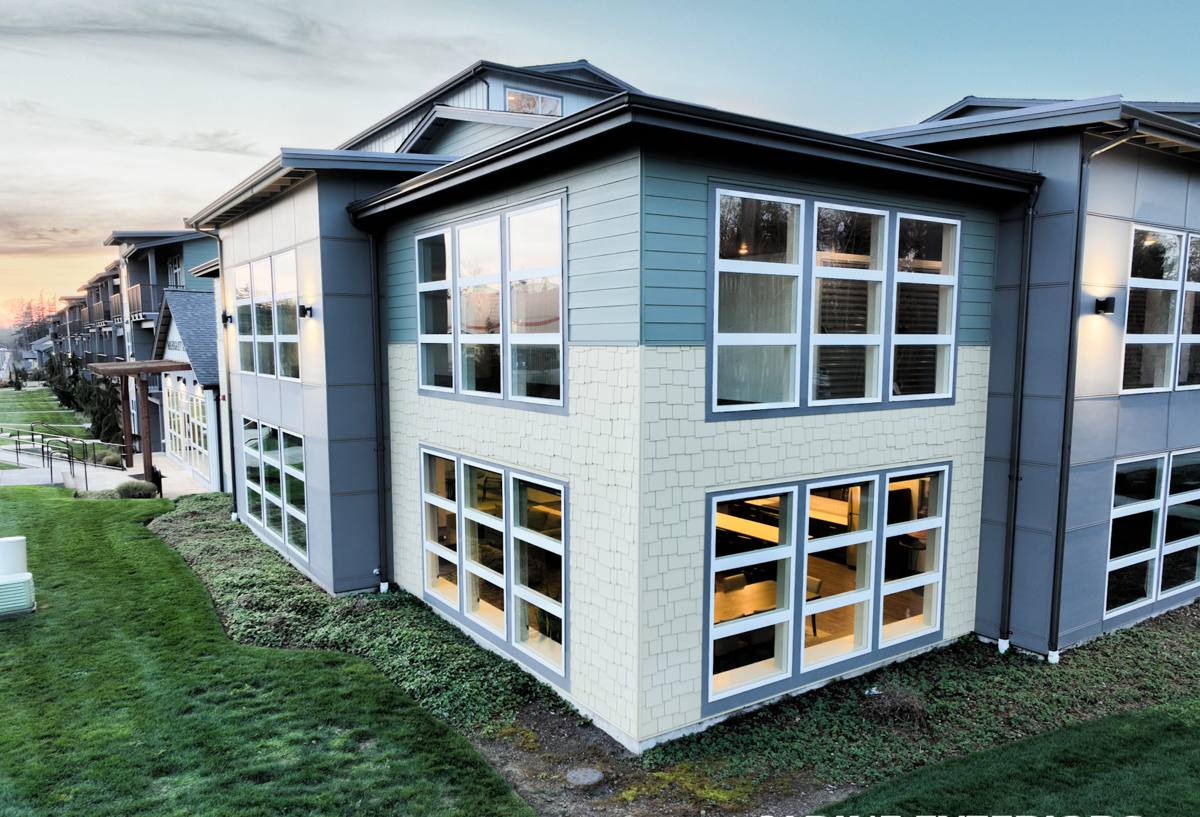
What the Coastal Environment Actually Does to Siding
Salt Air and Corrosion
Airborne salt accelerates corrosion on fasteners, trim accessories, and any metal flashing components. It also settles into the surface of siding and paint film over time. Products that rely on a field-applied finish tend to chalk, fade, or lose adhesion faster in this environment than a factory-cured finish designed for coastal exposure.
UV and Heat Cycling
Florida sun breaks down the plasticizers and resins in a lot of exterior products faster than manufacturers' national warranty language assumes, because those ratings are usually based on more moderate climates. Constant UV plus daily heat-and-humidity cycling stresses paint film, caulk joints, and any material with lower dimensional stability.
Wind-Driven Rain and Moisture Intrusion
The real damage on the island rarely comes from a single named storm — it comes from years of ordinary wind-driven rain finding its way behind poorly lapped siding, undersized flashing, or caulk joints used in place of proper flashing. Once moisture gets behind the cladding, the sheathing and framing underneath pay the price long before the siding itself looks bad from the street.
Why We Install Only James Hardie Fiber Cement Here
We standardized on James Hardie fiber cement siding company-wide, and Longboat Key is one of the clearest examples of why. Fiber cement is non-combustible, dimensionally stable across heat and humidity swings, and doesn't rely on a thin field-applied coat of paint as its only defense against sun and salt. Hardie's ColorPlus finish is baked on at the factory under controlled conditions, which gives it materially better fade and wear resistance in coastal sun than most site-applied paint systems — and it comes backed by its own finish warranty, separate from the substrate warranty.
Just as important for this location: Hardie engineers specific product lines for different climate zones. HZ5 formulations are built for climates with more moisture and freeze-thaw variability; HZ10 formulations are engineered for the higher heat and humidity profile of Gulf Coast Florida, including better resistance to moisture-related issues like cupping in sustained humid conditions. Installing the correct HZ line matters more on a barrier island than almost anywhere else in the region — it's not a marketing detail, it changes how the board performs over time.
We don't install vinyl, LP SmartSide, or other fiber-cement alternatives, and Longboat Key is exactly the kind of exposure that explains why. Vinyl softens, warps, and becomes brittle faster under intense, sustained UV and heat, and its color is baked all the way through a thin material that can still show impact and wind damage. Engineered wood products depend on an intact factory coating to keep moisture out, and any breach — a hairline crack, a fastener hole, a butt joint that opens up — gives water a path into a wood-based substrate. On an island with this much salt air and wind-driven rain, that's a maintenance burden and a moisture risk we're not willing to put our name behind.
What a Correct Installation Actually Involves
The siding panel is only one part of the system. Most siding failures we get called out to inspect on the coast trace back to installation shortcuts, not the product itself. On Longboat Key specifically, we pay close attention to:
- A correctly installed weather-resistive barrier behind the siding, with all seams and penetrations properly sealed before the first board goes up
- Flashing at every window, door, and roofline transition — installed to shed water outward, not caulked as a substitute for flashing
- Proper lap and overlap dimensions on horizontal siding so wind-driven rain can't work its way behind a course
- Correct fastener type, spacing, and embedment for the wind exposure category the home actually sits in, not a generic inland pattern
- Butt joints and trim details sealed with a Hardie-compatible sealant rated for the movement and exposure of a coastal install
- Proper clearance between the bottom of the siding and grade, decks, or roofing to avoid standing water and wicking
Skipping any one of these doesn't usually show up right away. It shows up two, five, or ten years later as a moisture problem behind the siding, which is a far more expensive repair than the siding itself.
Fastening and Wind Exposure
Longboat Key's exposure means fastening patterns matter more here than on a comparable home a few miles inland. We follow Hardie's published fastening schedules for the wind zone and exposure category the specific home falls under, rather than defaulting to a minimum-code pattern. That includes fastener spacing at panel ends and corners, where wind uplift and pressure differentials are highest.
How Our Process Works
For a Longboat Key project, our process starts with an on-site walk of the existing exterior — looking at the current cladding, trim, window flashing, and any visible signs of past moisture intrusion — before we ever talk about product selection. From there:
- We assess the home's specific exposure (direct waterfront, interior lot, elevation, existing damage) and recommend the appropriate Hardie product line and profile
- We remove the existing siding and inspect the sheathing underneath for hidden moisture damage before closing anything back up
- We install or repair the weather-resistive barrier and all flashing details first, since this layer matters more than the visible siding
- We install Hardie panels, lap siding, or trim to manufacturer fastening specifications for the site's wind exposure
- We do a final walk-through with the homeowner covering caulk lines, trim details, and care going forward
Nothing gets closed up until the layers underneath are right, because that's the part of the job nobody sees again once the siding is on.
Comparing Approaches for a Barrier-Island Home
| Factor | James Hardie Fiber Cement | Vinyl Siding | Engineered Wood (e.g. LP SmartSide) |
|---|---|---|---|
| UV/fade resistance in intense Florida sun | Factory-baked ColorPlus finish, separate finish warranty | Color runs through material but softens and fades under sustained heat/UV | Depends entirely on intact factory coating |
| Behavior in wind-driven rain | Rigid, holds lap lines and flashing detail well | Can distort or gap under wind pressure over time | Vulnerable if coating is breached at joints/fasteners |
| Salt air / corrosion resistance | Non-organic substrate, not affected by salt itself | Material itself stable but can chalk and become brittle | Wood-based core at risk if moisture gets in |
| Fire classification | Non-combustible | Combustible | Combustible |
| Long-term maintenance | Low, mainly caulk/paint inspection | Low but limited lifespan in intense sun | Higher — coating and joint inspection critical |
What Drives Cost on a Longboat Key Project
| Cost Factor | Why It Matters Here |
|---|---|
| Amount of existing moisture/sheathing damage | Barrier-island homes with older siding often have hidden water damage that has to be repaired before new siding goes on |
| Product line and profile selected | HZ10 boards, specific colors, and premium profiles cost more than standard inland specs but perform better in this exposure |
| Trim and flashing detail complexity | Homes with more windows, rooflines, and architectural detail require more flashing and trim labor |
| Site access on the island | Waterfront lots, tighter setbacks, and seasonal traffic can affect staging and scheduling |
| Removal and disposal of existing siding | Full tear-off adds cost but is often necessary to properly inspect and repair what's underneath |
We give homeowners a real, itemized number after an on-site assessment rather than a rough phone estimate — coastal jobs vary too much house to house to price accurately any other way.
Why a Crew That Already Works Longboat Key Matters
A contractor who mostly works inland can install Hardie siding correctly by the book and still miss the details that matter specifically on a barrier island — the right fastening schedule for the exposure, the flashing sequence that actually sheds wind-driven rain, or which side of the home takes the worst of the salt air over time. A crew that regularly works Longboat Key and the surrounding Bradenton coastline has already seen how these homes age, what fails first, and what holds up. That experience shows up in the small decisions made on-site, not just in the product on the invoice.
It also matters for follow-through. Coastal exteriors need periodic inspection of caulk lines, trim, and flashing — not constant maintenance, but occasional attention. Working with a Bradenton-based crew that's still around and still doing this work locally means that's realistic, rather than depending on a company that was in the area for one storm-season rush.
Get a Straight Answer for Your Home
If you own a home on Longboat Key and are weighing a siding replacement, we're happy to take a look and give you a straightforward, no-pressure estimate — including which Hardie product line and profile actually make sense for your specific exposure. Use the form below to get started.