 Bradenton Siding
 Siding That Has to Work in Mill Creek's Climate, Not Just Look Good
Mill Creek sits in Bradenton, in Manatee County, which means every exterior surface on a home here is fighting the same battle year-round: intense subtropical sun, wind-driven rain off the Gulf, tropical-storm and hurricane-force winds during the season, and a steady dose of salt air carried inland from the coast. Siding in this part of Florida isn't just a cosmetic layer — it's the first line of defense against moisture intrusion, wood rot, and wind damage, and it gets tested constantly, not just during a named storm.
A lot of siding failures we get called out to inspect in the Bradenton area aren't dramatic. They're slow: a seam that opened up and let water behind the panel, caulk that failed under UV exposure, a fastener pattern that wasn't rated for the local wind zone, or a bottom edge that never had a proper gap and started wicking moisture. By the time a homeowner notices bubbling paint or a soft spot near a window, the damage has usually been building for a year or more. This page walks through what fiber cement siding needs to do correctly in Mill Creek, what our installation process looks like, and why the details matter more here than in milder climates.
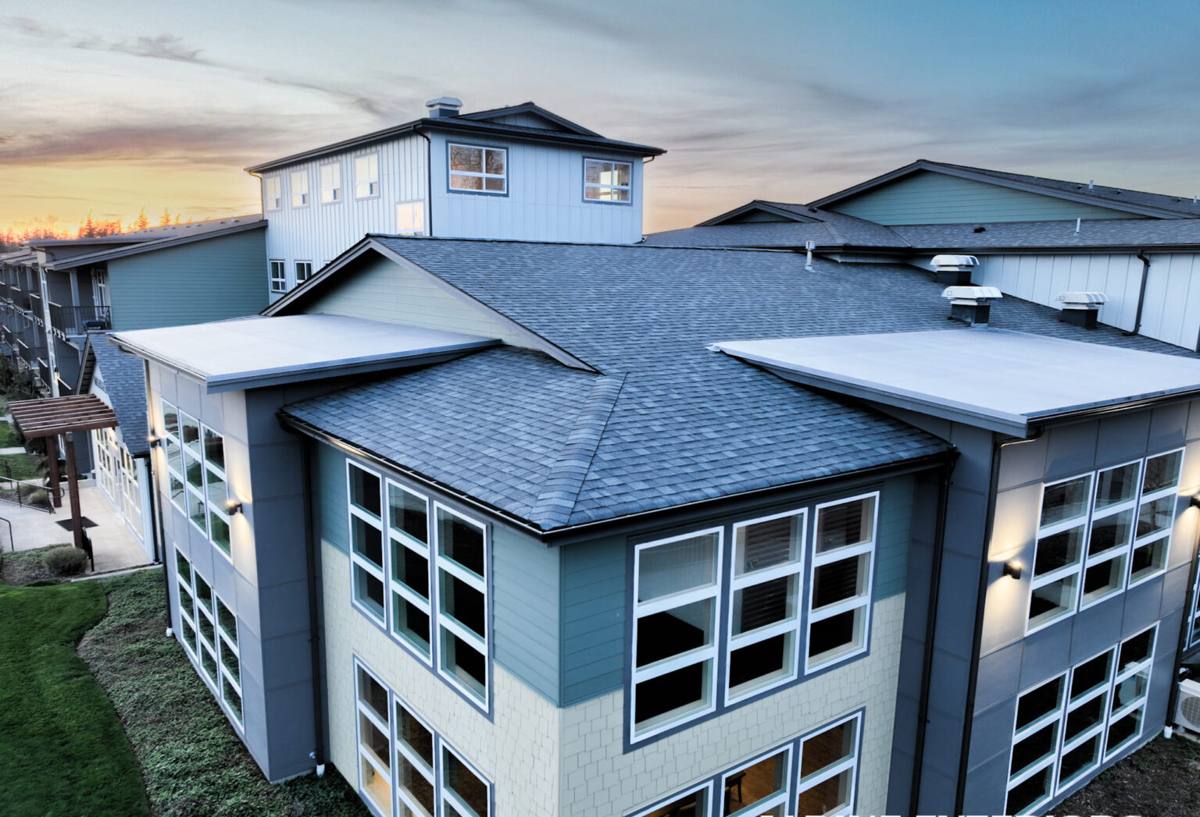
Why We Only Install James Hardie Fiber Cement
We install James Hardie fiber cement siding exclusively — not vinyl, not LP SmartSide, not Cemplank, not Allura, and not primed wood or cedar. That's a deliberate standard, not a sales preference. Fiber cement as a category resists the two things that damage siding fastest in Manatee County: sustained moisture and UV breakdown. Within that category, James Hardie's HardieZone system is engineered specifically for climate exposure — Florida falls under the HZ5 zone designation, which affects product specification, and Hardie backs its siding with a factory-applied ColorPlus finish and a strong transferable limited warranty that holds up under real coastal conditions.
We're not going to tell you vinyl or engineered wood products are junk — they have legitimate uses and plenty of homes elsewhere are sided in them successfully. But for a home in Mill Creek dealing with hurricane wind loads, near-constant UV, and salt-laden humidity, we've made a professional decision to stand behind one product system we trust to perform, rather than offer a menu of options with different long-term risk profiles. That's the whole reason this company exists in its current form.
What Fiber Cement Gets Right for This Climate
- Non-combustible material — doesn't contribute fuel in the rare event of an exterior fire
- Dimensionally stable — doesn't expand and contract with heat/humidity swings the way vinyl and wood can, which keeps seams and fasteners tighter over time
- Resists moisture-driven warping, cupping, and rot far better than untreated or primed wood products
- Factory-cured ColorPlus finish holds color better under intense Florida UV than field-applied paint
- Rated and tested for high wind-load performance when installed to manufacturer fastening specs
What Correct Installation Actually Involves
Fiber cement siding is only as good as the installation behind it. Most of the siding failures we see in this area trace back to installation shortcuts, not the product itself. A correct job on a Mill Creek home includes several steps that are easy to skip and hard to notice until something goes wrong years later.
The Non-Negotiables
- Weather-resistive barrier installed and lapped correctly before any siding goes up, giving the wall a secondary moisture defense behind the panels
- Proper flashing at windows, doors, and roof-to-wall transitions — the majority of water intrusion happens at these junctions, not through the field of the siding
- Manufacturer-specified fastener pattern and spacing, matched to the local wind zone rather than a generic minimum
- Correct clearance between the bottom edge of siding and grade, roofing, decks, and patios so water can't wick up into the material
- Factory-cut or properly sealed field cuts — an exposed, unsealed cut edge is one of the most common places fiber cement siding starts to fail early
- Caulking only where Hardie's installation instructions call for it — over-caulking traps moisture just as badly as under-caulking
None of this is exotic. It's the manufacturer's own installation specification, followed completely instead of partially. The difference between a fiber cement job that looks fine for two years and one that performs for decades almost always comes down to whether these steps were done, not what brand went on the wall.
Our Process for Mill Creek Homes
Every job starts with a walk of the exterior, not a quote pulled from a square-footage number. We're looking at existing siding condition, trim and window details, soffit and fascia condition, evidence of past moisture intrusion, and anything specific to the home's exposure — a side of the house that takes the brunt of prevailing wind and rain, for example, often needs closer attention to flashing and fastening than a more sheltered elevation.
- On-site assessment — condition of existing siding, sheathing, and trim; identification of moisture-prone areas
- Removal and inspection — old siding comes off and we check the sheathing underneath before anything new goes up; hidden rot or water damage gets addressed, not covered over
- Weather barrier installation — a continuous, correctly lapped moisture barrier goes on before siding
- Flashing at every penetration — windows, doors, vents, and roof lines get flashed to shed water outward, not into the wall assembly
- Hardie panel or plank installation — fastened per manufacturer spec for our wind zone, with correct reveal and clearance
- Trim, caulking, and touch-up — finished with Hardie-compatible trim and only the caulking the spec calls for
- Final walkthrough — we go over the finished exterior with the homeowner before calling the job done
Comparing Siding Options for a Home Like Yours
Homeowners in Mill Creek often ask us to explain, plainly, why fiber cement costs more up front than vinyl and how it stacks up against other choices. Here's an honest breakdown of the real-world trade-offs, not a sales pitch.
| Factor | James Hardie Fiber Cement | Vinyl | Primed Wood / Engineered Wood |
|---|---|---|---|
| Wind performance | Rated for high wind loads when installed to spec | Can crack, warp, or blow off in sustained high wind | Adequate if installed correctly, but fasteners loosen with moisture cycling |
| UV / fade resistance | Factory ColorPlus finish resists fading in intense sun | Fades and can become brittle over time | Paint fades and requires repainting on a regular cycle |
| Moisture behavior | Dimensionally stable, resists warping when installed correctly | Doesn't absorb water but seams can trap moisture behind panels | Prone to swelling, rot, and delamination if moisture gets in |
| Salt air exposure | Well-suited to coastal exposure with standard maintenance | Generally tolerant but can discolor | More vulnerable to accelerated deterioration |
| Upfront cost | Higher material and labor cost | Lowest upfront cost | Mid-range, varies by product |
| Long-term maintenance | Low — occasional wash, repaint only if desired | Low, but repair/replacement of damaged sections is common | Higher — regular repainting and moisture monitoring required |
Signs Mill Creek Homeowners Should Watch For
Because siding failure in this climate tends to be gradual, it helps to know what to look for before it becomes a bigger repair. None of these on their own mean the whole house needs new siding, but they're worth a professional look:
- Soft or spongy spots when you press on the siding, especially near the bottom edge or below windows
- Paint that's bubbling, peeling, or chalking heavily in one area but not others
- Visible gaps or separation at seams, corners, or trim joints
- Discoloration or staining that keeps returning after cleaning, which can point to moisture behind the panel
- Siding that flexes or feels loose when pushed, suggesting fastener failure
- Increased pest activity around the base of exterior walls
Why Local Experience in This Area Matters
Manatee County's building requirements and wind zone standards aren't the same everywhere in Florida, and a crew that regularly works Bradenton neighborhoods like Mill Creek already understands the permitting process, inspection expectations, and the specific exposure conditions a given street or lot orientation deals with. That's not a small thing — a crew unfamiliar with local wind zone fastening requirements or coastal moisture behavior can do a technically "fine" job that still underperforms here compared to somewhere inland or up north.
It also means faster response when something needs attention after a storm, better familiarity with how local HOAs and permitting offices operate, and a crew that isn't learning Gulf Coast installation conditions on your home for the first time.
Maintenance After Installation
One of the advantages of fiber cement over wood-based siding is how little ongoing maintenance it needs — but "little" isn't "none," especially in a coastal climate.
- Rinse siding periodically to remove salt residue and airborne debris, especially on sides of the house exposed to prevailing wind
- Inspect caulking annually at windows, doors, and trim joints and have any cracked or missing caulk addressed
- Trim vegetation back from the siding to maintain airflow and reduce trapped moisture
- After major storms, walk the exterior to check for loosened panels, damaged trim, or new gaps at seams
- Repaint only if desired for a color change — ColorPlus finish is designed to hold up without regular repainting
What This Means for Your Home
Siding is one of the few home improvements where the visible result and the actual performance can look identical for the first year or two, even when the installation underneath is wrong. In a climate like Bradenton's, that gap shows up eventually — usually as a repair bill instead of a warranty claim. Installing one product system correctly, to spec, by a crew that already understands the wind zone and moisture conditions in Mill Creek, is how you avoid finding out the hard way.
If you're dealing with aging siding, storm damage, or you're simply planning ahead for your home's exterior, we're glad to come take a look. There's no pressure and no cost to get our honest read on your home's current siding and what it would take to do it right — just fill out the form below to request a free estimate.