 Bradenton Siding
 Siding in Mill Creek Has to Work Harder Than Siding Inland
Mill Creek sits within Manatee County's stretch of the Gulf Coast, and that location shapes what a siding product has to survive here. Homes in this part of Bradenton deal with hurricane-force wind gusts during storm season, wind-driven rain that gets pushed sideways into wall assemblies, some of the most intense year-round UV exposure in the continental United States, and a steady dose of salt air moving in off the Gulf and Tampa Bay. None of those conditions are occasional — they're the baseline. Siding that isn't engineered for this environment doesn't fail dramatically; it fails slowly, through fading, swelling, cupping, and moisture intrusion that homeowners often don't notice until a repaint or a repair uncovers it.
That's the case for James Hardie fiber cement siding, and it's the only product this crew installs. We're not going to pretend every siding material is equally suited to a Manatee County exterior — some genuinely aren't — so this page focuses on what a correct James Hardie installation looks like on a Mill Creek home, and why the details matter more here than they would somewhere with a milder climate.
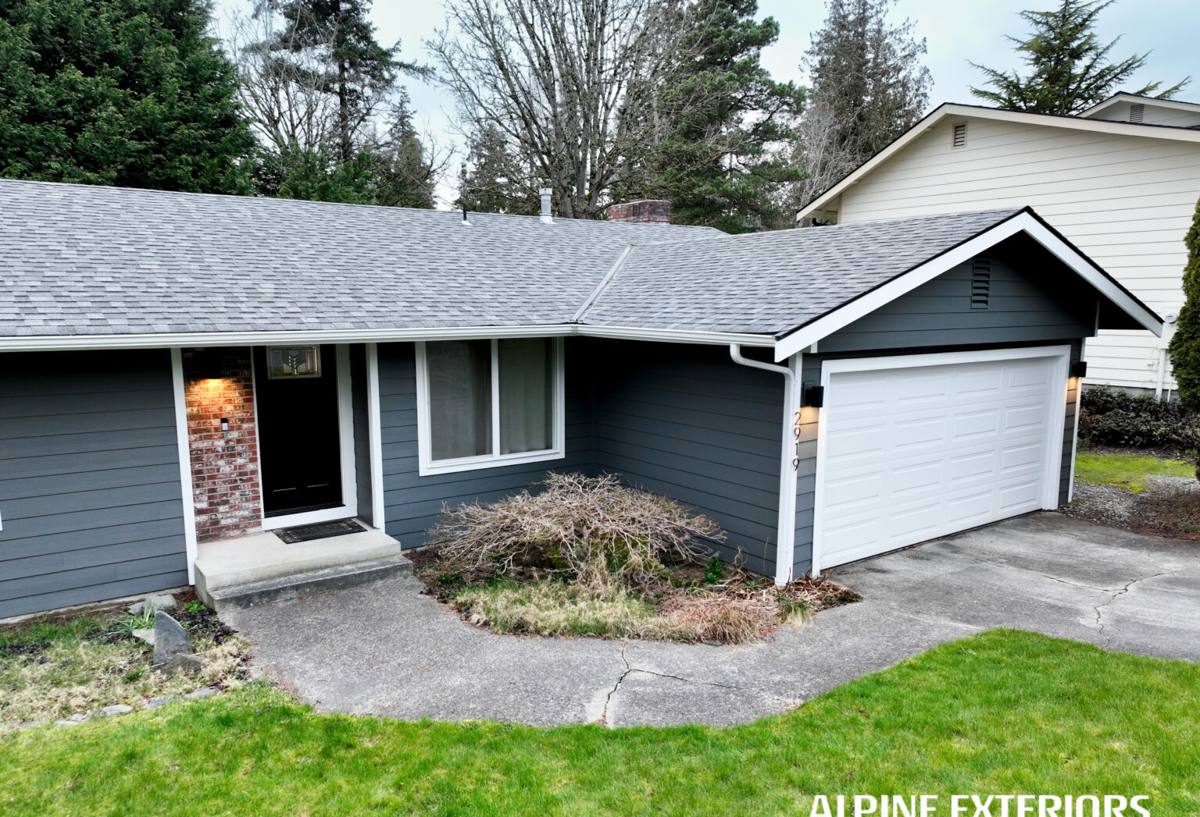
What This Climate Actually Does to Exterior Walls
Wind and Wind-Driven Rain
Wind pressure on a home isn't just about gusts pulling siding loose — it's about the way wind forces rain sideways and upward under laps, around trim, and into any gap that wasn't sealed correctly. A siding system with the right fastening pattern, clearances, and flashing detail sheds that water. One installed loosely, or without proper flashing at penetrations and butt joints, gives water a path into the wall assembly, where it causes damage no one sees until it's expensive.
UV Exposure
Florida sun is relentless, and it's tougher on painted surfaces than most homeowners realize. Field-applied paint on wood or engineered wood siding tends to chalk, fade, and break down years before a factory-cured finish does, because a factory finish is baked on under controlled conditions this same board could never get outdoors.
Salt Air
Mill Creek isn't oceanfront, but Bradenton's proximity to Tampa Bay and the Gulf means airborne salt is a real factor, not a coastal-only concern. Salt-laden air accelerates corrosion on fasteners and trim, and it degrades materials that absorb and hold moisture faster than it does denser, more stable ones.
Why We Install Only James Hardie Fiber Cement
James Hardie siding is a fiber cement product — a mix of cellulose fiber, sand, and cement — which makes it non-combustible, dimensionally stable, and far less prone to moisture-driven swelling or insect damage than wood-based or wood-adjacent alternatives. James Hardie also engineers its products by climate zone through its HardieZone system, meaning the formulation sold in a hot, humid, moisture-heavy region like ours is different from what ships to a dry inland climate. Installed correctly, it holds paint lines, resists cracking under wind pressure, and doesn't rot when it gets wet, which every piece of exterior siding on the Gulf Coast eventually does.
We standardized on James Hardie instead of carrying multiple brands because we'd rather install one product exceptionally well than spread our crew's expertise across several. That consistency shows up in the quality of the finished job.
Choosing the Right Hardie Product for a Mill Creek Home
James Hardie makes several distinct product lines, and the right one depends on the home's architectural style and how it's currently clad. Here's how the main options compare for a residential exterior in this area:
| Product | Look | Best Fit |
|---|---|---|
| HardiePlank lap siding | Traditional horizontal lap, smooth or woodgrain texture | Most common choice for ranch and traditional Florida homes |
| HardiePanel vertical siding | Clean vertical panels, often paired with battens | Modern or Craftsman-style exteriors, accent walls, gable ends |
| HardieShingle siding | Staggered or straight-edge shingle profile | Coastal cottage or accent-detail homes wanting dimensional texture |
| HardieTrim boards | Smooth or textured trim stock | Corners, window and door surrounds, fascia — finishes the whole system |
Most Mill Creek homes we work on end up on HardiePlank for the field of the house, with HardieTrim finishing the corners and openings. Homes with more architectural detail sometimes mix in HardiePanel or HardieShingle as accents. Part of a proper estimate is walking the home with you and recommending the combination that fits both the style of the house and the budget — not defaulting to whatever's easiest to install.
ColorPlus Finish: Why It Matters More in This Climate
James Hardie's ColorPlus Technology is a factory-applied, baked-on finish, and in a market with this much sun exposure, that's not a minor upgrade — it's the difference between siding that holds its color for years and siding that needs to be repainted on a shortened cycle. ColorPlus finishes are formulated to resist UV fading and are backed by a separate finish warranty from James Hardie, distinct from the substrate warranty on the board itself. For a home in Bradenton, choosing a ColorPlus color up front instead of planning to field-paint later is one of the simplest ways to cut down on long-term maintenance.
What a Correct Installation Actually Involves
The board itself is only part of what makes James Hardie siding perform. Installation quality determines whether the system delivers on what the product is engineered to do. On every Mill Creek project, that means:
- Following James Hardie's published fastening schedule and clearance requirements, including gaps at trim, corners, and any adjoining surfaces
- Installing a code-compliant water-resistive barrier and correctly integrated flashing at every window, door, and penetration
- Maintaining proper clearance between siding and grade, roofing, decks, and other transitions so water has somewhere to go
- Using corrosion-resistant fasteners appropriate for a salt-air environment
- Caulking and sealing only where James Hardie's installation guidelines call for it — not over-caulking in ways that trap moisture
- Pulling the required permits and meeting Manatee County's wind-load and building code requirements for the installation
Skipping any one of these doesn't necessarily show up on day one. It shows up two, five, or ten years later, as a callback nobody wants to make.
Our Process, Start to Finish
1. On-Site Assessment
We walk the exterior with you, check the condition of the existing siding and substrate, and talk through product line and color options based on the home's style and your budget.
2. Detailed, Written Estimate
You get a clear scope of work and price before anything is scheduled — no vague allowances, no surprise change orders for work that should have been included from the start.
3. Tear-Off and Substrate Check
Old siding comes off and we inspect the sheathing underneath for hidden moisture damage before installing anything new. This is where problems from a prior installation often surface, and it's better to find them now than after the new siding is up.
4. Weather Barrier and Flashing
A proper water-resistive barrier and flashing package goes on before a single piece of Hardie board, because this layer is what actually stops water intrusion — the siding is the second line of defense, not the first.
5. Installation to Manufacturer Spec
Fastening, clearances, and joint treatment follow James Hardie's installation guidelines exactly, which is also what keeps the manufacturer's warranty intact.
6. Final Walkthrough
We go over the finished exterior with you before calling the job done.
Why a Crew That Already Works Mill Creek Is Worth Choosing
A siding crew that regularly works in Mill Creek and the surrounding Bradenton area already understands Manatee County's permitting process and wind-load requirements, so there's no learning curve at your expense. We know what correct flashing and fastening look like for homes exposed to this specific combination of coastal wind, salt air, and sun — because it's the same combination on every job we run in this area, not a one-off condition we're adjusting for. That local repetition is what keeps installation quality consistent from house to house.
What Drives the Cost of a Siding Project
Every home is different, so a real number only comes from an on-site estimate — but these are the main factors that move the price up or down:
| Factor | How It Affects Cost |
|---|---|
| Home size and wall complexity | More square footage and more corners, gables, and dormers mean more material and labor |
| Product line selection | HardiePlank, HardiePanel, and HardieShingle carry different material costs |
| Substrate condition | Rotted or damaged sheathing found during tear-off adds repair work before new siding can go on |
| Trim and detail work | Homes with more window and door openings, or more architectural trim, take more labor to finish correctly |
| ColorPlus vs. field-applied paint | Factory-finished ColorPlus siding costs more up front but reduces repainting costs over the life of the siding |
Living With James Hardie Siding in Mill Creek
Fiber cement siding is low-maintenance compared to wood or engineered wood, but "low-maintenance" doesn't mean "no maintenance," especially in a climate this demanding. A little routine care keeps it performing the way it's designed to:
- Rinse the exterior periodically to clear salt residue, pollen, and airborne grime before it builds up
- Check caulking at trim, windows, and doors annually and touch up any that's cracked or pulled away
- Trim back landscaping so it isn't holding moisture against the siding or trapping debris behind it
- Have the exterior inspected after any major storm for impact damage or dislodged fasteners
- Address any moisture staining or discoloration promptly rather than waiting for it to spread
If your Mill Creek home needs new siding or you're planning ahead for storm season, we're happy to walk the exterior with you and put together a straightforward, no-pressure estimate. Use the form below to get started.