 Bradenton Siding
 Roof Replacement for Cortez Homes: Built for the Coast
Cortez sits about as close to the Gulf as a Manatee County neighborhood can get, and that proximity shapes everything about how a roof ages here. Salt-laden air moves off the water and settles on shingles, flashing, and fasteners every single day. Add Florida's intense year-round UV load, frequent wind-driven rain, and the real chance of hurricane-force gusts during storm season, and you have a roofing environment that's noticeably harsher than what you'd find twenty miles inland. A roof replacement in Cortez isn't just about swapping old shingles for new ones — it's about specifying and installing a system that's matched to this exact set of conditions.
We work throughout Bradenton and Manatee County, and Cortez jobs get the same attention to coastal detail as anything we do closer to the water in Anna Maria or Longboat Key. That means paying close attention to fastener corrosion resistance, underlayment quality, and flashing details that generic inland roofing crews sometimes treat as optional.
What Cortez's Climate Does to a Roof
Salt Air and Corrosion
Airborne salt is abrasive and chemically aggressive. It accelerates corrosion on exposed metal — nail heads, drip edge, flashing, vent boots, and any hardware that isn't rated for coastal exposure. On an older Cortez roof, this often shows up as rust streaking below flashing points or fasteners that have backed out or corroded to the point of losing their grip. When we replace a roof this close to the water, every metal component gets specified with that exposure in mind, not just whatever is standard-grade at the supply house.
UV Exposure
Florida sun breaks down roofing materials from the top down. Asphalt shingle granules erode, oils in the asphalt dry out, and the material becomes brittle years before its rated lifespan on a north-facing roof somewhere else in the country. This is a big part of why a "25-year shingle" rarely delivers 25 years of service life in this part of Florida — the sun exposure here is simply more intense, more consistently, for more months of the year.
Wind-Driven Rain
It's rarely just water hitting a roof straight down. Storms here push rain sideways and even upward under the edges of shingles and around penetrations. A roof that isn't properly sealed at every transition — valleys, sidewalls, chimneys, vent pipes — will find a way to let that water in eventually, even if it looks fine from the ground. This is one of the most common failure points we find on older roofs during a Cortez inspection.
Hurricane-Force Wind
Manatee County sits in a wind-borne debris region, and Cortez's open exposure toward the water means wind loading is a real design consideration, not a box to check. Uplift at the eaves and rake edges is where most wind damage starts — a roof that fails in a storm usually fails at the edges first, then progresses inward.
Signs a Cortez Roof Needs Replacing, Not Just Patching
- Granule loss heavy enough that shingles look blotchy or you're finding granules in gutters regularly
- Shingles that are curling, cupping, or cracking, especially on the south and west-facing slopes
- Soft spots in the decking you can feel when walking the roof, or sagging visible from the ground
- Flashing that's rusted, lifted, or was never properly step-flashed at walls and chimneys
- Daylight visible through the attic decking, or water stains on interior ceilings after a heavy rain
- A roof more than 15-18 years old that has never been fully replaced, only patched
- Missing or lifted shingles after any recent storm, even minor ones
If a roof is showing two or more of these signs, patching usually just delays the inevitable and can end up costing more over time than doing the replacement once, correctly.
What a Correct Roof Replacement Involves Here
A roof replacement done right for this environment goes well beyond removing old shingles and nailing down new ones. Here's what we consider non-negotiable on a Cortez job:
Tear-Off and Deck Inspection
Complete removal of the old roofing down to the deck, because you cannot properly evaluate or seal a deck you can't see. Salt air and moisture intrusion often cause hidden rot at the decking level long before it's visible from inside the attic. Any damaged or delaminated decking gets replaced before anything new goes down — this isn't an area to cut corners on.
Underlayment Upgrade
A synthetic underlayment or a self-adhering, water-resistant membrane at eaves, valleys, and penetrations gives the roof a genuine secondary line of defense if wind-driven rain gets past the shingles. Given how often Cortez sees sideways rain during storm season, this layer matters more here than it would in a drier inland climate.
Corrosion-Resistant Fasteners and Flashing
Coastal-grade fasteners and flashing resist the corrosion that standard hardware succumbs to within a few years this close to the Gulf. This is one of the details that separates a roof built for coastal exposure from one that was simply built to code minimums.
Wind-Rated Installation Details
Proper nailing patterns, enhanced fastening at eaves and rakes, and correctly installed edge metal all matter for wind performance. Manufacturer wind ratings only hold up if the installation follows the specification exactly — an under-fastened roof will underperform its rating regardless of what shingle brand is on it.
Ventilation Check
Poor attic ventilation traps heat and moisture, which shortens shingle life and can contribute to deck rot. We check and correct ventilation as part of a full replacement rather than leaving an inadequate system in place under new shingles.
Material Options for Cortez Homes
Different roofing materials handle this coastal environment differently. Here's how the common options compare for a Cortez application:
| Material | Coastal/Salt Performance | Wind Performance | Typical Considerations |
|---|---|---|---|
| Architectural asphalt shingle | Good with proper fasteners and flashing | Good when high-wind rated and correctly installed | Most common choice; wide range of quality tiers |
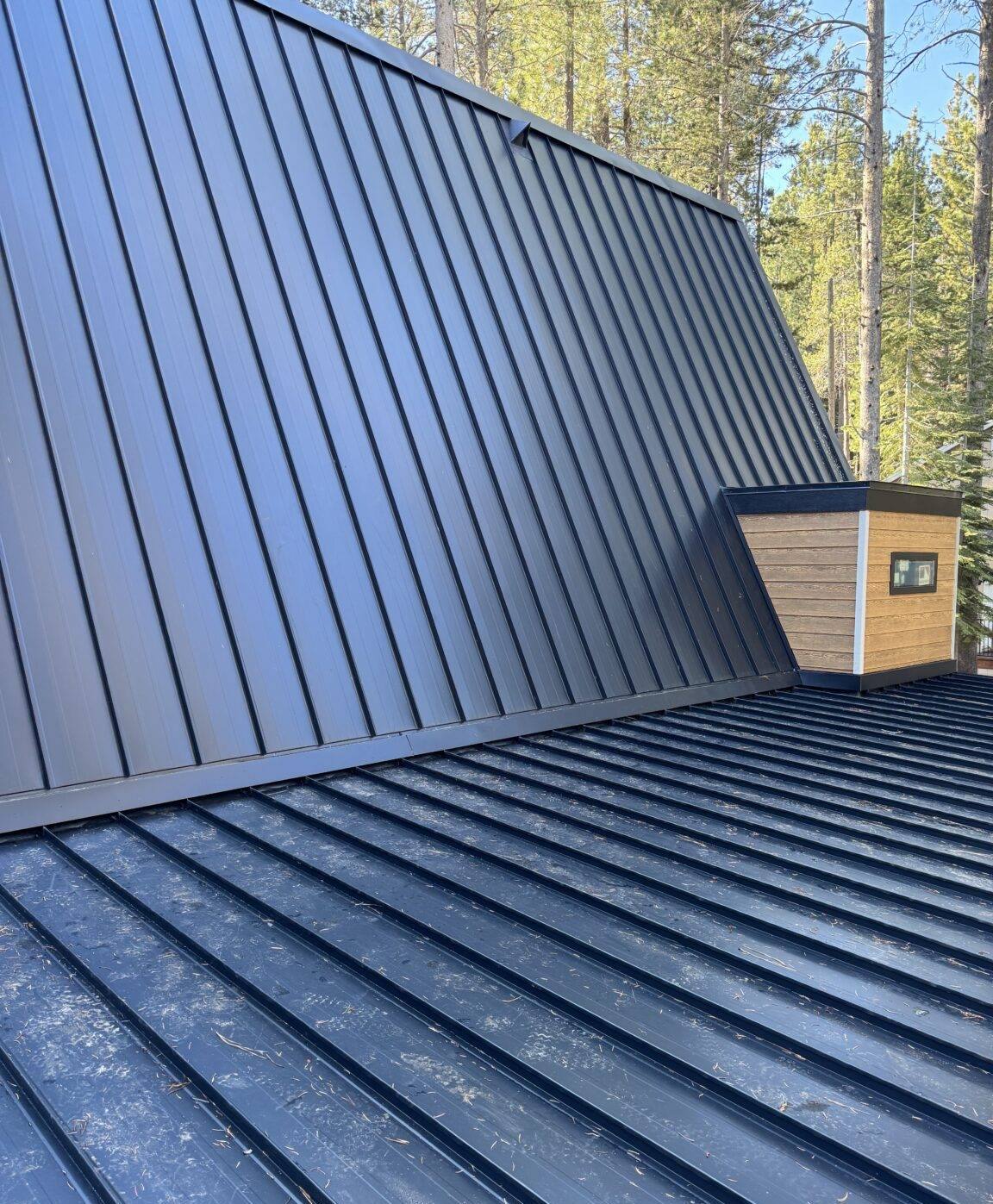
| Metal roofing (standing seam) | Excellent when properly coated and fastened | Excellent, among the best wind uplift resistance | Higher upfront cost, long service life |
| Tile (concrete or clay) | Very good; the tile itself resists salt and UV well | Good, but depends heavily on the fastening system underneath | Heavier structural load; underlayment failure is the real weak point over time |
| Flat/low-slope membrane (for additions, porches) | Depends on membrane type and seam quality | Adequate when properly adhered and detailed | Common for lanai and porch roofs attached to the main structure |
We'll walk through which option makes sense for your specific roof, budget, and how long you plan to stay in the home. There's rarely a single "best" material for every Cortez house — it depends on the roof's shape, your budget, and how much you value a longer replacement cycle versus lower upfront cost.
Our Process for a Cortez Roof Replacement
- Inspection and estimate: We walk the roof, check the decking where accessible, look at flashing and ventilation, and give you an honest assessment of whether replacement or repair is the right call.
- Material selection: We go over options suited to coastal exposure and your budget, with straightforward pros and cons for each.
- Permitting: Roof replacements require a permit through Manatee County or the appropriate local jurisdiction, and we handle that process as part of the job.
- Tear-off and deck repair: Full removal of the old system, deck inspection, and replacement of any compromised sheathing.
- Underlayment and flashing: Installation of upgraded underlayment and corrosion-resistant flashing at every valley, wall, and penetration.
- New roofing installation: Installed to manufacturer spec and wind-rating requirements, not just "close enough."
- Final inspection and cleanup: A walkthrough with you, magnet sweep for stray fasteners, and full site cleanup before we consider the job done.
Why It Matters to Hire a Crew That Already Works Cortez
Roofing crews that mostly work inland don't run into salt-air corrosion or the specific wind-exposure patterns that come with an open-water neighborhood like Cortez on a daily basis, so it's easy for those details to get treated as "extra" rather than standard. A crew that regularly works this part of Manatee County already knows to spec coastal-grade fasteners without being asked, already understands the local permitting process, and has seen firsthand what happens when a roof is built to inland standards in a coastal setting.
There's also a practical side to this: familiarity with local wind-zone and permitting requirements means fewer surprises and delays during the permit and inspection process. A crew unfamiliar with those requirements can end up costing you time even if their workmanship is fine.
Choosing a Roofing Contractor: What to Check
- Current Florida roofing license and general liability and workers' compensation insurance
- A written estimate that specifies materials, underlayment type, and fastening approach — not just a lump-sum number
- Willingness to explain why they're recommending a particular material for your specific roof and exposure
- A manufacturer's material warranty plus a separate workmanship warranty from the installer
- References or examples of similar coastal-area work they can speak to specifically
- A clear permit and inspection process handled by the contractor, not left to you
Be cautious of storm-chasing crews that show up after a hurricane, quote unusually low prices, and disappear before the workmanship warranty would ever come into play. Local, established contractors have a reputation in the community to protect and are still around if a warranty issue comes up years later.
Maintaining Your New Roof in a Coastal Environment
A new roof still needs some upkeep to hit its full service life in Cortez's environment. A simple annual check — after storm season is a good time — for lifted shingles, debris buildup in valleys, and any rust starting to show at flashing points goes a long way. Keeping gutters clear reduces water backing up under the roof edge, and trimming back overhanging branches limits both debris accumulation and the risk of impact damage during high winds. None of this requires a contractor visit every year, but it's worth doing yourself or having checked periodically.
Ready to Talk About Your Cortez Roof?
If your roof is showing its age, took a hit in a recent storm, or you just want an honest opinion on whether repair or replacement makes more sense, we're happy to take a look. Reach out below for a free, no-pressure estimate — no obligation, just a straight answer about what your roof actually needs.