 Bradenton Siding
 Rosedale's Climate Puts Real Stress on Exterior Siding
Rosedale is an established golf course community on the east side of Bradenton, and like most neighborhoods in Manatee County, its homes take a steady beating from the weather nine months out of the year. Intense UV exposure bakes painted and coated surfaces day after day, wind-driven rain during summer storms and hurricane season pushes moisture into seams and fastener points, and salt-laden air drifting in off the Gulf Coast accelerates corrosion on anything metal — including the trim, flashing, and fasteners that hold your siding system together. None of this is unique to Rosedale, but the combination of mature landscaping, irrigation spray hitting lower wall sections, and dense tree cover that keeps some walls shaded and damp longer than others means siding problems in this neighborhood often show up in predictable places: north-facing walls, areas behind shrubs, and corners exposed to prevailing wind.
Left alone, small siding issues in this kind of climate don't stay small. A cracked panel or open seam that would be a minor cosmetic issue in a dry inland climate becomes an entry point for water in a humid, storm-exposed one. That's the core reason repair timing and repair quality matter more here than in milder climates.
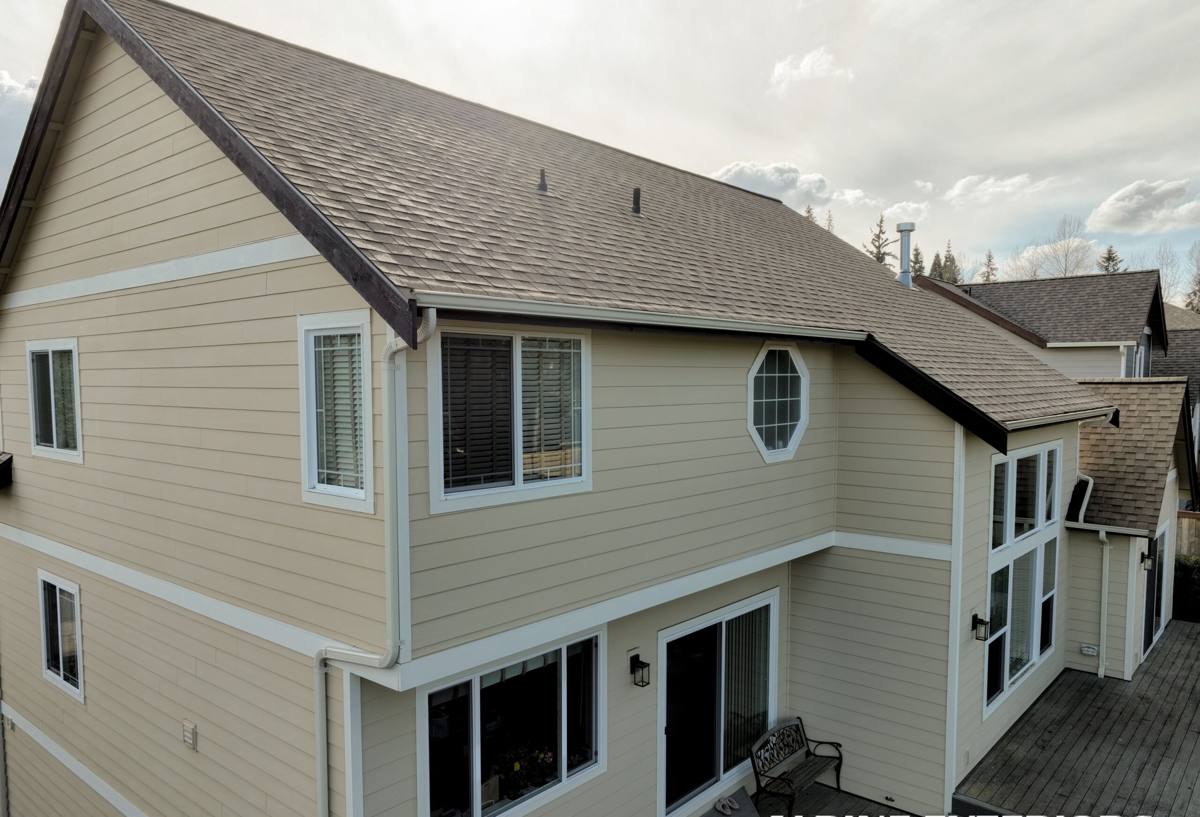
Common Signs of Siding Damage We See in Rosedale Homes
Vinyl and Wood Siding Symptoms
Vinyl siding in this climate tends to show heat warping, faded or chalky color on sun-facing elevations, and brittle panels that crack on impact from lawn equipment or storm debris. Wood or wood-composite siding shows swelling, soft spots, and paint failure where moisture has been getting behind the surface — often long before the damage is visible from the ground.
Fiber Cement Siding Symptoms
Fiber cement holds up better structurally, but it isn't immune to problems, especially when it wasn't installed to manufacturer spec. The issues we run into most often are failed caulk joints, nail heads that have popped or corroded and left rust streaks, edges that were left unsealed at the factory cut and are now absorbing water, and impact damage from storms or yard work. These are almost always repairable without touching the rest of the wall — if they're caught before water gets behind the panel and into the sheathing.
Repair or Replace? How We Make That Call
Not every damaged section needs a full re-side, and we're not going to tell you it does. The honest answer depends on how widespread the damage is, what's causing it, and how old the existing siding is relative to its expected service life.
| Factor | Repair usually makes sense | Replacement usually makes more sense |
|---|---|---|
| Extent of damage | Isolated to one or two wall sections | Recurring problems across multiple elevations |
| Underlying cause | Impact damage, a bad seam, a few failed fasteners | Long-term moisture intrusion into the sheathing or framing |
| Age of siding | Well within its expected service life | Near or past the end of its practical lifespan |
| Material on the wall | James Hardie fiber cement in otherwise sound condition | Vinyl, untreated wood, or a product we don't stand behind long-term |
| Color match | ColorPlus finish batch can be reasonably matched | Discontinued color or heavily faded field siding |
We'll always tell you plainly which side of that line your home falls on, and why — not just default to whichever job is bigger.
What a Proper Siding Repair Involves
Diagnosing the Real Cause
A repair that only addresses the visible symptom tends to come back. Before we touch a panel, we check what's behind it — whether the house wrap or water-resistive barrier is intact, whether flashing above windows and at butt joints is doing its job, and whether the damage is weather-related, installation-related, or both. In a coastal humidity climate like Bradenton's, skipping this step is how a "quick patch" turns into a rot problem two years later.
Matching Material and Finish
Because we work exclusively in James Hardie fiber cement, replacement pieces come from the same product line and profile as what's already on the wall, and we match ColorPlus factory finish as closely as the existing siding's age and sun exposure allow. Field-painting a small patch on a factory-finished product almost always looks worse than a color that's slightly off but properly cut and installed — we'll walk you through that tradeoff honestly rather than oversell a perfect match we can't guarantee.
Sealing, Flashing, and Water Management
Every cut edge on fiber cement needs to be sealed per manufacturer specification — factory edges are treated, field cuts are not, and that detail is where a lot of repairs fail. We also check and correct flashing and joint sealant as part of the repair, not as an afterthought, since a new panel installed over bad flashing just relocates the leak.
Why We Repair Exclusively With James Hardie Fiber Cement
We don't install or repair with vinyl, LP SmartSide, Cemplank, Allura, primed spruce, or cedar, and we're upfront about why: those products each carry real trade-offs in a hot, humid, storm-exposed climate — whether that's heat distortion, moisture sensitivity at cut edges and seams, a shorter realistic service life, or a maintenance burden that doesn't match what most homeowners actually want to keep up with. James Hardie's fiber cement is non-combustible, engineered specifically for humid climate zones in its HZ5 product line, and backed by a strong transferable warranty when installed to spec. That's what we put on Rosedale homes, and it's the only product we'll warranty our repair workmanship against.
This also means if your home currently has a different siding product, we'll be straightforward with you: we can often still assess and, in some cases, repair it, but our long-term recommendation for that wall will be a transition to Hardie rather than continuing to patch a product we don't install new.
Our Rosedale Siding Repair Process
- On-site inspection of the damaged area and a check of surrounding sections for related issues you may not have noticed yet.
- Honest assessment of cause — impact, installation defect, or moisture intrusion — explained in plain terms before any work starts.
- A written estimate that separates the repair scope from any recommended additional work, with no pressure to upsell into a full re-side.
- Sourcing matched James Hardie material and ColorPlus finish for the repair.
- Removal of the damaged section, inspection of the water-resistive barrier and framing underneath, and correction of any flashing or sealant issues found.
- Installation to Hardie's fastening, clearance, and sealing specifications — the details that determine whether a repair lasts five years or fifteen.
- Final walkthrough so you can see exactly what was done and why.
Why Local Experience in Rosedale Matters
A repair crew that already works in this neighborhood isn't guessing at what your siding is up against. We know that homes in established Manatee County communities like Rosedale often have HOA or architectural review guidelines around exterior color and material changes, and we build that into scheduling and material selection instead of surprising you with it mid-job. We also know which products and installation details actually hold up under Bradenton's specific mix of sun, humidity, and storm exposure — because we've fielded the callbacks on the ones that don't.
Local permitting through Manatee County is another place where experience saves you time. Depending on the scope of the repair, work may need to be permitted, and a crew unfamiliar with the county's requirements can hold up a straightforward job for weeks.
Keeping Your Siding Repair Lasting: Homeowner Checklist
- Walk your home's exterior twice a year, especially after hurricane season, and look for cracked panels, open seams, or rust streaks below fasteners.
- Keep irrigation heads from spraying directly on siding — repeated wetting accelerates finish wear and can force water behind panels over time.
- Trim shrubs and trees back from exterior walls so those sections can dry out after rain instead of staying damp.
- Re-caulk visible gaps at trim, windows, and joints before they widen — small gaps are a five-minute fix; open ones invite water intrusion.
- Have any soft spots, bubbling paint, or discoloration checked promptly rather than waiting for the next scheduled maintenance visit.
- Keep a record of your siding's installation date and product line — it matters for warranty claims and for matching future repairs.
If you're seeing any of these signs on your Rosedale home, we're happy to take a look and give you a straight answer on what it actually needs. Reach out for a free, no-pressure estimate using the form below.