 Bradenton Siding
 What Samoset's Climate Does to Exterior Siding
Samoset homes sit inside one of the more demanding exterior-siding environments in the country, even though nothing about the neighborhood looks extreme on a calm day. Manatee County sees direct and glancing hits from tropical systems on a near-annual basis, and hurricane-force wind gusts don't need a direct landfall to do damage — they show up in the outer bands of storms that pass well offshore. Add in year-round, high-intensity UV exposure that breaks down paint films and caulk faster than it does in northern climates, wind-driven rain that gets forced sideways into laps and seams instead of running straight off a wall, and the salt-laden air that comes with living anywhere near Tampa Bay and the Gulf Coast, and you have four separate stressors working on a home's siding at the same time, every year, for the life of the house.
None of these four factors is dramatic by itself. A single UV season doesn't ruin siding, one storm's rain doesn't rot a wall, and a few years of salt air doesn't corrode a fastener. What actually causes premature siding failure in this part of Florida is the compounding effect — a coating that's already chalking from UV exposure lets moisture in faster, moisture that gets in from wind-driven rain has nowhere to dry out in our humidity, and fasteners weakened by salt air let panels work loose in the next round of high wind. A siding replacement done right in Samoset has to account for all four factors together, not just the one that happens to be top of mind that year.
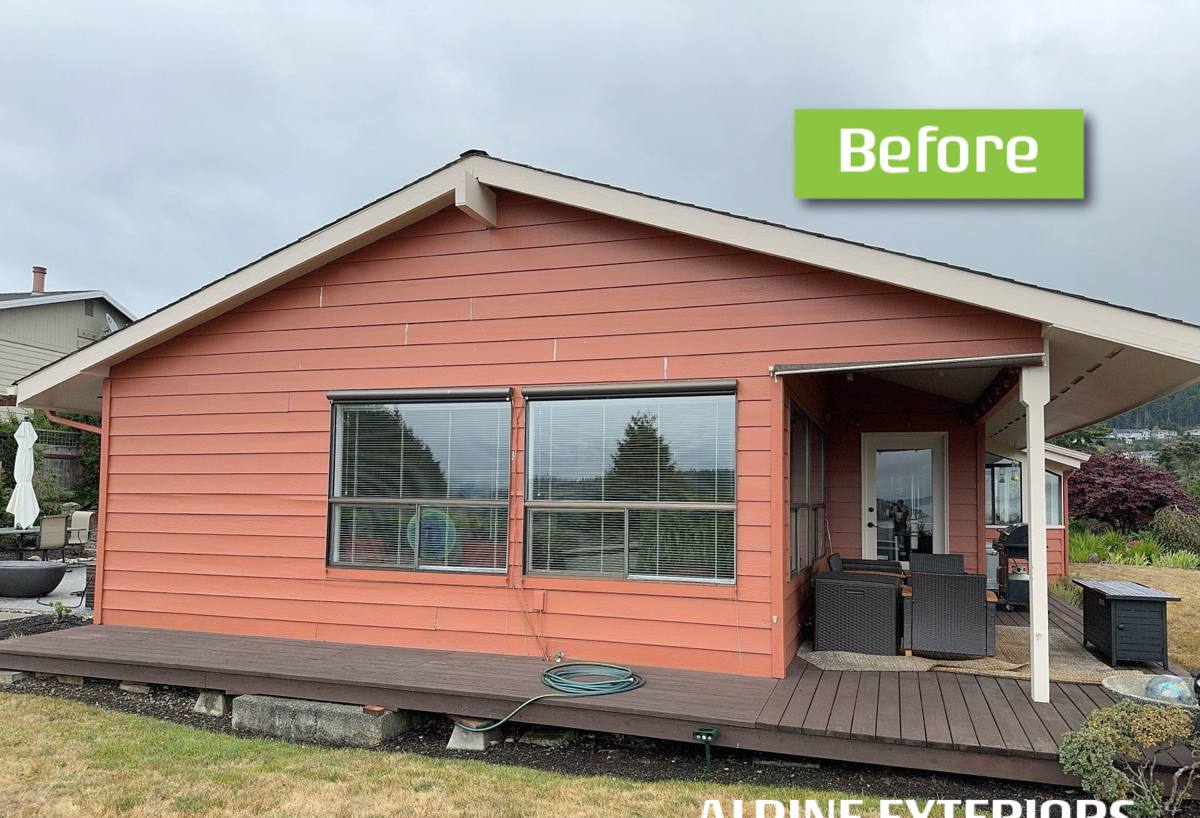
Signs Your Samoset Home's Siding Has Reached the End of Its Life
Some siding problems are obvious. Others hide behind a coat of paint until they're expensive. Here's what we look for on a Samoset estimate, and what should prompt you to get a professional opinion before it's an emergency:
- Soft spots, sagging, or a spongy feel when you press on a wall — usually a sign moisture has already reached the substrate underneath
- Visible cracking, buckling, or warping in individual panels or boards, especially after storm season
- Paint that's chalking heavily, peeling in sheets, or needing repainting more often than every 8-10 years
- Rust streaks below nail heads or trim fasteners
- Gaps opening up at seams, corners, or where siding meets window and door trim
- Rising interior energy bills with no other explanation — siding that's lost its seal lets conditioned air escape
- Visible mold, mildew, or a persistent musty smell near exterior walls
- Siding that's simply original to a home built more than 20-25 years ago, regardless of how it looks from the curb
Any one of these on its own might mean a repair. Several at once, or any sign of moisture at the substrate, usually means it's time to talk about full replacement rather than patching a system that's already failing underneath.
Why This Crew Installs Only James Hardie Fiber Cement
We don't offer vinyl, LP SmartSide, Cemplank, Allura, or primed wood siding, and that's a deliberate standard, not a limitation in what we're capable of installing. James Hardie fiber cement is non-combustible, which matters in a state where wildfire and electrical exposure both exist, and it's engineered specifically for humid, storm-prone climates through Hardie's HZ5 product line built for the Southeast. The factory-applied ColorPlus finish is baked on under controlled conditions rather than field-painted, which means the color and the moisture-resistant coating are far more consistent and far more UV-stable than anything applied on-site with a brush or sprayer — a real advantage given how hard Florida sun is on painted surfaces. Fiber cement also doesn't absorb and swell with humidity the way wood-based products can, and it holds up to wind-driven rain without the seam and moisture-management sensitivities that come with some engineered wood systems. Hardie backs it with a strong, transferable warranty. We standardized on one product because we'd rather install one system extremely well, to spec, every time, than offer a menu of products with different installation requirements and different long-term track records in this climate.
What a Correct Siding Replacement Actually Involves
Tear-Off and What's Underneath
A siding replacement is only as good as what happens after the old siding comes off and before the new siding goes on. Full tear-off lets us actually see the sheathing, framing, and any trim underneath — which is often the first time in decades anyone has looked at it. In a hurricane-prone, humid climate like Manatee County's, it's common to find soft or water-damaged sheathing behind siding that looked fine from outside. That gets addressed before anything new goes up. Skipping this step and installing new siding over hidden rot is one of the most common ways a siding job fails early, and it's not something you can catch after the fact without tearing the new siding back off.
Weather-Resistive Barrier and Flashing
A correctly installed weather-resistive barrier, along with proper flashing at every window, door, and roofline intersection, is what actually keeps wind-driven rain out of the wall assembly — the siding itself is the second line of defense, not the first. This is also where a lot of corner-cutting happens on lower-quality installs, because it's the part of the job that's invisible once the siding is up. We treat it as the part of the job that matters most, precisely because nobody will ever see it again.
Fastening and Manufacturer Spec
James Hardie publishes specific fastening patterns, clearances, and installation requirements, and they vary by product line and by wind exposure. Installing to spec — correct nail placement, correct gaps at butt joints, correct clearance from grade, roofline, and other trim — is what keeps the product performing the way it's engineered to in high-wind events. It's also frequently required to keep the manufacturer's warranty valid. An installation that looks right from the ground can still be out of spec in ways that only show up during the next major storm.
Factory-Finished Color, Applied Correctly
Cut edges and any field-touched areas get properly sealed with Hardie-approved products so the factory finish's moisture and UV protection stays intact at every seam, not just across the face of each board. That detail is easy to rush and easy to skip, and it's one of the more common places a technically "installed" job starts failing a few years early.
Choosing the Right Hardie Product for a Samoset Home
James Hardie makes several distinct product lines, and the right one depends on the home's architecture, existing trim, and the look a homeowner wants — not just personal preference. Here's how the main options compare for a typical Samoset property:
| Product Line | Look | Best Fit |
|---|---|---|
| HardiePlank Lap Siding | Traditional horizontal lap, widest range of textures and widths | Most Samoset homes; the standard choice for a classic Florida exterior |
| HardiePanel Vertical Siding | Clean vertical panels, often paired with board-and-batten trim | Accent walls, gables, or homes going for a more modern or coastal look |
| HardieShingle Siding | Staggered or straight-edge shingle profile | Accent areas, gables, or homeowners wanting a shingle-style aesthetic without wood's maintenance |
| Artisan Lap Siding | Premium smooth or beaded profile with tighter reveals | Homes where a higher-end, more refined lap look is the priority |
Most full replacements use HardiePlank as the primary field siding, with a panel or shingle line reserved for gables or accent areas where a homeowner wants visual variation. We walk through these options on-site against the home's actual architecture rather than recommending the same product for every house.
Our Process, Start to Finish
1. On-Site Assessment
We walk the exterior with you, look at the current siding's condition, check for trouble spots around windows, corners, and roof intersections, and talk through what you want the finished home to look like.
2. Written Scope and Product Selection
You get a clear, written scope of work — what's being torn off, what's being repaired underneath if needed, which Hardie product and color, and what the trim and flashing plan looks like. No verbal-only estimates.
3. Permitting
Siding replacement in Manatee County and the City of Bradenton requires a permit, and wind-load and fastening requirements get checked against current code for the property's specific wind exposure. We handle this as part of the job rather than leaving it to the homeowner.
4. Installation
Tear-off, substrate inspection and repair where needed, weather-resistive barrier and flashing, then the Hardie siding installed to manufacturer spec. We keep the property secured and protected from weather at every stage of a multi-day job.
5. Final Walkthrough
We walk the finished exterior with you before calling the job done, and you get the manufacturer warranty paperwork registered in your name.
What Affects the Cost of Siding Replacement in Samoset
Every home is different, and we won't quote a number without seeing the property, but these are the main variables that move the price up or down on a typical Samoset job:
| Factor | Why It Matters |
|---|---|
| Home size and wall complexity | More square footage and more corners, gables, and dormers mean more material and more cut edges to seal correctly |
| Condition of the substrate underneath | Hidden sheathing damage found during tear-off adds repair scope before new siding can go on |
| Product line and profile chosen | Standard HardiePlank lap is generally the most economical; Artisan and specialty shingle profiles cost more |
| Trim, soffit, and fascia scope | Replacing or upgrading trim alongside the siding adds cost but avoids mismatched old-and-new materials |
| Home height and access | Two-story walls, steep pitches, or tight lot access affect labor and equipment needs |
| Color | Standard ColorPlus colors are typically less expensive than premium or custom-matched finishes |
Why Hiring a Crew That Already Works in Samoset Matters
A siding contractor who works regularly in this specific part of Manatee County already knows the wind exposure requirements that apply to local homes, has a working relationship with the county and city permitting process, and has seen how different products and installation details actually hold up here over years — not just in a training manual. That local track record matters more than it sounds like it should. A crew that mostly works inland, drier climates might not fully account for how aggressively salt air and wind-driven rain attack a wall assembly here, and might use fastening or flashing details that are technically acceptable elsewhere but undersized for this exposure. Working the same neighborhoods repeatedly also means we're the ones who get the call if something needs attention after a storm — which is a different level of accountability than a crew that installed your siding once and moved on to the next county.
Caring for Your New Siding After Installation
James Hardie siding is low-maintenance compared to wood or vinyl, but "low-maintenance" doesn't mean "no maintenance" in this climate. A rinse with a garden hose a few times a year keeps salt residue and organic buildup from accumulating, especially on north- and shade-facing walls where mildew is more likely to take hold. Check caulking at trim joints and penetrations annually, since caulk is a wear item regardless of what siding it's paired with. After any major storm, a quick visual walk-around for loose trim, damaged flashing, or panel movement is worth the ten minutes it takes — catching a small issue early is a lot cheaper than catching it after a second storm makes it worse. Because ColorPlus finish is factory-applied and UV-stable, you're not looking at repainting on the same schedule you would with field-painted siding, which is one of the bigger long-term savings of the system.
If your Samoset home's siding is showing its age or you're planning ahead of the next storm season, we're happy to take a look and give you a straightforward, no-pressure estimate — no obligation, just an honest read on what your home actually needs. Use the form below to get started.