 Bradenton Siding
 Why Siding Replacement in Mill Creek Isn't a One-Size-Fits-All Job
Mill Creek is an established residential community in Bradenton, set back from the immediate coastline but still squarely inside Manatee County's Gulf Coast climate. That matters more than it sounds like it should when it comes time to replace siding. A wall assembly here has to shed hurricane-force wind-driven rain during storm season, hold up under some of the most intense and nearly year-round UV exposure in the continental United States, and resist the slow corrosion that comes from salt-laden air moving inland off Tampa Bay and the Gulf. None of that is unique to Mill Creek specifically, but it's a very different set of demands than siding faces in most of the country, and it's why a siding replacement done to a generic national standard often underperforms here.
This page is specifically about replacing existing siding on a Mill Creek home — not new construction, not a patch repair, but pulling old siding off and putting a new system on correctly. What that involves, what signs tell you it's time, and why the contractor doing the work matters as much as the material going up.
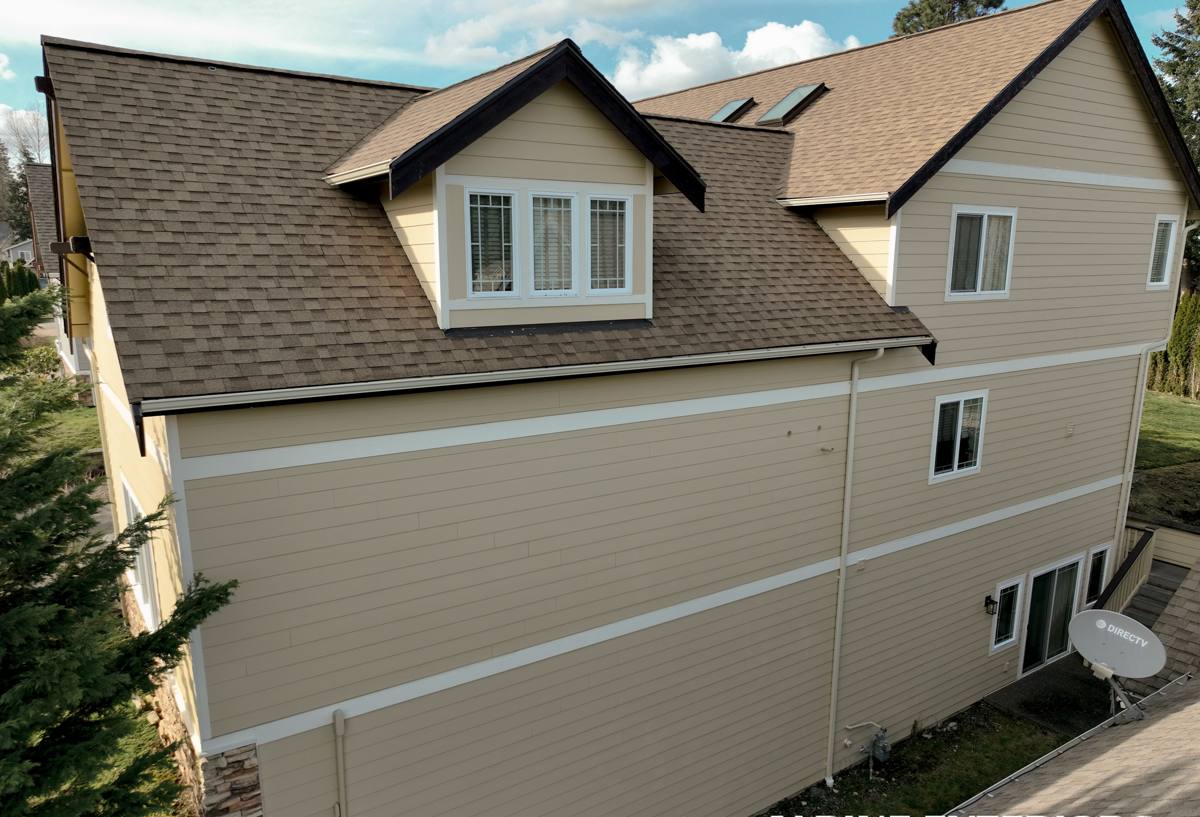
Signs a Mill Creek Home's Siding Has Reached the End of Its Life
Siding rarely fails all at once. It usually sends signals for a season or two before a problem becomes obvious from the curb. Worth checking for on a regular basis, especially heading into hurricane season:
- Visible cracking, warping, or buckling panels, especially on walls that take the most direct sun or wind exposure
- Soft or spongy spots when pressed, which usually means moisture has reached the material underneath
- Paint or finish that's chalking, fading unevenly, or peeling faster than it used to
- Caulk lines at joints and trim that have cracked, shrunk, or pulled away from the surface
- Rust streaking around fasteners or trim, a sign that hardware underneath is corroding
- A musty smell, staining, or soft drywall on interior walls that back up to exterior siding
- Rising energy bills that can't be explained by anything else, which sometimes points to a compromised wall assembly
- Visible storm damage — cracked or missing panels, lifted edges — after a wind event
Any one of these on its own might be a minor repair. Several showing up together, or a home built with materials known to age poorly in this climate, usually means full replacement is the more honest and more cost-effective answer than chasing repairs year after year.
What a Correct Siding Replacement Actually Involves
Tear-Off and an Honest Look Underneath
Replacement starts with removing the old siding entirely, not covering it up. That step matters because it's the only point in the project where the sheathing underneath is fully visible. If years of moisture intrusion have left soft or rotted sheathing, that has to be found and addressed before anything new goes up — installing new siding over a compromised wall just hides the problem for another few years instead of fixing it.
Water-Resistive Barrier and Flashing
A new, continuous water-resistive barrier goes on with proper overlap and sealed seams before any siding or trim covers it. Flashing at every window, door, and wall penetration has to be sequenced correctly with that barrier so wind-driven rain gets directed out and down, not trapped behind the cladding. This layer is completely invisible once the job is finished, which is exactly why it's worth confirming with your contractor rather than assuming it was done right.
Fastening, Clearances, and Cut Edges
James Hardie publishes specific fastener type, spacing, and clearance requirements, and following that spec is what keeps a wall performing through real wind loads and keeps the manufacturer's warranty valid. Clearance above grade, decks, and roof lines keeps the bottom edge of the siding out of standing water and splash-back. Any field-cut edge needs to be sealed according to spec before it goes up, since an unsealed cut is one of the most common places fiber cement actually takes on moisture.
Why We Replace Old Siding With James Hardie Fiber Cement Only
We don't install vinyl, LP SmartSide, Cemplank, Allura, primed spruce, or cedar. That's a deliberate standard, not a lack of options. James Hardie's fiber cement is non-combustible, dimensionally stable, and manufactured in climate-specific formulations rather than one generic mix sold everywhere. Homes in this part of Florida call for Hardie's HZ5 product line, engineered for high-humidity, high-moisture-exposure climates rather than the freeze-thaw conditions other regions of the country deal with. Its ColorPlus finish is baked on at the factory under controlled conditions, which resists the fading and chalking that field-applied paint shows under Florida's sun far sooner. Backed by a strong, transferable warranty when installed to spec, it gives a Mill Creek homeowner a system built for exactly the conditions the house actually faces, not a compromise between climates.
That doesn't mean other products are worthless — vinyl is inexpensive and low-maintenance in mild climates, and engineered wood has real fans for its workability. But vinyl distorts under sustained heat and UV and its seams give wind-driven rain a place to work behind panels, engineered wood's fiber core absorbs moisture at cut edges the way solid wood does, and cedar or primed spruce both need ongoing maintenance to keep ahead of Florida's wet-dry cycling. We'd rather install one product to a high standard, on every home we touch, than spread our crews thin across several systems with different failure points.
How James Hardie Compares to What's Likely Already on Your Home
| Material | How It Ages in Manatee County's Climate | Maintenance Reality |
|---|---|---|
| James Hardie fiber cement | Dimensionally stable; doesn't swell, warp, or absorb moisture into the base material | Occasional washing and caulk inspection; factory finish holds color far longer than field paint |
| Vinyl siding | Softens and can distort under sustained heat; seams and J-channels give wind-driven rain a path behind panels | Low upkeep but limited repair options once a panel cracks or fades unevenly |
| LP SmartSide / engineered wood | Wood-fiber core absorbs moisture readily, especially at cut edges, and can swell or delaminate over repeated wet-dry cycles | Requires consistent caulk and paint maintenance to keep moisture out |
| Cedar / primed wood | Absorbs and releases moisture continuously with humidity; prone to cupping and checking under Florida's UV and rain pattern | Regular refinishing needed to keep ahead of weathering |
Our Siding Replacement Process for a Mill Creek Home
- Assessment. We walk the property, look at how each wall is exposed to sun and prevailing wind, and check for existing signs of moisture damage before anything is priced.
- Tear-off. Old siding comes off and the sheathing gets inspected. Any rot or soft spots found here get addressed before new material goes up, not buried under it.
- Weather barrier and flashing. The water-resistive barrier and flashing go in first, sequenced correctly at every seam and penetration.
- James Hardie installation. Panels go up following Hardie's published fastening, spacing, and clearance requirements as the baseline for every job, not an option we upsell.
- Final walkthrough. We review the completed work with you, confirm it matches what was estimated, and go over basic upkeep for a Florida-installed Hardie system.
What Drives Cost and Timeline on a Mill Creek Replacement
Every estimate depends on the specific house, but a few factors consistently move both price and schedule:
| Factor | Why It Matters |
|---|---|
| Square footage and number of stories | More wall area and height mean more material, labor, and staging |
| Sheathing condition found during tear-off | Rot or water damage adds repair scope before new siding can go up |
| Trim and roofline complexity | More windows, gables, and transitions mean more flashing and cutting work |
| Product line and finish selection | James Hardie offers multiple panel styles, textures, and ColorPlus color options at different price points |
| Permitting and inspection timing | Manatee County permitting adds a step to the schedule that varies by workload and season |
Hurricane season also affects scheduling more directly here than in a milder climate — a stretch of high wind or heavy rain can shut down safe panel handling for a few days, so we build some flexibility into timelines rather than promising a fixed date a bad weather week is likely to break.
A Checklist Before You Sign a Replacement Contract
Whether you're evaluating our estimate or getting a second opinion, these are reasonable things to confirm before calling a siding replacement done:
- Full tear-off and a documented sheathing inspection, not siding installed over the old layer
- A continuous, properly lapped water-resistive barrier with sealed seams and penetrations
- Flashing visible and correctly sequenced at every window, door, and wall penetration before it's covered
- Fastener type and spacing that follows the manufacturer's published spec for your wind exposure
- Documented clearance between the bottom of the siding and grade, decks, or roof lines
- All field-cut edges sealed before installation, not left raw
- Current Florida contractor licensing and proof of insurance
- A final walkthrough where the work is explained, not just invoiced
Why a Crew That Already Works in Mill Creek Matters
Bradenton and the rest of Manatee County share a general climate, but how a specific neighborhood's homes are laid out, how much tree cover they carry, and how they're oriented to prevailing wind still shapes real judgment calls on a replacement job — where extra flashing attention pays off, which walls take the worst of a storm's wind-driven rain, and which shortcuts genuinely can't be taken regardless of schedule pressure. A crew that regularly works in this community makes those calls from repetition, not from a generic checklist applied the same way on every job across the county. That familiarity also tends to mean a smoother permitting process and fewer surprises once tear-off actually starts.
If your Mill Creek home's siding is showing its age, or you just want a straight answer about whether repair or full replacement makes more sense, we're glad to take a look. Reach out below for a free, no-pressure estimate.