 Bradenton Siding
 Roofing on a Barrier Island Is a Different Job
Holmes Beach sits on Anna Maria Island, a narrow strip of land with the Gulf of Mexico on one side and Tampa Bay on the other. That location is part of what makes the island beautiful, and it's also exactly why roofs here take more punishment than roofs a few miles inland in Bradenton or elsewhere in Manatee County. Wind doesn't slow down before it reaches a barrier island. Rain doesn't fall straight down here nearly as often as it drives sideways under eaves and into fascia. And the salt air that rolls off the Gulf every single day works on metal, fasteners, and sealants year-round, storm or no storm.
When we talk about "storm damage roof repair" in Holmes Beach, we're not just talking about the aftermath of a named hurricane. We're talking about the cumulative effect of tropical storms, seasonal squalls, waterspouts that come off the Gulf with little warning, and ordinary summer thunderstorms that hit harder here than they would twenty miles east. A roof that's been fine for years can develop a real problem after one bad afternoon, and on this island, that afternoon comes around more often than homeowners would like.
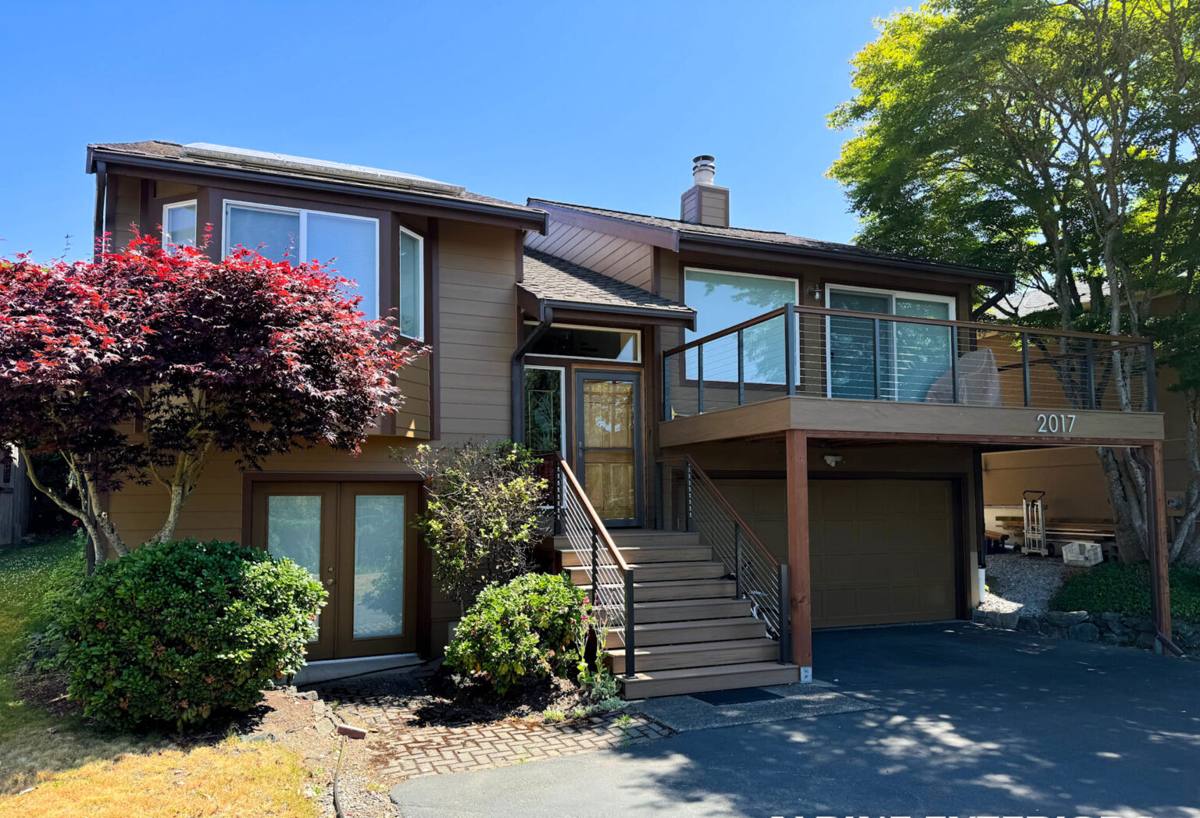
What Storm Damage Actually Looks Like on a Holmes Beach Roof
Storm damage isn't always obvious from the ground, and it isn't always dramatic. Sometimes it's a handful of shingles or tiles that shifted just enough to break their seal. Sometimes it's flashing around a chimney or skylight that got pried loose by uplift and never quite sat back down right. The tricky part is that minor storm damage often doesn't leak right away — it leaks weeks or months later, after wind-driven rain has had repeated chances to work its way through a small gap.
Here's what we look for on every storm damage inspection:
- Missing, cracked, or lifted shingles, tiles, or metal panels
- Creased or torn shingles where wind folded them back and forth
- Granule loss showing up in gutters or downspouts (a sign of impact or abrasion)
- Lifted, bent, or missing flashing around chimneys, vents, skylights, and roof-to-wall transitions
- Soft spots or discoloration on interior ceilings, especially near exterior walls
- Debris impact marks — branches, palm fronds, and wind-borne items are common on the island
- Gutters pulled loose or downspouts disconnected from wind load
- Signs of moisture intrusion at the roof deck when we can access the attic
Any one of these on its own might not be an emergency. But because Holmes Beach roofs face another storm system almost every season, small unresolved damage tends to compound instead of just sitting still.
Why Wind-Driven Rain Matters More Than the Wind Itself
Homeowners often assume the wind speed is the whole story, but on a barrier island, the direction and duration of rain matter just as much. Straight-down rain runs off a well-installed roof without much trouble. Wind-driven rain gets pushed sideways and upward, finding every seam, lap, and fastener penetration that wasn't sealed to handle it. That's why a roof with even a small amount of storm damage can develop leaks that show up nowhere near where the actual damage occurred — water travels along the underlayment or deck before it finds a way inside.
This is also why we don't treat storm damage repair as "patch the visible spot and move on." A correct repair accounts for how water actually behaves once it's inside a compromised roof system, not just where the damage is visible from the ground or a ladder.
What a Correct Storm Damage Repair Involves
1. Emergency Mitigation First
If a roof has active or likely leak points after a storm, the first priority is stopping ongoing water intrusion — tarping exposed areas, securing loose material, and clearing debris that's trapping moisture against the roof. This isn't the final repair; it's damage control while the rest of the job gets scoped correctly.
2. A Real Assessment, Not a Guess
We walk the roof (when it's safe to do so) and check the attic or interior ceiling line for moisture, not just the exterior. Storm damage often has both a visible component and a hidden one, and a repair that only addresses what's visible from the ground tends to fail again in the next storm.
3. Matching Repair Scope to Actual Damage
Some storm damage is truly a spot repair — a section of shingles or tiles, a run of flashing, a section of ridge. Other times, what looks like a small area of damage turns out to be a symptom of a roof that was already near the end of its service life, and a patch would just be a temporary fix on borrowed time. We tell you honestly which situation you're in, including when a repair is the right call and when it isn't.
Repair Approaches: Matching the Right Fix to the Damage
| Type of Damage | Typical Fix | What to Watch For |
|---|---|---|
| Isolated missing/lifted shingles or tiles | Spot replacement matched to existing material and fastening pattern | Color and profile matching on older roofs; re-sealing surrounding tabs |
| Damaged flashing (chimney, skylight, wall) | Flashing removal and reinstallation with fresh sealant and underlayment tie-in | Flashing is a common leak source even when the field of the roof looks fine |
| Wind-lifted ridge or hip caps | Re-securing or replacing ridge/hip material with corrosion-resistant fasteners | Ridge lines take the highest wind uplift on the whole roof |
| Localized deck damage from prolonged leak | Cut out and replace affected decking before re-covering | Skipping this step means new material over a soft or rotted deck |
| Widespread damage across multiple roof planes | Larger section replacement, sometimes full re-roof | When repair costs start approaching replacement, we'll say so plainly |
Materials That Hold Up to Gulf-Front Conditions
Whatever material a Holmes Beach roof uses, the fasteners, flashing, and sealants matter as much as the primary roofing material itself. Salt air accelerates corrosion on standard fasteners far faster than it would inland, which is why we prioritize corrosion-resistant fastening on every repair here, not just on brand-new installs. On the primary material side:
- Architectural asphalt shingles rated for high wind can perform well on the island when installed with the correct nailing pattern and sealed properly at laps and edges — installation quality matters more than the shingle brand.
- Standing seam metal roofing handles wind uplift and wind-driven rain very well and is common on Gulf-front homes, though it requires precise flashing details at every penetration.
- Tile roofing is durable against UV and salt but individual tiles can crack or dislodge in high wind, and repairs require matching the existing profile and underlayment condition.
We don't push one material as a cure-all. Every option has trade-offs in maintenance, repair complexity, and upfront cost, and the right call depends on the home's existing roof structure and what's already installed.
Our Process, Start to Finish
- Contact us and describe what you're seeing — a leak, missing material, visible damage after a storm.
- On-site inspection of the roof, attic access where available, and any interior signs of water intrusion.
- Written assessment explaining what's damaged, what caused it, and what repair options make sense — including if a repair isn't the right long-term answer.
- Documentation you can use for an insurance claim if the damage qualifies, including dated photos and a clear description of storm-related cause.
- Repair work performed to match existing roofing material and correct any underlying flashing or underlayment issues, not just the surface symptom.
- Final walkthrough so you can see what was done and ask questions before we consider the job complete.
Storm Damage and Insurance Claims
Many storm damage repairs in this area go through a homeowner's insurance claim, and the outcome often depends on documentation quality and timing. We provide clear photos and a written description of the damage and its likely cause, which your adjuster will need. What we don't do is inflate scope or claim damage that isn't there — an honest assessment holds up better through the claims process than an exaggerated one, and it protects you if the claim is ever reviewed later.
If damage is minor enough to fall under a typical deductible, we'll tell you that too, rather than encourage a claim that isn't in your interest to file.
Why Local, Storm-Experienced Crews Matter Here
After any significant storm in the Bradenton and Manatee County area, out-of-town crews show up looking for quick work, then leave once the immediate rush is over. That's a real risk for homeowners on Anna Maria Island specifically, because barrier island roofing has different exposure conditions than roofing five or ten miles inland — the wind loads, salt exposure, and moisture behavior aren't the same, and a crew unfamiliar with those conditions can miss things that matter.
A crew that already works in Holmes Beach and the surrounding island communities understands the fastening and flashing standards this environment actually requires, has a reputation to stand behind after the work is done, and is still reachable if a repair needs a follow-up visit. That matters more here than almost anywhere else in the county, simply because the next storm season is never far away.
Get an Honest Look at Your Roof
If your Holmes Beach home has visible storm damage, a leak that started after a recent weather event, or you just want a professional opinion before the next storm season, we're glad to take a look. The estimate is free, there's no pressure to move forward, and you'll get a straight answer about what your roof actually needs — nothing more, nothing less. Use the form below to get started.